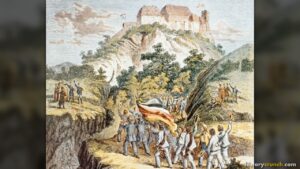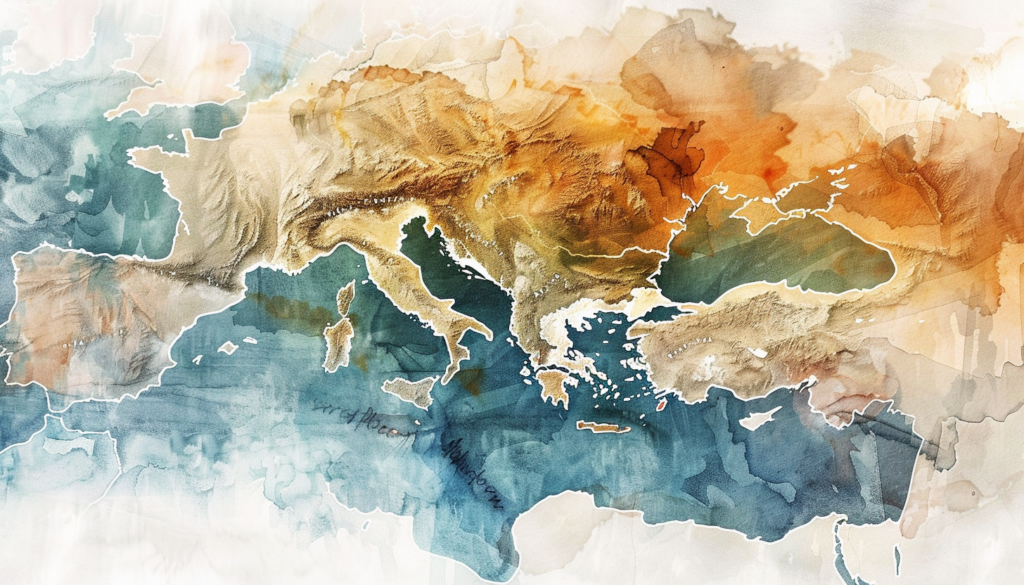
The Balkan Crisis before World War I refers to the issues that existed in the Balkans in the years before the outbreak of World War I. In short, this includes the Bosnian Crisis of 1908 and the two Balkan Wars (First Balkan War and Second Balkan War) which took place in 1912 and 1913. These events were significant because they led to the eventual 1914 outbreak of World War I. As such, historians consider the Balkan Crisis as a significant cause of World War I. The Balkans is a region in southeastern Europe that was under a great deal of nationalistic tensions in the first part of the 20th century. Click on the links below to read more about each topic related to the Balkans.
 FactsthatCrunch
Balkan Crisis Before World War I – Bosnian Crisis of 1908
In general, the Bosnian Crisis involved the annexationWhen one country takes control of another territory or region and adds it to its own lands. of Bosnia and Herzegovina by Austria-Hungary. Due to the timeframe in which it occurred, the Bosnian Crisis of 1908 is considered to be important to the two Balkan Wars (First Balkan War and Second Balkan War) as well as World War I.
The 19th century was a period of continuous change and competition in Europe. Not only was it the height of European imperialism, but it also saw the rise of nationalismA strong belief that people sharing a culture or ethnicity should form and support their own independent country., which swept across the continent. For instance, Italy formally unified as a country in 1861, and Germany did the same in 1871. In both cases, smaller kingdoms unified into one larger country and saw the people of each country identify with each other nationalistically. This wave of nationalism also swept across the Balkans.
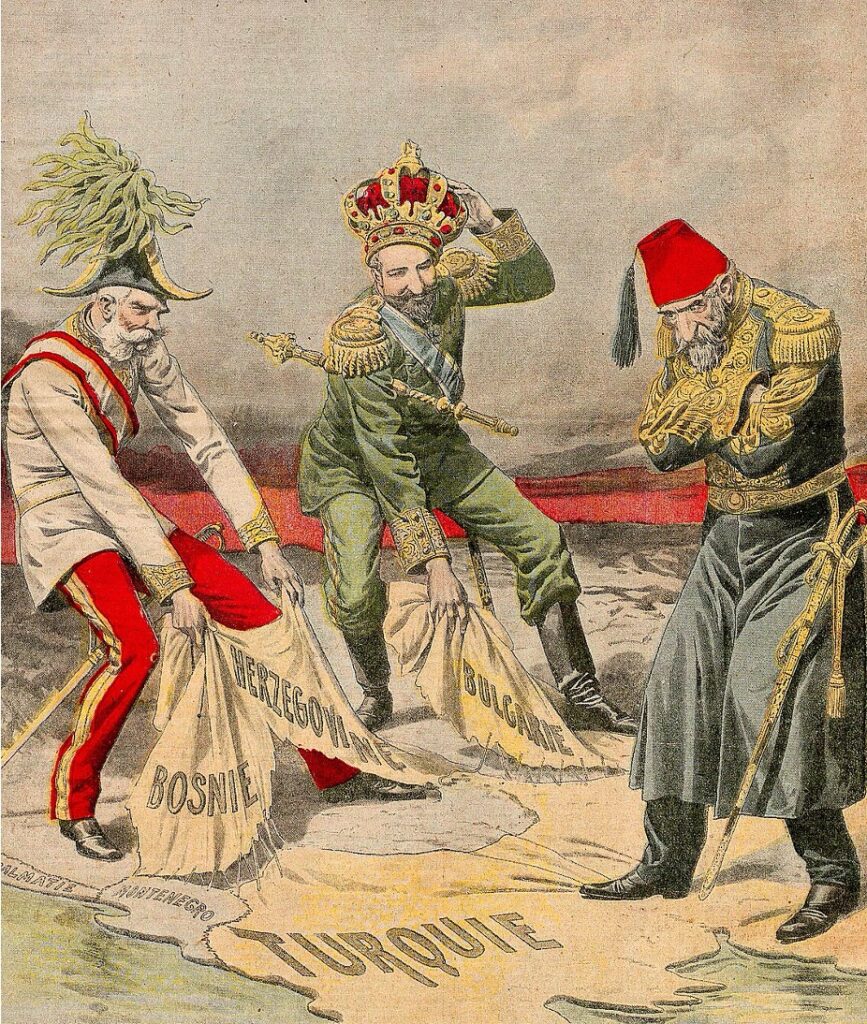
The Bosnian Crisis began in October of 1908 with the Austrian annexation of Bosnia and Herzegovina. This means that Austria took control over the two territories. Previously they had belonged to the Ottoman Empire, although Austria-Hungary had occupied and run them since 1878, and by this time the Ottoman Empire was in decline and losing its authority in the region. In fact, at the same time, the Balkan state of Bulgaria declared its independence from the Ottoman Empire. Austria’s annexation of Bosnia and Herzegovina created a crisis not only with the leadership of the Ottoman Empire, but also with other surrounding European nations including Italy, Russia and Serbia. This eventually set the stage for the events of the First Balkan War in 1912 and the outbreak of World War I in 1914.
 FactsthatCrunch
The Bosnian Crisis ended in March of 1909 when Germany pressed Russia to accept the annexation of Bosnia, and Russia backed down.
Russia was still weak after losing its war with Japan in 1905 and was not ready to fight. Russian leaders saw the retreat as a humiliation and were determined not to back down again. In July of 1914, when Austria-Hungary threatened Serbia, Russia chose to stand firm.
Balkan Crisis Before World War I – First Balkan War
At its core, the First Balkan War focused on the conflict between the nations of the Balkans and the Ottoman Empire. At the time, Serbia sought an alliance in order to assist in its attack against the Ottoman Empire, which led to the formation of the Balkan LeagueAn alliance formed by Bulgaria, Greece, Montenegro, and Serbia to fight against the Ottoman Empire in 1912.. The Balkan League was an alliance between several Balkan nations, including: Bulgaria, Greece, Montenegro, and Serbia.
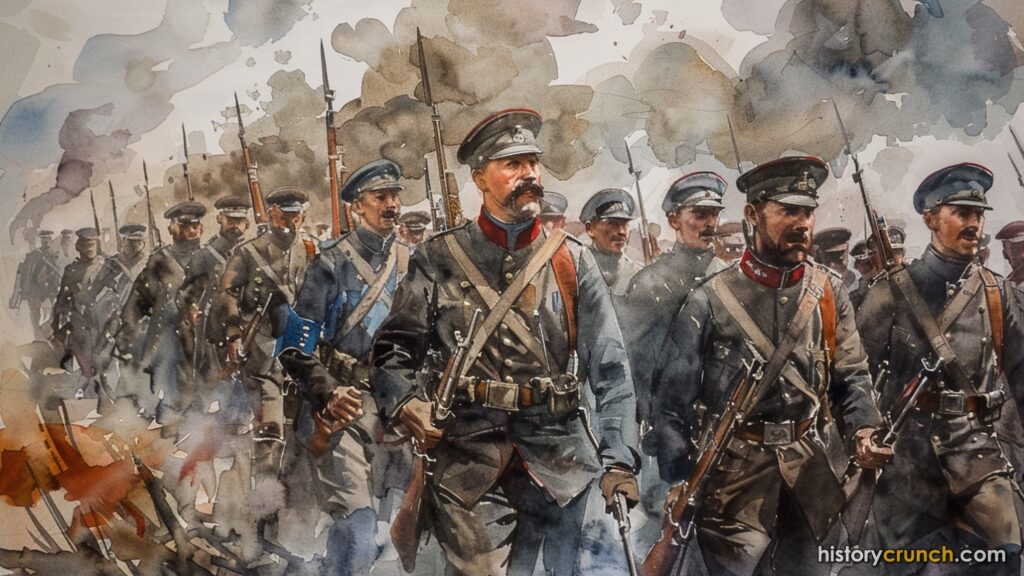
When war began in 1912, each of the nations involved had different levels of military resources and soldiers. Bulgaria was the strongest member nation of the Balkan League and mobilizedPrepared and assembled a country’s military forces and soldiers ready for war. over 450,000 soldiers in the First Balkan War. For their part, Serbia entered the war with over 230,000 soldiers. Greece and Montenegro had considerably fewer forces, with Greece mobilizing approximately 125,000 and Montenegro mobilizing 45,000.
The Ottoman Empire, which faced off against the Balkan League alone, had approximately 436,000 soldiers at the start of the war and added more as the war progressed. However, at this point in history the Ottoman Empire was essentially in decline as a political and militaristic force. For instance, during the First Balkan War, the leadership of the Ottoman Empire struggled to resupply and reinforce their forces in the Balkans. As such, the First Balkan War was a disaster for the Ottoman Empire and resulted in a major loss of territory for them in Europe.
Historians consider the First Balkan War to be significant for several reasons. First, as a result of its defeat, the Ottoman Empire gave up large sections of territory in the Balkans, which was taken over by the member nations of the Balkan League. Second, the events of the First Balkan War set the stage for the Second Balkan War, which began on June 29th in 1913. Third, historians consider the First Balkan War (and the Second Balkan War) to be significant causes of World War I, which began in 1914.
 FactsthatCrunch
Balkan Crisis Before World War I – Second Balkan War
Ferdinand I of Bulgaria was upset following the First Balkan War, because he believed that Bulgaria had not gained the territories that it was owed. As such, Bulgaria was the country that began the Second Balkan War.
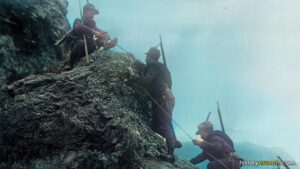
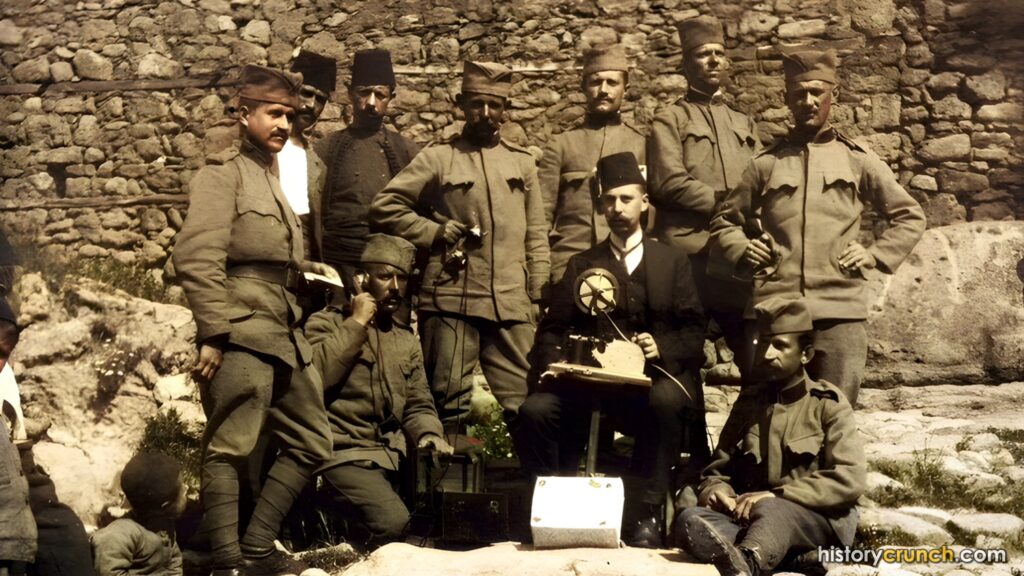
The Second Balkan War officially began on June 29th in 1913 following a period in which Bulgaria readied its armies. The main opponents that the Bulgarians faced in the conflict were Serbia and Greece, which were both former allies to Bulgaria in the First Balkan War. Both Serbia and Greece had signed a secret alliance before the outbreak of the Second Balkan War and were the main nations that Bulgaria argued with over territories in the Balkans. The Bulgarian armies attacked Serbian forces on June 29th. The two nations fought in bloody battles that included the Battle of Bregalnica and the Battle of Kalimanci. In both of these battles, the Bulgarians suffered heavy losses and were forced into a retreat. Bulgaria did much better against the Greek forces but did not obtain any meaningful victory. For instance, in the Battle of Kresna Gorge, which took place in July of 1913, both sides suffered losses. As a result, the battle was a stalemateA situation in a battle where neither side can defeat the other or make progress. and neither Greece nor Bulgaria was able to defeat the other. At the same time, both Romania and the Ottoman Empire attacked Bulgaria. Romania had lingering tensions from the First Balkan War with Bulgaria and wanted to capture some more territories for themselves. The Second Balkan War ended on August 10th, 1913.
As stated above, the Second Balkan War did not last long. In fact, the total duration of the war was just over a month. It ended in August of 1913 when Bulgaria sought an end to the war, after suffering terrible losses. What resulted were two treaties, the Treaty of Bucharest and the Treaty of Constantinople.
 FactsthatCrunch
Balkan Crisis and World War I
The information presented on this page highlights the tensions that existed in the Balkans before the outbreak of World War I in 1914. In fact, the event that sparked World War I was the assassination of the Austrian Archduke Franz Ferdinand on June 28th, 1914. Austria blamed Serbia for this action, since Ferdinand was murdered by Gavrilo Princip – a Bosnian Serb nationalist who had been armed and trained by the Black HandA secret organization that promoted Serbian and Slavic nationalism and armed and trained the men who assassinated Archduke Franz Ferdinand.. The Black Hand was a secret organization aimed at promoting Serbian (and Slavic) nationalism, and helped plan the assassination of Ferdinand in protest of Austria’s influence in the Balkans. As such, this displays that World War I was a direct result of the Bosnian Crisis of 1908 and the two Balkan Wars.
Therefore, historians consider the nationalistic tensions that existed in the Balkans in the early 20th century as an important factor in the eventual outbreak of World War I. In fact, the term ‘Balkan Powder Keg’ was used to describe the crisis in the Balkans before World War I. In general, the term is a metaphor and compares the nationalistic tensions present in the Balkans before World War I to that of a keg (or barrel) of gunpowder, which is essentially a bomb. Thus, the only thing the powder keg needed to explode was a spark, which was the assassination of Austrian Archduke Franz Ferdinand on June 28th, 1914.
 FactsthatCrunch
Key Vocabulary
Annexation
Nationalism
Balkan League
Mobilized
Stalemate
Balkan Powder Keg
Black Hand
Frequently Asked Questions
What was the Balkan Crisis before World War I?
The Balkan Crisis was a series of conflicts in southeastern Europe in the years before World War I. It included the Bosnian Crisis of 1908 and the two Balkan Wars of 1912 and 1913. These events built up nationalistic tensions that helped push Europe toward war in 1914.
What was the Bosnian Crisis of 1908?
The Bosnian Crisis of 1908 was Austria-Hungary’s annexation of Bosnia and Herzegovina in October of that year. These lands had belonged to the declining Ottoman Empire. The takeover angered the Ottomans and nearby nations like Serbia and Russia, raising tensions in the region.
Who fought in the First Balkan War?
The First Balkan War in 1912 pitted the Balkan League against the Ottoman Empire. The Balkan League was an alliance of Bulgaria, Greece, Montenegro, and Serbia. The war was a disaster for the Ottomans, who lost most of their remaining territory in Europe.
Why did the Second Balkan War start?
The Second Balkan War began because Bulgaria felt it did not get the land it deserved after the first war. Bulgaria attacked its former allies Serbia and Greece on June 29th, 1913. Romania and the Ottoman Empire soon joined against Bulgaria, and the war ended quickly in August of 1913.
What does the term “Balkan Powder Keg” mean?
The “Balkan Powder Keg” is a metaphor for the intense tensions in the Balkans before World War I. It compares the region to a barrel of gunpowder waiting to explode. The spark was the assassination of Archduke Franz Ferdinand on June 28th, 1914.
How did the Balkan Crisis help cause World War I?
The Balkan Crisis built up nationalistic anger that made a wider war likely. The final trigger came when Gavrilo Princip, a Bosnian Serb nationalist, killed Archduke Franz Ferdinand in 1914. Austria-Hungary blamed Serbia, and the alliance system pulled the major powers into World War I.
Cite This Article
To cite this article as a source, use one of the formats below.
MLA: Beck, Elias. “Balkan Crisis Before World War I: A Detailed Summary.” HistoryCrunch, 28 September 2026, https://historycrunch.com/balkan-crisis-before-world-war-i/.
APA: Beck, E. (2026). Balkan Crisis Before World War I: A Detailed Summary. HistoryCrunch. https://historycrunch.com/balkan-crisis-before-world-war-i/
Chicago: Beck, Elias. “Balkan Crisis Before World War I: A Detailed Summary.” HistoryCrunch. September 28, 2026. https://historycrunch.com/balkan-crisis-before-world-war-i/
Sources
- Margaret MacMillan, The War That Ended Peace.
- John Keegan, The First World War.