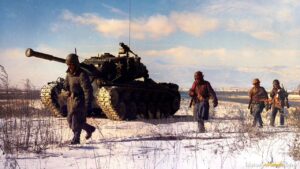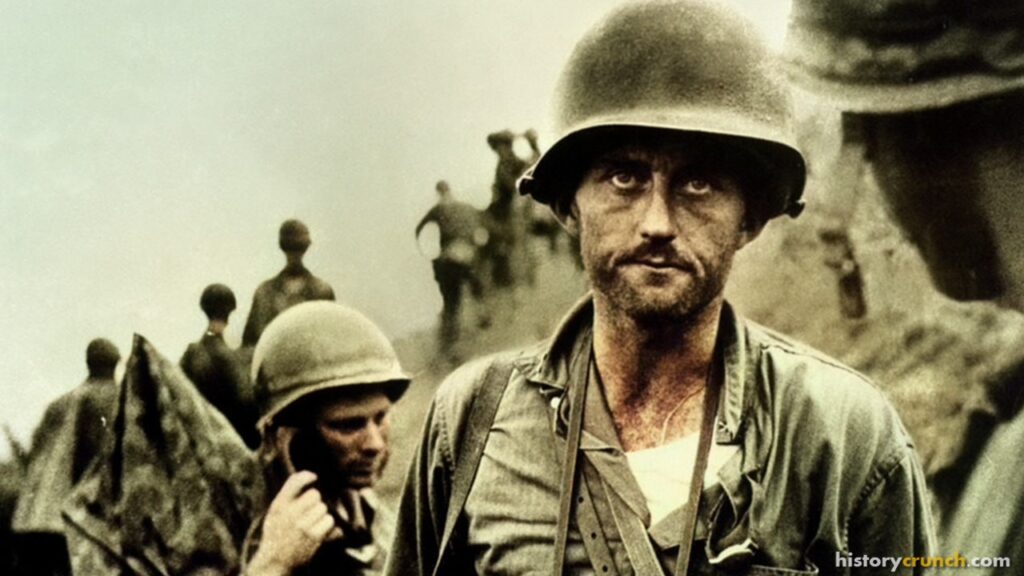
Life for soldiers in the Korean War was harsh because the war combined fast-moving campaigns, steep mountain terrain, extreme weather and long stretches of trench fighting. From the North Korean invasion on June 25th, 1950, to the armisticeAn agreement between opposing sides to stop fighting, ending active combat without a formal peace treaty. on July 27th, 1953, American troops and North Korean forces fought first in a war of retreat and advance and then in a grinding stalemateA situation in which neither side can gain an advantage, causing the conflict to become stuck with little progress. near the 38th parallel. As such, the war was ultimately a difficult and dangerous time for both sides.
 FactsthatCrunch
First Helicopter Evacuation of a Wounded Soldier in the Korean War
On August 4th, 1950, a Sikorsky H-5F from Detachment F, 3rd Emergency Rescue Squadron, U.S. Air Force, flew Private 1st Class Claude C. Crest, Jr. from the Sengdang-ni area to an Army hospital during the Battle of the Pusan Perimeter. Before this flight, wounded soldiers depended on ground transport, which could take hours or days to reach a surgical unit. By the end of the war in 1953, helicopters had carried more than 21,000 wounded soldiers to care, and the fatality rate for seriously wounded troops fell from 4.5 percent in World War II to 2.5 percent.
Start of the Korean War
In 1950, life for soldiers in the Korean War was first shaped by movement. The North Korean invasion opened with a fast offensive toward Seoul, South Korea. Next, the war swung south toward the Pusan PerimeterA defensive boundary in southeastern Korea where United Nations forces held their ground early in the war. in southeastern Korea before reversing again after the Inchon landing on September 15th, 1950. As such, soldiers on both sides often marched long distances, fought in hurried actions, slept wherever they could, and had little sense that the front line would remain fixed for long.
North Korean soldiers entered that first stage of the war as part of a force that had been carefully built before the invasion. United States Army historical studies note that North Korean forces were organized under Soviet supervision, supported by Soviet advisers, strengthened by Koreans who had served with Chinese Communist forces, and trained for battalion attacks, firing at moving targets, assaulting fortified positions, mountain warfare, and night combat. This was important because early life for North Korean soldiers in the Korean War began inside a more prepared offensive army than many of its opponents expected in June of 1950.
American soldiers, by contrast, were pulled into the war quickly as the United States expanded its response after the invasion. In the first months, many American troops fought in a war of emergency defense, retreat, and counterattack around places such as the Pusan Perimeter, and later Inchon, South Korea, and Seoul, South Korea. Therefore, life for American soldiers in the Korean War in 1950 often meant rapid movement, confusion, and constant pressure rather than settled front line routine.
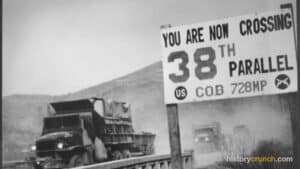
FactsthatCrunchNorth Korean forces that crossed the 38th parallel in June 1950 had received specific training for night attacks.
American Soldiers at the Front
For American troops, daily life depended heavily on whether supply units could keep up. Official Army accounts from Korea describe forward units receiving two hot meals and one C-ration meal when conditions allowed, though troops who stayed constantly on the move often had little beyond C-rationsPre-packaged meals issued to soldiers in the field when hot food could not be delivered.. As well, American soldiers struggled with a lack of shelter and constant concern about trench footA painful foot condition caused by prolonged exposure to cold, wet conditions inside boots or trenches., lice, and fleas.
Cold weather made American service even harder. In fact, significant frostbite and trench-foot problems appeared in winter fighting, and later rugged terrain and insecure roads complicated the movement of the wounded. At the same time, the Korean War saw the first regular use of helicopters to evacuate casualties from the battlefield, which gave wounded American soldiers a much better chance of reaching care quickly.
After the front stabilized, American soldiers spent much of their time in bunkers that they called ‘hootchiesInformal name American soldiers used for their log-and-earth bunkers built into hillsides at the front.‘. These log-and-earth shelters were generally built into hillsides, usually held two to seven men, and contained stoves, rough bunks, ammunition, and a firing port for defense.
American soldiers also served inside a formal rotation systemA military policy that moved soldiers home after they earned enough points, rewarding those in the most dangerous combat. that tried to manage fatigue. In fact, by September of 1951 the Army had introduced a point system for rotation home to the United States, with close-combat service earning the highest monthly total. The system did not remove the danger of service, but it gave many soldiers a concrete goal in a limited war that otherwise felt endless. This was important because life for American soldiers in the Korean War was not only about battlefield survival, but also about maintaining morale.
North Korean Soldiers at the Front
Life for North Korean soldiers in the Korean War followed a different pattern when compared to the American soldiers. Once the war began, however, North Korean soldiers also faced severe strain. In the early campaigns they advanced quickly, but that rapid movement put pressure on supply and exposed them to growing United Nations air power. Communist troops, including North Korean forces, relied heavily on concealment, and by the stalemate years enemy movement was often so limited in daylight that American observers believed troops were moving at night and avoiding roads. This was important because daily life for North Korean soldiers increasingly depended on hiding, moving carefully, and surviving under conditions created by enemy air superiorityControl of the skies by one side, forcing the enemy to hide, move at night, and avoid open roads. and artillery.
North Korean soldiers who remained in the later war often fought from hardened mountain positions. Official Army records describe Communist defenses as deeper and more elaborate than many United Nations positions, with tunnels and caves dug into mountainsides, strong bunkers, and fortifications that stretched far behind the front line. These defenses were built in part because Communist forces were weaker in firepower and needed stronger protection from shells, bombs, and hostile aircraft. Therefore, life for North Korean soldiers in the Korean War, especially from 1951 to 1953, often meant living underground or in concealed positions rather than in the more exposed bunker systems common on the United Nations side.
Historians have also noted that life for North Korean soldiers in the Korean War became more punishing as the conflict dragged on, because survival depended not only on courage or training, but also on whether exhausted units could be rebuilt at all.
FactsthatCrunchAmerican and North Korean soldiers fought along the same front lines, but their daily conditions differed sharply in shelter, supplies, and air support.
Similarities for Both Sides
Despite those differences, American soldiers and North Korean soldiers also shared several important similarities in terms of daily life for the soldiers. For instance, both fought in steep mountain country and needed to endure Korean winters that could be punishing and difficult. Both also spent long periods digging, carrying, waiting, standing guard, and living under the threat of mortar or artillery fire. In fact, once the war settled near the 38th parallel, life for soldiers in the Korean War became a war of bunkers, hills, patrols, raids, and exhaustion for both sides, even though the armies were supplied and organized very differently.
FactsthatCrunchWhat physical challenge made the Chosin Reservoir campaign especially difficult for U.S. Marines in late 1950?
Korean War timeline · 1950 – 1953
Key Vocabulary
C-rations
Trench foot
Stalemate
Hootchies
Air superiority
Armistice
Rotation system
Frequently Asked Questions
Why was life so hard for soldiers in the Korean War?
Life was hard because the war mixed fast campaigns, steep mountains, brutal weather, and long trench fighting. Soldiers marched far, slept wherever they could, and lived under the threat of mortar and artillery fire. Cold winters brought frostbite and trench foot, while poor supply left many troops short of food and shelter.
What did American soldiers eat during the Korean War?
American soldiers ate two hot meals and one C-ration meal when supply units could reach them. Troops who stayed on the move often had little beyond C-rations, which were canned combat rations. Daily food depended heavily on whether supply lines could keep up with the fighting.
What were “hootchies” in the Korean War?
Hootchies were bunkers that American soldiers built into hillsides after the front line stabilized. These log-and-earth shelters usually held two to seven men and had stoves, rough bunks, ammunition, and a firing port. They gave soldiers some protection during the long stalemate near the 38th parallel.
How did North Korean soldiers protect themselves from enemy attacks?
North Korean soldiers relied on concealment and hardened mountain positions to survive. Their defenses included tunnels and caves dug into mountainsides, strong bunkers, and fortifications stretching far behind the front. These deep positions were needed because Communist forces were weaker in firepower and faced heavy air attacks.
How did wounded soldiers get medical help in the Korean War?
The Korean War saw the first regular use of helicopters to carry wounded soldiers off the battlefield. This gave hurt American troops a much better chance of reaching care quickly. Rugged terrain and unsafe roads made moving the wounded difficult, so air evacuation was a major help.
What did daily life look like for both sides during the stalemate?
Once the war settled near the 38th parallel, both sides fought a war of bunkers, hills, patrols, and raids. Soldiers spent long stretches digging, carrying gear, standing guard, and waiting under artillery fire. Both armies also endured steep mountains and punishing Korean winters, even though they were supplied very differently.
Cite This Article
To cite this article as a source, use one of the formats below.
MLA: Millar, B. “Life for Soldiers in the Korean War: A Detailed Summary.” HistoryCrunch, 18 September 2026, https://historycrunch.com/life-for-soldiers-in-the-korean-war/.
APA: Millar, B. (2026). Life for Soldiers in the Korean War: A Detailed Summary. HistoryCrunch. https://historycrunch.com/life-for-soldiers-in-the-korean-war/
Chicago: Millar, B. “Life for Soldiers in the Korean War: A Detailed Summary.” HistoryCrunch. September 18, 2026. https://historycrunch.com/life-for-soldiers-in-the-korean-war/
Sources
- Max Hastings, The Korean War.
- William Stueck, The Korean War: An International History.
- Sheila Miyoshi Jager, Brothers at War: The Unending Conflict in Korea.
- Truman Presidential Library