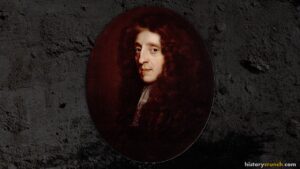
Voltaire was one of the most significant thinkers during the Age of Enlightenment. More specifically, he was a writer and philosopher and argued for freedom of speech, religious toleranceAccepting that people have the right to practice different religions without persecution., and justice. His ideas and writings were central to the ideals of the Enlightenment and helped lay the framework for important concepts, such as: secularismThe idea that government and public life should be separate from religious control or influence., human rights, and modern liberal thought. As such, historians consider him to be one of the most significant voices during the Age of Enlightenment, alongside others, such as: Baron de Montesquieu, John Locke and Jean-Jacques Rousseau.
 FactsthatCrunch
Voltaire was a French writer and philosopher who argued for religious tolerance, freedom of speech, and limits on government power during the Age of Enlightenment. His writings, including his famous satirical work Candide (1759) and Letters on England (1733), spread Enlightenment ideas across Europe and helped inspire later movements for liberty and human rights.
Voltaire – Early Life
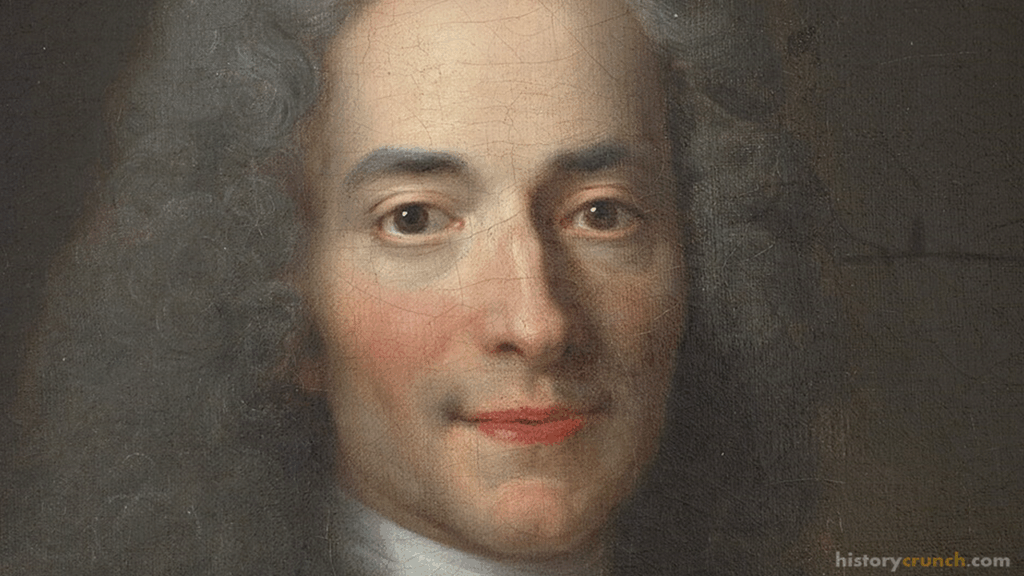
Voltaire was born on November 21st, 1694. His name at birth was François-Marie Arouet, but later became better known as ‘Voltaire’. He was born into a large family, and was the youngest of five children. Voltaire’s father was a lawyer, and his mother was from a family of French nobility.
He was educated at the Collège Louis-le-Grand, where he learned Latin and theology. He later learned English, Italian and Spanish. Though his father wanted him to become a lawyer, Voltaire was drawn to literature and began writing plays and poems in his twenties. His work was liked by aristocratic families because it was witty. Furthermore, he spent much of his early life in Paris, and it is there that he took on the name, Voltaire.
FactsthatCrunchWhy did Voltaire take a pen name instead of using his real name François-Marie Arouet?
After being released from the Bastille prison in 1717, where he had been locked up for writing sharp comments against French nobles, he adopted the pen name Voltaire to separate himself from the dangers his real name now carried. The name gave him a fresh identity at a time when his satire had already made powerful enemies in Paris. He used that pen name for the rest of his life, and it is the name by which history remembers him.
Voltaire – Writer
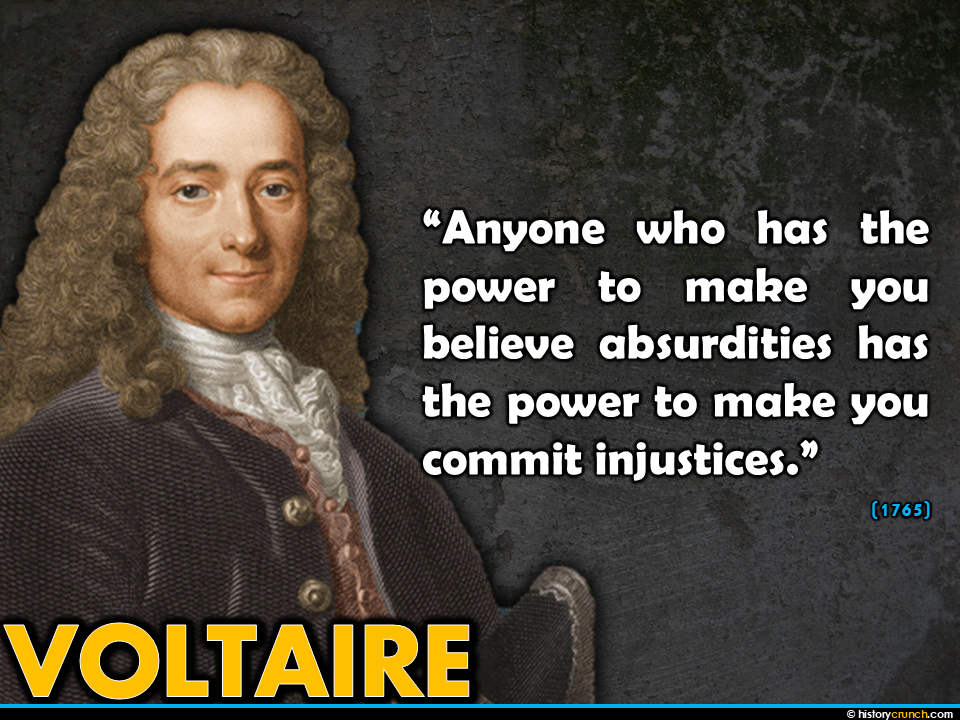
As stated above, Voltaire was a prolificProducing a very large amount of work over a period of time. writer. In fact, in 1718, Voltaire gained fame as a poet and playwright. Furthermore, Voltaire was a master of wit and satireWriting that uses humor and irony to mock or criticize people, governments, or society.. For instance, he used his writing to criticize injustice, religious intolerance, and abuses of power. His writing style was clear, sharp, and often humorous, which made complex ideas easy for ordinary people to understand.
His most famous work, ‘Candide’ (1759), is a satirical story that mocks blind optimism and exposes the cruelty and foolishness of society. Voltaire also wrote ‘Letters on England’ (1733), which praised English freedom of speech and religion while criticizing France’s lack of tolerance.
However, his satire and criticism of French politics and religion often landed him in trouble. For example, in 1717, he was imprisoned in the Bastille, a prison-fortress in Paris, for comments against French nobility. Upon his release, he adopted the pen name ‘Voltaire’.
After another clash with French authorities in 1726, Voltaire was exiled to England, where he stayed for three years. This period profoundly influenced him. In England, he encountered John Locke’s political philosophy and Isaac Newton’s scientific discoveries, which broadened his intellectual pursuits. He admired England’s relatively greater religious tolerance and constitutional monarchyA system where a monarch’s power is limited by laws and a constitution. compared to France’s absolute monarchyA system of government where a king or queen holds total, unlimited power. and Catholic dominance.
 FactsthatCrunch
Voltaire – Age of Enlightenment
Today, Voltaire is known for his contributions to the Age of Enlightenment as a writer and philosopher. The Enlightenment was a cultural movement that emphasized reason, progress, and individual rights. His major ideas centered on religious tolerance, freedom of speech and criticism against absolute authority.
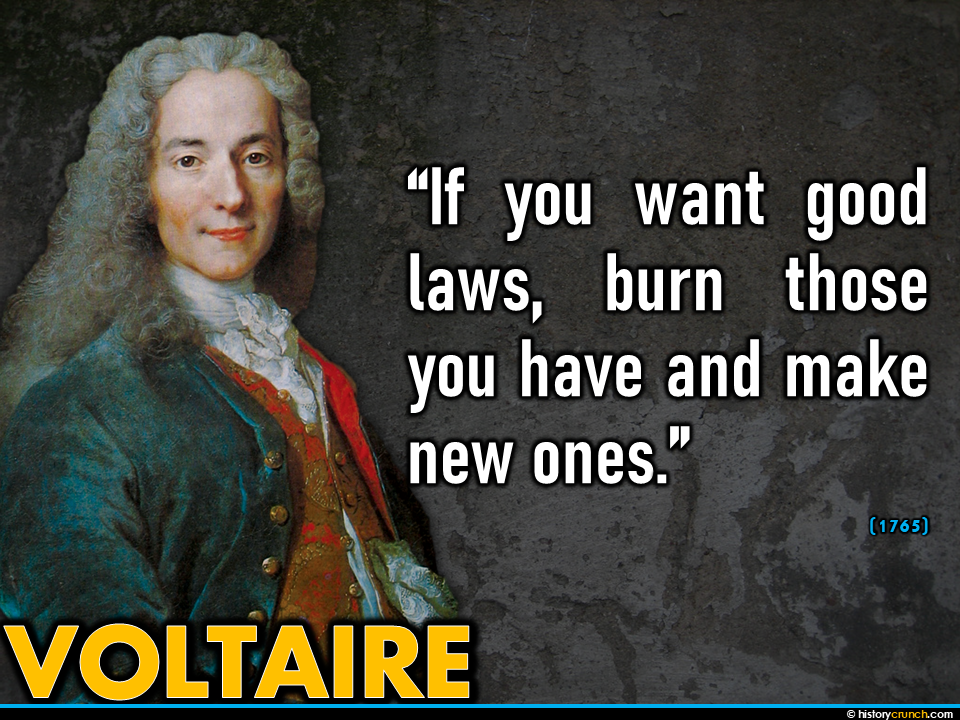
For instance, Voltaire fiercely criticized religious intolerance and the abuses of the Catholic Church. He also believed in the right to express one’s views freely, even those one disagreed with. Although the famous phrase “I disapprove of what you say, but I will defend to the death your right to say it” was coined later by his biographer, it still accurately reflects Voltaire’s views on freedom of expression.
 FactsthatCrunch
I disapprove of what you say, but I will defend to the death your right to say it
Hall, writing as S. G. Tallentyre, coined this line to sum up Voltaire's reaction when French authorities burned the philosopher Helvetius's book On the Mind, and the phrase became a rallying cry for freedom of speech, though it is often wrongly credited to Voltaire himself.
Voltaire – Later Life and Death
Voltaire spent much of his later life at his estate near the French-Swiss border, where he continued writing and corresponding with intellectuals across Europe. He became a symbol of Enlightenment thought, admired by both ordinary people and rulers.
He returned to Paris in 1778, shortly before his death, and was celebrated as a hero of free thought. Voltaire died on May 30th, 1778, at the age of 83. Because of his criticism of the Church, he was initially denied a Christian burial, but his remains were later moved to the Panthéon in Paris in 1791, a testament to his enduring legacy.
Voltaire – Significance
Voltaire is remembered as one of the greatest literary figures of his time, if not of all time. In particular, he is known for having a large impact on the Age of Enlightenment and the growth of liberty. He popularized Enlightenment ideals through witty, accessible works. Furthermore, he helped spread Locke’s, Newton’s, and other thinkers’ ideas across Europe. As well, his ideas inspired later revolutions, particularly the French Revolution and movements advocating free speech and religious liberty.
FactsthatCrunchAccording to the article, how did Voltaire's ideas help inspire the French Revolution?
Age of Enlightenment timeline · 1517 – 1815
Key Vocabulary
Satire
Prolific
Religious tolerance
Absolute monarchy
Secularism
Constitutional monarchy
Frequently Asked Questions
Who was Voltaire?
Voltaire was a French writer and philosopher who was one of the leading thinkers of the Age of Enlightenment. He argued for freedom of speech, religious tolerance, and justice. His witty writing helped spread Enlightenment ideas across Europe.
What was Voltaire’s real name?
Voltaire’s birth name was François-Marie Arouet, and he was born on November 21st, 1694. He adopted the pen name “Voltaire” during his early years in Paris. He became far better known by that name than by his real one.
What is Voltaire’s most famous work?
Voltaire’s most famous work is “Candide,” a satirical story published in 1759. It mocks blind optimism and exposes the cruelty and foolishness of society. His sharp, humorous style made hard ideas easy for ordinary people to grasp.
Why was Voltaire imprisoned and exiled?
Voltaire got in trouble because his satire criticized French politics and religion. In 1717, he was jailed in the Bastille for comments against French nobility. After another clash in 1726, he was exiled to England for three years.
How did England influence Voltaire?
England shaped Voltaire’s thinking during his exile in the late 1720s. There he studied John Locke’s political ideas and Isaac Newton’s scientific discoveries. He admired England’s greater religious tolerance and its constitutional monarchy compared with France.
Why is Voltaire important today?
Voltaire is remembered as a major voice of the Enlightenment and the growth of liberty. He spread ideas about reason, free speech, and religious freedom to a wide audience. His views later inspired the French Revolution and movements for free thought.
Cite This Article
To cite this article as a source, use one of the formats below.
MLA: Woida, K.L. “Voltaire: A Detailed Biography.” HistoryCrunch, 22 September 2026, https://historycrunch.com/voltaire/.
APA: Woida, K. L. (2026). Voltaire: A Detailed Biography. HistoryCrunch. https://historycrunch.com/voltaire/
Chicago: Woida, K.L. “Voltaire: A Detailed Biography.” HistoryCrunch. September 22, 2026. https://historycrunch.com/voltaire/
Sources
- Peter Gay, The Enlightenment: An Interpretation.
- Roy Porter, The Enlightenment / Enlightenment: Britain and the Creation of the Modern World.
- Stanford Encyclopedia of Philosophy
- Fordham Modern History Sourcebook