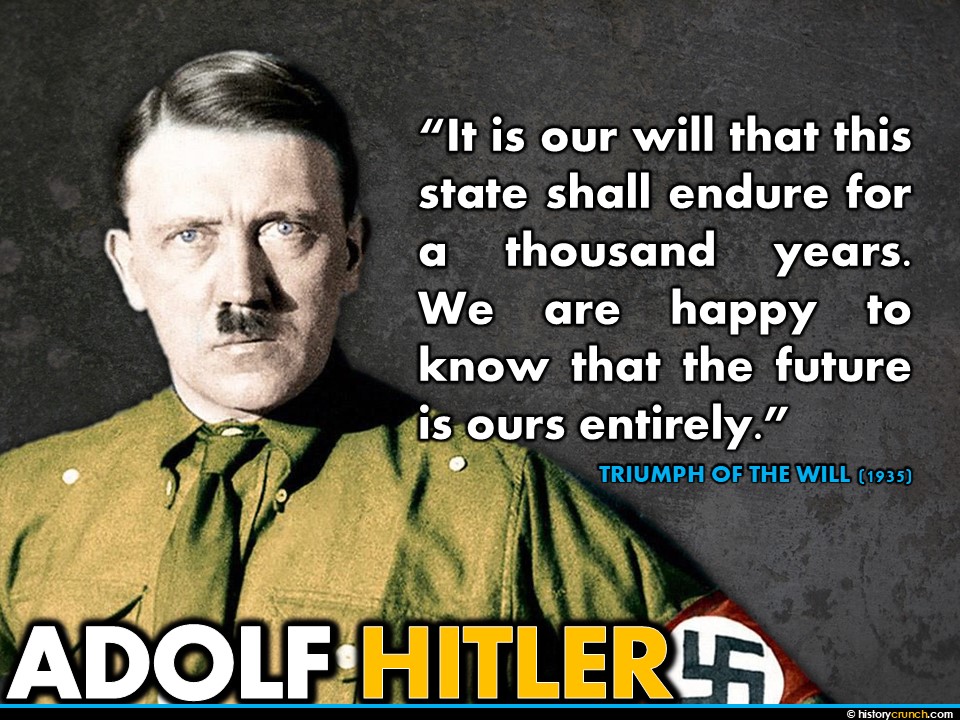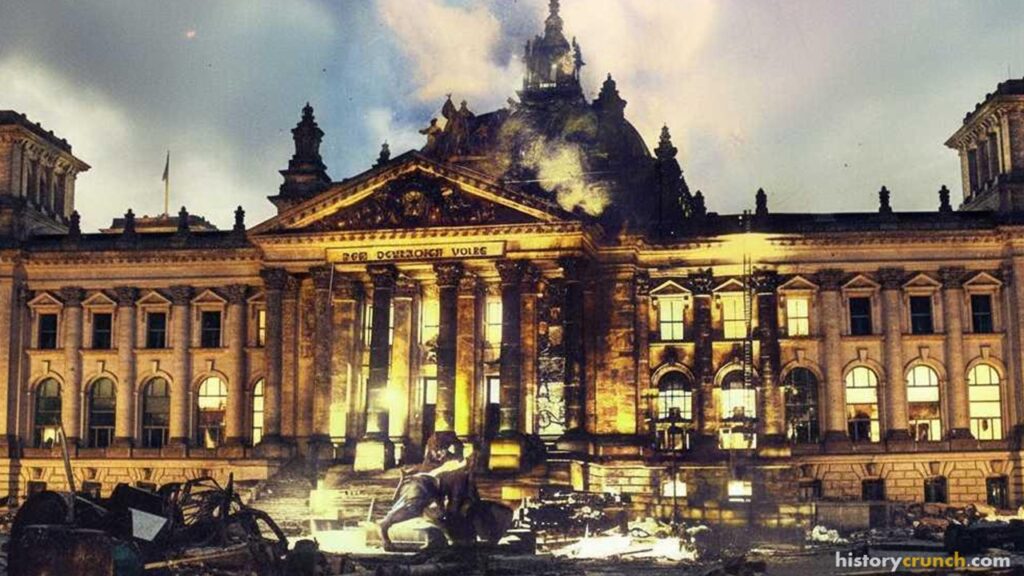
The Reichstag Fire occurred on the night of February 27th, 1933, when the German Reichstag building (parliament) in Berlin was set on fire, just weeks after Adolf Hitler had been appointed Chancellor of Germany. The fire became an important event in the rise to power of Adolf Hitler, as it was used by Hitler and the Nazi Party to create fear among the German public in regards to a communist revolution. However, historians now see it as a strategy by Hitler and the Nazi Party to overthrow the democratic government of Germany.
REICHSTAG FIRE – BACKGROUND
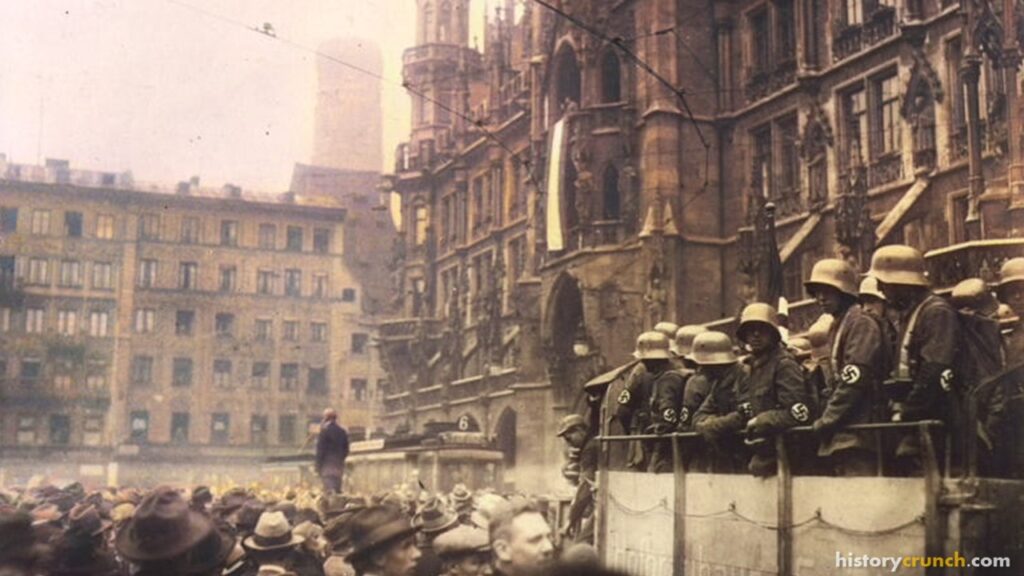
Throughout the 1920s and early 1930s, Adolf Hitler rose to power in the Nazi Party and then in German politics. After a failed attempt to overthrow the Weimar Republic with his Beer Hall Putsch of 1923, Hitler instead worked to increase the popularity of the Nazi Party and gain power through the electoral system. In fact, Hitler became the Chancellor of Germany, leader of the democratically elected government, on January 30th, 1933. The next major event during his rise to power in Germany was the Reichstag Fire.
REICHSTAG FIRE – SUMMARY
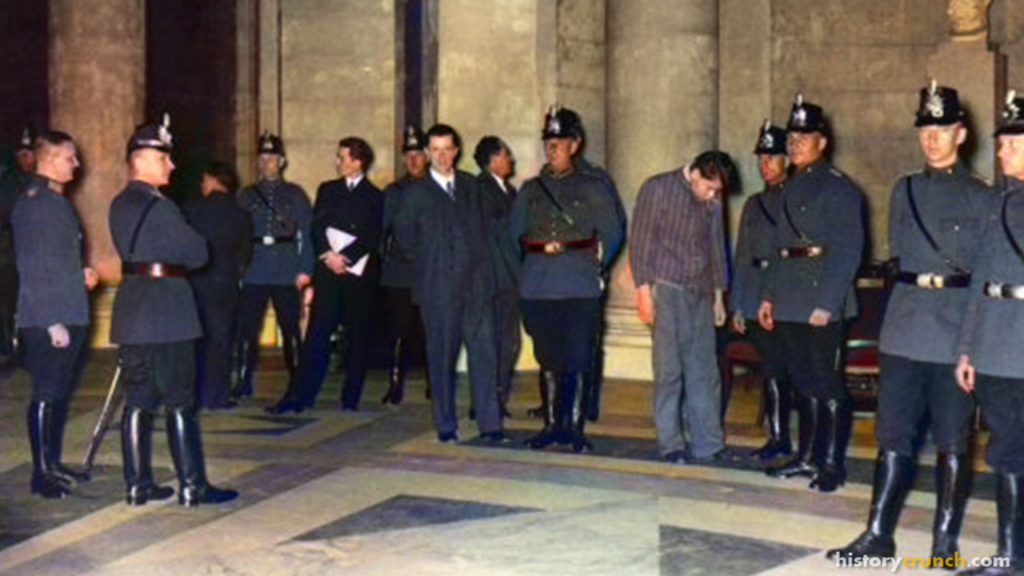
As stated above, the Reichstag was the German parliament building, and was located in the city of Berlin. Just a few weeks after Hitler was appointed Chancellor, the Reichstag was severely damaged from a devastating fire. The fire occurred on February 27th, 1933 and the event was quickly put to use by Hitler and the Nazis as a tool for gaining complete control over Germany. For example, the Nazi government blamed a young Dutch communist for the fire. Marinus van der Lubbe, who had just recently moved to Germany, was supposedly captured on the grounds of the Reichstag as the fire was burning. He claimed sole responsibility for the fire, stating it was a protest against capitalism. Despite this confession, the Nazi leadership immediately blamed the Communist Party of Germany (KPD) for planning the attack as part of a larger conspiracy to overthrow the government. At the time, the greatest political opponents for the right-wing Nazi Party were the more left-leaning parties such as the German Communist Party. By blaming the fire on a communist, the Nazis were effectively able to create fear within the minds of German citizens that a communist takeover of the country was imminent.
Van der Lubbe was soon put on trial and sentenced to death for his crime. Historians question the accuracy of Van der Lubb’s role in the fire and instead wonder whether the Nazi Party lit the fire itself in order to create the necessary climate for the final stages of Hitler’s rise to power.
For example, while Hitler was the Chancellor of Germany he still had to contend with the authority of German President Paul Hindenburg. The day after the fire at the Reichstag, Hitler informed Hindenburg about the fire and expressed that it was part of a communist plot to take over the country. As a result, Hindenburg agreed to and signed the ‘Order of the Reich President for the Security of People and State’. Historians more commonly refer to it as the ‘Reichstag Fire Decree’.
The Reichstag Fire Decree essentially gave Hitler more authority over German society in an attempt to stop the communist plot. For instance, he ordered the arrest of thousands of German communists and banned the Communist Party. This effectively removed Hitler’s main rival in the next election, which took place in March of 1933. Facing less opposition and having gained the trust of many German citizens with his handling of the Reichstag Fire, Hitler and the Nazi Party won 43.9 percent of the vote, their best result yet, and held a majority in the Reichstag only with the support of their Nationalist allies. He had successfully solidified his authority in the country.
REICHSTAG FIRE – SIGNIFICANCE
Historians consider the Reichstag Fire to be a major event in the rise to power of Hitler and the Nazi Party. It allowed Hitler to remove his political opponents and to centralize much of the authority in himself. As such, many historians argue that the Nazis carried out the Reichstag Fire themselves in order to create a crisis that would allow Hitler to take over control of the country. As well, the Reichstag Fire was an important step towards the creation and implementation of the Enabling Act, which was created in March of 1933.
For instance, on March 23rd, 1933, Germany’s Reichstag passed ‘The Enabling Act’ which granted Hitler and the Cabinet the authority to enact laws without the participation of the Reichstag for four years. This allowed Hitler and the Nazi Party to ban all other political parties and Germany ceased to be a democratic country and became a dictatorship under Adolf Hitler. German President Paul von Hindenburg signed ‘The Enabling Act’ under public pressure of a communist takeover and based on the popularity of the Nazi Party and Hitler within Germany.