
The question of where and how did the plague spread has a detailed answer: it first appeared in Central Asia and spread westward along trade routes such as the Silk Road, eventually reaching Europe in 1347 CE via merchant ships. It was primarily spread by fleas carried on rats, which thrived in the unsanitary conditions of the European towns and cities of the Middle Ages.
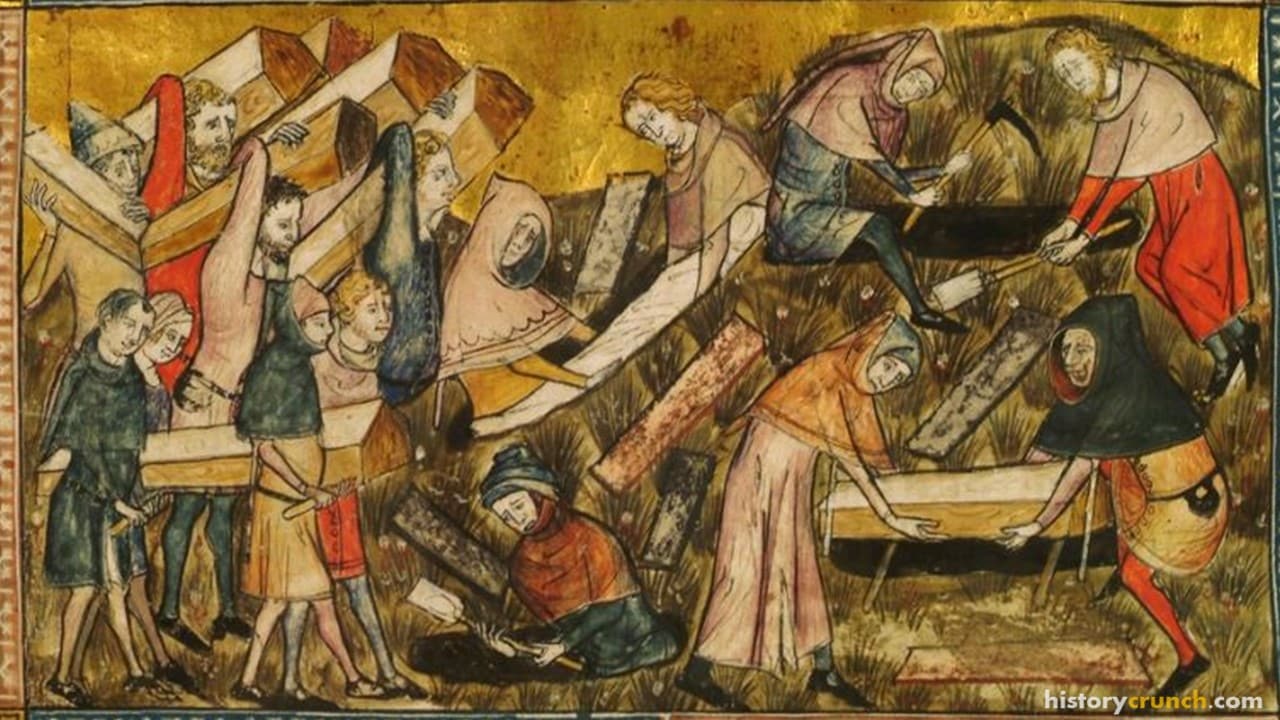
What Was the Black Death?
The Black Death is the term that historians use to describe the spread of the bubonic plagueA deadly bacterial disease spread by flea bites that causes painful black swellings on the body.. It is believed that the plague first began in Central Asia and spread to Europe through vast trade routes such as the Silk RoadA network of ancient trade routes connecting Asia to Europe, used to move goods and, unknowingly, disease.. Historians studying the spread of the plague discovered that the disease was spread by fleas that are commonly found on rodents such as rats and mice. As such, it is now understood that the plague spread via trade routes as the rodents traveled in caravansGroups of traders and animals traveling together overland, which unknowingly carried infected rodents along trade routes. and on merchant ships.

The Plague Arrives in Europe
The first example of the plague arriving in Europe dates from 1347 when a Genoese merchant ship arrived in Sicily. The merchants on the ship were suffering from the effects of the plague, which included: flu-like symptoms, black and painful lumps that oozed blood and pus, and vomiting. The traders had just returned from a port city on the Crimean PeninsulaA land area on the Black Sea where Genoese merchants encountered Mongol raiders and reportedly contracted the plague. in the Black Sea. While there they had encountered Mongol raiders from which they supposedly received the disease.

 FactsthatCrunch
In 1347, Genoese trading ships fled the Mongol-besieged port of Kaffa in Crimea and sailed to Messina, Sicily, carrying rats and fleas infected with Yersinia pestis aboard.
The Mongols besieging Kaffa in 1346 and 1347 were themselves suffering from plague. When the Genoese merchants abandoned the port and sailed home, they unknowingly brought the disease with them. The arrival of their ships at Messina in October 1347 is widely regarded as the point at which the Black Death entered western Europe.
Where Did the Plague Spread?
Shortly after its arrival in Sicily the plague spread throughout the rest of Europe. For example, in January of 1348, there was a major outbreak of the disease in Pisa, Italy, which then allowed the disease to spread to Northern Italy. From there it traveled along trade routes and on trading ships to other regions of Europe, such as: France, England, Germany, Spain, Portugal and Russia. For instance, the plague arrived in Russia in 1352. The only European communities that seemed to withstand the wrath of the plague were ones which relied less on trade with their neighbors, thus limiting their exposure to other groups of people.

In what order did the Black Death spread through Europe after reaching Sicily in 1347?
How Did the Plague Spread?
The lack of medical understanding during the time is evidenced by the remedies or cures that people believed would work. For instance, some believed that the plague was spread by “bad air” and thought that they could cleanse the air with the burning of incenseA substance burned to produce fragrant smoke, which plague-era people wrongly believed could cleanse diseased air.. In later outbreaks of the plague, in the 1600s, this belief led to some doctors wearing strange outfits with masks that looked like the beak of a bird; the doctors of the 1340s did not yet have this costume. Believing that the plague was spread through the air, the doctors would fill the nose area of the mask with incense in order to overpower the “bad air”. However, it also served to mask the smell of death, which was a common reality due to the large number of dead.
While many focus on the effects of the initial outbreak of the plague, it is important to understand that the plague swept through Europe several times over hundreds of years. For instance, it reappeared across Europe at least six times in just over 50 years after first arriving in 1347. In fact, some historians have noted that Europe was impacted in some part by the plague every year until the 17th century. Each time the plague swept through it ravaged the area and left large portions of the population dead. This continual crisis left Europe (and other areas) with several different impacts.
Black Death timeline · 1347 – 1351 CE
Key Vocabulary
Bubonic plague
Silk Road
Caravans
Yersinia pestis
Incense
Crimean Peninsula
Frequently Asked Questions
Where did the Black Death start?
The plague is believed to have started in Central Asia. From there it moved west along busy trade routes like the Silk Road. Rodents carrying infected fleas traveled with caravans and merchant ships, which carried the disease toward Europe.
When did the plague reach Europe?
The plague reached Europe in 1347 CE when a Genoese merchant ship arrived in Sicily. The traders on board were already sick, showing fever, vomiting, and painful black lumps. They had just returned from a port on the Crimean Peninsula in the Black Sea.
How did the plague spread so quickly?
The plague spread quickly because infected fleas rode on rats that lived close to people. Crowded, dirty towns gave the rats and fleas an easy place to thrive. Trade ships and roads then carried these rodents from one region to the next.
Which parts of Europe did the plague reach?
The plague spread from Sicily and Italy into most of Europe within a few years. It struck France, England, Germany, Spain, Portugal, and reached Russia by 1352. Places that traded less with neighbors were exposed to fewer people and often suffered less.
Why did plague doctors wear bird-like masks?
The beaked costume of the plague doctor was not used during the Black Death of the 1340s but during later outbreaks in the 1600s, three centuries later (the picture above is from 1656). Doctors who wore it believed disease spread through “bad air” and filled the beak with incense. The mask did not stop the plague, but it did cover the smell of death.
Did the plague only strike Europe one time?
No, the plague returned to Europe many times over hundreds of years. It reappeared at least six times in the 50 years after 1347. Some historians note that part of Europe was affected by the plague nearly every year until the 17th century.
Cite This Article
To cite this article as a source, use one of the formats below.
MLA: Beck, Elias. “Where and How Did the Plague Spread?: A Detailed Summary.” HistoryCrunch, 15 September 2026, https://historycrunch.com/where-and-how-did-the-plague-spread/.
APA: Beck, E. (2026). Where and How Did the Plague Spread?: A Detailed Summary. HistoryCrunch. https://historycrunch.com/where-and-how-did-the-plague-spread/
Chicago: Beck, Elias. “Where and How Did the Plague Spread?: A Detailed Summary.” HistoryCrunch. September 15, 2026. https://historycrunch.com/where-and-how-did-the-plague-spread/
Sources
- Jerry Bentley & Herbert Ziegler, Traditions & Encounters: A Global Perspective on the Past.
- J.M. Roberts & Odd Arne Westad, The Penguin History of the World.