Why was Jerusalem so Important in the Crusades?: A Detailed Summary

Why was Jerusalem so Important in the Crusades
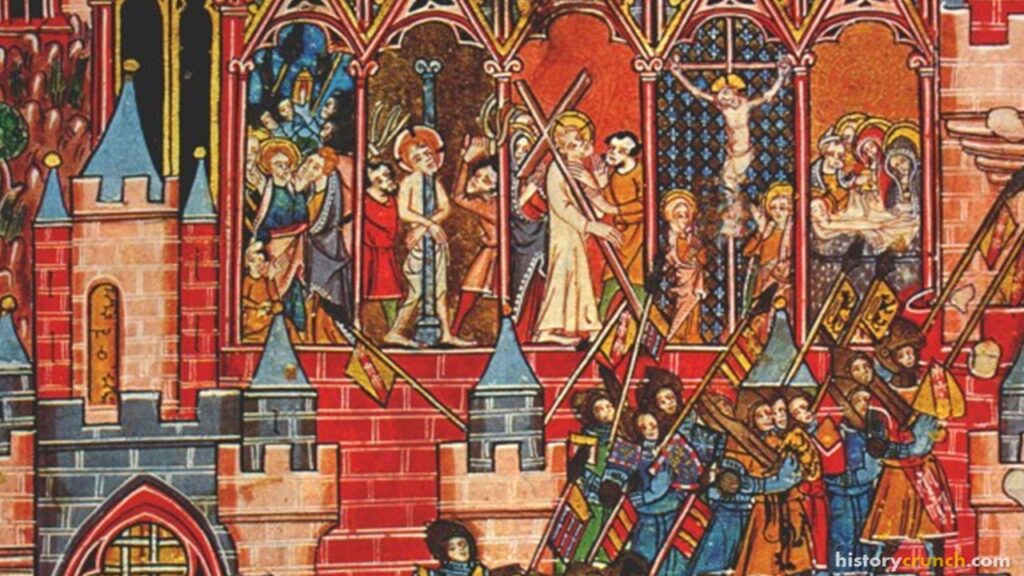
'Siege of Jerusalem during the First Crusade' by an Unknown Artist. (14th Century)

Table of Contents

Why was Jerusalem so important in the Crusades? Historians have been faced with this question for centuries and have developed several reasons for Jerusalem's importance. This article details the history and significance of Jerusalem in the Crusades.

Jerusalem was the main site of much of the conflict and interest of the Crusades. In fact, the city of Jerusalem was important, as a Holy site, by Christians, Muslims, and Jews for its deep religious significance. It was captured by the Crusaders in 1099 CE during the First Crusade, leading to the establishment of the Kingdom of Jerusalem. Over the years, the city changed hands multiple times, during the nine main Crusades.

WHAT WERE THE CRUSADES?

The Crusades are one of the most significant events in the history of Europe and the Middle East.  They were a series of religious wars carried out by Christian crusaders from Europe during the timeframe of the Middle Ages.  Beginning in 1095 CE, the crusades saw European knights and noblemen travel to the Middle East in an attempt to capture the Holy Land away from Muslim people that had controlled the region for the previous centuries.  The term crusade means ‘cross’.  Therefore, the Europeans that became crusaders viewed themselves as ‘taking up the cross’.  In fact, many of the crusaders wore crosses on their clothing and armor as they made their pilgrimage to the Holy Land in order to conquer Jerusalem.
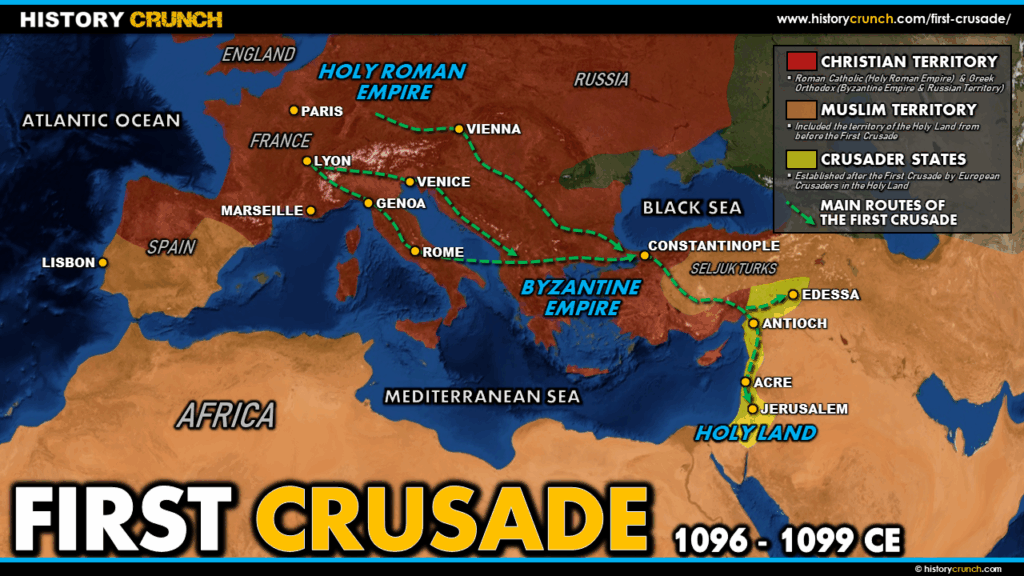
First Crusade Map
First Crusade Map created by History Crunch

JERUSALEM IN THE CRUSADES

The city of Jerusalem was the heart of the fighting of the crusades.  The city was centrally located in the Holy Land between the Mediterranean Sea and the Dead Sea.  While the history of the city itself goes back much further, it was a significant site in the crusades because of the importance it holds in the three main religions of the region: Christianity, Islam and Judaism.  For Christians, Jerusalem was the site of Jesus Christ’s crucifixion and resurrection.  As such, the city was vitally important to their understanding of the teachings and history of Jesus.  For Muslims, the city was the land guaranteed by Abraham and the place where the prophet Muhammed ascended into heaven to meet Allah (God).  For Jewish people Jerusalem was important because it was the land guaranteed to them by Abraham.  All three religions had (and still have) important religious sites in the city including temples, churches, mosques and synagogues.  As a result, all three religions wanted access to the city which led to clashes and disagreements over time.
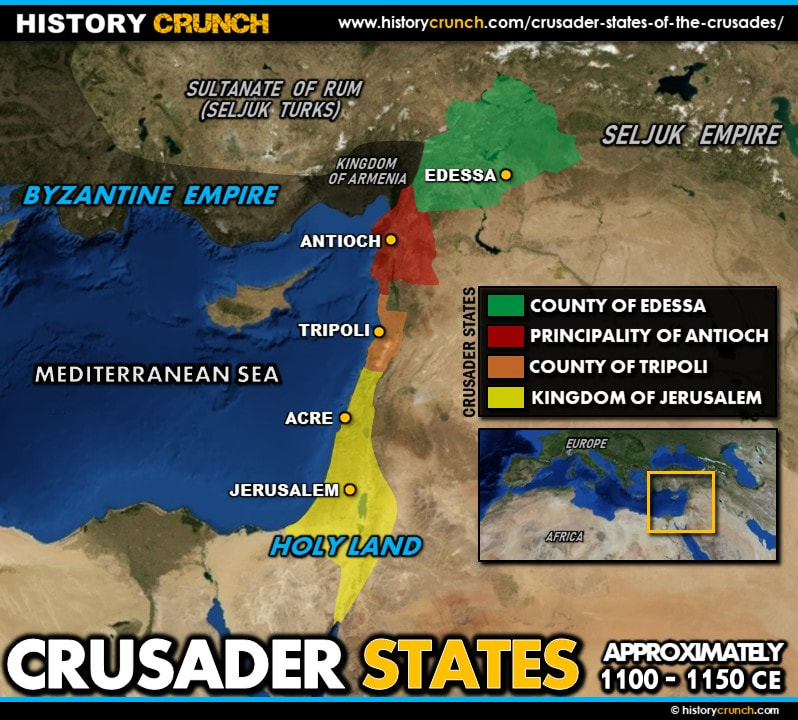

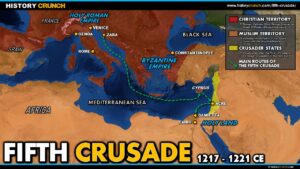
Crusader States Map
Crusader States Map created by History Crunch
Facebook
X
Reddit
Pinterest
LinkedIn

We strive to produce educational content that is accurate, engaging and appropriate for all learners. If you notice any issues with our content, please contact us and let us know!

AUTHOR INFORMATION
Picture of Elias Beck

Elias Beck

I'm a passionate history and geography teacher with over 15 years of experience working with students in the middle and high school years. I have an Education Degree with a focus in World History. I have been writing articles for History Crunch since 2015 and love the challenge of creating historical content for young learners!
Isabella I of Castile
Middle Ages

Isabella I of Castile: A Detailed Summary

Isabella of Castile, known as Isabella the Catholic, was one of the most important rulers of the Middle Ages who completed the Reconquista, established the Spanish Inquisition and funded the voyages of Christopher Columbus. This article details the life and significance of Isabella of Castile.

Holy Roman Empire in the Middle Ages
Middle Ages

Holy Roman Empire in the Middle Ages: A Detailed Summary

The Holy Roman Empire in the Middle Ages was one of the most important political entities of the medieval period, playing a central role in the religious and political history of Europe. This article details the history and significance of the Holy Roman Empire in the Middle Ages.

Great Schism
Middle Ages

Great Schism: A Detailed Summary

The Great Schism of 1054 CE was the formal split between the Roman Catholic Church and the Eastern Orthodox Church, one of the most significant events in the history of Christianity and the Middle Ages. This article details the history and significance of the Great Schism.

Henry V.
Middle Ages

Henry V: A Detailed Biography

Henry V was one of the most celebrated kings in English history, famous for his victory at the Battle of Agincourt in 1415. In just nine years on the throne he revived England’s claim to France and nearly united the two crowns before his sudden death in 1422.

Social Classes in the Middle Ages
Middle Ages

Social Classes in the Middle Ages: A Detailed Summary

Social classes in the Middle Ages were organized around the three estates of the clergy, nobility and peasants, which shaped nearly every aspect of life in medieval European society. This article details the history and significance of social classes in the Middle Ages.

Eleanor of Aquitaine.
Middle Ages

Eleanor of Aquitaine: A Detailed Biography

Eleanor of Aquitaine was one of the most powerful women of the Middle Ages, ruling her own lands while serving as queen of both France and England. She led armies, shaped royal politics, and became the mother of two English kings. Her long and dramatic life left a lasting mark on Europe.