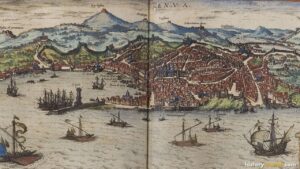
The Renaissance is an important event in European history that stretched from the 14th century to the 17th century. It was preceded by the Middle Ages in Europe and eventually led to the major events of the Age of Enlightenment. In historical terms the Renaissance is important because it led to a major shift in European thought and worldview. This shift eventually led to the developments of the Enlightenment and set the stage for the modern western worldview. While the Renaissance is considered to have begun in the city-states of the Italian peninsula in the 14th century, the main ideas of the movement eventually spread to all of Europe by the 16th century. The most significant changes that emerged as a result of the Renaissance can be seen in European architecture, art, literature, mathematics, music, philosophy, politics, religion and science. Intellectual thought in these fields flourished during the timeframe of the Renaissance and led to many people questioning long held beliefs about each. This created an environment of discovery and curiosity in which new ideas were constantly being introduced and tested. Historians have been studying how, where and when the ideas of the Renaissance spread from its start in Italy to the rest of Europe.
 FactsthatCrunch
The Age of Enlightenment grew out of Renaissance thought through a chain of connected shifts in how Europeans approached knowledge, reason, and human potential.
Why Was the Renaissance Slow to Spread at First?
As stated above, the Renaissance first began on the Italian peninsulaA landmass surrounded by water on three sides, which limited overland travel out of Italy. in the 14th century but later spread to the rest of Europe. The Renaissance first began in Italy due to a number of identified causes, such as: increased interaction between different cultures, the rediscovery of ancient Greek and Roman texts, the emergence of humanismA Renaissance philosophy that emphasized the value, potential, and everyday experiences of real human beings., different artistic and technological innovations, and the impacts of conflict and death. However, initially the new ideas and perspectives of the Italian Renaissance were slow to spread out of Italy for several reasons, including: the rigidity of feudalismA system in which kings granted land to nobles in return for loyalty and military service, and most people were born into fixed social classes., conflicts and war, geography, and the influence of the Roman Catholic Church in Europe.
Feudalism was a form of government common during medieval Europe that involved society being structured in a very rigid and hierarchical way. It was popular in European society from the 9th century until the 15th century and was the form of government in which the country was dominated by an absolute monarch, in which all power was held within a single king. The monarch would rule over the country while the rest of the people were bound by a hierarchical system in which people were placed into classes in which they were born. For example, under feudalism, most people were peasants who worked tirelessly on the farms of local lords. Feudalism was much more present in European society outside of Italy which caused the ideas of the Renaissance to spread slowly. This was because Feudal society was not as open to new ideas as the city-states that existed in Italy at the time. Powerful nobles and monarchs used the feudal system to keep out any new ideas that had the potential to threaten their wealth and authority in society.
The second reason that the Renaissance spread out of Italy slowly at first was the continuous conflicts and wars that occurred in the late Middle Ages and early Renaissance. For example, the Hundred Years’ War was a series of conflicts in Northern Europe between the kingdoms of France and England that occurred from 1337 to 1453. The war was fought over the control of territory in France and ultimately involved multiple kingdoms in western and northern Europe going to war. As a result, these regions were not as open to change and new ideas because they were preoccupied with constant conflict. As well, the Hundred Years’ War would have made travel between the different kingdoms in western Europe difficult and thus slowed the spread of scholars and artists who had the potential to spread the ideas of the Renaissance.
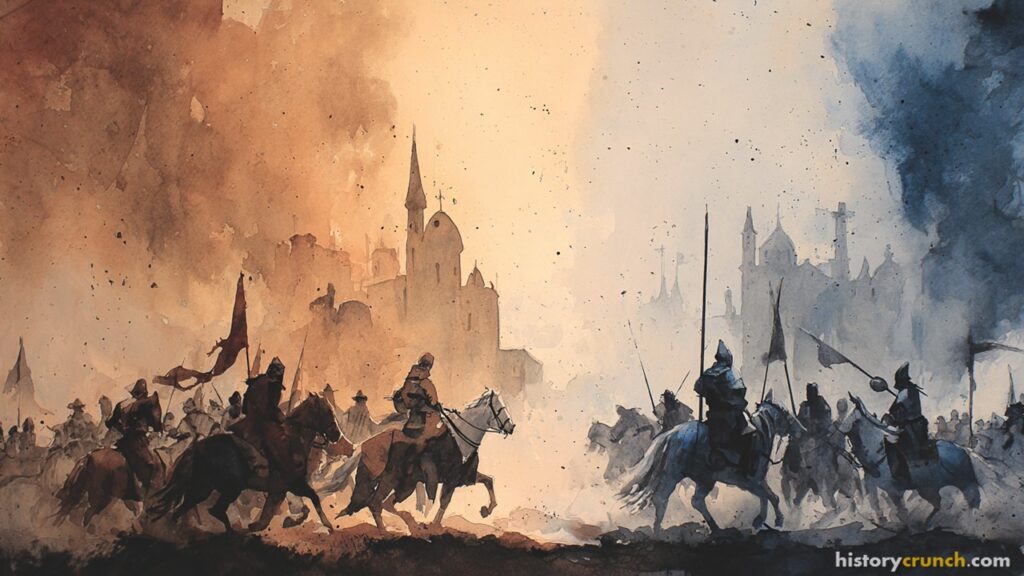
The third reason for the slow movement of Renaissance ideas out of Italy was the geography of northern Italy. Travel in the Late Middle Ages and early Renaissance time periods was difficult and treacherous but the isolated nature of the Italian peninsula made it particularly difficult for people and ideas to travel north to the rest of Europe. First, Italy is a peninsula meaning it is surrounded by the waters of the Mediterranean Sea on three sides. This obviously made travel over land impossible and limited the vast majority of people from reaching new areas.

Also, northern Italy contains the Alps which is one of the largest mountain ranges in all of Europe. This also limited ground travel as movement through the Alps at the time was a difficult task. As such, the natural geography of Italy limited the ability of Renaissance ideas to spread to the rest of Europe.
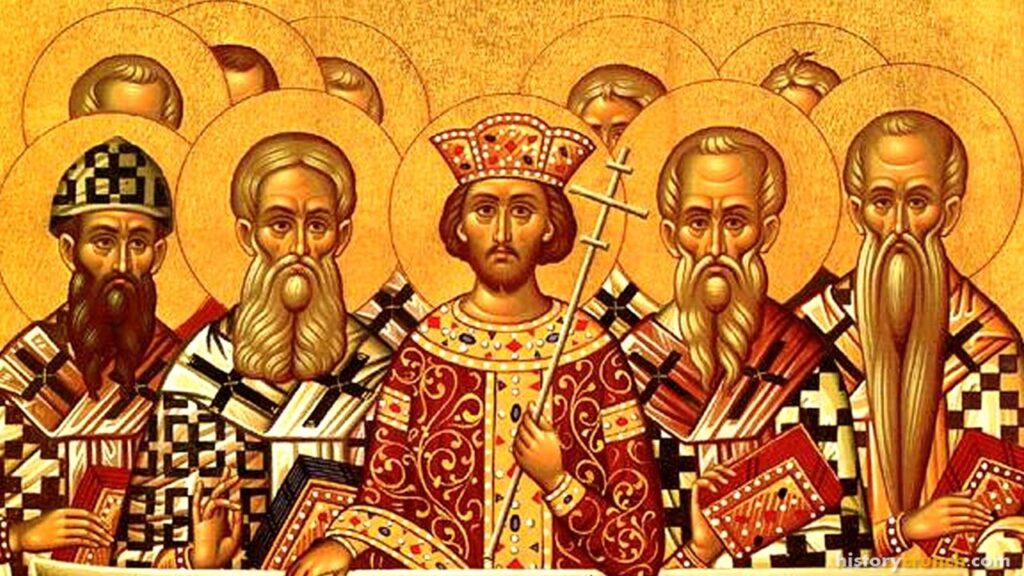
The final reason for the slow spread of the Renaissance from Italy to the other regions of Europe is the influence of the Roman Catholic Church. Catholicism and the authority of the Catholic Church played a major role in the lives of people throughout Europe. In fact, from 1309 to 1376 the Roman Catholic Church was located in Avignon, France instead of in Rome. This situation increased the influence of the church in mainland Europe. This is important because the Catholic Church was not necessarily open to the new ideas and changing worldview of the Renaissance in Italy and instead wanted to maintain the situation in Europe that had existed throughout the earlier Middle Ages. As a result, this caused many people in places such as western Europe to be less open to the ideals of the Renaissance.
Why Did the Renaissance Eventually Spread Out of Italy?
While the Renaissance was slow to spread at first, for the reasons mentioned above, it eventually did spread to the other regions of Europe. As such, historians have identified several reasons for why and how the Renaissance did reach the other kingdoms of the continent, including: a period of peace, innovations in art and publishing, and migrations of people.
First, the Renaissance ideas spread to Europe more quickly once several of the major conflicts had ended. For example, the Hundred Years’ War was a series of conflicts in Northern Europe between the kingdoms of France and England that occurred from 1337 to 1453. As stated previously, the war was fought over the control of territory in France and ultimately involved multiple kingdoms in western and northern Europe going to war. As a result, these regions were not as open to change and new ideas at the time because they were preoccupied with constant conflict. This slowed or prevented the spread of the Renaissance ideas in the earlier years of the Renaissance. However, when the Hundred Years’ War ended in the mid-15th century it allowed the ideas of the Italian Renaissance from the 14th century to extend north and west to other parts of Europe. As such, Europe experienced a relative period of peace in the 15th century after earlier centuries of war which allowed for more interaction, trade and travel which helped the new ideas to spread.
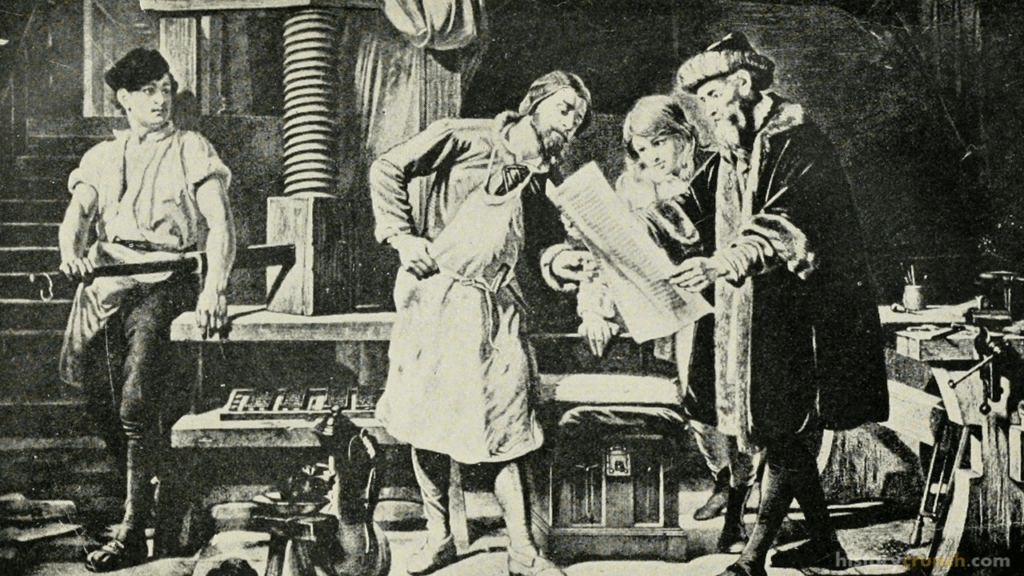
The second reason for why the spread of the Renaissance eventually sped up was due to innovations in publishing and art. In terms of publishing, the printing press was one of the most significant innovations in all of world history. German blacksmith, goldsmith and printer Johannes Gutenberg developed the first printing press in the mid-1400s and it quickly had a profound impact on the events of the Renaissance (as well as later events such as the Enlightenment). Prior to the printing press, books and other literature were created through a varied assortment of methods (woodblock press, etc.) which were all labor intensive and slow. Gutenberg’s invention was the development of a hand mold that allowed for precise movable typeIndividual letter pieces that can be arranged and rearranged quickly to print text, making book production far faster and cheaper.. This meant that he perfected the process of making movable type pieces for easily and quickly constructing type-font documents. This sped up the printing process and made it extremely affordable, which allowed for an explosion in the publishing and printing of books. For example, the Gutenberg Bible was the first book to be mass produced on the Gutenberg printing press. The invention and use of the printing press in Europe was important for the Renaissance because it allowed new ideas and worldviews to spread across the continent more easily. At its core, the Renaissance was about new ideas (such as humanism) overthrowing old views and customs (such as religious beliefs and practises and feudal traditions). Therefore, the invention of the printing press allowed these new ideas to spread and further enhance the overall Renaissance.
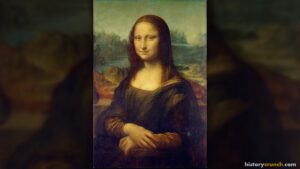
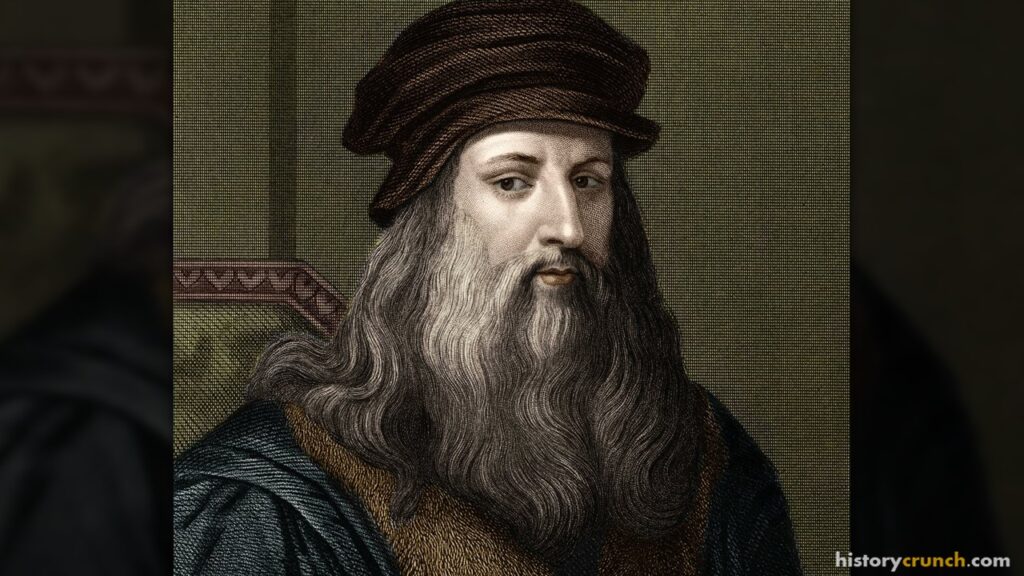
The next major innovation that caused the Renaissance to spread out of Italy was related to the new art being developed by famous Renaissance artists. Today, the Renaissance is perhaps best known for the famous artists and their famous works of art. In the Renaissance, European artists were inspired to create paintings and sculptures that focused on the realities of everyday life and real people. This was likely due to the influence of humanism that helped spark the Renaissance. Also, just as scholars such as Petrarch were inspired by earlier Greek and Roman works, so too were Renaissance artists. This meant realism and the human form were important and central to the new styles of art. Furthermore, Renaissance artists such as Leonardo da Vinci and Michelangelo pioneered new skills and techniques, such as linear perspectiveAn artistic technique that creates the illusion of depth and distance on a flat surface. and sfumatoA painting technique pioneered by Renaissance artists that blends edges softly to portray people and the world in realistic ways., that allowed them to portray people and the world in new ways. Because Italian artists were at the forefront of these new styles and techniques in art, they inspired others throughout Europe to use the same techniques. As a result, this caused the ideals of the Renaissance in Italy, including humanism, to spread throughout Europe. Therefore, these innovations in art helped spread the Renaissance ideas as more artists across Europe adopted the new techniques and methods.
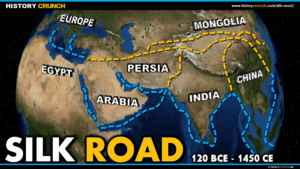
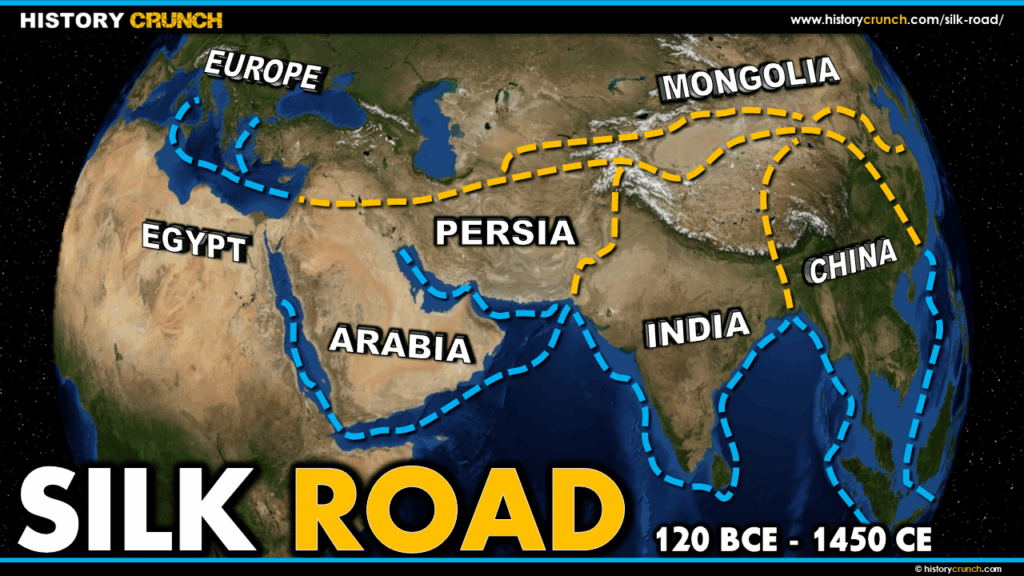
The next reason for the spread of the Renaissance out of Italy and into the rest of Europe was the migration of people in the years before and during the Renaissance. While travel in the time of the Middle Ages and Renaissance was difficult and not often carried out by most people it was still necessary. For example, trade was vitally important to the economy in Europe and many Europeans enjoyed goods from far-away places. The largest and most well known trade network of the time was the Silk Road. It is perhaps one of the earliest and largest trade networks in human history, and played a vital role to many different civilizations throughout Eurasia from approximately 130 BCE to 1453 CE. At its height, the Silk Road stretched from China in the east to the Mediterranean area including Italy in the west, which was a span of over 4000 miles. Along the way it travelled through many different regions including: India, Persia, the Middle East, Africa and Eastern Europe. There were many different civilizations that participated in the Silk Road over the centuries of its existence. Obviously, Chinese and Mongol traders played an important role in the Silk Road, as many of their goods were highly desired in faraway markets, such as Europe. Therefore, European traders often travelled to areas in the Middle East to secure rare and desirable products from the Far East. While the Silk Road is generally remembered for the food and goods that were traded along the route, it is important to understand that the Silk Road also involved the exchange of ideas. Furthermore, religious and philosophical beliefs from the time period spread easily along the routes and had a profound impact on later events such as the Renaissance. This influx of new ideas inspired people in Europe including artists, writers, philosophers and more.
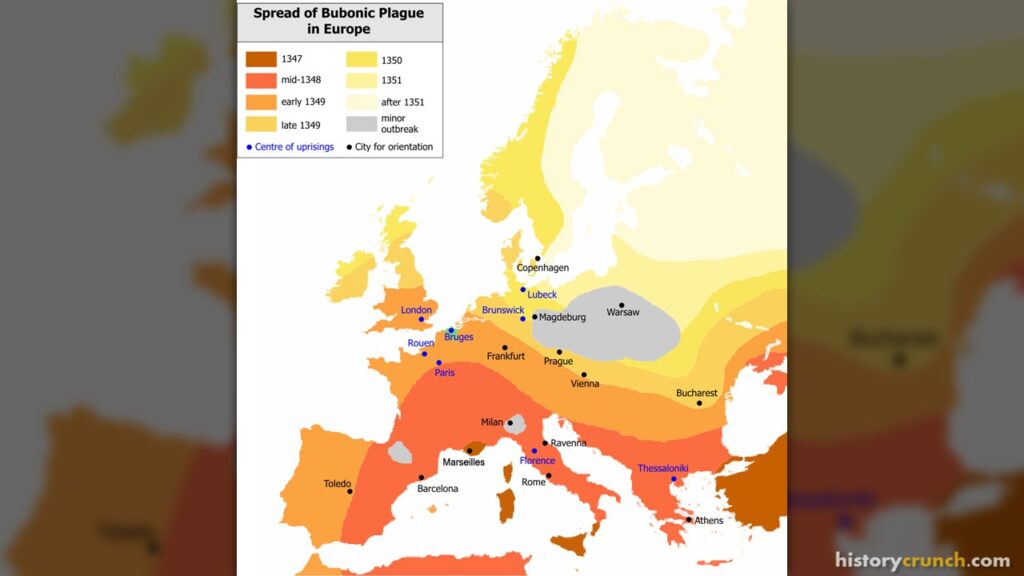
While people migrated throughout Europe for trade, they also migrated to find work and to avoid the effects of the spread of the bubonic plague. Major city centers became much more important in the 14th century and caused some people to migrate from the countryside to city centers in search of work. The best example of this is in the Italian city-states of Florence, Genoa and Venice. Further to this idea, people also fled the cities through Europe during the timeframe of the Black Death to avoid the effects of the bubonic plague. The Black Death is one of the most important events in Western history and is often viewed as a cause of the Renaissance. The Black Death occurred during the 14th century and ravaged human populations throughout Asia and Europe as it spread along trade routes and through trading ports. The death toll of the Black Death is a debated topic and different historians have offered different views on the issue. Regardless, the reported death tolls are massive with some suggesting that it resulted in the deaths of between 75 and 200 million people in Europe and Asia. These high numbers suggest that between 30% and 60% of people died due to the infectious disease. Some regions suffered more than others, but in general it is widely accepted that approximately half of Europeans died as a result of the disease. For example, it has been recorded that both Paris, France and London, England saw half of their populations succumb to the pandemic. As a result of the effects of the Black Death many people migrated out of areas that were heavily impacted and suffering. This caused people to travel through Europe and led to the spread of many of the new ideas of the Renaissance reaching new communities. Therefore, the Black Death helped spread the Renaissance ideals out of Italy and into the rest of Europe.
 FactsthatCrunch
Explore Renaissance · 1300 – 1600 CE
Keep exploring Renaissance with these History Crunch resources.
Key Vocabulary
Feudalism
Humanism
Movable type
Linear perspective
Sfumato
Bubonic plague
Peninsula
Frequently Asked Questions
How did the ideas of the Renaissance spread across Europe?
Renaissance ideas spread through a period of peace, new inventions, and the movement of people. Once wars like the Hundred Years’ War ended, travel and trade became easier. The printing press then allowed books and new ideas to reach a wide audience quickly. Artists and scholars also carried these ideas north as they traveled.
Why was the Renaissance slow to spread out of Italy at first?
The Renaissance spread slowly at first because of feudalism, war, geography, and the Roman Catholic Church. Feudal nobles and monarchs kept out new ideas to protect their power. Constant wars made travel dangerous, and Italy’s mountains and seas blocked easy movement. The Catholic Church also resisted changes to the old worldview.
How did the printing press help spread the Renaissance?
The printing press let books and ideas spread across Europe faster and cheaper than ever before. Johannes Gutenberg built the first printing press in the mid-1400s using movable type. Before this, books were copied slowly by hand, which made them rare and costly. His invention caused an explosion in printing that carried new ideas like humanism far and wide.
How did the Black Death help spread Renaissance ideas?
The Black Death pushed many people to migrate, which carried Renaissance ideas into new communities. The disease struck Europe in the 14th century and killed about half of its population. People fled regions hit hardest by the plague in search of safety and work. This movement helped new ideas reach places beyond Italy.
Where did the Renaissance begin, and when did it reach the rest of Europe?
The Renaissance began in the city-states of Italy in the 14th century. Its main ideas later spread to all of Europe by the 16th century. The movement grew out of increased contact between cultures and the rediscovery of ancient Greek and Roman texts. It changed European art, science, religion, and thought in lasting ways.
How did new Renaissance art help spread its ideas?
Italian artists developed new styles that inspired other artists across Europe to copy their methods. Painters like Leonardo da Vinci and Michelangelo pioneered skills such as linear perspective and sfumato. Their focus on realism and the human form reflected the ideas of humanism. As more European artists adopted these techniques, Renaissance values spread with them.
Cite This Article
To cite this article as a source, use one of the formats below.
MLA: Beck, Elias. “How Did the Ideas of the Renaissance Spread?: A Detailed Summary.” HistoryCrunch, 20 October 2026, https://historycrunch.com/how-did-the-ideas-of-the-renaissance-spread/.
APA: Beck, E. (2026). How Did the Ideas of the Renaissance Spread?: A Detailed Summary. HistoryCrunch. https://historycrunch.com/how-did-the-ideas-of-the-renaissance-spread/
Chicago: Beck, Elias. “How Did the Ideas of the Renaissance Spread?: A Detailed Summary.” HistoryCrunch. October 20, 2026. https://historycrunch.com/how-did-the-ideas-of-the-renaissance-spread/
Sources
- Jerry Brotton, The Renaissance: A Very Short Introduction.
- John Hale, The Civilization of Europe in the Renaissance.
- Peter Burke, The Italian Renaissance: Culture and Society in Italy.