Daily life for people living in the Aztec Empire varied depending on the social class that they belonged to. For instance, the upper class of people were referred to as pipiltinThe upper class of Aztec society who lived in larger homes, held government and military power, and could afford luxury items.. They generally lived in larger homes, were able to afford luxury items and slaves and held more power in the government, religion and military. The middle class people referred to as macehualtinThe Aztec middle class who worked as farmers, merchants, artisans, and warriors and lived in moderate homes. had much more average lives. They worked as farmers, merchants, artisans and warriors. They lived in more moderate homes and could not afford as elaborate clothes or art. Regardless, there are several key aspects to consider about the daily life of most Aztec people, such as: clothing, education, entertainment, food, homes, religion and work.
 FactsthatCrunch
 Social Classes of Aztec Society
Who Are the Aztec?
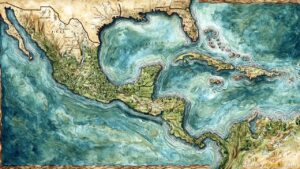
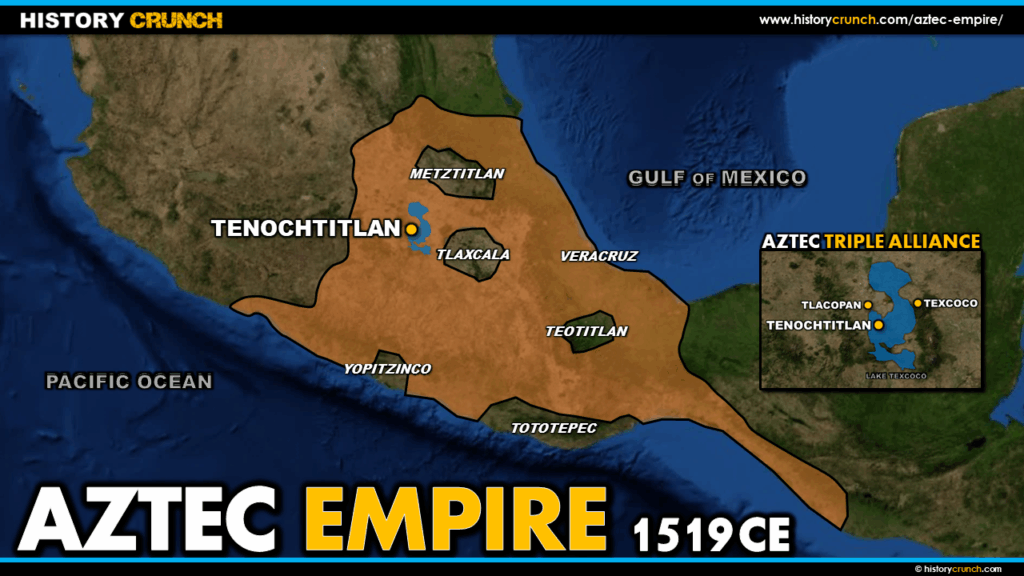
The Aztec Empire was a civilization in central Mexico that thrived in the time before the arrival of European explorers during the Age of Exploration. Throughout its history as a civilization the Aztec Empire expanded across much of central Mexico and other surrounding areas, to become the most dominant and powerful people in the region. Tenochtitlan, the main Aztec city (or altepetl), was the center of this vast empire.
 FactsthatCrunch
Tenochtitlan was founded on a small island in Lake Texcoco, and its location in the middle of a lake gave the Aztec a natural fortress that rivals could not easily attack.
The lake acted as a barrier on all sides, making it extremely difficult for enemies to storm the city with a large army.
The Aztec built wide causeways connecting the island to the mainland, so they could control who entered and left, cutting access during a threat.
The city sat at the heart of the Triple Alliance, the political partnership between Tenochtitlan, Texcoco, and Tlacopan that drove Aztec military expansion across central Mexico.
Because the capital was so well protected and so strategically placed, tribute from conquered peoples flowed into Tenochtitlan, concentrating wealth and power there and reinforcing its role as the dominant center of the empire.
Aztec Clothing and Dress
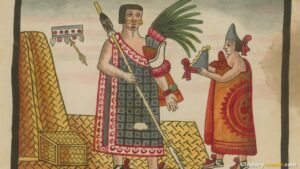
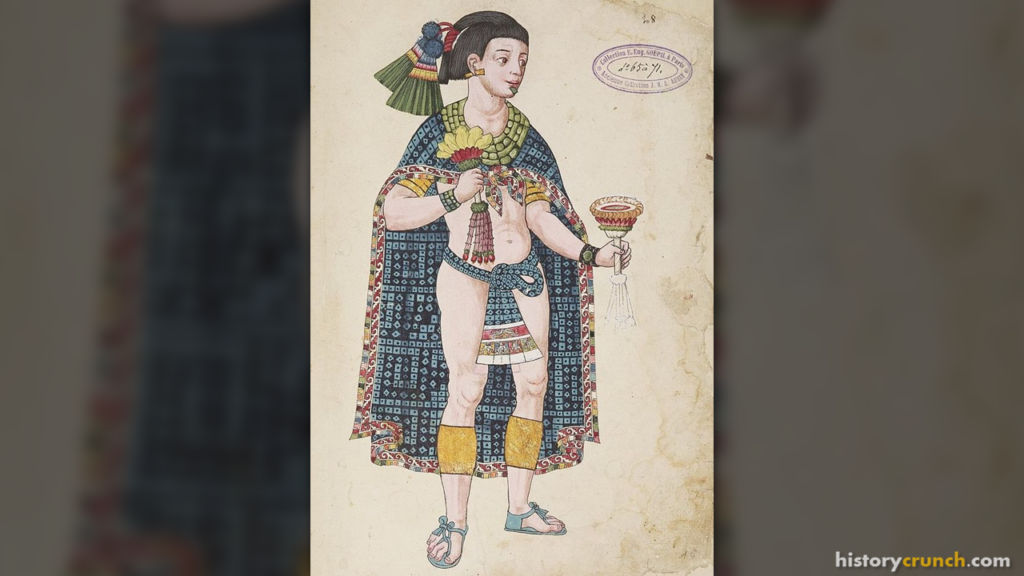
An important part of the Aztec daily life was the clothing that the people made and wore. First, Aztec society was divided between distinct classes, and the different classes wore different types of clothing. For example, the high priests, nobility and royalty would wear very ornate clothing while the lower classes would not. Second, the basic item in Aztec clothing for men was the ‘maxtlatlA loincloth that was the basic clothing item worn by Aztec men.’, which was a type of loincloth. Men would usually wear the maxtlatl with another garment that resembled a cloak called a ‘tilmahtliA cloak-like garment worn over the maxtlatl, styled differently to show which social class a person belonged to.’. The tilmahtli were stylized differently to distinguish between the different classes in Aztec society. Third, Aztec women were known to wear a type of blouse called a ‘huīpīlli’ along with a long skirt called ‘cuēitl’. For footwear, the Aztec nobility wore a sandal which they called ‘cactli’. Commoners in Aztec society were not allowed to wear these as they were viewed as a sign of status. As well, all Aztec people were required to be barefoot when they entered a temple or when they were in the presence of the emperor (huey tlatoani).
Jewelry and accessories were also popular in Aztec society. For instance, both men and women were known to wear necklaces and bracelets made of gold and different types of stones. In general, jewelry was a status symbol for the Aztec, with the upper classes wearing more and the lower classes wearing less. Also prominent in Aztec jewelry and dress were feathers and shells. In fact, the blue-green feathers from the quetzal bird were highly prized and worn exclusively on the headdresses of the Aztec royalty.
 FactsthatCrunch
Aztec women wore a loose blouse called a huipilli with a long wrapped skirt called a cueitl, while men wore a loincloth and a cloak called a tilmahtli.
The decoration on clothing showed a person's social class. Only nobles could wear sandals, called cactli, and everyone had to go barefoot inside a temple or in front of the emperor.
Aztec Education
Education was an important part of daily life for the young people of the Aztec Empire. All children attended schools where they were taught the traditions and history of their people. In fact, education was free for all people regardless of their social class. At first, Aztec children were taught by their parents, until they were in their teens when they attended schools.
As they grew up, Aztec boys received an education that ultimately prepared them for battle and service in the Aztec military. For instance, boys between the ages of ten and twenty were required to attend school. Boys of the lower classes attended schools called TelpochcalliSchools attended by lower-class Aztec boys that focused on preparing them for warfare and weapons.. While the boys from the nobility attended schools called CalmecacSchools for noble Aztec boys that prepared them to be leaders in the military, priesthood, and government.. The Telpochcalli schools focused on preparing the boys for warfare and teaching the boys how to use different weapons, while the Calmecac schools prepared the noble boys to be leaders in the military, priesthood and government. Aztec religion was also a central component of these schools, as children were taught the different gods and traditions related to each. For instance, they were instructed to recite the correct songs and poems related to each festival and practiced different dances for different religious ceremonies. Children of the pipiltin (nobility) were also instructed in how to play the famous ballgame that was common throughout much of Mesoamerica. At the age of fifteen, the boys began training with weaponry and would often accompany more experienced warriors into battle, but they did not participate in the fighting. As well, it was during this time that the boys would usually seek the guidance from an experienced warrior to act as a mentor. Finally, when the boys were approximately twenty years old they joined the military ranks and became an Aztec warrior.
Girls also attended school in the Aztec Empire but not the same ones as boys. Instead of focusing on warfare and weapons, girls were instructed in housekeeping. With that said, girls would also be taught the religious traditions and history of the Aztec Empire. For, instance they were instructed to learn the songs and poems of the different religious festivals and ceremonies and learned to dance.
These schools were important for developing and fostering the Aztec culture among its people.
 FactsthatCrunch
Lower-class and noble Aztec boys attended the same schools for their education.
Aztec Entertainment (Mesoamerican Ballgame)
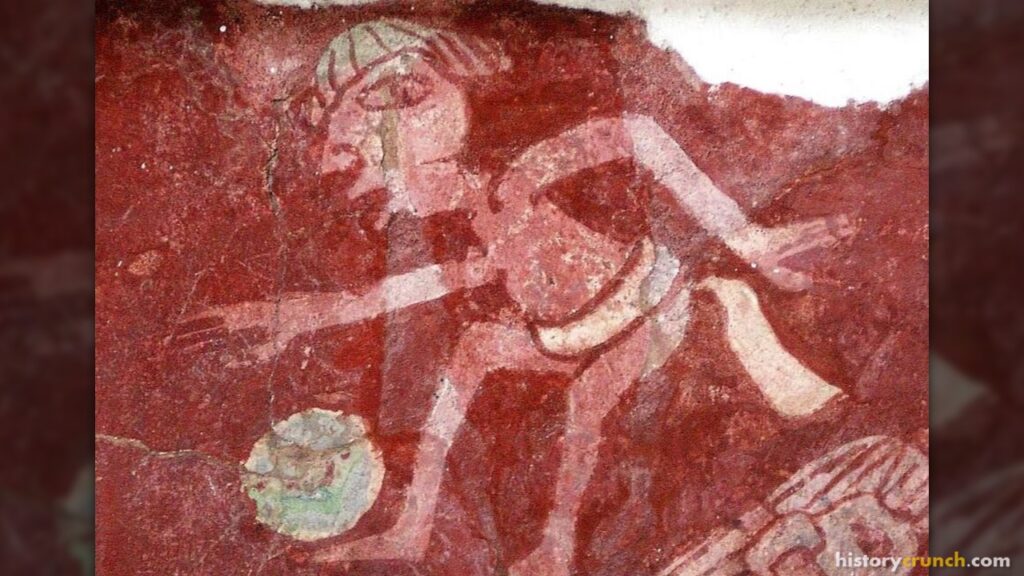
Despite being concerned with regular military expansion throughout central Mexico, the Aztec people were also known to participate in different games and be entertained. One of the most important games in Aztec history was the ballgame referred to as ōllamalitzli. The term ‘ōllamalitzli’ translates to ‘rubber to play ball’. In fact, the ballgame was common throughout much of Mesoamerica and was played by many different groups of people, including: Maya, Teotihuacan, and the Aztec. It is believed that the game originated sometimes around 1400 BCE in modern-day Mexico, meaning it had a long history in the region.
Historians do not know the exact rules of the game, but there are some basic assumptions of how it was played. For example, two teams would face off against each other in a ‘ball court’ which was essentially a large rectangular space. Furthermore, in Tenochtitlan (the Aztec capital), the largest ball court was called ‘teotlachco’ meaning ‘holy ball court’. The ball court was, of course, the location of the game but it also served purposes for other religious festivals and ceremonies.
The game was played with a rubber ball that was approximately 10 pounds (4.5 kilograms) in weight. It is believed that the point of the game was for the players to hit the ball back and forth to each other by using their hips, forearms or thighs. The purpose was to keep the ball in play and keep the game going.
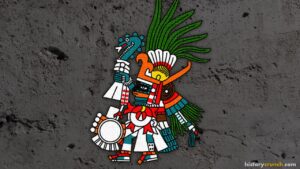
The ballgame had important religious and cultural significance for the Aztec people. For instance, it was a major event in Aztec society that brought many people together in a common space. As well, historians believe that the Aztec people may have viewed the ballgame as a metaphor for the conflict between the sun and the moon. As such, it is believed that the Aztec associated the game closely with the god Huitzilopochtli. For the Aztec he was the representation of the sun. He was also considered to be the national god of the ‘Mexica’ which is the term the Aztec used to refer to themselves. As well, he was the patron god of the Aztec capital Tenochtitlan. In fact, there was a temple built in his and Tlaloc’s honor in the center of the city called Templo Mayor, which some refer to as the Great Temple of Tenochtitlan. In Aztec tradition Huitzilopochtli was viewed as the sun, his sister the moon, and his brothers the stars. The constant movement of the sun, moon and stars was viewed by the Aztecs as an ongoing battle between Huitzilopochtli and his siblings. Thus, the Aztec believed that they needed to provide tribute to Huitzilopochtli in order to ensure the sun’s survival and ability to ‘fight’ each day.
Beyond its religious connections, the game was a form of entertainment for the Aztec people. This was especially true of the pipiltin (nobility), who were taught to play the game as children in the Calmecac schools.
How heavy was the rubber ball used in the Aztec ballgame ōllamalitzli?

Aztec Food and Farming
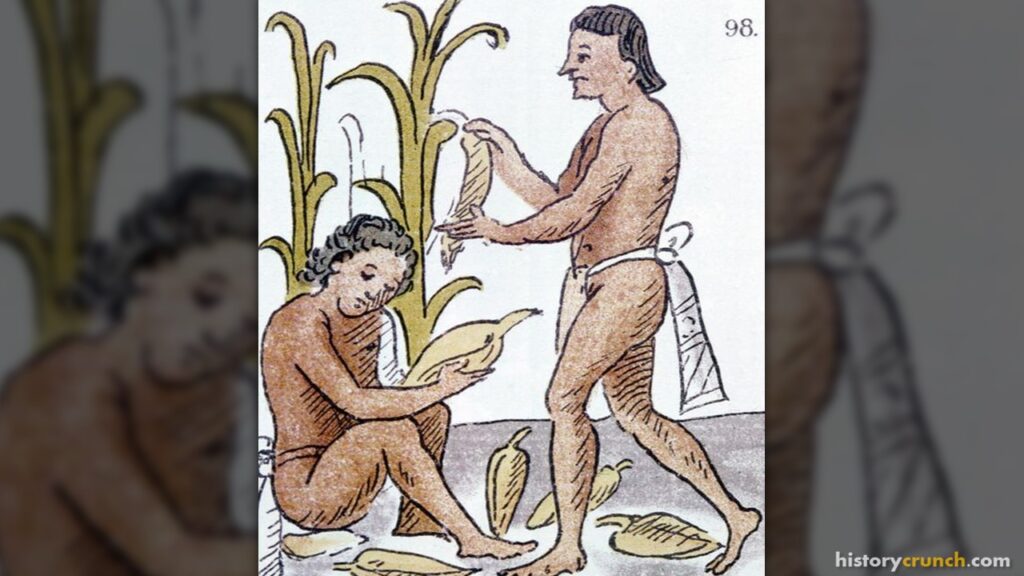
The Aztec had a diverse range of food items that made up their diet. With that said, because the events of the Columbian Exchange had not yet occurred, the Aztec were limited to locally grown foods. As such, since most domesticated animals originate from Eurasia, the Aztec diet was primarily based upon vegetables and fruits. For instance, likely the most common food item of the Aztec Empire was maize (corn). Maize is a cereal grain that was likely first grown by humans about 9,000 years ago in modern-day Mexico. As such, by the time of the Aztec Empire, maize had a long history of use in farming practices in Mexico. The Aztec would prepare the maize in several different ways, including grinding it down into a flour that could then be used to create a tortilla. Maize remains an important crop today and has spread across the world and is used in many different types of foods.
Besides maize, the Aztec also had other foods that were also important, such as beans, squash, tomatoes, peanuts, chilies, and chocolate. In general, the vegetables listed provided the Aztec people with much of their nutritional needs. However, the Aztec were also known to eat some animals, including: ducks, turkeys, dogs, fish, and other smaller animals.
 FactsthatCrunch
Before the Columbian Exchange, the Aztec diet depended heavily on plants because very few domesticated animals were available in central Mexico.
Aztec Religion
An important aspect of the Aztec Empire and history was their religious beliefs and practices. In general, the Aztecs shared many of their main religious beliefs and practices with other societies in the region. For example, some gods and religious practices were common throughout different Mesoamerican societies, including: Toltec and Teotihuacan. As such, when learning about Aztec religion it’s important to understand that much of it also applies to other civilizations throughout the history of the region.
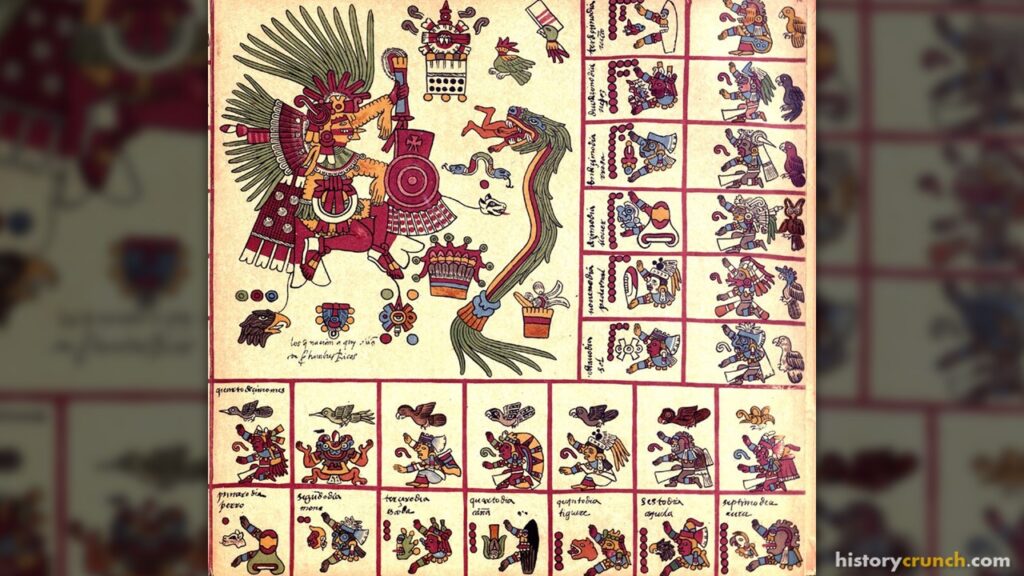
The concept of ‘god’ in Aztec society is referred to as ‘Teotl’ in Nahuatl, the language of the Aztec. The Aztecs, like other Mesoamerican societies, had a wide pantheon of gods. As such they were a polytheisticHaving many gods, each representing different important parts of the world. society, which means they had many gods and each god represented different important parts of the world for Aztec people.
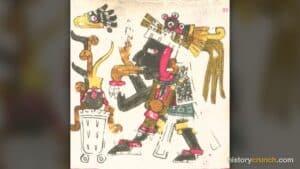
As stated above, the gods in the Aztec religion represented different aspects of life and the world for the Aztec people. The aspects that the gods represented included: culture of Aztec society and Mesoamerica, nature and the natural world, creation stories, fertility, food, death and the underworld, trade and excess or entertainment. Each god had different attributes and personality traits and was usually represented in distinct ways by the Aztec. Some could take human or animal form and were celebrated in festivals and rituals. There were many gods in the Aztec religion but some of the most prominent included: Huitzilopochtli, Quetzalcoatl, Tezcatlipoca, Mictlāntēcutli, and Tlaloc.
Aztec Work
There were several different forms of work in the Aztec Empire. In general, men were expected to do more laborious work while women were expected to work in the household and care for the family. For example, women were tasked with caring for young children, preparing meals and repairing clothing. Some women worked as artisans or craftspeople and sold their creations in the many different markets that were so important to the Aztec economy.
For their part, men worked in several different occupations, including: farmer, artisan, craftsman, merchant, warrior, priest or government official. For instance, commoners or middle class citizens in the Aztec Empire (who were referred to as macehualtin) mostly worked as farmers growing crops such as maize (corn), beans and squash. Some, who were skilled artists and creators, worked as artisans and sold their goods at market. The Aztec referred to skilled artisans as tolteca after the earlier Toltec civilization that the Aztec admired. The commoners were also required to work, at different times, to build and maintain the temples and public buildings in the Aztec city of Tenochtitlan.
Some macehualtin worked as merchants in the markets by selling and trading different types of goods. Furthermore, some men worked as long distance traders, which were referred to as pochtecaLong-distance traders who carried goods across vast distances of the Aztec Empire to different markets.. These men carried goods from vast distances across the Aztec Empire to different markets. As well, all Aztec men were expected to serve time in the Aztec military as a warrior. For instance, the boys trained from a very young age to use different types of Aztec weapons and the rules and conduct of battle. Men of the noble class (pipiltin) were trained from a very young age to serve as high priests or in top government positions. These people oversaw the many Aztec ceremonies and festivals, and carried out the functions of the Aztec government.
 FactsthatCrunch
Follow the chain from top to bottom. Tap any step to read what happened.
Key Vocabulary
Pipiltin
Macehualtin
Maxtlatl
Tilmahtli
Telpochcalli
Calmecac
Pochteca
Polytheistic
Frequently Asked Questions
What was daily life like for the Aztec people?
Daily life for the Aztec depended on the social class a person belonged to. The upper class, called pipiltin, lived in larger homes and held power in government, religion, and the military. The middle class, called macehualtin, worked as farmers, merchants, artisans, and warriors. Their homes and clothing were much simpler than those of the nobility.
What did the Aztec wear?
Aztec men wore a loincloth called a maxtlatl along with a cloak called a tilmahtli. Women wore a blouse called a huipilli and a long skirt called a cueitl. Clothing showed social class, since the nobility wore ornate styles and more jewelry. Only nobles could wear sandals called cactli, which marked their higher status.
How were Aztec children educated?
Aztec education was free for all children, no matter their social class. Boys from common families attended schools called Telpochcalli, which trained them for warfare. Noble boys attended the Calmecac, which prepared them to be leaders in the military, priesthood, and government. Girls attended separate schools and learned housekeeping along with religious songs and traditions.
What did the Aztec eat?
The Aztec diet was built mostly around maize, or corn, which they ground into flour for tortillas. They also ate beans, squash, tomatoes, chilies, and chocolate as major foods. Since few domesticated animals lived in the region, their meals relied heavily on vegetables and fruits. The Aztec did eat some animals, such as turkeys, ducks, dogs, and fish.
What was the Mesoamerican ballgame?
The ballgame was called ollamalitzli and was played across much of Mesoamerica. Two teams hit a heavy rubber ball back and forth using their hips, forearms, or thighs. The ball weighed about 10 pounds (4.5 kilograms) and was kept in play on a long rectangular court. The game had religious meaning and was often linked to the sun god Huitzilopochtli.
What kinds of work did the Aztec do?
Most common men worked as farmers growing maize, beans, and squash. Others worked as skilled artisans, merchants, or long distance traders known as pochteca. All Aztec men were also expected to serve in the military as warriors. Noble men trained to become high priests or to hold top positions in the government.
Cite This Article
To cite this article as a source, use one of the formats below.
MLA: Beck, Elias. “Aztec Daily Life: A Detailed Summary.” HistoryCrunch, 24 October 2026, https://historycrunch.com/aztec-daily-life/.
APA: Beck, E. (2026). Aztec Daily Life: A Detailed Summary. HistoryCrunch. https://historycrunch.com/aztec-daily-life/
Chicago: Beck, Elias. “Aztec Daily Life: A Detailed Summary.” HistoryCrunch. October 24, 2026. https://historycrunch.com/aztec-daily-life/
Sources
- The Met (Heilbrunn Timeline): Aztec art
- Matthew Restall, When Montezuma Met Cortés / Seven Myths of the Spanish Conquest.
- Michael E. Smith, The Aztecs.