Mictlantecuhtli (Aztec God): A Detailed Summary

Mictlantecuhtli
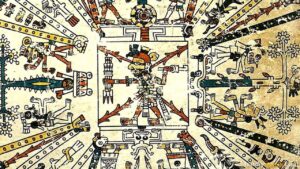
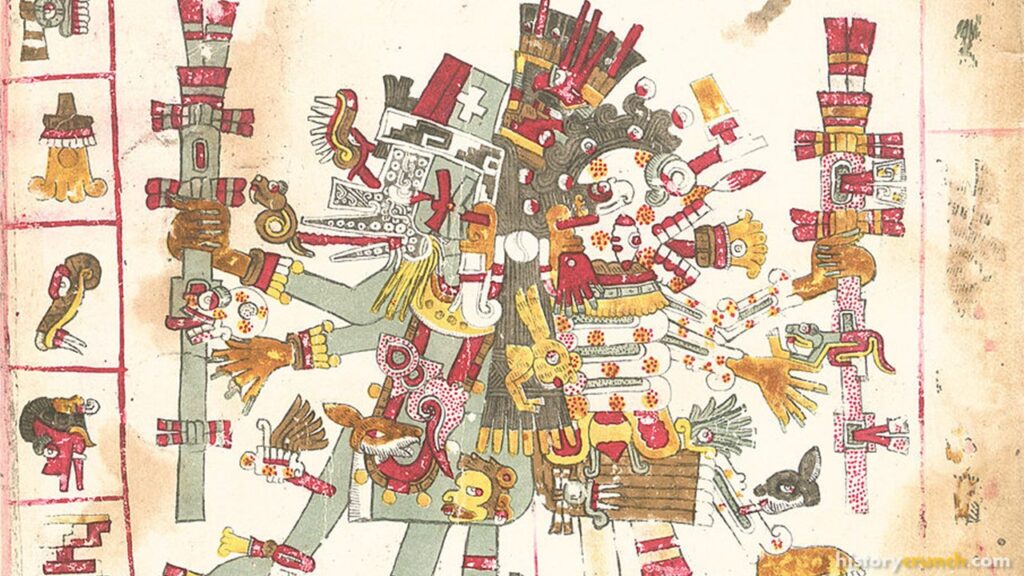
Mictlantecuhtli, the Aztec god, from the Codex Borgia.

Table of Contents

Mictlantecuhtli was one of the most significant gods in the Aztec religion. He was considered to be the god of the dead and king of the northernmost section of the underworld.

Mictlantecuhtli was the Aztec god of death and the ruler of the underworld, where the Aztec believed that souls journeyed to after death. He was usually shown as a skeletal figure, symbolizing his connection to the afterlife. Mictecacihuatl governed the fate of the dead and played a key role in Aztec beliefs about the afterlife and the cycle of life and death.

AZTEC GODS – OVERVIEW

The concept of ‘god’ in Aztec society is referred to as ‘Teotl’ in Nahuatl, the language of the Aztec.  The Aztecs, like other Mesoamerican societies, had a wide pantheon of gods.  The gods in the Aztec religion represented different aspects of life and the world for the Aztec people.  The aspects that the gods represented included: culture of Aztec society and Mesoamerica, nature and the natural world, creation stories, fertility, food, death and the underworld, trade and excess or entertainment.  Each god had different attributes and personality traits and were usually represented in distinct ways by the Aztec.  Some could take human or animal form and were celebrated in festivals and rituals.  There were many gods in the Aztec religion but some of the most prominent included: HuitzilopochtliQuetzalcoatlTezcatlipoca, Mictlāntēcuhtli, Tlaloc, and Chicomecōātl.
Aztec Culture
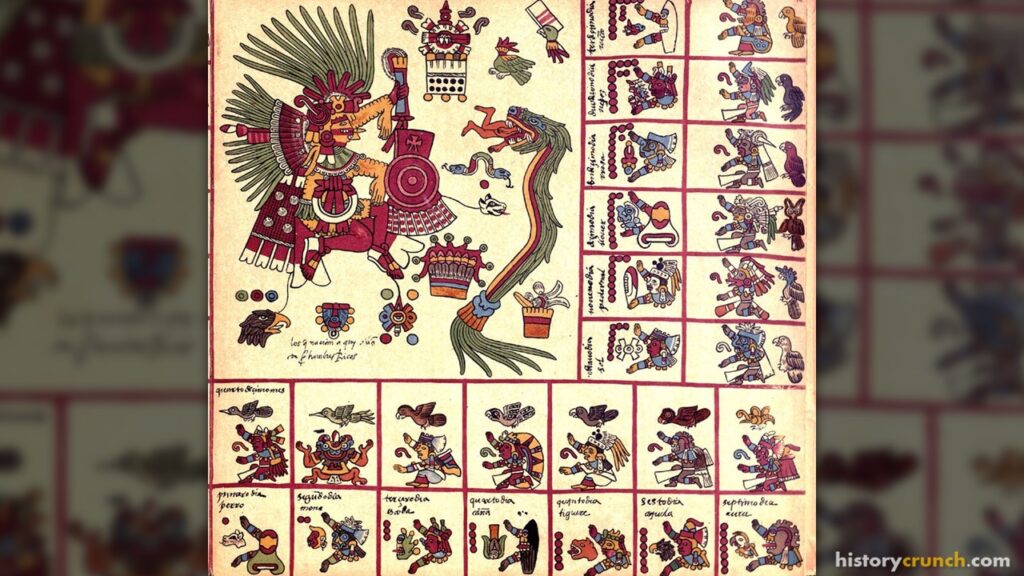
Gods and religious traditions were an important part of Aztec culture. This image from the Codex Borbonicus, shows the Aztec gods: Tezcatlipoca and Quetzalcoatl.

MICTLANTECUHTLI – SUMMARY

A significant god of the Aztec was Mictlāntēcuhtli.  His name means ‘Lord of Mictlan’ in Nahuatl, the language of the Aztec.  In Aztec religious beliefs, Mictlāntēcuhtli was considered to be the god of the dead and king of the northernmost section of the underworld.  He is often represented as a skeleton with eyeballs.  As well, he wore a headdress made of owl feathers and a necklace of human eyeballs.  It was common for gods in Aztec mythology to be represented by skeletons as its symbolized the connection between life and death for the Aztec people.  When an Aztec person died they were often buried with different objects which were said to help them on their journey to the underworld.  In fact, the objects were supposed to be given to Mictlāntēcuhtli upon their arrival to the underworld.

Mictlāntēcuhtli is also important to Aztec mythology in that he played an important role in the creation story of human beings.  For example, in the story, Quetzalcoatl is sent into the underworld to gather the bones of previous generations of gods.  As the story goes, Mictlāntēcuhtli tried to stop Quetzalcoatl from fleeing with the bones and caused him to trip and fall.  This led to Quetzalcoatl dropping the bones and they were broken into many small pieces.  Quetzalcoatl picked them up and returned to the land of the living where the bones were transformed into human beings.

Aztec Empire
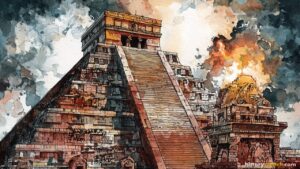
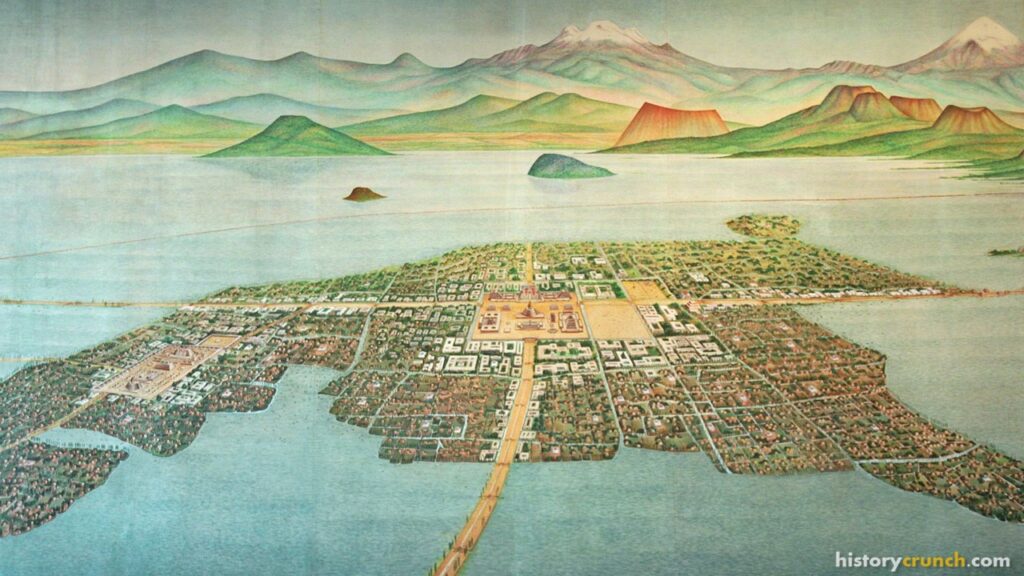
Artistic representation of the Aztec Empire and the capital city of Tenochtitlan.
Facebook
X
Reddit
Pinterest
LinkedIn

We strive to produce educational content that is accurate, engaging and appropriate for all learners. If you notice any issues with our content, please contact us and let us know!

AUTHOR INFORMATION
Picture of Elias Beck

Elias Beck

I'm a passionate history and geography teacher with over 15 years of experience working with students in the middle and high school years. I have an Education Degree with a focus in World History. I have been writing articles for History Crunch since 2015 and love the challenge of creating historical content for young learners!
Map of the Route of Hernan Cortes to Conquer the Aztec
Maps

Map of the Route of Hernan Cortes to Conquer the Aztec

This map of the route of Hernan Cortes to conquer the Aztec was created by History Crunch to help students and teachers understand the geographic journey of the Spanish conquistador from the coast of Mexico to the Aztec capital of Tenochtitlan. It traces his path from the Yucatan Peninsula through Mesoamerica and into the Valley of Mexico between 1519 and 1521. Designed for students in grades 5 to 12.

Aztec Religion
Aztec Empire

Aztec Religion: A Detailed Summary

Aztec religion was a deeply important factor in the daily lives of the Aztec people. For instance, Aztec gods were celebrated and honored throughout Aztec culture.

Spanish and Aztec Meet
Aztec Empire

Spanish and Aztec Meet: A Detailed Summary

The Spanish and the Aztec societies first met when Hernan Cortes and his crew ventured into Aztec territory in the Valley of Mexico. What followed was the Spanish conquest of the Aztec Empire.

Moctezuma I
Aztec Empire

Moctezuma I (Aztec Emperor): A Detailed Biography

Moctezuma I was the fifth Aztec Emperor, which was referred to as the huey tlatoani (Great Speaker). This article details the history and significance of Moctezuma I in relation to the Aztec Empire.

Aztec Emperors
Aztec Empire

Aztec Emperors (Huey Tlatoani): A Detailed Summary

Aztec Emperors (huey tlatoani) ruled over the vast and powerful Aztec Empire that stretched across Mesoamerica. This article details the main history and significance of the Aztec emperors and includes a list of significant rulers.

La Malinche
Aztec Empire

La Malinche: A Detailed Biography

La Malinche, also known as Doña Marina, was an indigenous Nahua woman who served as Hernán Cortés’ interpreter during the Spanish conquest of the Aztec Empire. This article details her life and importance, especially in relation to Mesoamerican history.