Edmund Cartwright was a significant figure in the timeframe of the Industrial Revolution and is remembered as a talented inventor. For example, he invented the power loom and other devices, which had a profound impact on production in England and around the world during the time of the Industrial Revolution. For example, Edmund Cartwright’s power loomA machine that weaves fabric automatically using mechanical power instead of human hands. transformed the textile industry by speeding up production and automating the weaving process.
 FactsthatCrunch
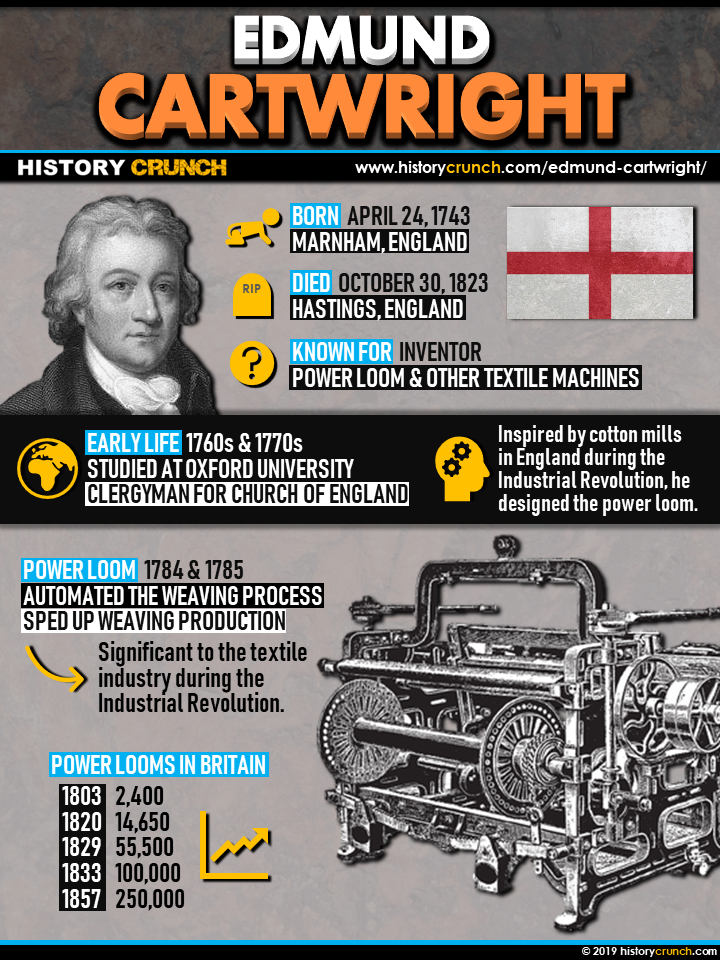
Cartwright invented the power loom in 1785, a machine that used a large shaft to weave fabric automatically instead of by hand, which transformed textile manufacturing across Britain and the world during the Industrial Revolution. Although he earned little money from his invention, the number of power looms in Britain grew from approximately 2,400 in 1813 to more than 250,000 by 1857, showing the enormous scale of his impact on industrial production.
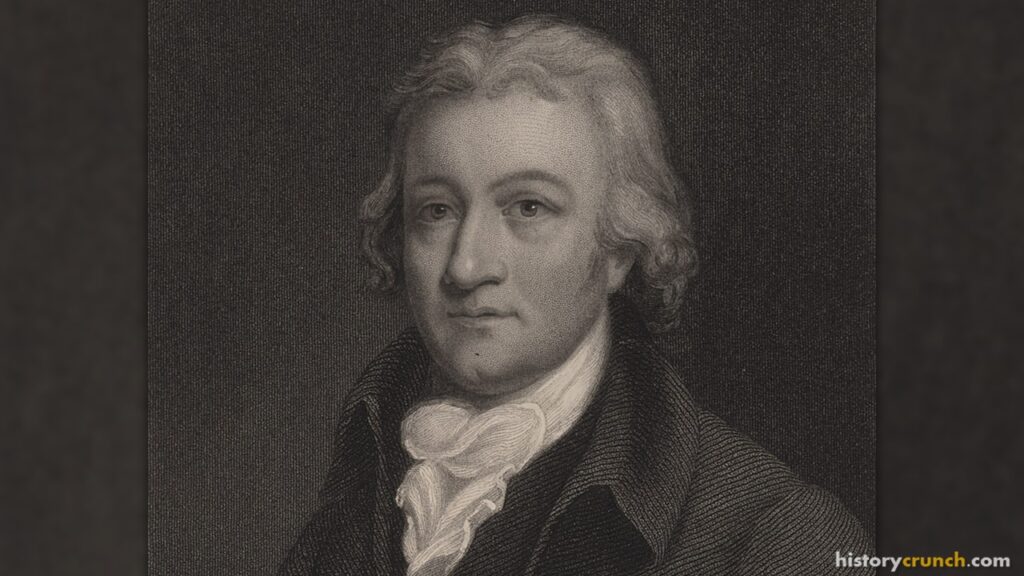
Edmund Cartwright – Early Life
Edmund Cartwright was born in Marnham, England on April 24th, 1743. Cartwright was the son of a landowner and was well educated. He went to a Grammar school in Wakefield, and then went to Oxford University. After graduating he became a clergyman and was then elected as a prebendaryA clergyman who receives a salary from a cathedral, given as an honorary position. at Lincoln Cathedral.
FactsthatCrunchWhat were the key facts about Edmund Cartwright's role as a prebendary at Lincoln Cathedral?
Edmund Cartwright – Invention of the Power Loom
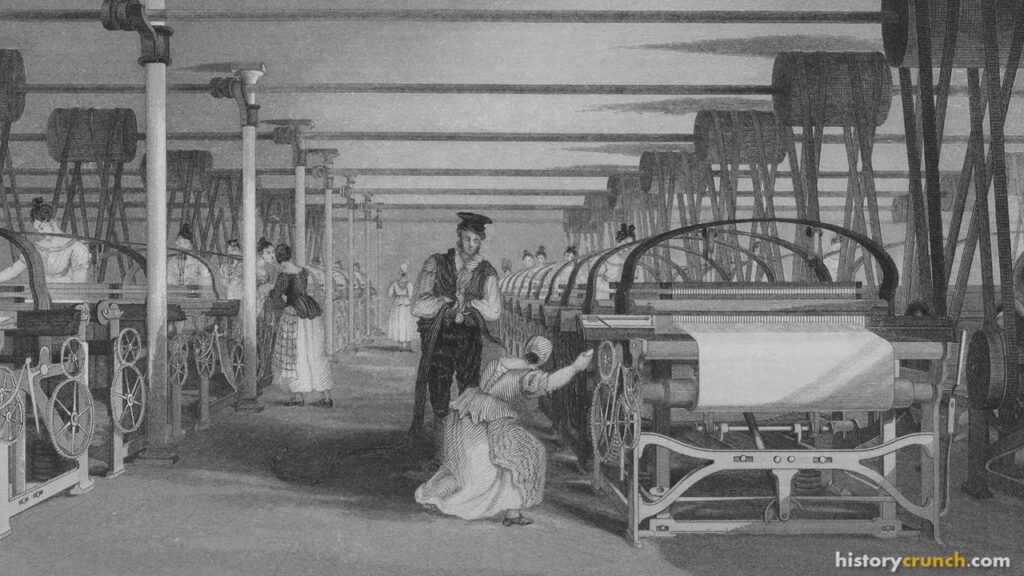
While working for the church Cartwright visited Richard Arkwright’s cotton spinning mills and saw the cotton spinning machines in action. Richard Arkwright was another important inventor during the timeframe of the Industrial Revolution and is best known for developing the water frame. After seeing the spinning machines Cartwright thought that he could make something similar for weaving and so was inspired to create a machine called the power loom. He began working on the designs of the machine in 1784 and fully built it in 1785. Many people thought that Cartwright would not be able to make a machine that was able to weave automatically, but he did. The first machine he made was simplistic, but he soon made improvements that enabled the machine to be used in factories. Essentially, the power loom mechanizedMade to run by machine rather than by hand or human effort. the function of a loom by use of a large shaft and sped up the process of textile manufacturing. In general, looms were used to weave together fabrics in order to create textilesWoven or manufactured fabrics and cloths produced in factories or by hand.. Cartwright did not benefit much from his invention of the power loom. For instance, he made very little money from his invention. With that said, the power loom had a transformative impact on society and went on to have a profound effect on industrial production.
In 1796 Cartwright moved to London, England. He continued inventing, and came up with a number of different ideas. However, none of his inventions proved successful or were sold. In 1809, he was awarded £10,000 for the national benefits of his power loom and was later elected as a Fellow of the Royal SocietyAn honor given to a person recognized for making a significant contribution to science or industry..
 FactsthatCrunch
In 1784, Edmund Cartwright, a clergyman working for the church, visited Richard Arkwright's cotton spinning mills and watched the spinning machines run automatically. Cartwright became convinced he could build a similar machine for weaving and began working on designs that same year. Many people believed it was impossible to make a machine that could weave fabric on its own.
Edmund Cartwright – Death and Legacy
Cartwright died on October 30th, 1823 in Sussex, England. While he made very little money from his invention of the power loom, the device went on to have a profound impact in textile manufacturing. For example, in 1813, there were approximately 2,400 power looms in all of Britain. However, by the mid-1800s, his power loom design was used in numerous factories across Britain and helped power the major impacts of the Industrial Revolution especially in terms of textile manufacturing. For instance, by 1857, it is estimated that there were more than 250,000 looms in use in Britain.
Edmund Cartwright – Infographic
Key Vocabulary
Prebendary
Power loom
Water frame
Mechanized
Textiles
Fellow of the Royal Society
Frequently Asked Questions
What did Edmund Cartwright invent?
Edmund Cartwright invented the power loom, a machine that wove fabric automatically. He began designing it in 1784 and finished building it in 1785. The device sped up weaving and changed how textiles were made in factories.
How did the power loom work?
The power loom used a large shaft to run the weaving process by machine instead of by hand. Looms wove threads together to make cloth, and Cartwright’s version made this much faster. His improved model could be used in busy factories.
What inspired Edmund Cartwright to build the power loom?
Cartwright was inspired after visiting Richard Arkwright’s cotton spinning mills and seeing the machines at work. Arkwright was famous for the water frame, which spun thread. Cartwright believed he could build a similar machine for weaving.
Did Edmund Cartwright make money from the power loom?
Cartwright made very little money from his invention despite its huge effect on industry. In 1809 the government awarded him £10,000 for the national benefits of the power loom. He was also later elected a Fellow of the Royal Society.
How did the power loom change textile production?
The power loom greatly increased the number of looms used across Britain during the Industrial Revolution. In 1813 there were about 2,400 power looms in Britain. By 1857 the number had grown to more than 250,000 looms in use.
Cite This Article
To cite this article as a source, use one of the formats below.
MLA: Beck, Elias. “Edmund Cartwright: A Detailed Biography.” HistoryCrunch, 26 September 2026, https://historycrunch.com/edmund-cartwright/.
APA: Beck, E. (2026). Edmund Cartwright: A Detailed Biography. HistoryCrunch. https://historycrunch.com/edmund-cartwright/
Chicago: Beck, Elias. “Edmund Cartwright: A Detailed Biography.” HistoryCrunch. September 26, 2026. https://historycrunch.com/edmund-cartwright/
Sources
- The Science Museum Group
- Robert C. Allen, The Industrial Revolution: A Very Short Introduction.
- Fordham Modern History Sourcebook
- Joel Mokyr, The Enlightened Economy.