Charles Dickens was a significant figure in the timeframe of the Industrial Revolution and is remembered today as a famous writer and social criticSomeone who uses their work to point out problems and injustices in how society is organized.. For example, he wrote some of the most famous stories in the English language and his stories are still read and studied today. More specifically, he wrote: ‘Oliver Twist’, ‘A Christmas Carol’, ‘A Tale of Two Cities’ and ‘Great Expectations’. Many of his stories focused in on the realities of life for working-class people in industrial England. As such, his works are often considered to be a critique on government policy in England during the Industrial Revolution.
 FactsthatCrunch
Charles Dickens wrote novels that showed the hard, often brutal lives of poor and working-class people in industrial England, making him a widely read writer of the Victorian era. His books, including Oliver Twist, A Christmas Carol, A Tale of Two Cities, and Great Expectations, drew directly on his own childhood experience as a child laborer and pushed readers and lawmakers to recognize the conditions facing England's poor.
Charles Dickens – Early Life
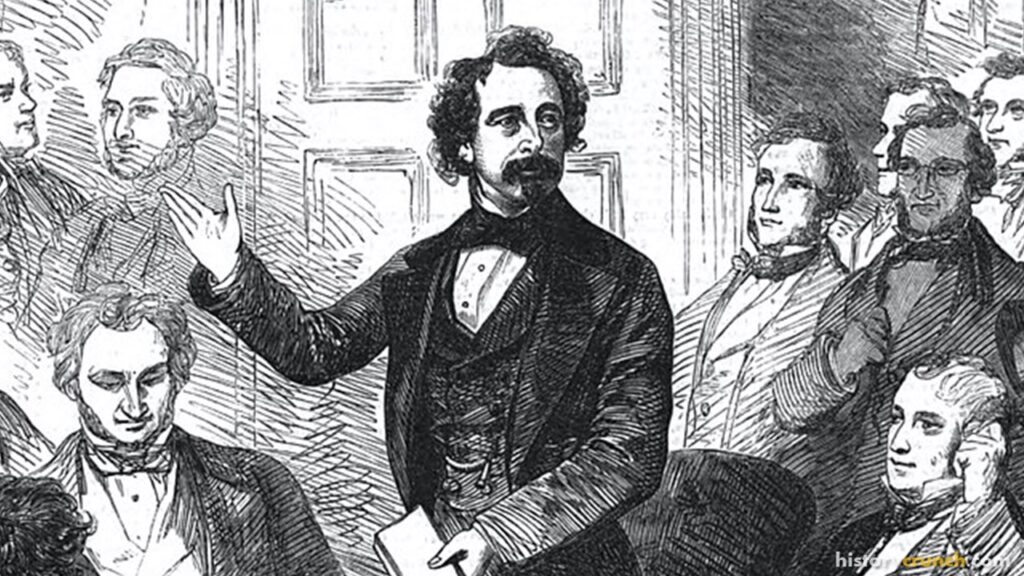
Charles Dickens was born in Portsmouth, England on February 7th, 1812. As a child, Charles Dickens is said to have read continually and had a fairly positive childhood afforded by his father’s (John Dickens) work as a Navy Pay Officer. Despite this, the family was actually quite poor due to his parents overspending and living beyond their means. Because of this, the Dickens family incurred a great deal of debt and by the time Charles Dickens was twelve years old, his father had been sent to prison for not being able to pay back these debts. Charles’ mother (Elizabeth) and his younger siblings moved into the debtors’ prison with his father, but Charles, being the eldest boy, was sent to work in a blacking factoryA workshop where workers covered and labeled pots of black paste used for polishing boots and shoes.. The job involved putting labels on pots, and paid Dickens just six shillingsUnits of British money used before modern currency; six shillings a week was very little pay. per week. The conditions of the blacking factory were horrible, and Dickens was often cold and very lonely whilst working. After about a year of hard work, he was lucky to be able to return to school. His experience in the factory, as a child laborer, was important as it served as inspiration for several of his stories, including: Oliver Twist and A Christmas Carol. In both of these stories, he heavily criticized the poor treatment of children in the industrial towns and cities across England.
For example, Charles Dickens discusses life at the blacking factory in the below quote from John Forster’s famous biography of Dickens titled ‘The Life of Charles Dickens’.
“The blacking-warehouse was the last house on the left-hand side of the way, at old Hungerford Stairs. It was a crazy, tumble-down old house, abutting of course on the river, and literally overrun with rats. Its wainscoted rooms, and its rotten floors and staircase, and the old grey rats swarming down in the cellars, and the sound of their squeaking and scuffling coming up the stairs at all times, and the dirt and decay of the place, rise up visibly before me, as if I were there again. The counting-house was on the first floor, looking over the coal-barges and the river. There was a recess in it, in which I was to sit and work. My work was to cover the pots of paste-blacking; first with a piece of oil-paper, and then with a piece of blue paper; to tie them round with a string; and then to clip the paper close and neat, all round, until it looked as smart as a pot of ointment from an apothecary’s shop. When a certain number of grosses of pots had attained this pitch of perfection, I was to paste on each a printed label, and then go on again with more pots. Two or three other boys were kept at similar duty down-stairs on similar wages. One of them came up, in a ragged apron and a paper cap, on the first Monday morning, to show me the trick of using the string and tying the knot. His name was Bob Fagin; and I took the liberty of using his name, long afterwards, in Oliver Twist.”
FactsthatCrunchWhat were the key effects of the Dickens family debt on young Charles?
Charles Dickens – Work as a Journalist
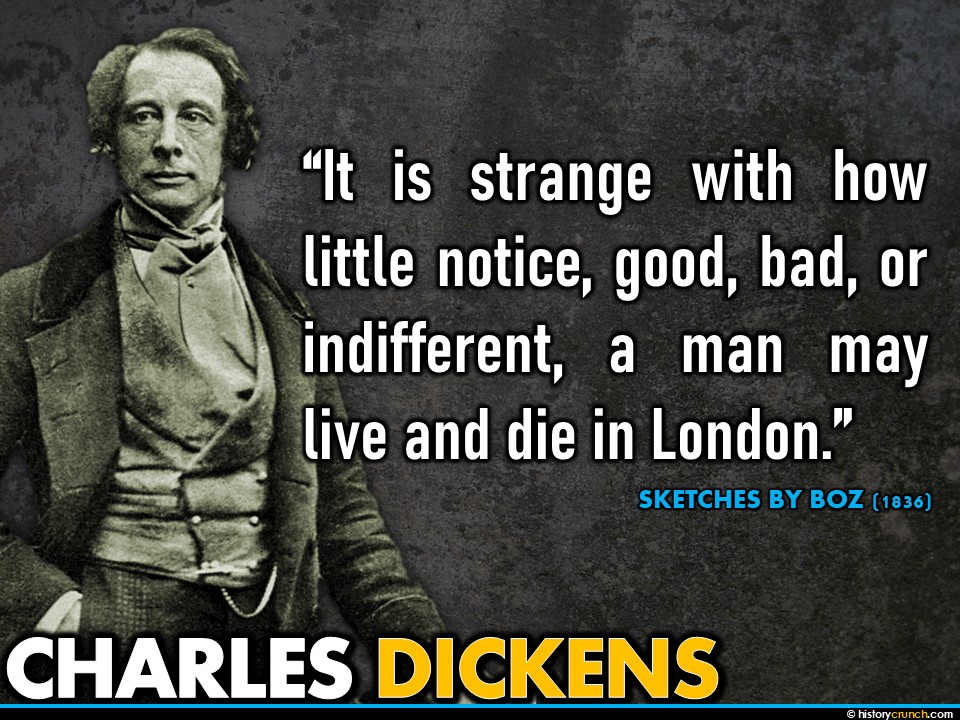
After graduating from school, Charles Dickens started working as a journalist. Initially he worked with ‘The Mirror of Parliament’ and ‘The True Sun’. As Charles’ skills developed, and he learnt shorthandA fast system of writing using symbols instead of full words, used to record information quickly., he moved up the ranks, and in 1834 he started working on ‘The Morning Chronicle’ as a parliamentary journalist. This role allowed him to publish some more creative works, under the pseudonymA made-up name an author uses instead of their real name when publishing work. ‘Boz’. In 1836, Dickens got married and also wrote the first edition of the ‘Pickwick Papers’ which quickly became very popular. The following year, Victoria became Britain’s Queen.
 FactsthatCrunch
Charles Dickens – the Writer
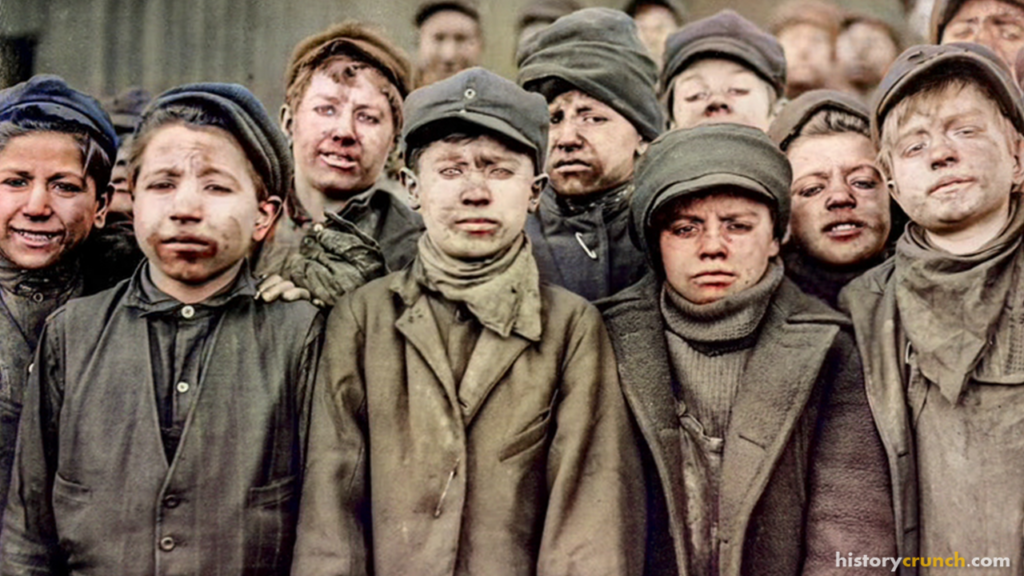
Charles Dickens wrote numerous editions of the Pickwick papers. The stories he wrote were inspired by travels around England and his own life experiences. In fact, many of his characters were named after people he knew and interacted with in his own life. Dickens had so many ideas that he started writing novels such as ‘Oliver Twist’, ‘David Copperfield’ and ‘Great Expectations’. These books reflected Dickens’ childhood, and his time in the factory. The books were loved at the time, and Charles Dickens became a celebrity in his own life with people in the street recognizing him. The books have continued to be well loved today because of their interesting characters, and plot lines. The books that Dickens wrote are also important historically because they have captured what life was like during the Industrial Revolution in Britain. In particular, his classic story ‘A Christmas Carol’ captured the difficult living conditions and horrible working conditions that many people experienced during the Industrial Revolution. He wrote about how life changed during the revolutionary years, with special focus on the lives of the poor.
 FactsthatCrunch
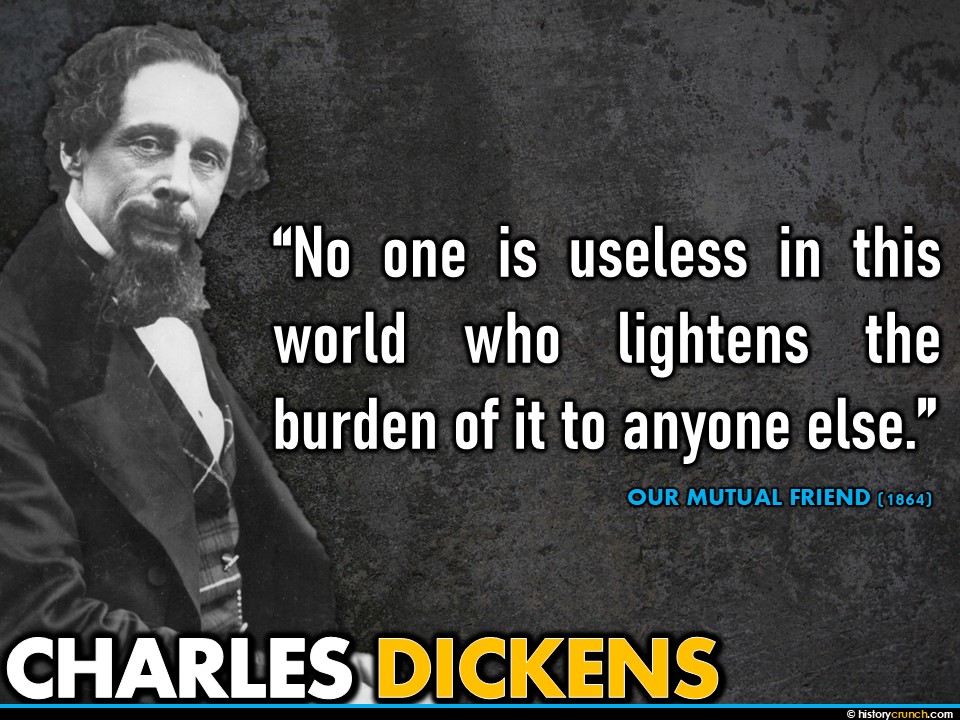
The blacking-warehouse was the last house on the left-hand side of the way, at old Hungerford Stairs. It was a crazy, tumble-down old house, abutting of course on the river, and literally overrun with rats.
Charles Dickens · private autobiographical fragment, London · written around 1847, published in John Forster's The Life of Charles Dickens, 1872
In 1824, after his father was imprisoned for debt, twelve-year-old Charles Dickens was sent to work at Warren's blacking warehouse at Hungerford Stairs on the River Thames. There he pasted labels on pots of boot polish for six shillings a week. He described the rotting, rat-filled building in a private account he gave to his friend John Forster, who published it after Dickens's death in his biography, The Life of Charles Dickens.
Charles Dickens – Death and Legacy
Charles Dickens died following a stroke in 1870, and is buried at Westminster Abbey in London. Today, he is celebrated as one of the greatest writers of the Victorian era, known for his vivid characters, incisiveSharp and clear in a way that cuts straight to the truth of a problem. social commentary, and pioneering contributions to the development of the serial novelA story published in separate parts over time, like chapters released one at a time in a magazine. format. His most famous works have never gone out of print, deeply influencing English literature and social reform by highlighting the plight of the poor and disadvantaged in 19th-century Britain. As such, many people and historians associate his writings with the era of the Industrial Revolution.
 FactsthatCrunch
What did Charles Dickens's novels record about life during the Industrial Revolution in Britain?
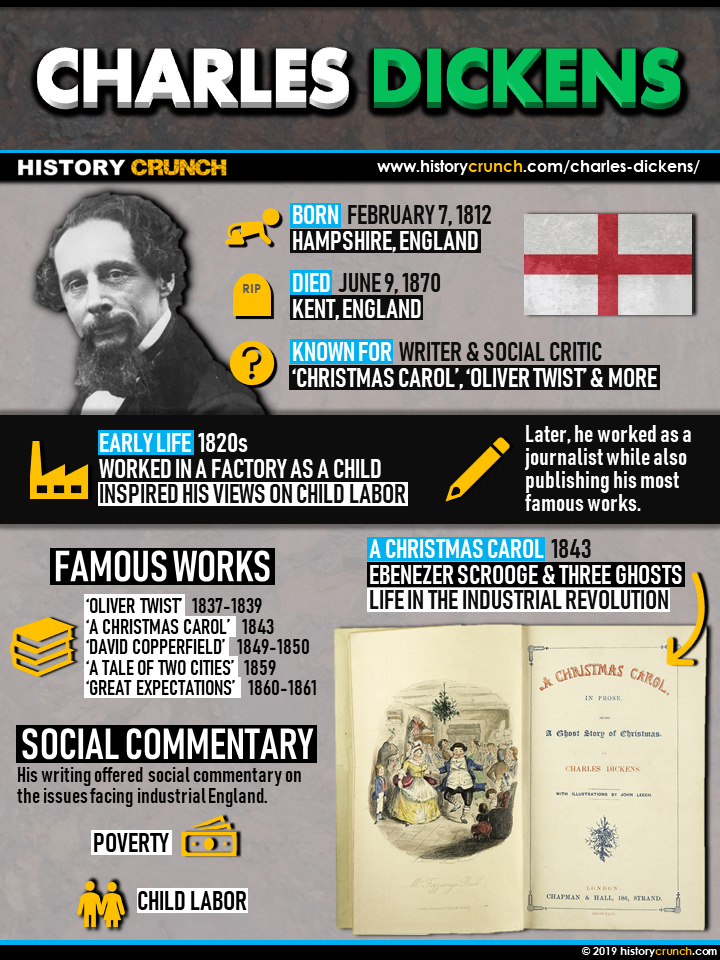
Charles Dickens – Infographic
Industrial Revolution timeline · 1760 – 1840
Key Vocabulary
Social critic
Blacking factory
Shillings
Shorthand
Pseudonym
Serial novel
Incisive
Frequently Asked Questions
Who was Charles Dickens?
Charles Dickens was a famous English writer and social critic who lived during the Industrial Revolution. He wrote some of the best known stories in the English language, and people still read them today. Many of his works looked at the hard lives of working-class people in industrial England.
What did Charles Dickens write?
Dickens wrote classic novels such as Oliver Twist, A Christmas Carol, A Tale of Two Cities, and Great Expectations. He also wrote David Copperfield and the popular Pickwick Papers. Many of his characters were named after real people he knew in his own life.
Why did Charles Dickens work in a factory as a child?
Dickens worked in a factory because his father was sent to prison for debt when Charles was twelve. While his mother and younger siblings joined his father in the debtors’ prison, Charles was sent to a blacking factory to support himself. He put labels on pots for six shillings a week in cold and lonely conditions.
How did Dickens’ early life shape his writing?
His time as a child laborer gave him ideas for stories like Oliver Twist and A Christmas Carol. In these books he criticized the poor treatment of children in England’s factory towns. His novels captured what life was like for the poor during the Industrial Revolution.
When and where did Charles Dickens die?
Charles Dickens died in 1870 after suffering a stroke. He is buried at Westminster Abbey in London, a place reserved for many important British figures. Today he is seen as one of the greatest writers of the Victorian era.
Cite This Article
To cite this article as a source, use one of the formats below.
MLA: Beck, Elias. “Charles Dickens: A Detailed Biography.” HistoryCrunch, 26 September 2026, https://historycrunch.com/charles-dickens/.
APA: Beck, E. (2026). Charles Dickens: A Detailed Biography. HistoryCrunch. https://historycrunch.com/charles-dickens/
Chicago: Beck, Elias. “Charles Dickens: A Detailed Biography.” HistoryCrunch. September 26, 2026. https://historycrunch.com/charles-dickens/
Sources
- Robert C. Allen, The Industrial Revolution: A Very Short Introduction.
- Emma Griffin, A Short History of the British Industrial Revolution.
- Joel Mokyr, The Enlightened Economy.
- Fordham Modern History Sourcebook