
The Age of Exploration is the two centuries in which European ships worked out the shape of the world, opened sea routes to Asia and the Americas, and destroyed two of the largest empires on earth in the process. It began because the overland road to Asia closed, and it ended with the Atlantic crossed in both directions, a trade in enslaved people running across it, and an argument about what any of it should be called that is still going.
From a raid on Ceuta in 1415 to a crew setting their captain adrift in the ice.
The Age of Exploration is the two centuries in which European ships worked out the shape of the world, opened sea routes to Asia and the Americas, and destroyed two of the largest empires on earth in the process. It began because the overland road to Asia closed, and it ended with the Atlantic crossed in both directions, a trade in enslaved people running across it, and an argument about what any of it should be called that is still going.
China had bigger ships and had sailed further, fifty years earlier, and then stopped. Why did Europe keep going?
The push, the pull and the tools, and none of them alone is the answer.
The word discovery assumes nobody was home. Two of the largest states on earth were. What were they?
Tenochtitlan, the Triple Alliance and the Inca road system, before any European saw them.
The compass, the astrolabe, the chart and the caravel. If you could give a captain of 1400 only one of them, which one?
Four technologies, and an argument about which one is load-bearing.
Men sailed for two years, half of them died, and the cargo still made a profit. How is that possible?
The arithmetic that made an absurd risk into a sensible investment.
Portugal spent eighty years creeping down the African coast before it got to India. Who keeps funding something for that long?
Ceuta in 1415 to Calicut in 1498, one careful step at a time.
Dias found the way round Africa and was never given the voyage to India. Who decides whose name survives?
The man who answered the question, and the man who collected the reward.
The same voyages that opened the spice route opened the trade in enslaved Africans. Were they two programmes or one?
From the African coast to the plantations, on the routes Henry's captains drew.
A kingdom of under a million people controlled the sea route to Asia for a century. How?
Charts as state secrets, forts at the chokepoints, and a head start nobody could buy.
The experts who turned him down had the better numbers. He sailed anyway and was saved by a continent he did not know was there. Is that skill or luck?
Six years of rejection, one bad calculation and an accident that changed the world.
The first voyage was an exploration. By the second it was a colonization. What happened in seventeen months?
Eleven years, four crossings, and a change of purpose nobody voted on.
A national holiday, hundreds of statues and a capital city carry his name. Others have pulled the statues down. Who is right?
The evidence, and then the argument about what to do with it.
In 1500 a royal investigator put Columbus in chains and shipped him back to Spain. What had he done that Spain objected to?
Not the voyages. The eight years of governing that came after them.
Columbus crossed first. The continent is named for a man who never commanded a voyage. How did that happen?
A letter, a mapmaker and the difference between doing something and explaining it.
Five ships and 270 men went out. One ship and 18 men came back. Was it worth it?
Three years, two oceans and a survival rate of one in fifteen.
Balboa crossed Panama with 190 Spaniards and several hundred indigenous guides and allies. Whose expedition was it?
The people who carried, guided, translated and fought, and are not in the title.
Every voyage came home with new coastline. Who got to see it, and who decided what the names were?
Charts, secrets, and the power of getting to write the labels.
The usual answer is steel, horses and guns. The records point somewhere else. Where?
Disease, division and allies, with the soldiers arriving last.
He had two years of warning, an army, and a city on an island reached by causeways he controlled. He let them walk in. Why?
The hardest question in the conquest, and the sources are not neutral.
The Inca delivered a room of treasure for their emperor's release. The Spanish took it and executed him. What does that tell you?
A bargain kept on one side only.
Smallpox, measles and influenza arrived with the ships and often ran ahead of any European. How much does that explain?
The largest population loss in recorded history, and nobody planned it.
Cortes took Tenochtitlan with thousands of Mesoamerican warriors. Pizarro walked into an Inca war of succession. Whose war was it?
The word conquest hides who was actually fighting.
England, France and the Dutch arrived two generations late to a world Spain and Portugal had divided between them. What were their options?
Look for a different route, or take what the others had.
Cabot, Cartier, Hudson and dozens more went looking for a northern route to Asia. It did not exist in any usable form. Why keep going?
Four centuries of expeditions into ice, on a hope nobody could disprove.
Cartier came home with worthless stones and France lost interest. Sixty years later it founded Quebec. What changed?
Fur, which was real, and a river that went somewhere.
The English knighted him. The Spanish wanted him hanged. Both were describing the same voyages.
Raiding, circumnavigating and a knighthood for the proceeds.
Every captain is remembered by name. Almost none of the crews are. Who were they and what happened to them?
The men below deck, and the numbers that came home.
There is no refrigeration, the water goes bad in weeks, and the voyage is longer than anyone has planned for. What happens?
Salt, biscuit, rot and scurvy.
Caravel, carrack, galleon, fluyt. Each was better at something and worse at something else. What is the trade-off?
Four hulls, and the compromise every captain had to make.
Potatoes and maize went east, wheat and cattle went west, and diseases went one way with catastrophic effect. Was anyone better off?
Maize, potatoes and tomatoes went east; wheat, cattle and sugar went west. Both diets changed at once.
The events are five hundred years old and largely agreed. The argument is louder than ever. Why?
From a Spanish friar in 1566 to a statue coming down last year.
In 1450 a European merchant who wanted pepper bought it from a man who had bought it from a man, back along a road that ran four thousand miles and ended in somebody else's empire. When Constantinople fell in 1453 that road closed, and the price of everything worth having went up. Europe already had the compass, was learning to draw usable charts, and had begun building a ship that could sail back against the wind. On the other side of an ocean nobody had crossed, two empires of millions were going about their business with no idea any of this was happening.
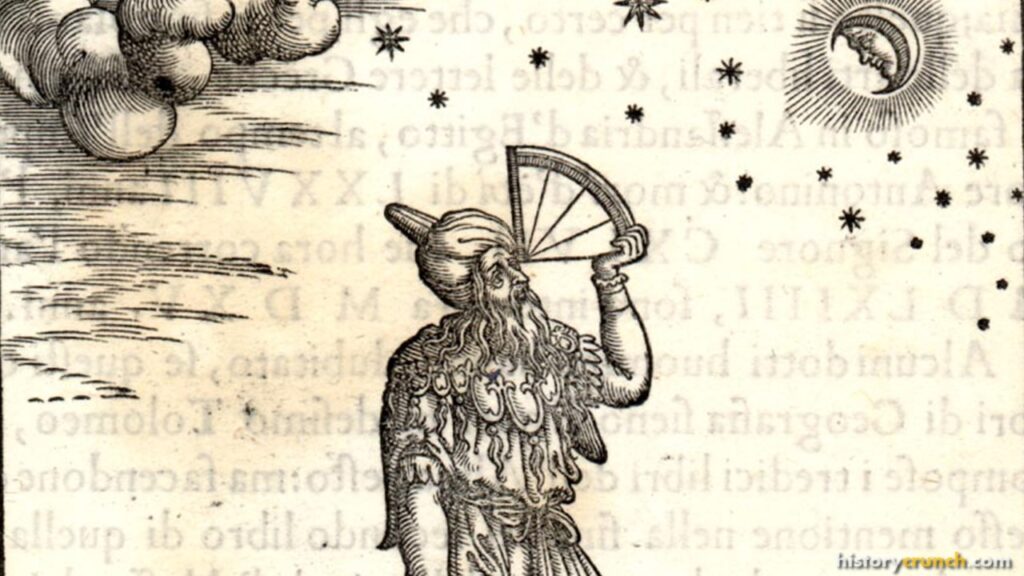
The mariner's compass, a magnetized needle pivoting in a dry box, was in use in Europe by no later than 1300, alongside the astrolabe for reading latitude from the sun. Before it, a captain who lost sight of the coast was guessing. With it, he could hold a course through cloud and night.
LEARN MORESHOW LESSwhy it matters · key numbersTECHNOLOGYEverything on this timeline depends on being able to sail out of sight of land and come back. The compass is the first of the three tools that made that possible, and the oldest by two hundred years. Latitude they could measure; longitude they could not, and would not be able to for another three hundred years.
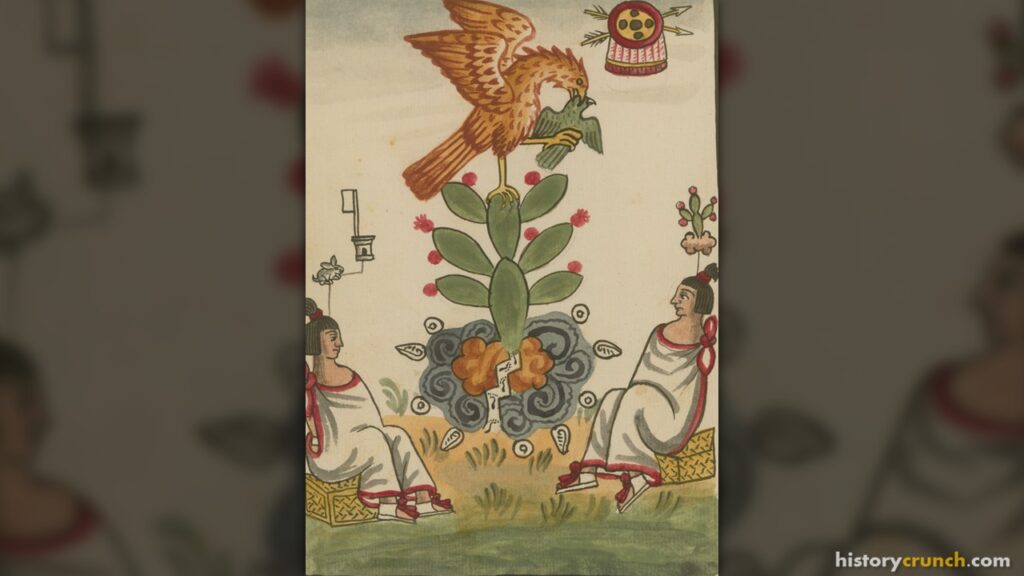
On 20 July 1325 the Aztec founded Tenochtitlan on the western shore of Lake Texcoco, naming it for their chief Tenoch. Within two centuries it was one of the largest cities on earth.
LEARN MORESHOW LESSwhy it matters · 1 key figurePOLITICALThe ships in this timeline did not sail into empty country. Two of the largest states in the world were already here, and this is where one of them begins.
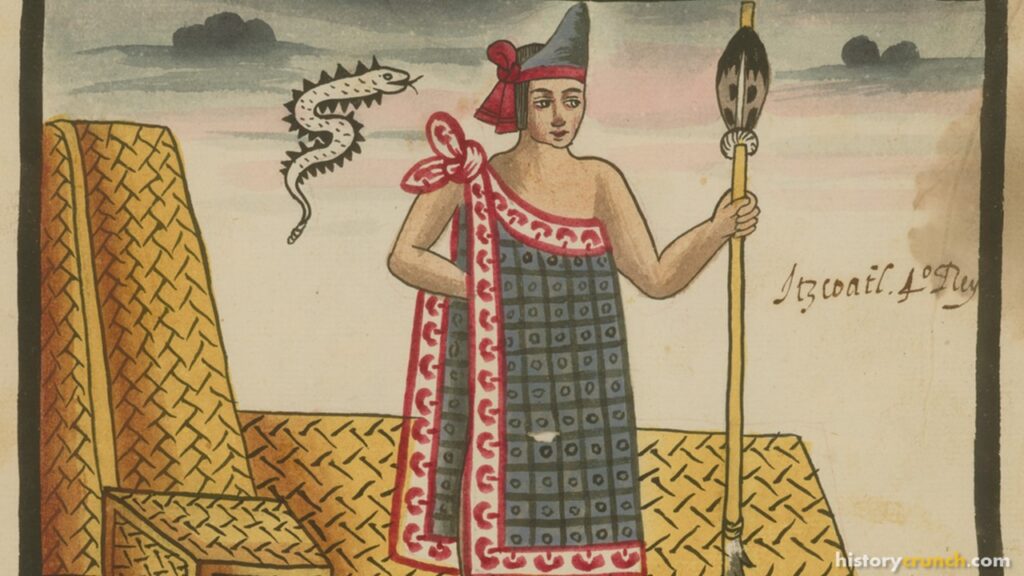
In 1428 the Aztec joined with Texcoco and Tlacopan to form the Triple Alliance. Itzcoatl, who became leader in 1427, is remembered as the ruler who made the Aztec the strongest people in the valley. The alliance held until 1521.
LEARN MORESHOW LESSwhy it matters · key numbers · 1 key figurePOLITICALThe empire Cortes met was not a single city but a coalition with subject states that resented paying it tribute. That is the fact that decides the conquest ninety years later.
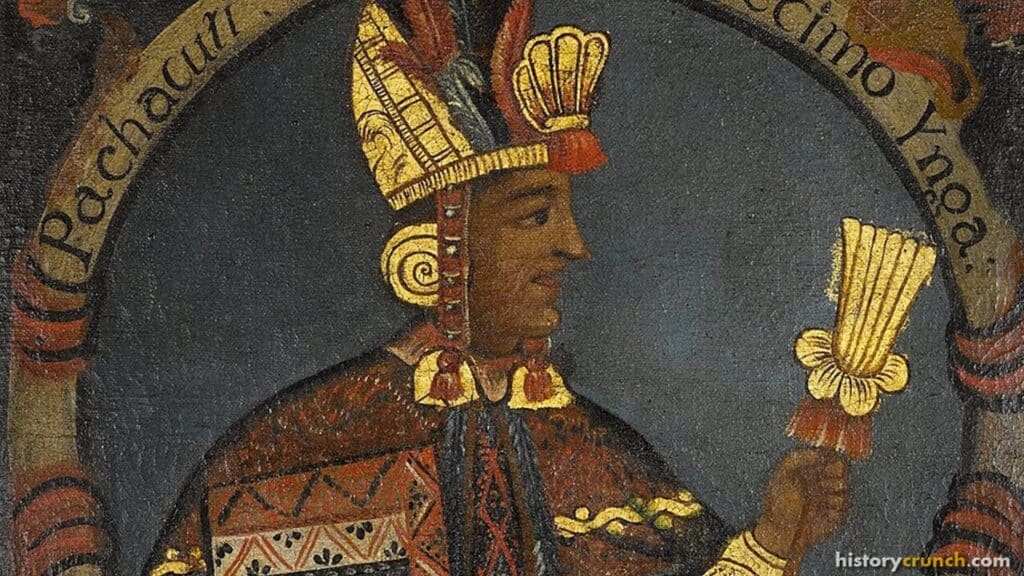
Pachacuti came to power around 1438 and began a programme of conquest that carried the Inca from a regional power to the dominant civilization of South America, running thousands of miles down the spine of the Andes.
LEARN MORESHOW LESSwhy it matters · 1 key figurePOLITICALThe second of the two great American empires, and the second one a Spanish force of under two hundred men would bring down within forty years of first sighting it.
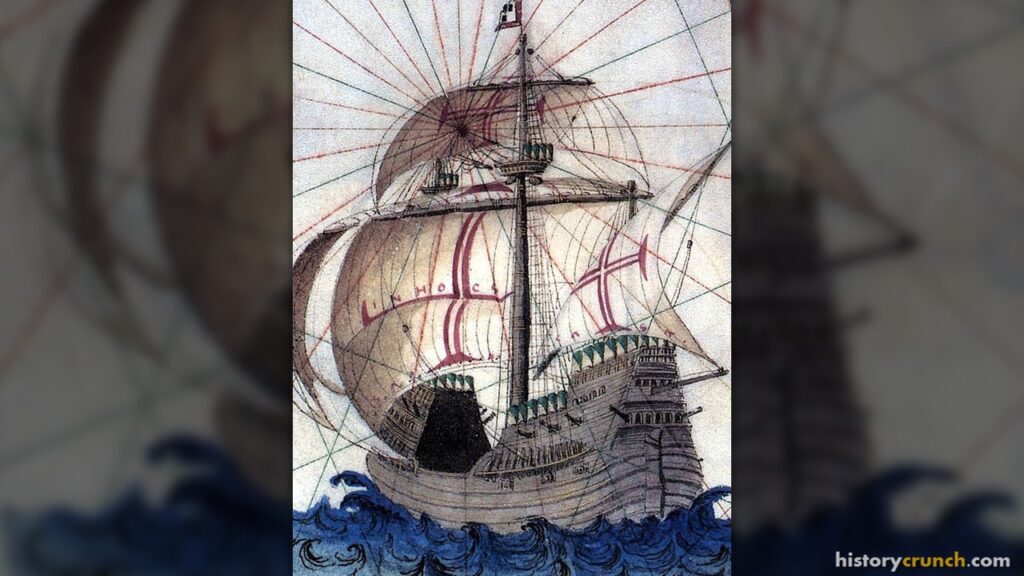
The caravel was light, shallow and rigged so it could work against the wind rather than only run before it. Columbus took two of them west in 1492 and da Gama used them for India in 1497.
LEARN MORESHOW LESSwhy it mattersTECHNOLOGYA ship that can only sail downwind can go out and not come back. The caravel is the difference between an expedition and a one-way trip.
Accurate maps and nautical charts were as much a part of the technology as the ship itself. Each voyage came back with coastline that was drawn, copied and sold, so the next captain started from further along.
LEARN MORESHOW LESSwhy it mattersTECHNOLOGYThis is why the voyages accelerate. Knowledge accumulated on paper, and a Portuguese captain in 1490 began where the captain of 1450 had stopped.
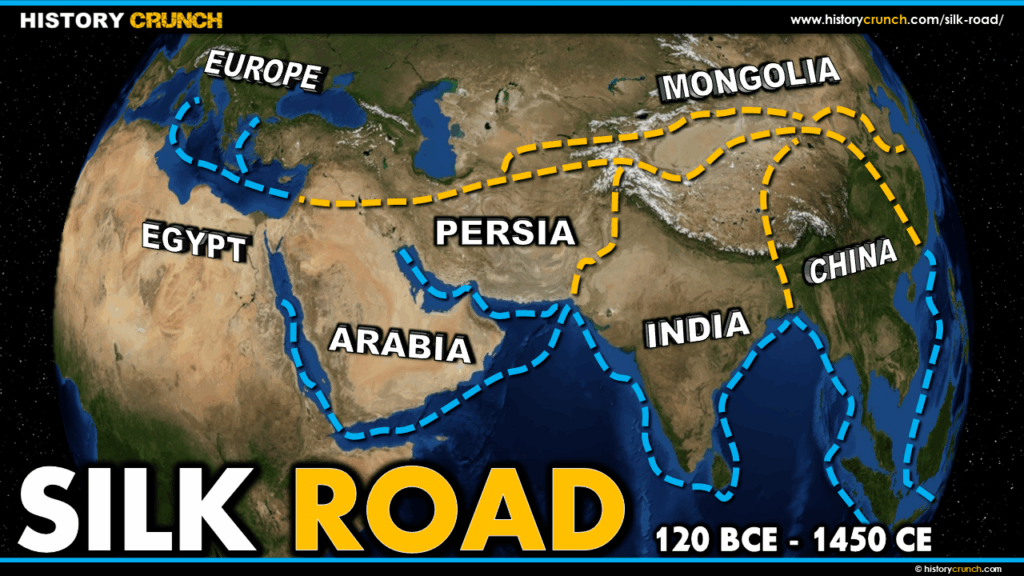
The fall of Constantinople in 1453 and the rise of the Ottoman Empire made the old overland routes, including the Silk Road, unreliable and expensive for European merchants.
LEARN MORESHOW LESSwhy it matters · key numbersPOLITICALThis is the push. Europe did not take to the sea out of curiosity but because the land route to the goods it wanted had become somebody else's toll road.
The Silk Road had carried goods across Eurasia for some fifteen hundred years, and pepper, cinnamon and nutmeg reached Europe only after passing through many hands. Every hand took a cut.
LEARN MORESHOW LESSwhy it mattersECONOMICCut out the middlemen and the profit is enormous. That arithmetic, not adventure, is what persuaded kings to fund ships.
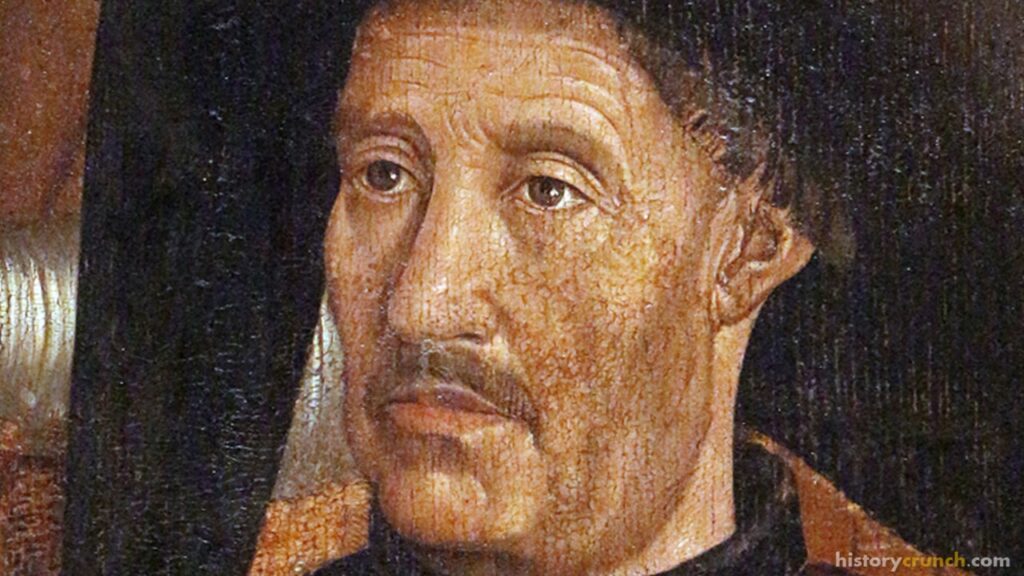
One small kingdom on the edge of Europe spent eighty years working its way down the coast of Africa, a little further with each voyage, funded and organized as a programme rather than a series of adventures. It began with a raid on Ceuta in 1415 that showed the Portuguese where the trans-Saharan wealth was coming from. It ended with Vasco da Gama stepping ashore in India in 1498, and a cargo of pepper and cinnamon that paid for every ship that had been lost getting there.
In 1415 Prince Henry helped lead the Portuguese capture of Ceuta, a Muslim trading port in North Africa. Inside, the Portuguese found warehouses of goods that had crossed the Sahara by camel.
LEARN MORESHOW LESSwhy it matters · 1 key figureMILITARYPortugal worked out at Ceuta that the wealth arriving in North Africa came from somewhere further south. The whole programme of exploration follows from wanting to reach that somewhere directly.
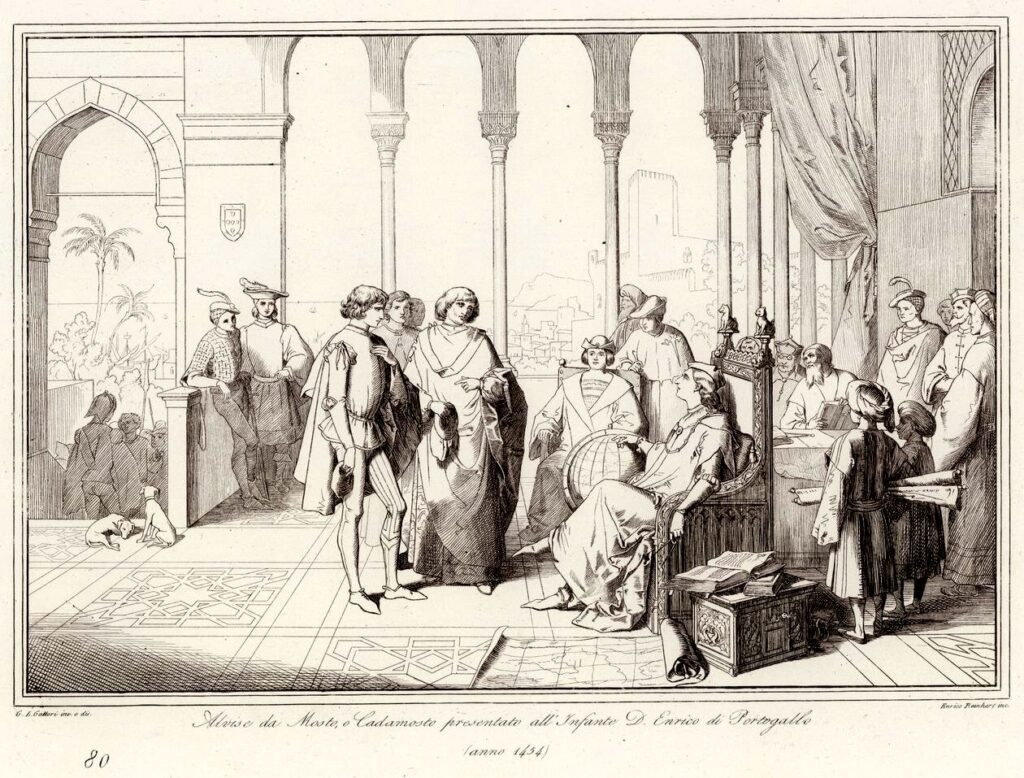
Henry set up a school of navigation in 1419. Under his direction sailors refined sailing techniques, navigational instruments, sail designs and methods of mapping, and pushed a little further down the African coast each year.
LEARN MORESHOW LESSwhy it matters · 1 key figureTECHNOLOGYExploration stopped being a series of lucky voyages and became a state programme run from the Portuguese coast at Sagres, funded and repeated, with each captain briefed on what the voyage before his had found.
Henry died in Portugal on 13 November 1460. The exploration programme he had set in motion did not stop; it grew through the decades that followed and reached the southern tip of Africa within thirty years.
LEARN MORESHOW LESSwhy it matters · 1 key figurePOLITICALA programme that survives its founder is a different thing from a patron's hobby. Portugal had built an institution.
Bartolomeu Dias left Lisbon in August 1487 with orders to find where the African coast ended. Seventy years of Portuguese voyages had crept south; nobody knew whether the continent stopped at all.
LEARN MORESHOW LESSwhy it matters · 1 key figureMILITARYThis is the question the whole Portuguese programme had been working toward since Ceuta, and Dias is the man sent to settle it.
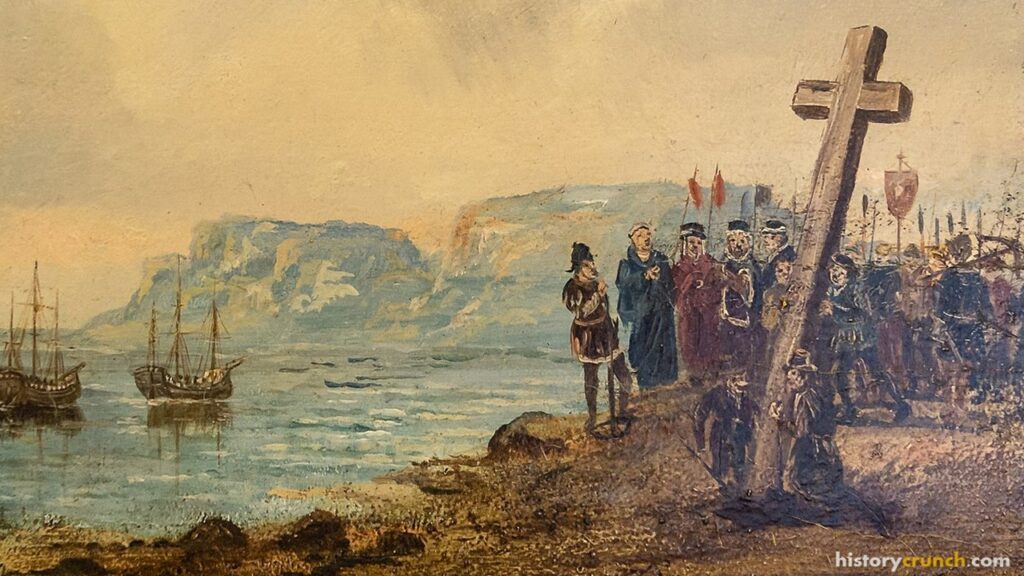
In January 1488 a severe storm drove Dias's fleet far out to sea and pushed it south for several days. When he turned east and found no land, then north and found a coast running away to the east, he understood he had passed the bottom of Africa.
LEARN MORESHOW LESSwhy it matters · 1 key figureMILITARYAfrica had an end, and beyond it lay open water toward India. Dias found it by accident, in weather that nearly killed him.
Dias reached Lisbon in December 1488 having proved that the Atlantic and Indian oceans joined. The mission to follow his route to India went to Vasco da Gama instead.
LEARN MORESHOW LESSwhy it matters · 2 key figuresPOLITICALThe man who solved the problem did not get the reward. Da Gama used Dias's route and knowledge, and it is da Gama's name that is remembered.
The fleet sailed from Lisbon on 8 July 1497, rounded the Cape of Good Hope and worked up the east coast of Africa before striking out across the Indian Ocean.
LEARN MORESHOW LESSwhy it matters · 1 key figureMILITARYDias had shown the way was there. Da Gama was sent to prove it could be sailed all the way to the other end.
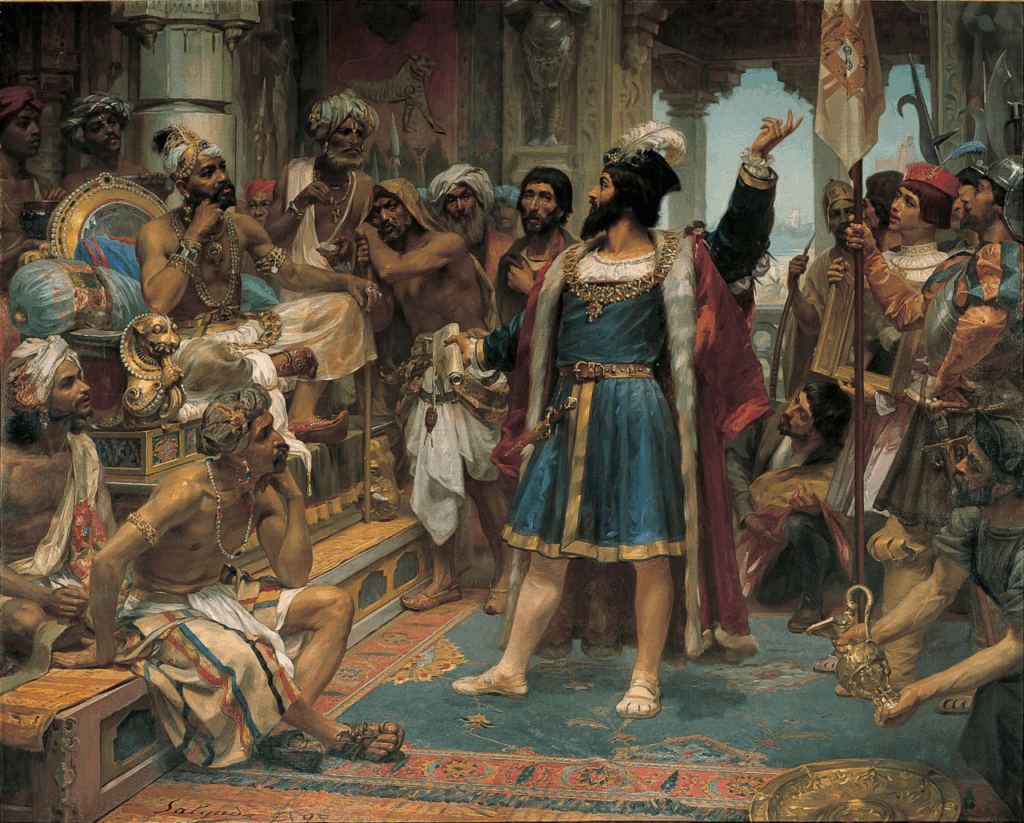
Da Gama arrived in India in May 1498, the first European to get there by sea. He returned to Portugal in 1499 with a small but immensely valuable cargo of spices, including cinnamon and pepper.
LEARN MORESHOW LESSwhy it matters · key numbers · 1 key figureECONOMICEighty-three years after Ceuta, Portugal had what it set out for: a route to the spices that no other power controlled and no middleman taxed.
By the time da Gama's ships reached land again in 1499, only about half the crew had survived. Many had died of scurvy, an illness caused by a lack of vitamin C that the crews did not understand.
LEARN MORESHOW LESSwhy it mattersSOCIALThis is the real price of the spice route, and the accounts still showed a profit. That is why the voyages kept going.
Christopher Columbus was wrong. He thought Asia lay about three thousand miles west of Spain; the experts who turned him down for six years knew it was far further, and they were right. What saved him was a continent he did not know existed and never accepted he had found. Four voyages in eleven years took him from a hopeful navigator with no funding to a governor accused of brutality, and left the Atlantic permanently open behind him.
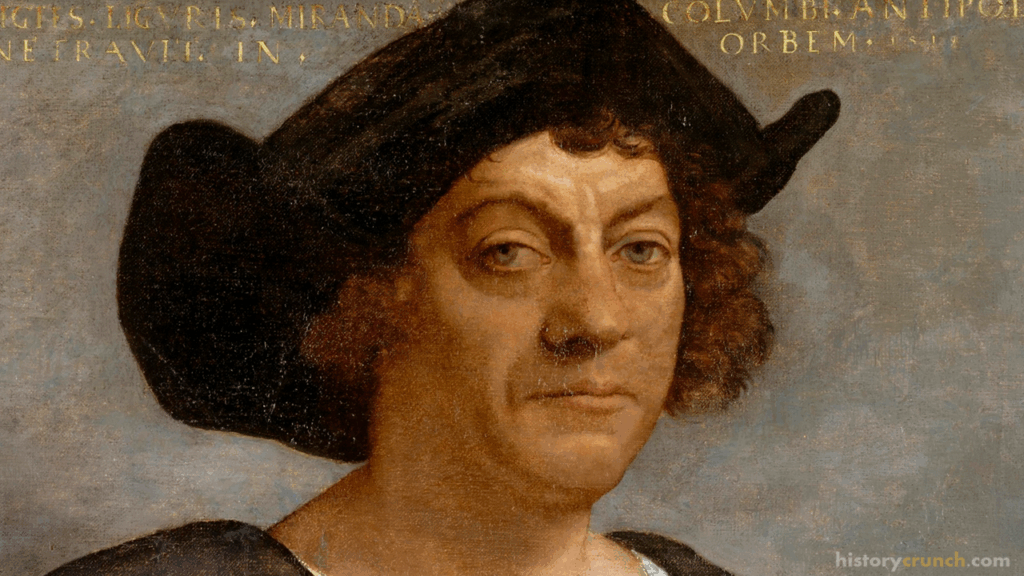
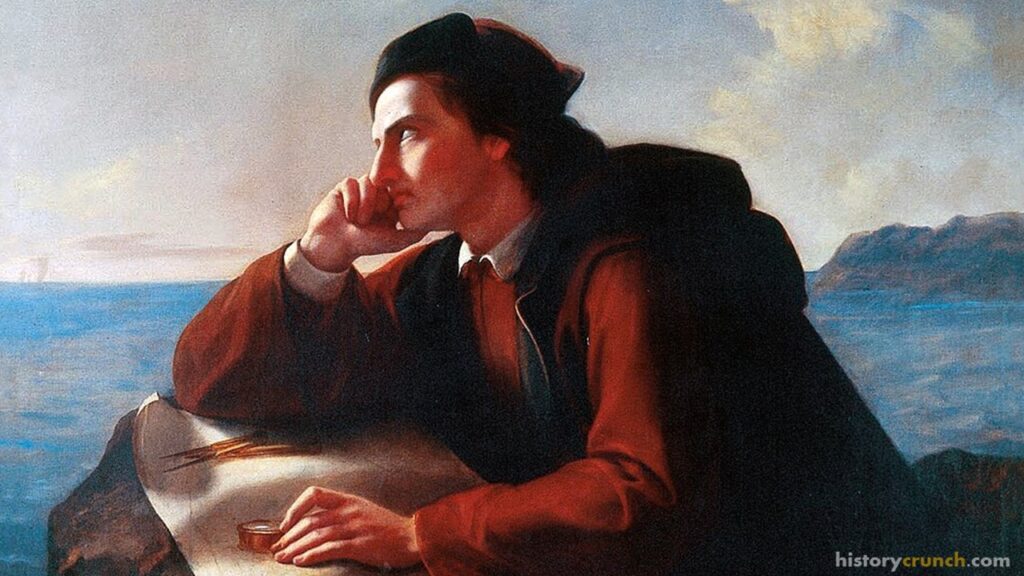
Christopher Columbus was born on 31 October 1451 in the Republic of Genoa. He was not highly schooled but read widely and spoke several languages, and he married into a Portuguese family with sailing connections in 1479.
LEARN MORESHOW LESSwhy it matters · 1 key figureSOCIALHe is the most argued-over figure on this timeline, and the argument is easier to follow if you know he was a working sailor with a fixed idea rather than a scholar or a nobleman.
Columbus put his westward plan to King John II of Portugal in 1485 and was refused. He came back in 1488 and was refused again.
LEARN MORESHOW LESSwhy it matters · 1 key figurePOLITICALPortugal's own experts thought his distances were wrong, and they were right: he had badly underestimated how far Asia was. He was saved by a continent he did not know existed.
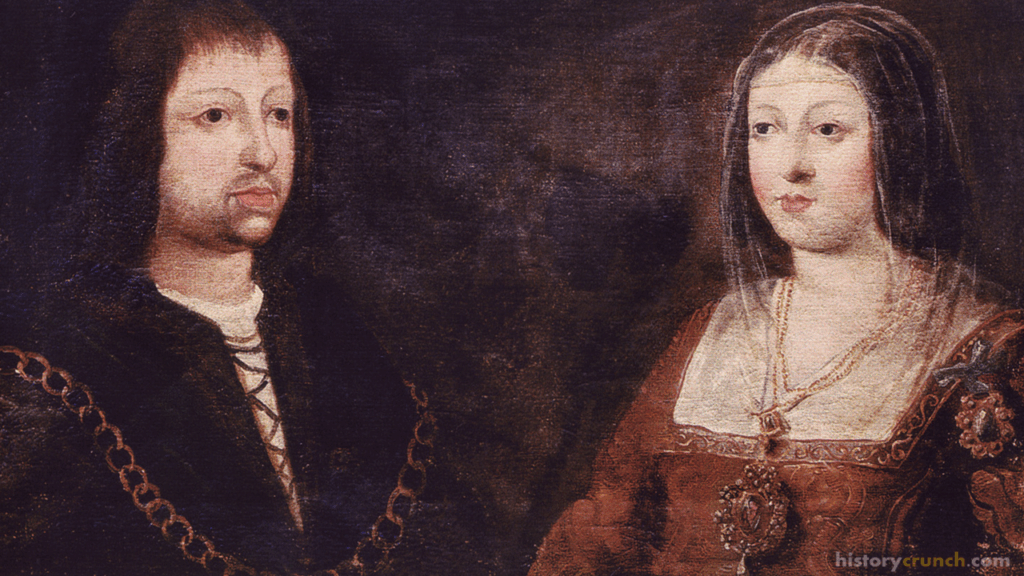
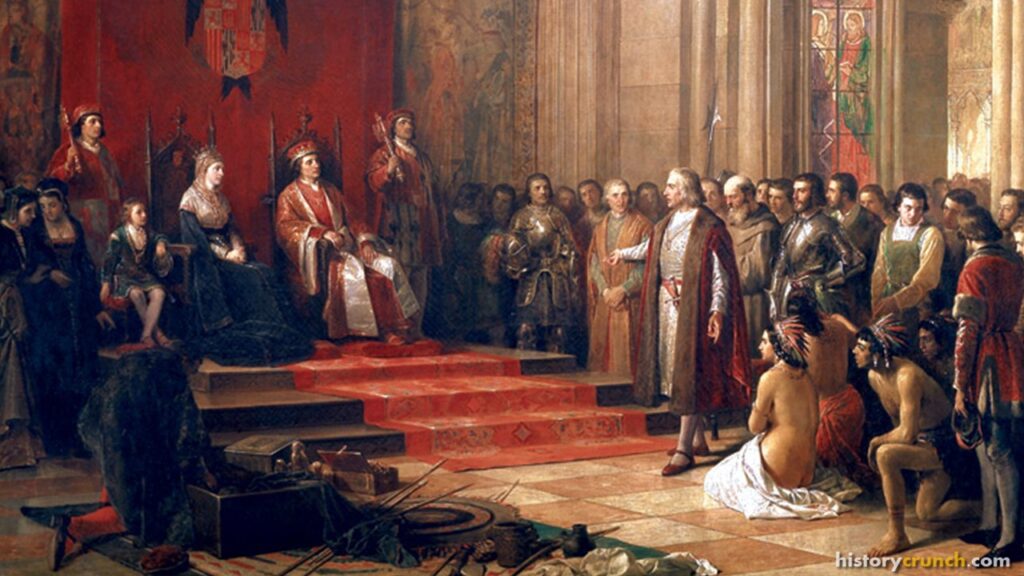
Columbus first put the idea to Ferdinand and Isabella in 1486. A deal was not reached until January 1492, when the Spanish monarchs finally agreed to fund him.
LEARN MORESHOW LESSwhy it matters · key numbers · 1 key figurePOLITICALSix years of being turned down. The voyage that changed the shape of the world nearly did not get its money.
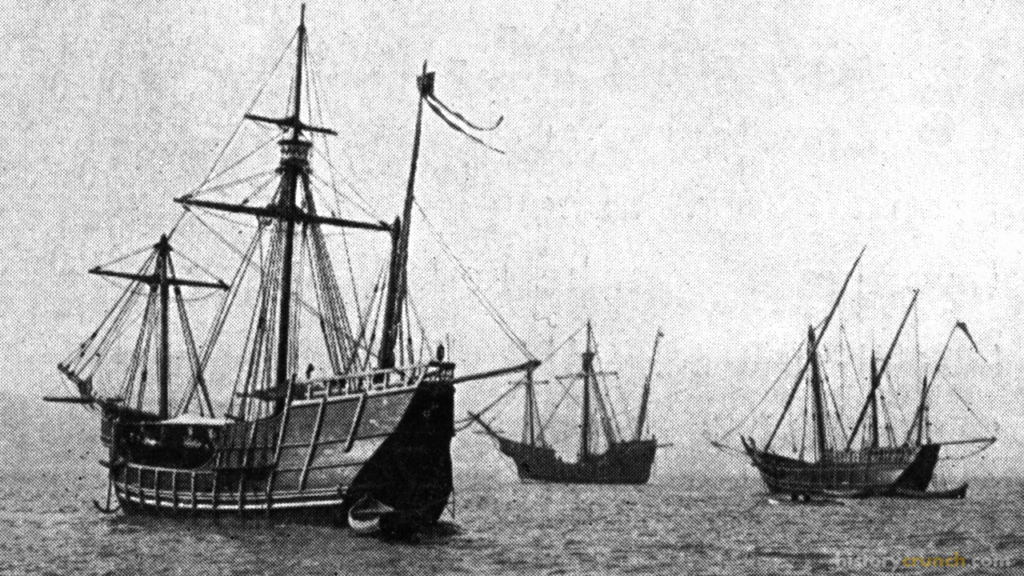
Columbus left Spain on 3 August 1492 with three ships: two caravels, the Nina and the Pinta, and a larger carrack, the Santa Maria. They refitted in the Canary Islands and set out across the Atlantic on 6 September.
LEARN MORESHOW LESSwhy it matters · 1 key figureMILITARYContrary to the story told in classrooms for a century, educated Europeans in 1492 knew the earth was a sphere. The argument was about how big it was, and Columbus was wrong about that.
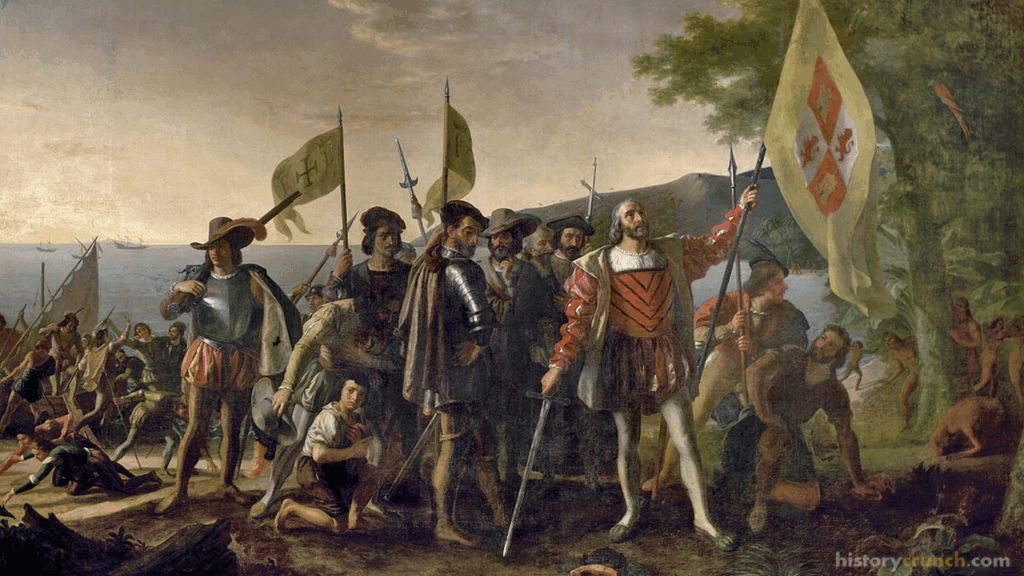
On 12 October 1492 Columbus made landfall in the Caribbean. He believed he had reached the outer islands of Asia and called the people he met Indians, a name that stuck for five centuries.
LEARN MORESHOW LESSwhy it matters · 1 key figurePOLITICALThe most important misunderstanding in world history. Everything in the three eras that follow comes out of this day.
The Santa Maria, the largest of the three ships, ran aground off Hispaniola on Christmas Day 1492 and had to be abandoned. Her timbers were used to build a small fort for the men who could not fit aboard the remaining ships.
LEARN MORESHOW LESSwhy it mattersMILITARYThe first European settlement in the Americas was an accident, built from a wreck because there was no room to take everyone home.
The second voyage left Spain on 24 September 1493 with a fleet many times the size of the first. Its purpose was not exploration but permanent colonies.
LEARN MORESHOW LESSwhy it matters · 1 key figurePOLITICALThe difference between the first voyage and the second is the difference between finding a place and taking it. Seventeen months separate them.
On the second voyage Columbus carried horses, pigs, sheep, dogs, cattle, chickens and goats, along with seeds and plants. He also carried diseases nobody aboard knew they were carrying.
LEARN MORESHOW LESSwhy it mattersECONOMICThe exchange that reshaped the diet, farming and population of both hemispheres starts on this crossing, and most of it was unintended.
At least 1,600 Taino were enslaved, some transported to Spain and others forced into labor on Hispaniola under the system later formalized as the encomienda, which granted a colonist the labor of the people living on an area of land. The settlement was also struck by hurricanes in 1494 and 1495.
LEARN MORESHOW LESSwhy it matters · key numbersSOCIALThis is part of the record of the second voyage, and it is why the argument about how Columbus should be remembered is an argument about evidence rather than opinion.
On 31 July 1498 Columbus arrived at a point further south than he had ever reached, touching the mainland of South America for the first time.
LEARN MORESHOW LESSwhy it matters · 1 key figureMILITARYHe had found a continent, and explained it to himself as an unknown part of Asia. The explanation held for the rest of his life.
Columbus left Spain on 11 May 1502 with four ships, looking for a strait through to the Indian Ocean. He was caught in a storm he described in his journal that December: 'For nine days I was as one lost, without hope of life.'
LEARN MORESHOW LESSwhy it matters · a source · 1 key figureMILITARYThere was no strait at that latitude and he could not have known it. Magellan would find the real one seventeen years later, thousands of miles further south.
IN THEIR OWN WORDS“For nine days I was as one lost, without hope of life.”
Christopher Columbus, journal, December 1502
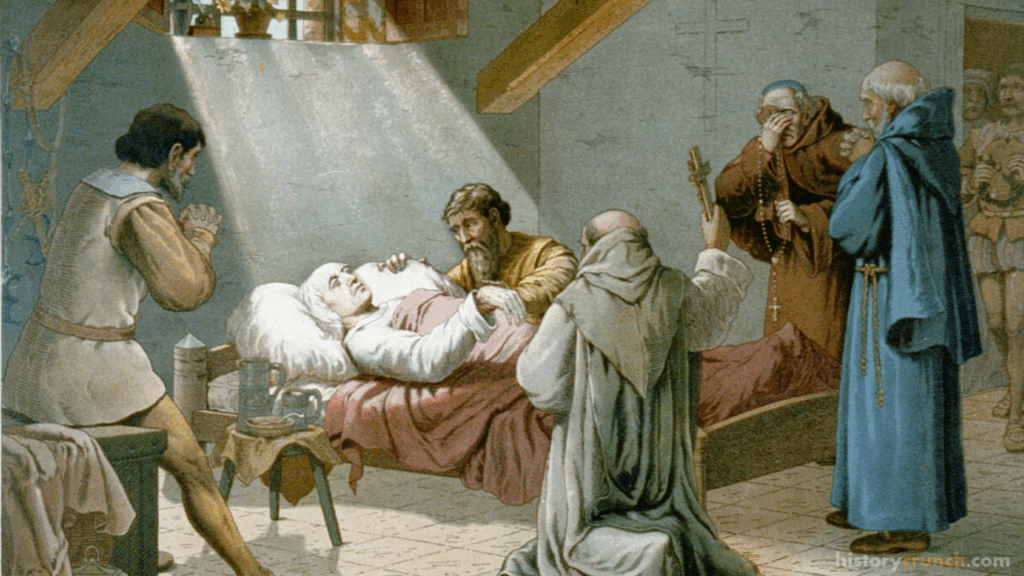
Columbus died in 1506 convinced he had found a route to Asia. He was not widely credited with reaching a separate continent, and the continent was named after somebody else.
LEARN MORESHOW LESSwhy it matters · 1 key figureSOCIALThe man who crossed first did not understand what he had crossed to. That is why the map says America.
Once the Atlantic had been crossed, the question became what exactly had been crossed to, and how big the world actually was. Cabot sailed for England, Vespucci wrote the letter that gave the continent its name, Balboa climbed a hill in Panama and saw a second ocean, and Magellan went looking for a way through to it. The answer cost five ships and two hundred and fifty-two men, and settled the size of the earth for good.
In 1496 John Cabot, a Genoese navigator sailing for England, made his first attempt to cross the Atlantic and turned back.
LEARN MORESHOW LESSwhy it matters · 1 key figureMILITARYEngland's entry into the age begins with a failure, four years after Columbus and with far less money behind it.
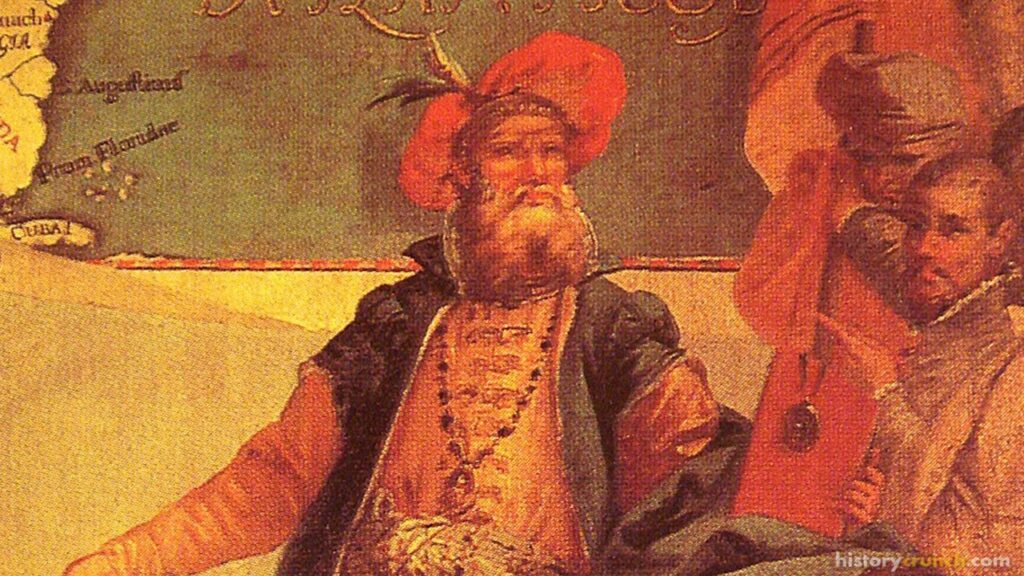
Backed by Bristol merchants and Henry VII, Cabot sailed again in May 1497 in a small ship called the Matthew with a crew of about eighteen to twenty men, and reached the North American coast.
LEARN MORESHOW LESSwhy it matters · key numbers · 1 key figureMILITARYEngland's first real claim in the New World, made by twenty men in one small ship. Every later English colony argued back to this voyage.
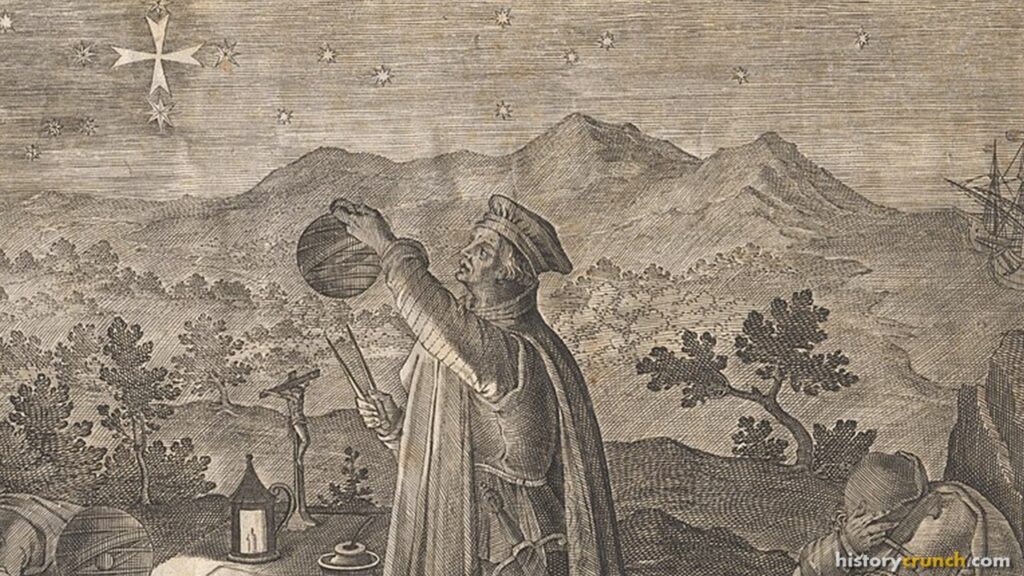
A letter published in 1503 under Vespucci's name, titled Mundus Novus, argued that the lands across the Atlantic were not Asia at all but a continent nobody in Europe had known about. It spread rapidly across Europe.
LEARN MORESHOW LESSwhy it matters · 1 key figureSOCIALColumbus crossed first; Vespucci was the one who said what had been crossed to. The difference in credit is the difference between doing something and explaining it.
In 1507 the cartographer Martin Waldseemuller published a world map that labelled the new continent 'America', crediting Vespucci as the first to recognize it as a separate landmass.
LEARN MORESHOW LESSwhy it matters · 1 key figureSOCIALTwo continents and about a billion people now carry the first name of a Florentine who never commanded a voyage of his own.
Ponce de Leon had sailed with Columbus in 1493 and governed Puerto Rico before political rivalry cost him the post. On 2 April 1513 he sighted a coast he took for an island and named it La Florida, land of flowers.
LEARN MORESHOW LESSwhy it matters · 1 key figureMILITARYThe first documented European landing on what is now the mainland United States, made by a man who had been pushed out of his job.
In September 1513 Balboa crossed the Isthmus of Panama with about 190 Spanish soldiers and several hundred indigenous guides and allies. On 25 September he climbed a peak and became the first European to see the Pacific from the Americas, claiming the ocean and every shore it touched for Spain.
LEARN MORESHOW LESSwhy it matters · key numbers · 1 key figureMILITARYThe moment Europe learned there was another ocean on the far side. It also tells you how these expeditions actually worked: 190 Spaniards and several hundred local allies.
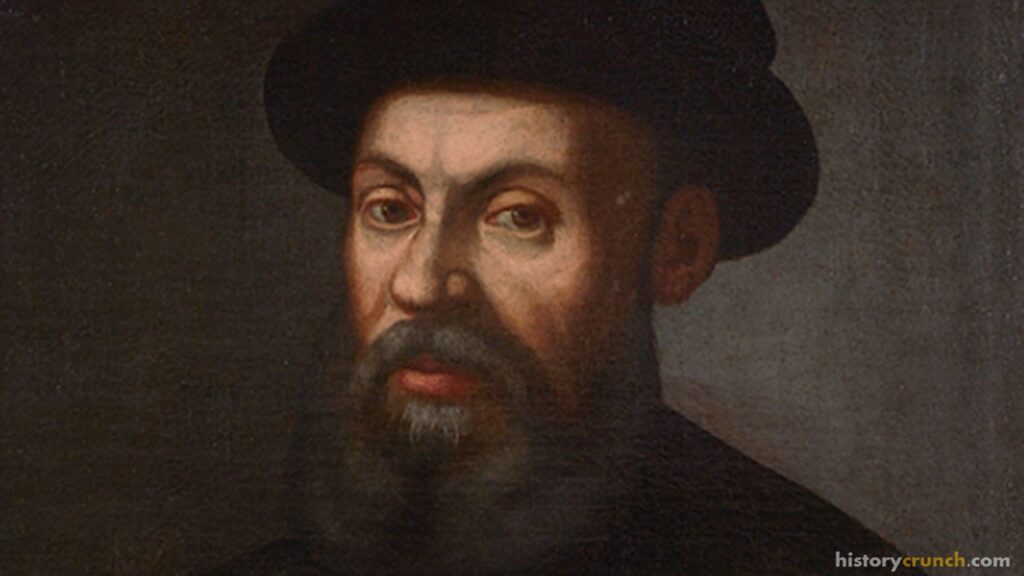
On 20 September 1519 Ferdinand Magellan, a Portuguese captain sailing for Spain, left Seville with five ships and around 270 men to find a western route to the spice islands.
LEARN MORESHOW LESSwhy it matters · key numbers · 1 key figureMILITARYThe most ambitious voyage yet attempted, and the one that would finally settle the size of the world Columbus had guessed wrong about.
In October 1520, after more than a year of coasting South America and putting down a mutiny, the fleet found a narrow waterway through to the far ocean. It is still called the Strait of Magellan.
LEARN MORESHOW LESSwhy it matters · 1 key figureMILITARYThe passage Columbus died looking for, found eighteen years later at the other end of a continent.
Having crossed the Pacific and reached the Philippines, Magellan became entangled in a local conflict and was killed in the Battle of Mactan on 27 April 1521.
LEARN MORESHOW LESSwhy it matters · 1 key figureMILITARYThe man who proved the world could be circled did not circle it. He died two thirds of the way round, in a fight that was not his.
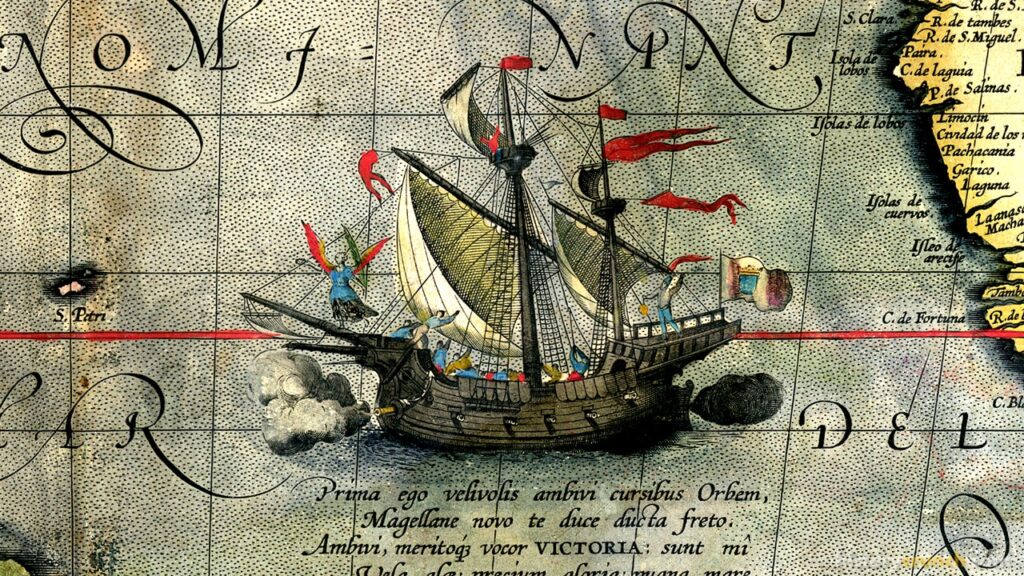
Of the five ships that left Seville in 1519, one returned: the Victoria, in 1522. Of roughly 270 men, 18 completed the journey.
LEARN MORESHOW LESSwhy it matters · key numbersMILITARYThe first circumnavigation in history cost fifteen men in every sixteen. That number is the honest measure of what these voyages were.
Crews lived in cramped, wet quarters on salted food and water that spoiled within weeks. Scurvy, dysentery and accidents killed steadily, and discipline was kept with harsh punishments.
LEARN MORESHOW LESSwhy it mattersSOCIALEvery captain on this timeline is remembered by name and almost none of their crews are. This is the card about the other ninety-nine per cent.
Within forty years two of the largest states on earth were gone, and the usual explanation – a few hundred Spaniards with steel and horses – is not what the records show. Smallpox arrived first and killed without preference. Both empires had subject peoples who were willing to fight them. Cortes took Tenochtitlan with thousands of Tlaxcalan warriors beside him, and Pizarro walked into an Inca civil war. The conquistadors supplied the final push to structures that were already breaking.
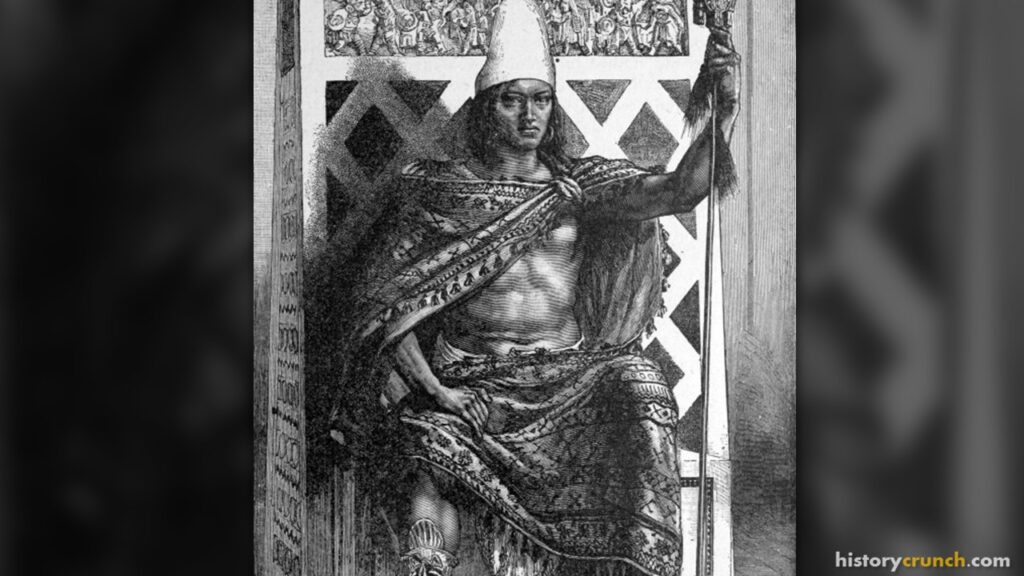
Moctezuma II became the ninth huey tlatoani and ruler of Tenochtitlan in 1502, inheriting an empire that dominated Mesoamerica and drew tribute from city-states across the valley and beyond.
LEARN MORESHOW LESSwhy it matters · 1 key figurePOLITICALHe is the man who will have to decide what to do about the Spanish, and he is remembered almost entirely for those two years rather than the seventeen before them.
Moctezuma II was first made aware of the Spanish in 1517, when conquistadors landed at the edge of Aztec territory on the coast of the Gulf of Mexico.
LEARN MORESHOW LESSwhy it matters · 1 key figurePOLITICALTwo years of warning. What he did with them is one of the hardest questions in this whole timeline.
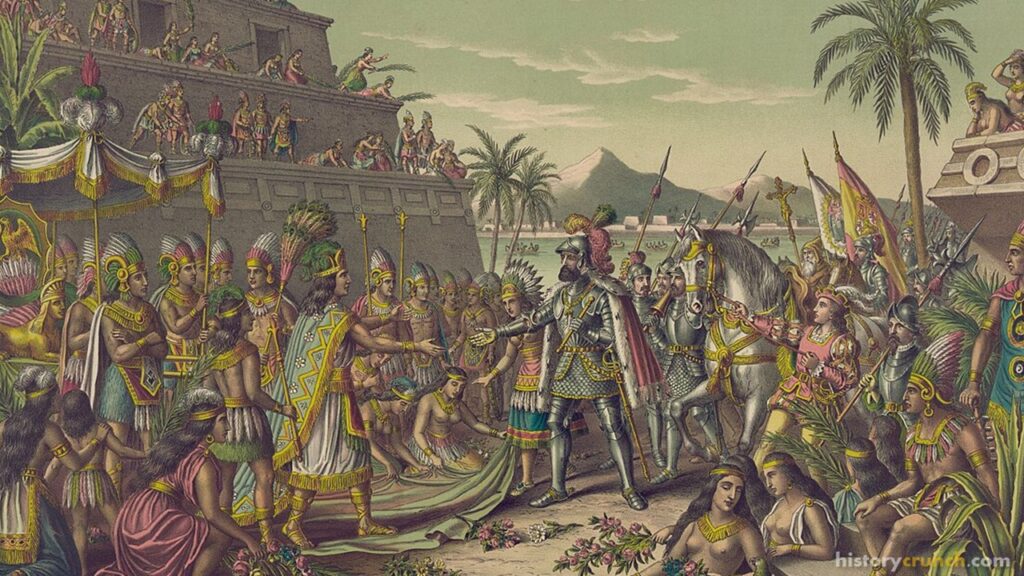
Hernan Cortes and his men reached Tenochtitlan in November 1519 and met Moctezuma II in the Aztec capital, a city built on a lake and larger than almost anything in Europe.
LEARN MORESHOW LESSwhy it matters · 2 key figuresPOLITICALThe two men at the center of the conquest stand in the same room. Within two years one is dead, the other rules the city, and the empire is gone.
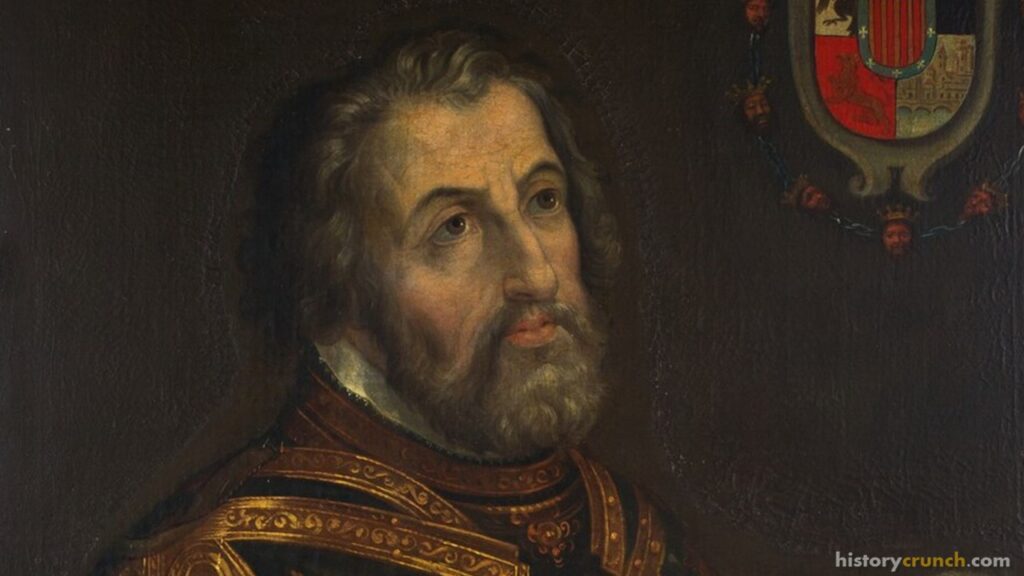
Cortes was born in Medellin, Spain, in 1485 and sailed for Hispaniola in 1504, twelve years after Columbus's first crossing. He heard of the Aztec through contact with other peoples in the region.
LEARN MORESHOW LESSwhy it matters · 1 key figureSOCIALHe was not sent by a king to topple an empire. He was a colonist on a Caribbean island who went looking, and exceeded his orders doing it.
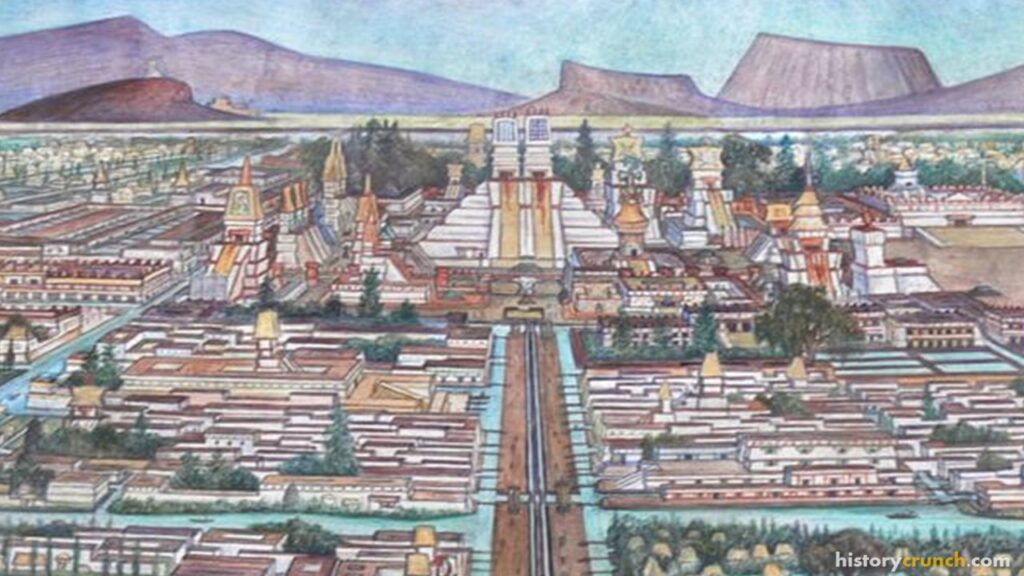
With the Spanish quartered in Tenochtitlan, Spanish forces attacked Aztec nobles and priests gathered for a religious festival in the Great Temple precinct, killing large numbers of unarmed people.
LEARN MORESHOW LESSwhy it mattersMILITARYWhatever accommodation had been possible ended here. From this point the Aztec fought.
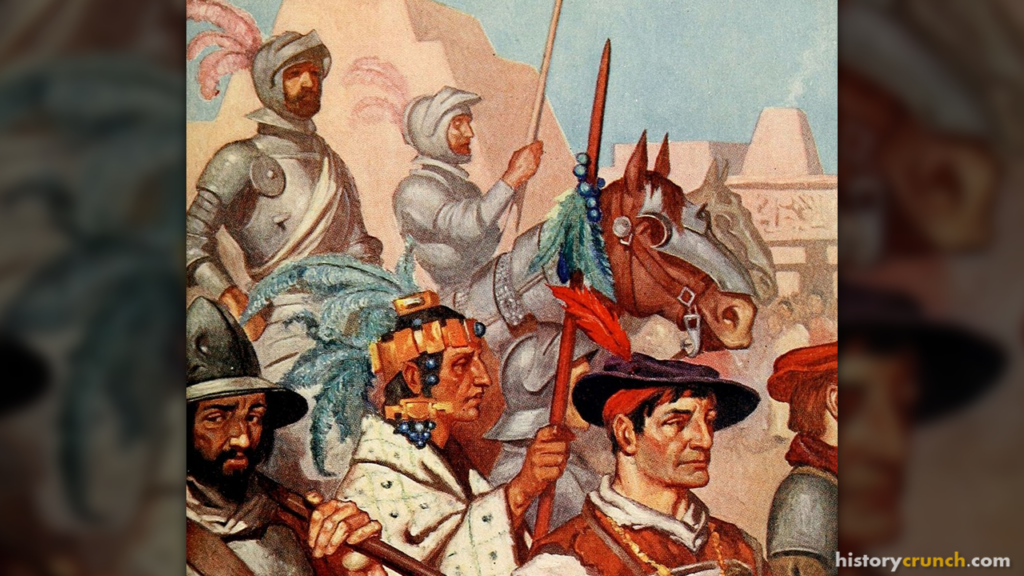
From September to November 1520 smallpox swept through Tenochtitlan. The Aztec had no immunity to it, and it killed without regard to rank, carrying off warriors, priests and rulers alike.
LEARN MORESHOW LESSwhy it mattersSOCIALThe single largest cause of the collapse, and nobody planned it. Disease did what no army of a few hundred men could have done.
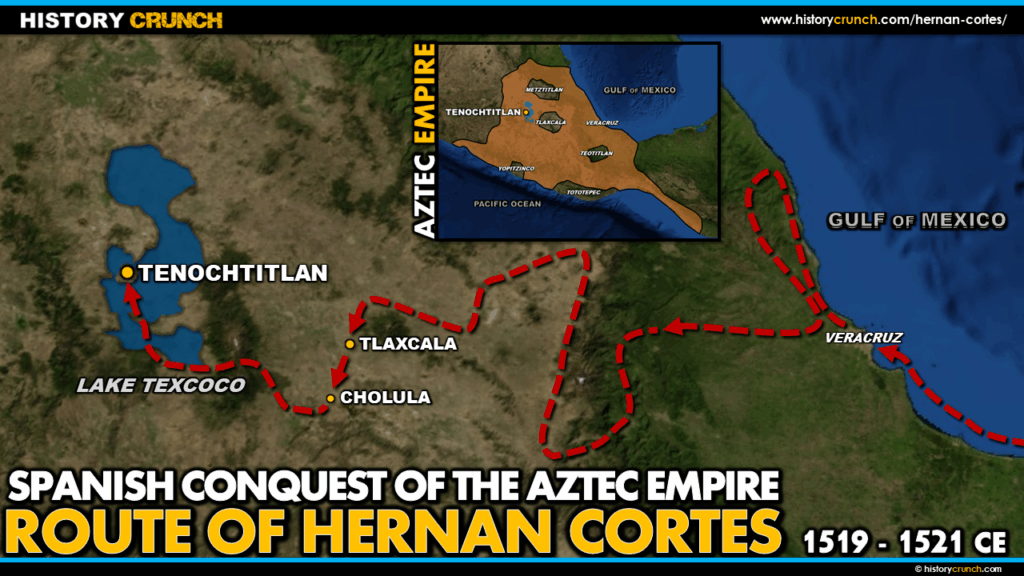
The Spanish and their Tlaxcalan allies left Tlaxcala on 26 December 1520 and set about making alliances with other city-states around Lake Texcoco against Tenochtitlan. When the attack came, thousands of Tlaxcalan and Texcocan warriors fought alongside the Spanish.
LEARN MORESHOW LESSwhy it matters · 1 key figureMILITARYThis is the answer to how a few hundred Spaniards took an empire of millions. They did not. They joined a war that the Aztec's neighbors were already willing to fight.
A new tlatoani, Cuauhtemoc, was chosen in February 1521 to lead a city already gutted by disease and facing a besieging army made up mostly of other Mesoamericans.
LEARN MORESHOW LESSwhy it matters · 1 key figurePOLITICALHe inherited a position nobody could have held, and he held it for six months.
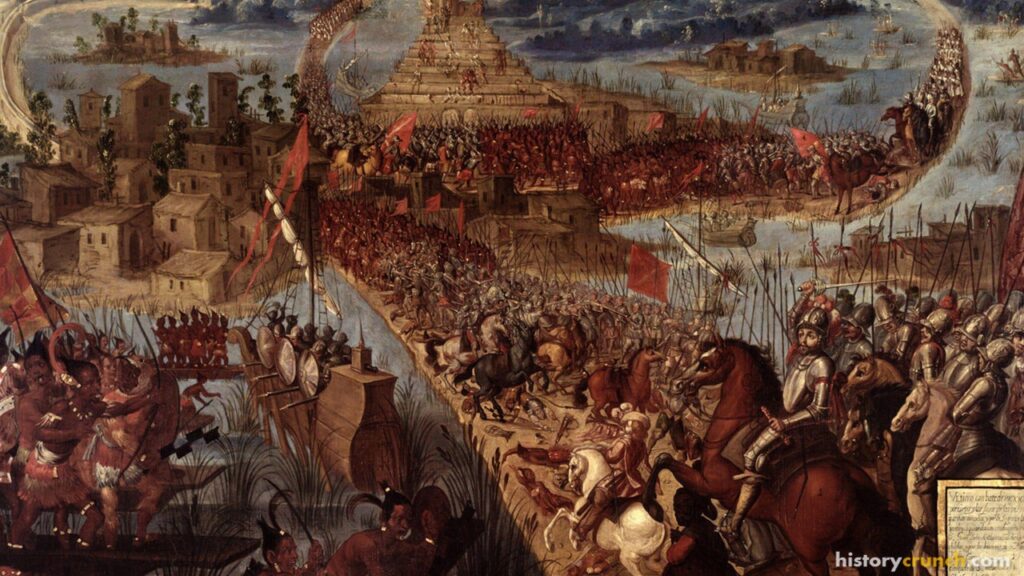
After a siege through the spring and summer of 1521, Tenochtitlan was captured by the Spanish and their Tlaxcalan allies on 13 August 1521. The Triple Alliance formed in 1428 ended with it.
LEARN MORESHOW LESSwhy it matters · key numbersMILITARYOne of the largest cities on earth, destroyed in two years by disease, siege and the resentment of its own neighbors. Mexico City was built on the ruins.
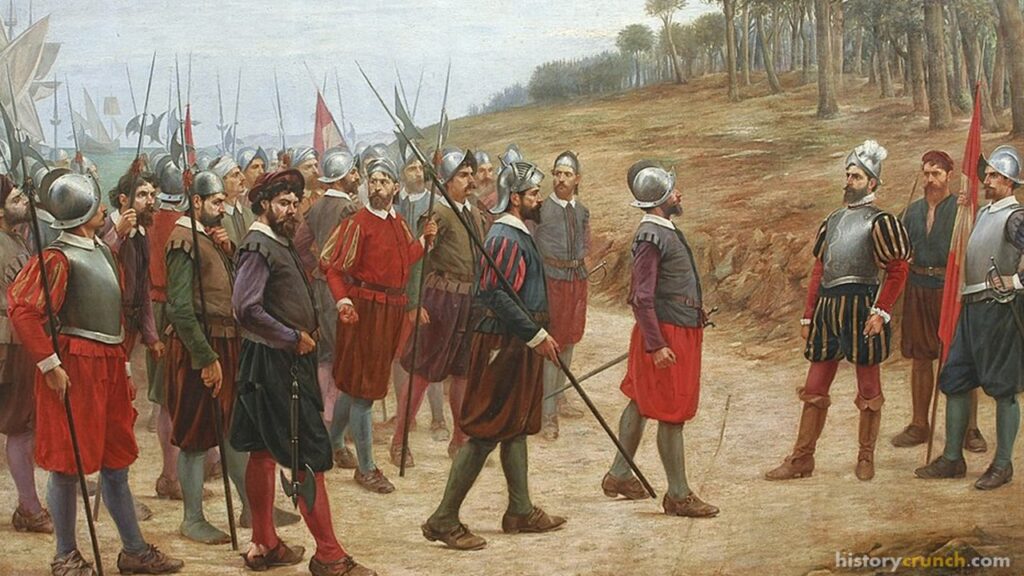
In 1532 Francisco Pizarro landed on the northern coast of Peru with about 168 Spanish soldiers, 27 horses and a few cannon, and moved inland toward one of the largest empires in the world.
LEARN MORESHOW LESSwhy it matters · key numbers · 1 key figureMILITARY168 men. The number only makes sense alongside the next card.
By the time Pizarro arrived, the Inca Empire had been struck by European disease travelling ahead of any European, and was split by a civil war between rival claimants to the throne.
LEARN MORESHOW LESSwhy it mattersPOLITICALThe same two forces as in Mexico, in the same order: disease first, division second, soldiers last. Pizarro walked into a country that was already fighting itself.
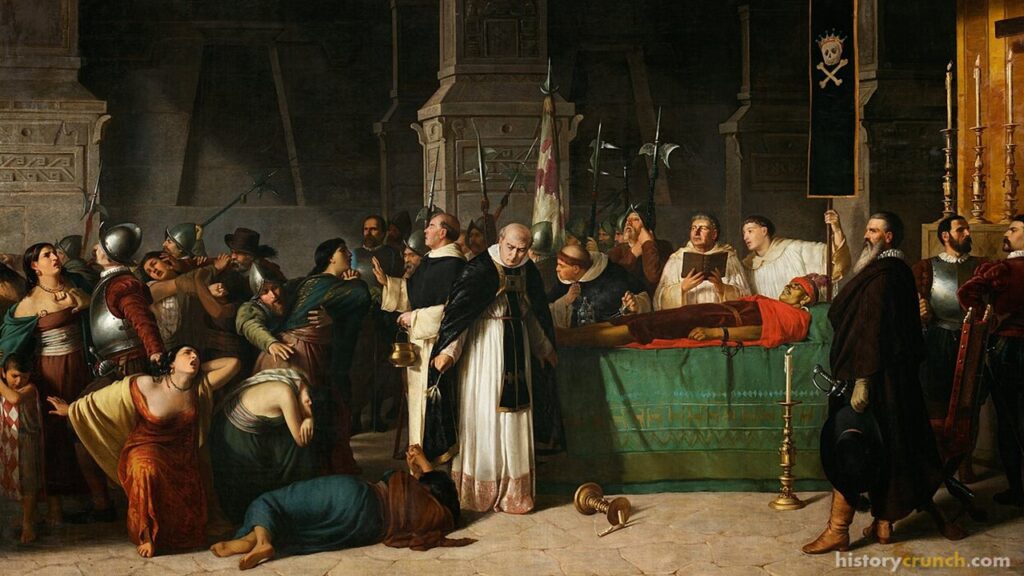
Atahualpa was seized and promised a room filled with treasure for his release. By May 1533 the Inca had delivered it and the Spanish began melting it down. Atahualpa was baptized a Christian and then executed by strangulation.
LEARN MORESHOW LESSwhy it matters · 2 key figuresPOLITICALThe ransom was paid in full. It is the clearest single illustration of what the conquest was, and it is why the episode is still taught.
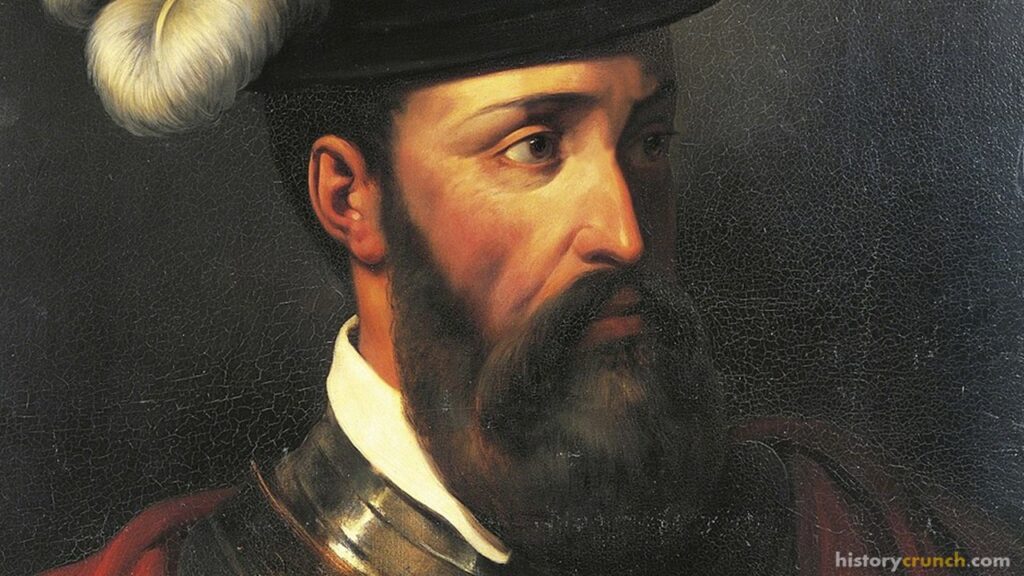
In 1535 Pizarro founded Lima, which became the capital of the Viceroyalty of Peru and is still the capital of Peru today. The Spanish ruled the Andes from a new city on the coast rather than from Cusco.
LEARN MORESHOW LESSwhy it matters · 1 key figurePOLITICALMoving the capital to the sea was a decision about where power now came from: ships, and the route home.
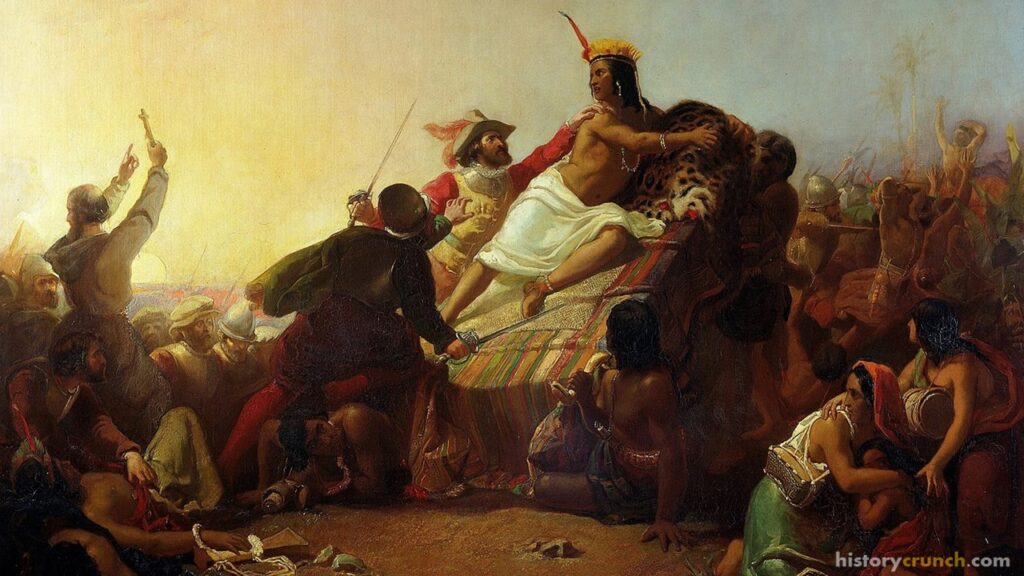
Resistance continued for forty years after Pizarro landed. In 1572 the last Inca ruler, Tupac Amaru, was captured and executed, marking the formal end of the empire.
LEARN MORESHOW LESSwhy it matters · key numbersPOLITICALThe conquest was not a single event in 1532. It took four decades, and the resistance is the part usually left out.
England, France and the Dutch arrived two generations late to a world Spain and Portugal had already divided, so they went looking for a different way in: a northern passage to Asia that did not exist. They found the St Lawrence, the Hudson, Newfoundland and a great deal of ice. What they could not take by discovery they took by raiding, and by 1588 the Armada was broken and the Atlantic was open to everybody.
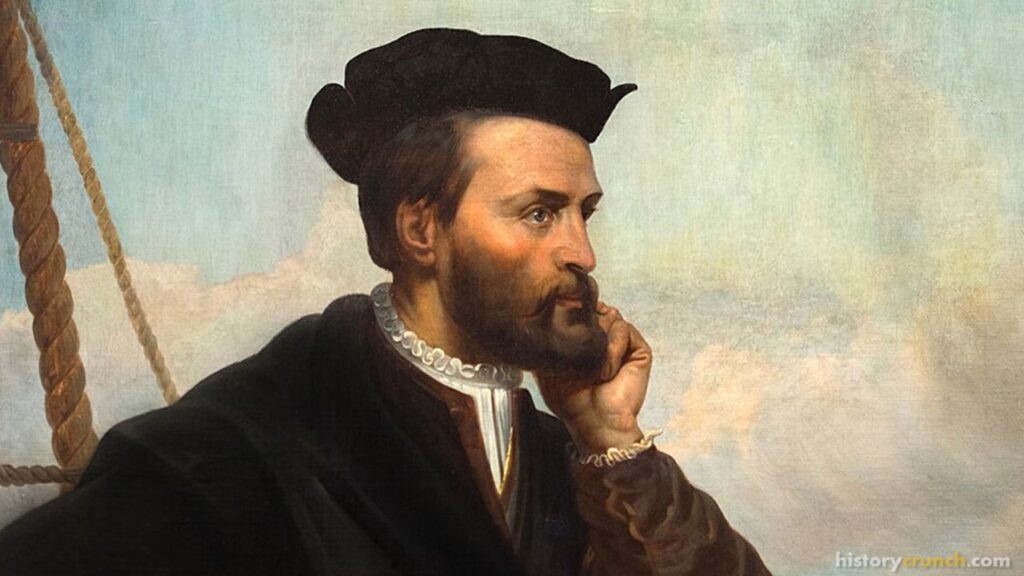
Jacques Cartier, born in Saint-Malo on 31 December 1491, set out on his first voyage on 20 April 1534 and entered the Gulf of St Lawrence, claiming the land for France.
LEARN MORESHOW LESSwhy it matters · 1 key figureMILITARYFrance arrives forty-two years after Columbus, looking for a northern route to Asia and finding Canada instead.
Cartier returned to France in September 1534 after only a couple of months, bringing two indigenous captives with him. He hoped they would impress the French court and yield information about riches inland.
LEARN MORESHOW LESSwhy it matters · 1 key figureSOCIALTaking people back as proof and as sources of intelligence was standard practice on these voyages, and it is worth naming rather than passing over.
Cartier's second voyage sailed in 1535 with three ships and over 110 crew, pushing up the St Lawrence past the sites of Quebec and Montreal, and returned to France in 1536.
LEARN MORESHOW LESSwhy it matters · 1 key figureMILITARYThe river turned out to be a road into a continent rather than a passage through it. That discovery shapes French North America for the next two hundred years.
Hernando de Soto had taken a large share of the Inca ransom and returned to Spain wealthy in 1536. In 1539 he landed in North America with an armed expedition looking for another Peru.
LEARN MORESHOW LESSwhy it matters · 1 key figureMILITARYHe was funded by the gold of one conquest and went looking for the next. It is the clearest case of the conquests paying for each other.
Cartier's third and final voyage set out in 1541 and lasted a year. The gold and diamonds he carried home proved to be iron pyrite and quartz, and France did not seriously return for sixty years.
LEARN MORESHOW LESSwhy it matters · 1 key figurePOLITICALFool's gold ended French exploration for two generations. What finally brought them back was fur, which was real.
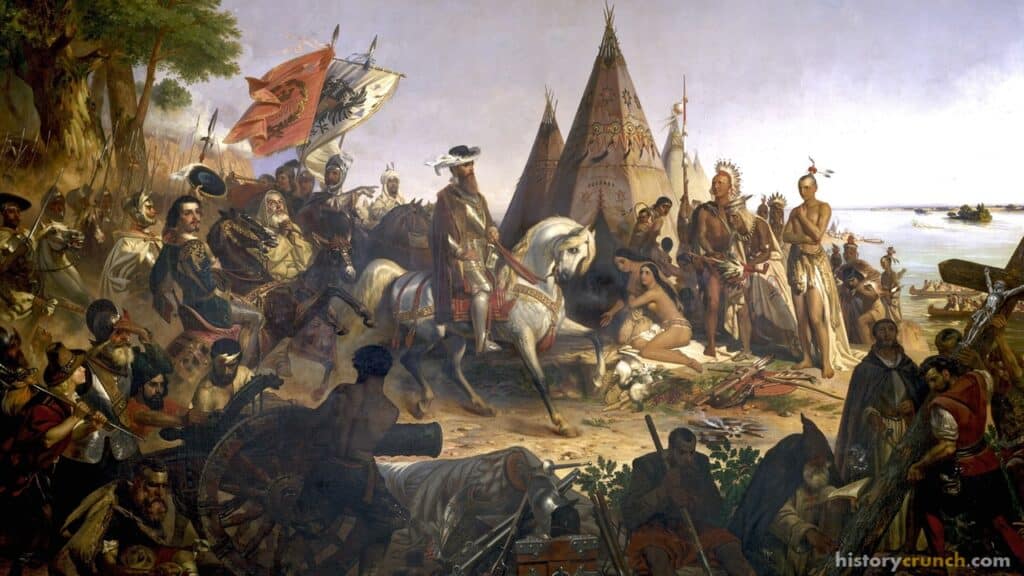
In 1541 de Soto's expedition reached the Mississippi River. He died of fever on 21 May 1542 near its banks, in what is now Louisiana or Arkansas, having found no second Peru.
LEARN MORESHOW LESSwhy it matters · 1 key figureMILITARYThree years of marching through the American south, and the expedition's lasting effect was the disease it left behind in the towns it passed through.
Francis Drake, born in Devon about 1540, set out in December 1577 with five ships on a mission to raid Spanish holdings and explore. He had already raided Spanish towns on his own account in 1572.
LEARN MORESHOW LESSwhy it matters · 1 key figureMILITARYEngland could not match Spain's empire, so it robbed it. Drake was a national hero at home and a pirate in Madrid, and both descriptions fit.
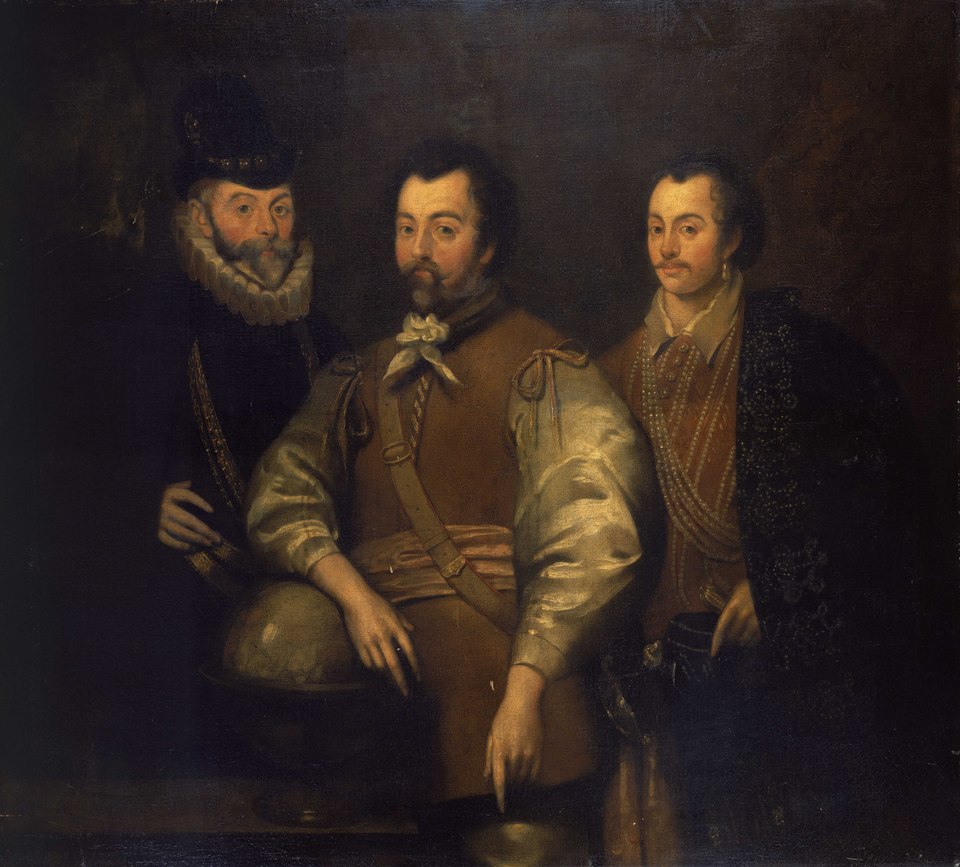
Drake crossed the Pacific, Indian and Atlantic oceans and reached England in September 1580 with a vast haul of Spanish treasure. Elizabeth I knighted him in 1581.
LEARN MORESHOW LESSwhy it matters · 2 key figuresECONOMICThe second circumnavigation in history, and the first whose captain came home alive. It paid for itself many times over.
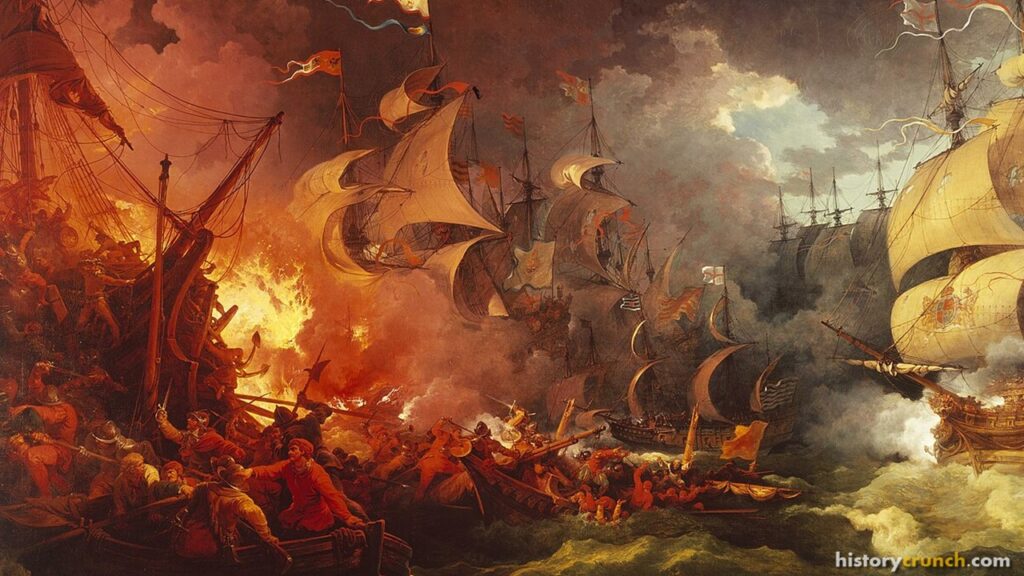
The rivalry between England and Spain, sharpened by decades of raiding, came to a head in 1588 when England defeated the Spanish Armada.
LEARN MORESHOW LESSwhy it mattersMILITARYSpain's command of the Atlantic was broken, and the door opened for English and Dutch colonies on the American coast.

Founded in 1602, the VOC was a joint-stock company with 21 years of monopoly rights and the power to raise armies, wage war and sign treaties in its own name.
LEARN MORESHOW LESSwhy it mattersECONOMICExploration stops being a royal project and becomes a business with shareholders. Almost every later empire is built on this model.
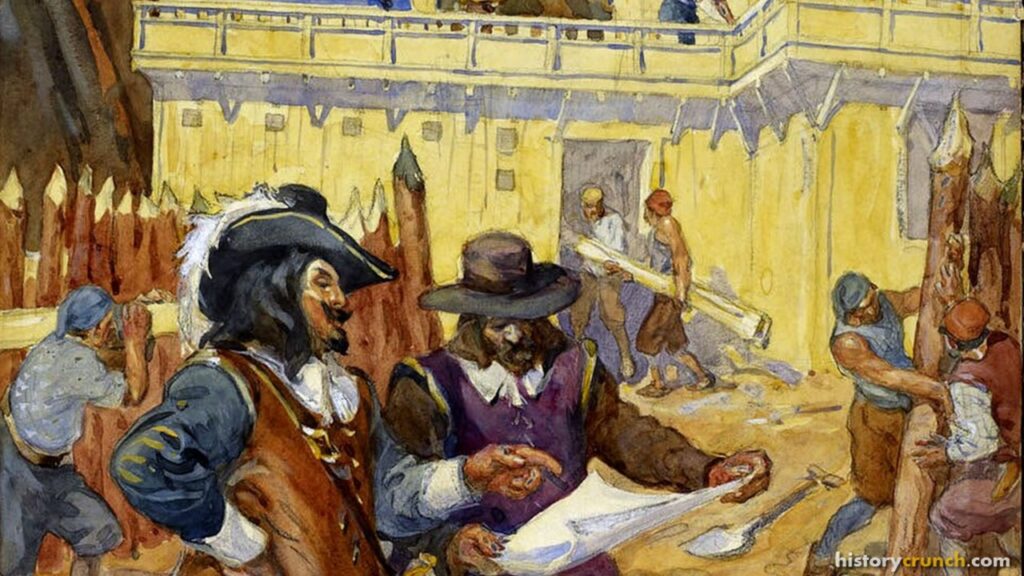
Samuel de Champlain, born about 1574, made his first North American voyage in 1603 and in 1608 established the settlement of Quebec on the banks of the St Lawrence. It became the capital of New France.
LEARN MORESHOW LESSwhy it matters · 1 key figurePOLITICALThe first permanent French foothold in North America, on the river Cartier had found seventy-four years earlier.
Hudson had already failed twice to find a northern route, turned back by ice in 1607 and 1608. In 1609 the Dutch East India Company hired him to find a north-westerly passage to China; he found the river that now carries his name.
LEARN MORESHOW LESSwhy it matters · 1 key figureMILITARYNo passage, but the Dutch claim to the Hudson valley starts here, and so does New Amsterdam.
On a further voyage backed by the British East India Company, Hudson's ship was trapped by ice through the winter. When it melted in 1611 he wanted to keep searching. His crew mutinied, set him adrift in a small boat with his son and a few loyal men, and sailed home. He was never seen again.
LEARN MORESHOW LESSwhy it matters · 1 key figureSOCIALThe last card of the era, and the plainest statement of what the search for the Northwest Passage cost the men sent to find it.
Maize, potatoes and tomatoes crossed east; wheat, sugar, cattle and horses crossed west; and diseases crossed in both directions with catastrophic effect in one. Exploration turned into occupation, and the same sea routes that carried spices carried twelve million enslaved Africans. The argument about how to remember it began with a Spanish friar in the sixteenth century and has never stopped, which is why the last card here is about a public holiday.
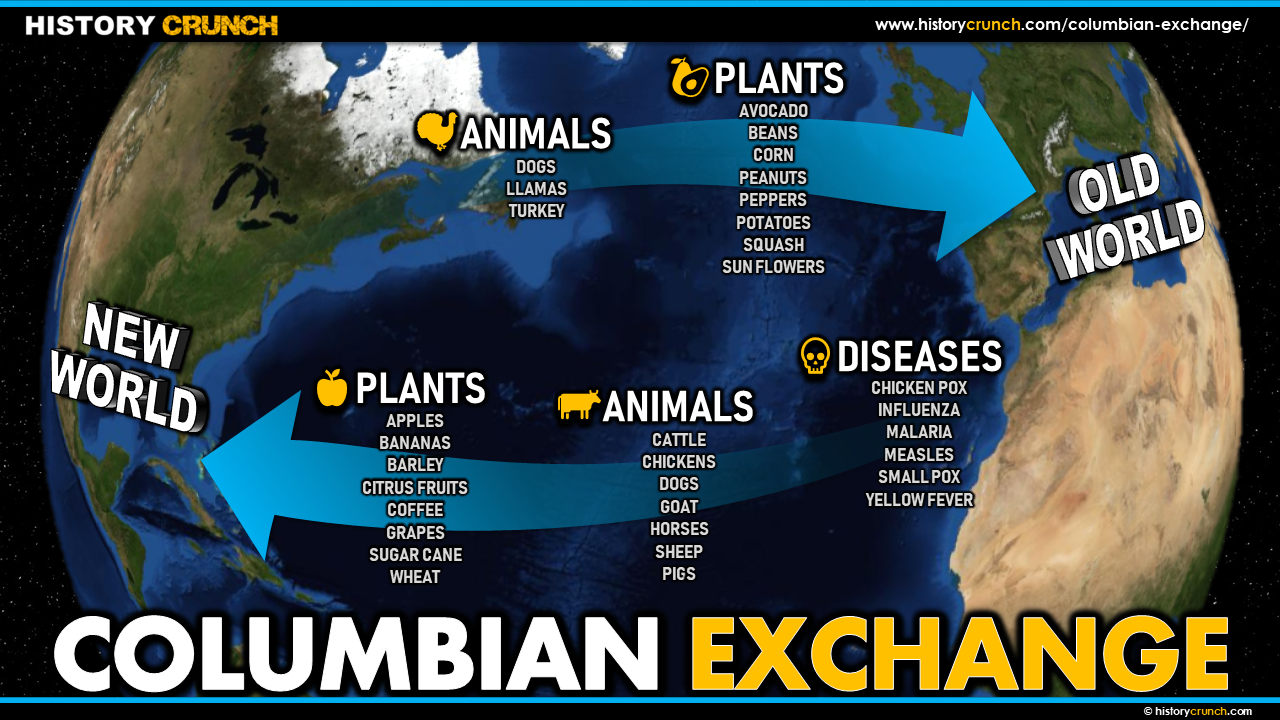
The Columbian Exchange was the transfer of plants, animals, people and diseases between the New World and the Old following Columbus's 1492 voyage. Maize, potatoes and tomatoes went east; wheat, sugar, horses and cattle went west.
LEARN MORESHOW LESSwhy it mattersECONOMICThe largest change to the human diet in recorded history, and it runs in both directions. Most of what Italy, Ireland and West Africa are famous for eating arrived this way.
Smallpox, measles and influenza arrived with the ships. Populations with no prior exposure died in numbers that emptied whole regions, often well ahead of any European arriving in person.
LEARN MORESHOW LESSwhy it mattersSOCIALThe largest demographic catastrophe in recorded history, and unlike the conquests it was nobody's plan. Both facts are true at once.
Exploration became occupation. European powers claimed territory, imposed their own government and religion, and organized the land and its people for export.
LEARN MORESHOW LESSwhy it mattersPOLITICALThe word exploration stops describing what is happening somewhere in the sixteenth century. This card is where the timeline says so.
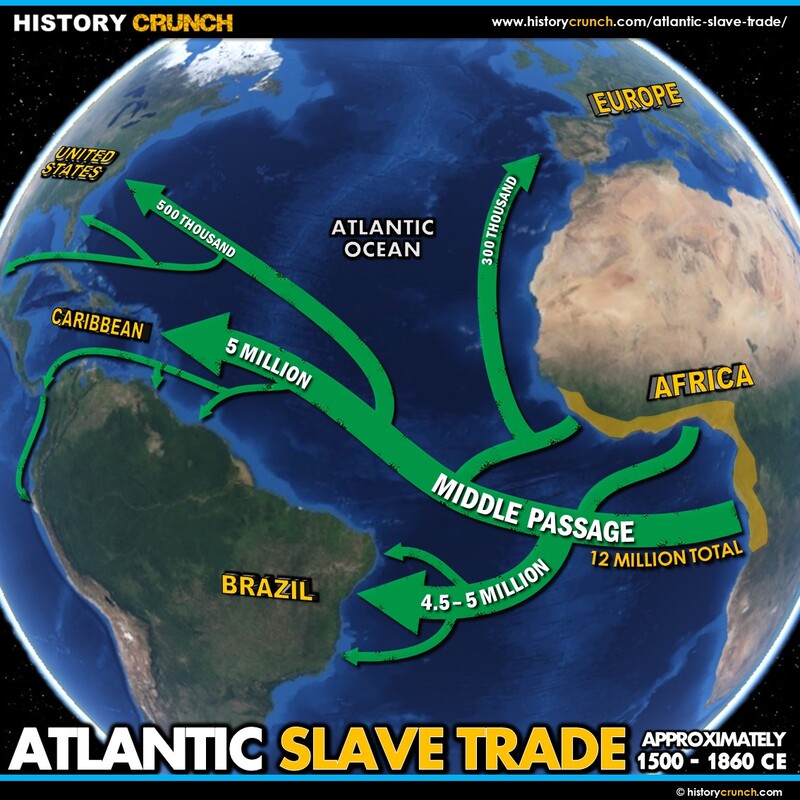
The Portuguese voyages down the African coast that began under Henry opened the trade in enslaved Africans, and the plantations established in the Americas created a demand that lasted for centuries.
LEARN MORESHOW LESSwhy it mattersSOCIALThe sea route to the spices and the sea route that carried twelve million enslaved people are the same route, opened by the same programme.
Bartolome de las Casas, a Spanish friar who lived from 1484 to July 1566, wrote detailed accounts of the treatment of indigenous people in the Spanish colonies, including of Columbus himself.
LEARN MORESHOW LESSwhy it matters · 1 key figureSOCIALThe criticism is not a modern invention. It was written by a Spaniard, at the time, who had seen it.
Groups across the United States celebrated the 400th anniversary of Columbus's landing in 1892 as an expression of patriotism and national pride, particularly among Italian American communities facing hostility.
LEARN MORESHOW LESSwhy it mattersSOCIALHow Columbus is remembered has always been about the present. In 1892 he was useful to people who needed to belong.
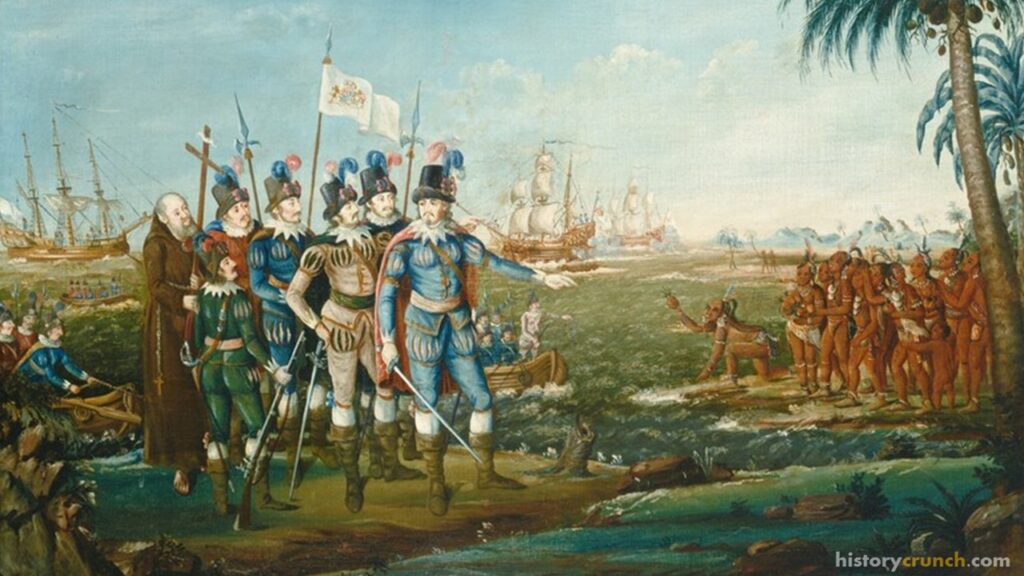
Columbus Day was recognized as a federal holiday in 1934 under President Franklin D. Roosevelt. Since 1971 it has fallen on the second Monday in October. Several Latin American countries mark the same day as Dia de la Raza.
LEARN MORESHOW LESSwhy it matters · a debatePOLITICALA holiday named for one man's landfall, and the argument about whether to keep it is really an argument about everything else on this timeline.
Should Columbus Day be kept?
It honors navigation and courage, and it was adopted by Italian American communities as a claim to belong in a country that treated them badly. Removing it erases that too.
A holiday is an endorsement, and this one marks the beginning of colonization, enslavement and catastrophic population loss. Several American states now mark Indigenous Peoples' Day instead.

I'm a passionate history and geography teacher with over 15 years of experience working with students in the middle and high school years. I have an Education Degree with a focus in World History. I have been writing articles for History Crunch since 2015 and love the challenge of creating historical content for young learners!

I'm the founder of History Crunch, which I first began in 2015 with a small team of like-minded professionals. I have an Education Degree with a focus in Social Studies education. I spent nearly 15 years teaching history, geography and economics in secondary classrooms to thousands of students. Now I use my time and passion researching, writing and thinking about history education for today's students and teachers.

K.L. is a content writer for History Crunch. She is a fantastic history and geography teacher that has been helping students learn about the past in new and meaningful ways since the mid-2000s. Her primary interest is Ancient History, but she is also driven by other topics, such as economics and political systems.
To cite this timeline as a source, use one of the formats below.
MLA: Beck, E., et al. “Age of Exploration Timeline.” HistoryCrunch, 12 September 2026, https://historycrunch.com/age-of-exploration-timeline/.
APA: Beck, E., Millar, B., & Woida, K.L. (2026). Age of Exploration Timeline. HistoryCrunch. https://historycrunch.com/age-of-exploration-timeline/
Chicago: Beck, E., B. Millar, and K.L Woida. “Age of Exploration Timeline.” HistoryCrunch. September 12, 2026. https://historycrunch.com/age-of-exploration-timeline/
© History Crunch
China had bigger ships and had sailed further, fifty years earlier, and then stopped. Why did Europe keep going?
Historians divide over whether this was mainly economic or mainly technological. One case is that the closing of the overland routes made the profit enormous and the ships would have followed regardless. The other is that the caravel, the compass and usable charts arrived first and made an old ambition finally possible. A third position points at Portugal's position on the Atlantic and a crown willing to fund losses for decades, and says the real cause is institutional.
The word discovery assumes nobody was home. Two of the largest states on earth were. What were they?
Historians argue about population numbers, and the argument matters because it decides how catastrophic the collapse was. Estimates for the Americas in 1492 have ranged from about 8 million to over 100 million. The higher figures rest on disease modelling and carrying-capacity studies, the lower on colonial censuses taken after the epidemics had already passed through, which is the problem with them.
The compass, the astrolabe, the chart and the caravel. If you could give a captain of 1400 only one of them, which one?
Historians of technology usually reject the single-invention story. The caravel, the compass and the chart all existed elsewhere in some form, and the argument has shifted to why Portugal combined them into a sustained state programme when other powers did not.
Men sailed for two years, half of them died, and the cargo still made a profit. How is that possible?
Economic historians dispute how much the spice trade actually mattered to Europe as a whole. One view treats it as the engine of early modern commerce. Another points out the volumes were small relative to European agriculture and textiles, and argues the real significance was the financial machinery it produced – joint-stock companies, insurance and long-distance credit.
Portugal spent eighty years creeping down the African coast before it got to India. Who keeps funding something for that long?
Historians have grown sceptical of the Henry the Navigator story, much of which comes from a chronicler working for his family. The school at Sagres may never have existed as an institution. What is not disputed is that Portugal ran a sustained, state-backed programme; the argument is about how much one prince directed it.
Dias found the way round Africa and was never given the voyage to India. Who decides whose name survives?
Historians point out that Dias's voyage was reconnaissance and da Gama's was a diplomatic and commercial mission with very different resources, so the two are not really comparable. Others argue that the pattern – the scout forgotten, the closer celebrated – repeats too often across this period to be coincidence.
The same voyages that opened the spice route opened the trade in enslaved Africans. Were they two programmes or one?
Historians disagree about continuity. One view is that Portuguese Atlantic slaving grew directly out of existing Mediterranean and trans-Saharan slavery and was not new in kind. Another argues that plantation slavery in the Americas was different in scale, in permanence and in its racial basis, and should not be treated as a continuation of anything.
A kingdom of under a million people controlled the sea route to Asia for a century. How?
Historians debate whether the Portuguese 'policy of secrecy' was as systematic as later writers claimed. Some argue it is a later reconstruction from scattered rules. Others point to the death penalty prescribed for selling charts abroad, and to how fast Portuguese knowledge reached Spain once its pilots could be hired by rivals.
The experts who turned him down had the better numbers. He sailed anyway and was saved by a continent he did not know was there. Is that skill or luck?
The flat-earth story is a nineteenth-century invention and historians have spent a century trying to kill it. The real dispute is different: whether Columbus was a skilled navigator with a bad premise, or a self-promoter whose success was almost entirely accidental. The logbooks support the first more than the second.
The first voyage was an exploration. By the second it was a colonization. What happened in seventeen months?
Historians disagree about how much responsibility Columbus personally bears. He was arrested by Spain's own investigator in 1500 for his conduct as governor, which suggests even by the standards of his employers he was extreme. Others argue the system of conquest and forced labor was the crown's design and he was its instrument.
A national holiday, hundreds of statues and a capital city carry his name. Others have pulled the statues down. Who is right?
The dispute is not mainly about evidence. Defenders of the holiday argue it honors navigation and the immigrant communities who adopted it when they were unwelcome. Critics argue a holiday is an endorsement and this one marks the start of colonization and catastrophic population loss. A third position says the man is being asked to carry the weight of everything that came after him, which no individual can.
In 1500 a royal investigator put Columbus in chains and shipped him back to Spain. What had he done that Spain objected to?
The Bobadilla report was rediscovered in 2006 and hardened the case against Columbus considerably. Some historians caution that it was compiled by a rival who took his job, and that testimony gathered by a successor is not neutral. Few now argue the picture it paints is wholly invented.
Columbus crossed first. The continent is named for a man who never commanded a voyage. How did that happen?
Vespucci's authorship of Mundus Novus is disputed; parts may have been written or embellished by publishers. Some historians treat him as a self-promoter who took credit for others' work. Others argue that recognizing the Americas as a separate landmass was the genuinely original insight, whoever wrote it down.
Five ships and 270 men went out. One ship and 18 men came back. Was it worth it?
Historians argue over whether Elcano, who brought the Victoria home, deserves more credit than Magellan. Spanish accounts have often favoured Elcano, Portuguese ones Magellan. The wider dispute is whether the voyage achieved anything practical, since the route was too long and lethal to use commercially for decades.
Balboa crossed Panama with 190 Spaniards and several hundred indigenous guides and allies. Whose expedition was it?
Recent scholarship has largely rewritten the conquest as a set of indigenous civil wars in which Europeans were one faction among several. Older accounts emphasized Spanish steel, horses and gunpowder. The current argument is about how much agency the allied states had, and whether they understood what they were helping to create.
Every voyage came home with new coastline. Who got to see it, and who decided what the names were?
Historians of cartography argue about how far early maps reflect knowledge versus ambition. Blank space was often filled with speculation because an empty map was commercially weak. The disagreement is over whether that makes them unreliable records or valuable evidence of what their makers wanted to be true.
The usual answer is steel, horses and guns. The records point somewhere else. Where?
Historians now agree disease was decisive but argue about the rest. One school emphasizes indigenous allies and treats the conquest as a civil war Spain joined. Another stresses Spanish advantages in steel, horses and writing. A third focuses on political structure: both empires were tribute systems whose subject states had little reason to defend them.
He had two years of warning, an army, and a city on an island reached by causeways he controlled. He let them walk in. Why?
The story that the Aztec mistook Cortes for a returning god is now heavily doubted; it appears mainly in sources written after the conquest, some by Spaniards and some by Nahua writers under Spanish rule. Alternative explanations include diplomatic protocol for receiving envoys, a deliberate attempt to assess a small force from close quarters, and simple miscalculation.
The Inca delivered a room of treasure for their emperor's release. The Spanish took it and executed him. What does that tell you?
Some historians argue the execution was a calculated decision: a living emperor was a rallying point and Pizarro's force was tiny. Others treat it as opportunism dressed up in legal language afterwards. Contemporary Spanish opinion was itself divided, and the crown criticized it.
Smallpox, measles and influenza arrived with the ships and often ran ahead of any European. How much does that explain?
There is a real argument about intent. The great majority of deaths were from diseases nobody understood and could not have deliberately deployed. But historians also document deliberate cruelty, forced labor and famine that followed, and dispute how to weigh an unintended catastrophe against an intentional system built on top of it.
Cortes took Tenochtitlan with thousands of Mesoamerican warriors. Pizarro walked into an Inca war of succession. Whose war was it?
This is one of the liveliest arguments in the field. The newer reading treats these as indigenous conflicts in which Spaniards were a minor faction with useful weapons. Critics warn that this can understate the Spanish role and, taken too far, shift blame onto the allied states rather than the people who built the colonial system afterwards.
England, France and the Dutch arrived two generations late to a world Spain and Portugal had divided between them. What were their options?
Historians dispute whether Elizabethan privateering was a coherent state strategy or opportunism the crown tolerated because it paid. The distinction matters for whether 1588 was the culmination of a policy or the consequence of provocations nobody controlled.
Cabot, Cartier, Hudson and dozens more went looking for a northern route to Asia. It did not exist in any usable form. Why keep going?
Historians note that the search was rational for longer than it looks: the Arctic was warmer in some decades, reports of open water were genuine, and the commercial prize was enormous. The argument is about when persistence became denial, and whether the backers or the captains drove it.
Cartier came home with worthless stones and France lost interest. Sixty years later it founded Quebec. What changed?
Historians of New France argue about how much control the French really had. One view stresses French agency and imperial design. Another, now more common, treats the colony as dependent on indigenous nations for food, transport, alliance and the fur itself, and reads early New France as a partnership the French could not have dictated.
The English knighted him. The Spanish wanted him hanged. Both were describing the same voyages.
The legal position was genuinely ambiguous: England and Spain were not formally at war for much of Drake's career, and letters of marque were issued for claimed past injuries. Historians disagree over whether this was a legal fiction everyone understood or a real distinction in contemporary law.
Every captain is remembered by name. Almost none of the crews are. Who were they and what happened to them?
Maritime historians argue about whether these voyages were exceptionally lethal or simply typical of long-distance sailing before the causes of scurvy were understood. Comparative work suggests the great voyages were worse than routine trade, but not by as much as the famous examples imply.
There is no refrigeration, the water goes bad in weeks, and the voyage is longer than anyone has planned for. What happens?
Historians of nutrition point out that the link between citrus and scurvy was observed repeatedly and forgotten repeatedly for two centuries. The argument is about why: competing medical theories, the difficulty of preserving juice, and the fact that the men who died were not the men who wrote the reports.
Caravel, carrack, galleon, fluyt. Each was better at something and worse at something else. What is the trade-off?
Naval historians argue about how decisive ship design really was. Some treat the caravel as the key enabling technology. Others point out that most long voyages were made in carracks and later galleons, and that rig, rudder and hull form mattered less than provisioning, navigation and the willingness to accept losses.
Potatoes and maize went east, wheat and cattle went west, and diseases went one way with catastrophic effect. Was anyone better off?
Economic historians dispute how much the exchange explains. One line of work credits New World crops with a large share of Old World population growth after 1700. Critics argue the effect is hard to separate from other changes in farming, and that the framing of exchange obscures how one-sided the human cost was.
The events are five hundred years old and largely agreed. The argument is louder than ever. Why?
Public historians distinguish between history and commemoration: a statue is an argument, not a record. Defenders of monuments argue that removing them erases the past. Critics reply that the past is in archives and books, and a monument is a present-day statement about whom a community honors.
No question matches that word.
Research question 1China had bigger ships and had sailed further, fifty years earlier, and then stopped. Why did Europe keep going?
Research question 2The word discovery assumes nobody was home. Two of the largest states on earth were. What were they?
Research question 3The compass, the astrolabe, the chart and the caravel. If you could give a captain of 1400 only one of them, which one?
Research question 4Men sailed for two years, half of them died, and the cargo still made a profit. How is that possible?
Research question 5Portugal spent eighty years creeping down the African coast before it got to India. Who keeps funding something for that long?
Research question 6Dias found the way round Africa and was never given the voyage to India. Who decides whose name survives?
Research question 7The same voyages that opened the spice route opened the trade in enslaved Africans. Were they two programmes or one?
Research question 8A kingdom of under a million people controlled the sea route to Asia for a century. How?
Research question 9The experts who turned him down had the better numbers. He sailed anyway and was saved by a continent he did not know was there. Is that skill or luck?
Research question 10The first voyage was an exploration. By the second it was a colonization. What happened in seventeen months?
Research question 11A national holiday, hundreds of statues and a capital city carry his name. Others have pulled the statues down. Who is right?
Research question 12In 1500 a royal investigator put Columbus in chains and shipped him back to Spain. What had he done that Spain objected to?
Research question 13Columbus crossed first. The continent is named for a man who never commanded a voyage. How did that happen?
Research question 14Five ships and 270 men went out. One ship and 18 men came back. Was it worth it?
Research question 15Balboa crossed Panama with 190 Spaniards and several hundred indigenous guides and allies. Whose expedition was it?
Research question 16Every voyage came home with new coastline. Who got to see it, and who decided what the names were?
Research question 17The usual answer is steel, horses and guns. The records point somewhere else. Where?
Research question 18He had two years of warning, an army, and a city on an island reached by causeways he controlled. He let them walk in. Why?
Research question 19The Inca delivered a room of treasure for their emperor's release. The Spanish took it and executed him. What does that tell you?
Research question 20Smallpox, measles and influenza arrived with the ships and often ran ahead of any European. How much does that explain?
Research question 21Cortes took Tenochtitlan with thousands of Mesoamerican warriors. Pizarro walked into an Inca war of succession. Whose war was it?
Research question 22England, France and the Dutch arrived two generations late to a world Spain and Portugal had divided between them. What were their options?
Research question 23Cabot, Cartier, Hudson and dozens more went looking for a northern route to Asia. It did not exist in any usable form. Why keep going?
Research question 24Cartier came home with worthless stones and France lost interest. Sixty years later it founded Quebec. What changed?
Research question 25The English knighted him. The Spanish wanted him hanged. Both were describing the same voyages.
Research question 26Every captain is remembered by name. Almost none of the crews are. Who were they and what happened to them?
Research question 27There is no refrigeration, the water goes bad in weeks, and the voyage is longer than anyone has planned for. What happens?
Research question 28Caravel, carrack, galleon, fluyt. Each was better at something and worse at something else. What is the trade-off?
Research question 29Potatoes and maize went east, wheat and cattle went west, and diseases went one way with catastrophic effect. Was anyone better off?
Research question 30The events are five hundred years old and largely agreed. The argument is louder than ever. Why?