Jewish resistance during the Holocaust is one of the most important and often misunderstood parts of the history of World War II and the Nazi genocide. Despite facing almost impossible conditions, Jewish people across Nazi-occupied Europe found many ways to fight back against their persecutors. Some took up weapons in armed uprisings, while others escaped to the forests to wage guerrilla warfare, and still others resisted quietly by hiding, rescuing children, and keeping their faith and culture alive. In fact, these acts of defiance took place in ghettos, concentration camps, and even in the death camps themselves.
Jewish resistance can be defined as the many organized and individual efforts by Jewish people to oppose Nazi Germany and its plan to destroy the Jewish population of Europe. This resistance is usually divided into armed resistance, which involved fighting with weapons, and unarmed or spiritual resistance, which involved acts of survival, rescue, and the preservation of Jewish life and identity. Both forms mattered greatly, because both were attempts to resist a regime that aimed to wipe out an entire people.
What Was the Holocaust?
The Holocaust is one of the most important events of the 20th century and is perhaps the most significant genocide in human history. A genocide is a mass killing of a group of people for ethnic, religious, or racial reasons. It unfolded during the reign of Adolf Hitler in Nazi Germany and the major events of World War II.
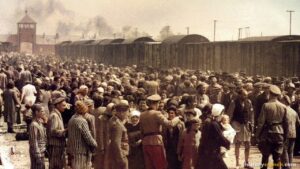
During the Holocaust, which occurred from 1933 to 1945, over 11 million people were executed. In total, 6 million were Jewish people, while the other 5 million included several other groups, such as disabled people, homosexuals, communists, Soviet and Polish prisoners of war, Roma, and other religious and ethnic minorities. As part of the Nazis’ plan, known as the “Final Solution,” Jewish people were forced into ghettos, concentration camps, and death camps, where they faced starvation, disease, forced labor, and mass murder.
It was under these terrible conditions that Jewish resistance took shape. More specifically, resistance was extremely difficult because the Nazis controlled nearly every part of daily life, weapons were almost impossible to obtain, and the German army was one of the most powerful military forces in the world. Even so, Jewish people across Europe still chose to resist.
Why Was Jewish Resistance So Difficult?
Jewish resistance faced enormous obstacles that few other groups in history have had to overcome. For instance, the Nazis deliberately isolated Jewish communities by forcing them into sealed ghettos, cutting them off from the outside world and from any source of weapons. Access to guns, ammunition, and military training was extremely limited, and simply owning a weapon could mean death.
In addition, the Nazis used a system of collective punishment to discourage resistance. If a single person resisted, the Nazis often responded by murdering that person’s entire family or large numbers of people from the same ghetto or camp. This meant that any act of defiance could cost the lives of many innocent people, which made the decision to resist even harder.
The success of resistance also depended heavily on outside support, which was almost always missing. Local underground movements did not always welcome Jewish fighters, and some were themselves hostile toward Jews. As stated above, the availability of weapons, the attitudes of the non-Jewish population, and the surrounding geography all shaped whether resistance could succeed. In some regions, such as the dense forests of Belarus, these conditions made partisan warfare possible, while in other places armed resistance was nearly impossible.
What Was Armed Resistance in the Ghettos?
The most famous form of Jewish resistance was armed resistance, which took place in dozens of ghettos across Nazi-occupied eastern Europe. Between 1941 and 1943, underground resistance movements developed in about 100 Jewish ghettos. Their main goals were to organize uprisings, break out of the ghettos, and join partisan units fighting the Germans in the countryside.
The fighters knew that these uprisings would not defeat the German army and that only a handful of people might survive. Still, many Jews made the decision to resist so that they could die fighting with honor rather than be sent to the death camps. This choice reflected both courage and desperation, since resistance was often a final act of defiance rather than a realistic path to survival.
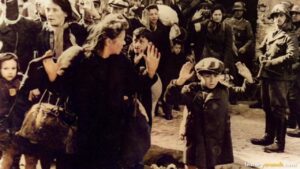
The most important of these revolts was the Warsaw Ghetto Uprising, which became a symbol of Jewish resistance around the world. In the summer of 1942, the Nazis had deported around 265,000 Jews from the Warsaw ghetto to the Treblinka death camp, leaving only a fraction of the original population behind. When it became clear that the remaining Jews would also be deported and killed, an underground group called the Jewish Fighting Organization, known by its Polish initials ZOB, prepared to fight.
On April 19th, 1943, German troops entered the ghetto to begin the final deportation, and about 700 young Jewish fighters, led by 23-year-old Mordecai Anielewicz, rose up in armed revolt. Armed with only a small number of pistols, rifles, and homemade explosives, they held out against a much larger and better-equipped German force. The fighting lasted nearly a month before the uprising was crushed on May 16th, 1943, and the ghetto was burned to the ground. Although the revolt failed, it was the largest Jewish uprising of World War II and inspired resistance in other ghettos and camps.
Who Were the Jewish Partisans?
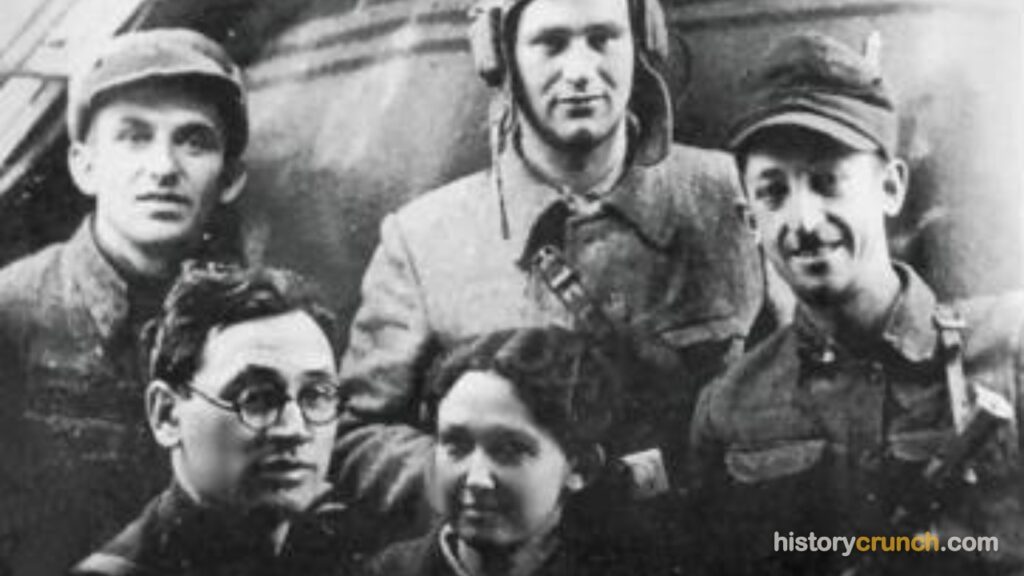
Beyond the ghettos, thousands of Jews escaped into the forests of eastern Europe to fight as partisans. Partisans were irregular fighters who lived in hidden camps and attacked the Germans through ambushes, sabotage, and raids on supply lines. Many of these fighters had fled from ghettos and villages before or during Nazi roundups, choosing the dangers of the forest over certain death.
Partisan warfare was most successful in areas with thick forests and swamps, especially in Belarus and Ukraine, where the difficult terrain made it easier to hide. As many as 30,000 Jews are believed to have joined the partisan movement in Belarus alone, sometimes forming their own Jewish units and sometimes joining larger Soviet groups. In these forests, Jewish fighters also established family camps, where fighters fed and protected noncombatant Jews who could not fight, including women, children, and the elderly.
The most famous partisan group was the one led by the Bielski brothers, Tuvia, Asael, and Zus, in western Belarus. After their parents were murdered by the Germans, the brothers fled into the forest in late 1941 and formed a small partisan unit. Unlike many other groups, their main goal was not only to fight the Germans but to rescue and shelter as many Jews as possible. By the end of the war, the Bielski group had grown to more than 1,200 people and included a school, a bakery, and an infirmary, making it one of the most successful rescue efforts of the entire Holocaust.
Was There Resistance Inside the Camps?
Remarkably, resistance also took place inside the Nazi concentration camps and death camps, even though conditions there were the most brutal of all. Prisoners in these camps were starved, worked to death, and surrounded by armed guards, yet some still managed to plan and carry out uprisings. In reality, these revolts were acts of extraordinary courage, because the chances of survival were almost none.
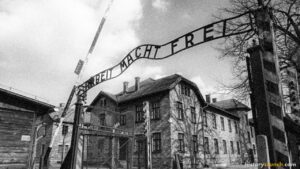
In August of 1943, prisoners at the Treblinka death camp staged an armed revolt, seizing weapons and setting fire to parts of the camp before a small number escaped. A similar uprising took place at the Sobibor death camp in October of 1943, when prisoners killed several guards and hundreds fled into the surrounding countryside. Even at Auschwitz, the largest of the death camps, prisoners rose up and destroyed one of the crematoria before the revolt was put down.
Alongside these armed revolts, many Jews resisted in quieter but equally meaningful ways. Some smuggled food and medicine, forged documents, or helped others escape and hide. Others resisted spiritually by continuing to practice their religion in secret, teaching children, and keeping written records so that the world would one day know what had happened. All of these acts, whether armed or unarmed, were forms of resistance against a regime determined to destroy Jewish life.
Significance of Jewish Resistance in the Holocaust
The significance of Jewish resistance in the Holocaust lies in how it challenges the false belief that Jewish people did nothing to fight back. In fact, Jews resisted in nearly every country where they were persecuted, in ghettos, forests, and camps, often under the most impossible circumstances. This resistance stands as powerful evidence of human courage and dignity in the face of overwhelming cruelty.
Jewish resistance is also historically important because it reshaped how the Holocaust is remembered. Events such as the Warsaw Ghetto Uprising became lasting symbols of defiance and inspired both Jewish and non-Jewish resistance movements during the war. Today, these acts are honored as examples of bravery and are studied to understand how people can choose to resist injustice even when victory seems impossible.
Finally, the story of Jewish resistance carries an important lesson about human rights and the dangers of prejudice. It reminds people that even in the darkest moments of history, individuals made the choice to fight back, protect one another, and preserve their identity. In this way, Jewish resistance during the Holocaust continues to teach powerful lessons about courage, survival, and the importance of standing up against hatred.
Frequently Asked Questions
Did Jewish People Really Fight Back During the Holocaust?
Yes, Jewish people resisted the Nazis in many different ways throughout the Holocaust. The idea that Jews did not fight back is a myth, since resistance took place in ghettos, forests, and death camps across Europe. This resistance ranged from armed uprisings to hidden acts of rescue, faith, and survival, all carried out despite extreme danger.
What Was the Warsaw Ghetto Uprising?
The Warsaw Ghetto Uprising was the largest armed revolt by Jews during World War II. It began on April 19th, 1943, when Jewish fighters resisted German efforts to deport the last residents of the Warsaw ghetto to death camps. Though the revolt was crushed after nearly a month, it became a worldwide symbol of Jewish courage and defiance.
Who Were the Bielski Partisans?
The Bielski partisans were a Jewish resistance group led by three brothers in the forests of western Belarus. Their main goal was to rescue and protect Jews rather than only to fight the Germans, and their forest community grew to more than 1,200 people. This made them one of the most successful rescue efforts of the entire Holocaust.
What Is the Difference Between Armed and Unarmed Resistance?
Armed resistance involved fighting the Nazis with weapons, such as uprisings and partisan attacks, while unarmed resistance involved acts of survival, rescue, and the preservation of culture. Both were forms of defiance against the Nazi plan to destroy Jewish life. Unarmed resistance included smuggling food, hiding children, forging documents, and secretly keeping records of Nazi crimes.
Were There Uprisings Inside the Death Camps?
Yes, prisoners staged uprisings inside several Nazi death camps, including Treblinka, Sobibor, and Auschwitz. These revolts were incredibly dangerous, since prisoners were starved and heavily guarded, yet they still managed to seize weapons and help some people escape. Although most who escaped did not survive the war, these uprisings remain powerful examples of resistance against impossible odds.
Cite This Article
To cite this article as a source, use one of the formats below.
MLA: Millar, B. “Jewish Resistance in the Holocaust: A Detailed Summary.” HistoryCrunch, 15 August 2026, https://historycrunch.com/jewish-resistance-in-the-holocaust/.
APA: Millar, B. (2026). Jewish Resistance in the Holocaust: A Detailed Summary. HistoryCrunch. https://historycrunch.com/jewish-resistance-in-the-holocaust/
Chicago: Millar, B. “Jewish Resistance in the Holocaust: A Detailed Summary.” HistoryCrunch. August 15, 2026. https://historycrunch.com/jewish-resistance-in-the-holocaust/
Sources
- Gerhard L. Weinberg, A World at Arms.
- Antony Beevor, The Second World War.
- The National WWII Museum