Italian Unification stands as one of the most important political events of the 1800s, because it turned a divided peninsula into a single nation and helped reshape the map of modern Europe. The impacts of this movement, known in Italian as the Risorgimento, reached far beyond Italy itself. They changed the balance of power on the continent, inspired other nationalist movements, and created deep divisions within the new Italian state that would last for generations. Understanding these effects helps explain both why unification mattered and why it left problems that Italy still struggled with long afterward.
The impacts of Italian Unification are the political, social, and economic results that followed the joining of the many separate states of the Italian peninsula into one country. Before unification, the peninsula was split into rival kingdoms, duchies, and the Papal States, many of them controlled or influenced by foreign powers. When these territories were brought together to form the Kingdom of Italy, the change affected everything from Italy’s place among the great powers to daily life in its northern cities and southern villages.
What Was the Age of Nationalism?
The Age of Nationalism refers to the period during the 1800s when the idea of the nation became one of the most powerful forces in European politics. Nationalism is the belief that people who share a common language, culture, and history should govern themselves in a single country of their own. Before this era, most people saw themselves as subjects of a king or members of a local community rather than as citizens of a nation.
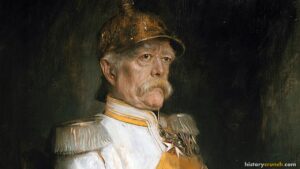
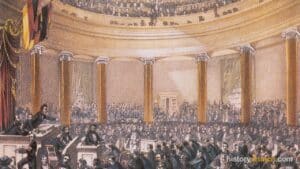
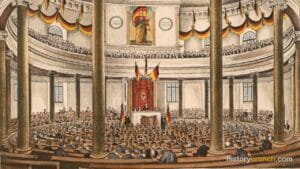
This new way of thinking spread widely after the French Revolution and the era of Napoleon at the turn of the century. Over the following decades, nationalist movements challenged the large multi-ethnic empires that had long ruled Europe and pushed for the creation of nation-states. Italian Unification and German Unification were the two most famous results of this movement, and both showed how nationalism could redraw the political map. In fact, the joining of Italy in 1861 became one of the clearest examples of nationalist ideas turning into a real country.
How Did Unification Create a New Italian Nation?
The most obvious impact of the Risorgimento was the birth of a single Italian state. For centuries, the peninsula had been divided among many governments, and much of it had fallen under foreign control, especially that of Austria. Unification ended this fragmentation and replaced dozens of separate rulers with one national government under King Victor Emmanuel II of the House of Savoy.
The Kingdom of Italy was officially proclaimed in 1861, but the new nation was not yet complete. The region of Venetia was added in 1866 after Austria was defeated in a war with Prussia. The final piece fell into place in 1870, when French troops that had protected the pope were withdrawn to fight in the Franco-Prussian War, allowing Italian forces to enter Rome. Rome was then confirmed as the capital in 1871, marking the end of the long unification process.
Bringing Rome into the kingdom also meant the end of the Papal States as an independent territory. For over a thousand years, the popes had ruled a stretch of central Italy as their own kingdom. Unification stripped away this political power and left the pope in control only of the small area around the Vatican, which created lasting tension between the Italian government and the Catholic Church.
How Did Unification Change the Balance of Power in Europe?
Italian Unification did not just affect Italy. It shifted the overall balance of power across the continent. The creation of a large new state in the center of the Mediterranean added another major country to the list of European powers, making Italy one of the most populous nations in Europe alongside giants like Russia, Germany, and France.
The change came partly at the expense of Austria. For decades Austria had dominated northern Italy and worked to crush nationalist movements. As unification progressed, Austria lost its Italian provinces of Lombardy and Venetia, which weakened its influence on the peninsula and in European affairs more generally. In reality, the decline of Austrian power in Italy was one of the clearest signs that the conservative order set up after Napoleon was breaking down.
The events that completed unification were tied to the wider reshaping of Europe. The Franco-Prussian War, which removed French troops from Rome, also shattered the French Empire and helped create a powerful united Germany. These shifts changed the balance of power in ways that contributed to the rivalries and tensions that eventually led to World War I.
How Did Unification Inspire Other Nationalist Movements?
Another major impact of Italian Unification was the example it set for other peoples across Europe. The success of the Risorgimento showed that a group of divided states could be brought together into a single nation through a mix of nationalism, diplomacy, and war. This encouraged nationalists elsewhere who dreamed of building or freeing their own countries.
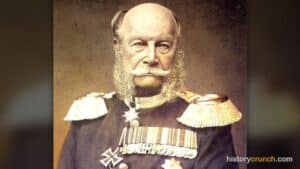
The clearest parallel was German Unification, which was completed in 1871, just as Italy was finishing its own process. Both movements used practical politics and carefully chosen wars to unite scattered states under a single monarchy. The two cases are often studied together because they both showed how nationalism could reshape the map of Europe within a single generation. More specifically, the Italian model helped prove that the idea of the nation-state, born from the French Revolution, could become a lasting political reality.
What Problems Did Unification Create Inside Italy?
Not everyone celebrated Italian Unification equally, and the new kingdom faced serious internal problems from the start. The government was dominated by the interests and institutions of Piedmont in the north, whose laws and officials were extended across the rest of the country. Many people in other regions felt that they had simply been taken over by Piedmont rather than joined as equal partners.
The deepest division was between the industrializing north and the poorer, largely agricultural south. Many southerners found that unification brought hardship rather than improvement, as new taxes, military service, and northern control weighed heavily on them. These economic and social differences created lasting tensions that later became known as the “southern question,” a phrase used to describe the gap in wealth and development between the two halves of the country.
There were also disappointments among the nationalists themselves. Giuseppe Mazzini, one of the great thinkers behind the movement, had hoped for a democratic republic rather than a monarchy. He died in 1872 still unhappy, believing that the new kingdom had betrayed the democratic ideals of the Risorgimento. As stated above, unification also left some Italian speakers living outside the new borders, which kept nationalist hopes alive for further expansion in the future.
Significance of Impacts of Italian Unification
The significance of the impacts of Italian Unification lies in how deeply they shaped both Italy and Europe. For Italy, unification ended centuries of foreign domination and replaced a patchwork of governments with a single national state, giving Italians a shared country and identity for the first time in the modern age. This achievement remains a central part of how Italy understands its own history.
For Europe, the impacts were just as important. The rise of a new Italian power weakened old empires, disrupted the balance created after Napoleon, and helped inspire the wave of nationalism that reshaped the continent during the 1800s. In this way, Italian Unification stood alongside German Unification as one of the defining events of the Age of Nationalism.
At the same time, the effects of unification were not all positive, and this too is part of their significance. The southern question, the tension with the Catholic Church, and the disappointment of democratic nationalists showed that creating a nation on paper did not immediately create unity among its people. These lasting challenges shaped Italian politics for decades and remind readers that great historical changes often bring new problems along with their achievements.
Frequently Asked Questions
What Were the Main Impacts of Italian Unification?
The main impacts were the creation of a single Italian nation, the decline of Austrian power in Italy, and a shift in the European balance of power. Unification also inspired other nationalist movements, ended the Papal States, and created lasting divisions between the north and south of the country.
How Did Italian Unification Affect the Pope?
Italian Unification stripped the pope of his political kingdom by taking Rome and the Papal States into the new nation. Afterward, the pope refused to recognize the Italian government and stayed within the Vatican, and this quarrel between church and state was not fully settled until an agreement was reached in 1929.
What Was the Southern Question?
The southern question was the name given to the sharp gap in wealth and development between northern and southern Italy after unification. The north grew more industrial and prosperous, while the south stayed poor and rural, and this imbalance pushed millions of southern Italians to emigrate in the following decades.
Did Italian Unification Lead to World War I?
Italian Unification did not directly cause World War I, but it helped reshape the balance of power in ways that contributed to later tensions. The same events that completed unification also weakened France and helped create a strong Germany, changing the rivalries between the great powers that would later erupt into war.
How Is Italian Unification Connected to German Unification?
The two are connected because both were completed around the same time and both used nationalism, diplomacy, and war to unite divided states under a monarchy. They are often compared as the twin achievements of the Age of Nationalism, and the wars that helped unite Germany also helped Italy gain Venetia and Rome.
Cite This Article
To cite this article as a source, use one of the formats below.
MLA: Millar, B. “Impacts of Italian Unification: A Detailed Summary.” HistoryCrunch, 12 August 2026, https://historycrunch.com/impacts-of-italian-unification/.
APA: Millar, B. (2026). Impacts of Italian Unification: A Detailed Summary. HistoryCrunch. https://historycrunch.com/impacts-of-italian-unification/
Chicago: Millar, B. “Impacts of Italian Unification: A Detailed Summary.” HistoryCrunch. August 12, 2026. https://historycrunch.com/impacts-of-italian-unification/
Sources
- J.M. Roberts & Odd Arne Westad, The Penguin History of the World.
- Jerry Bentley & Herbert Ziegler, Traditions & Encounters: A Global Perspective on the Past.