Italian Unification was one of the most important political events of the 1800s in Europe, and understanding its causes helps explain how a divided peninsula became a single modern nation. For centuries, the land now known as Italy was not a country at all but a patchwork of separate kingdoms, duchies, and territories, many of them controlled or influenced by foreign powers. The movement that eventually joined these states together is called the Risorgimento, an Italian word that roughly means “Rising Again” or “Resurgence.” The causes of this movement were rooted in ideas about freedom, national identity, and resentment of foreign control that had been building for decades.
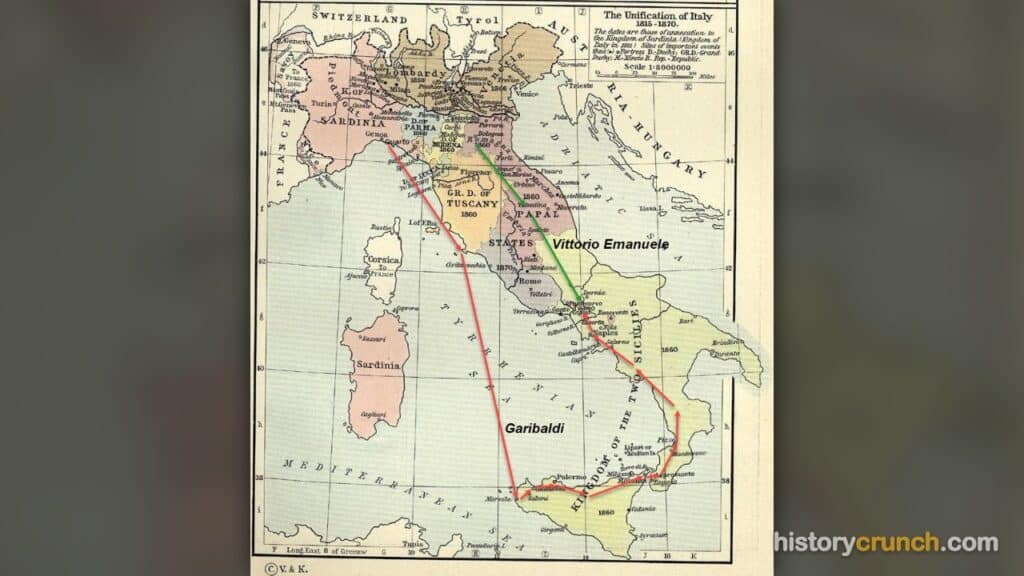
Italian Unification refers to the long process by which the many separate states of the Italian peninsula were gradually brought together to form one nation between roughly 1815 and 1871. It was not a single event but a series of revolts, wars, and political deals carried out by people who often disagreed about what a united Italy should look like. Some wanted a republic, others wanted a monarchy, and still others hoped for a loose union led by the Pope. Despite these differences, they shared the basic goal of freeing the peninsula from foreign rule and uniting it under one government.
What Was the Age of Nationalism?
The causes of Italian Unification belong to a larger period in European history known as the Age of Nationalism. Nationalism is the belief that people who share a common language, culture, history, and identity should govern themselves as a single nation, rather than being ruled by a foreign power or a distant monarch. During the 1800s, this idea became one of the most powerful forces in Europe, and it reshaped the map of the entire continent.
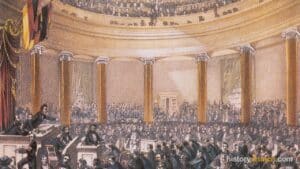
In fact, the same nationalist feeling that drove Italian Unification also drove the unification of Germany during the same century. Before nationalism spread widely, most Europeans thought of themselves as subjects of a king or an empire, not as members of a nation. Over the course of the 1800s, that older way of thinking began to fade, and millions of people started to imagine themselves as citizens of nations such as Italy. This shift in thinking created the emotional and political energy that made unification possible.
How Did the French Revolution and Napoleon Spark the Movement?
One of the most significant causes of Italian Unification was the impact of the French Revolution and the Napoleonic era. The French Revolution, which began in 1789, spread powerful new ideas across Europe, including the belief that ordinary people, rather than kings, should hold political power. These ideas reached the Italian peninsula and planted the seeds of nationalist thinking.
When the French military leader Napoleon Bonaparte conquered much of the peninsula in the late 1790s and early 1800s, he reorganized the many small Italian states into a smaller number of larger units. For the first time in centuries, large parts of Italy were joined together under a single system of laws and government. Napoleon also introduced reforms such as a common legal code and a more efficient administration. Even though he ruled Italy for France’s benefit, his changes gave many Italians a taste of what a unified nation might look like.
As a result, when Napoleon was finally defeated in 1815, the memory of a more unified Italy did not disappear. Many Italians had been exposed to revolutionary ideas about liberty and national identity, and these ideas continued to inspire them for decades. In this way, the Napoleonic period acted as a spark for the entire unification movement.
Why Was the Congress of Vienna a Cause of Unification?
After Napoleon was defeated and his empire collapsed, the major European powers gathered at the Congress of Vienna in 1814 and 1815 to reorganize the continent. The leaders who met there wanted to restore order and undo the changes Napoleon had made. Under the arrangements they created, Italy was divided once again into separate states.
The Austrian Empire came out of this settlement as the dominant force on the peninsula. Austria took direct control of the northern region of Lombardy-Venetia and held strong influence over several other Italian states. The Austrian chancellor Klemens von Metternich was determined to maintain conservative rule across Europe, and he actively worked to suppress any nationalist movements that might threaten the old order.
For many Italian nationalists, the outcome of the Congress of Vienna felt deeply unjust. They believed that their homeland had been carved up and handed to foreign rulers without any regard for the wishes of the Italian people. This sense of injustice became a major driving force behind the push for unification, because it gave nationalists a clear enemy to oppose and a clear goal to work toward.
How Did Nationalist Groups and Secret Societies Fuel the Cause?
Another important cause of Italian Unification was the growth of nationalist ideas and organizations throughout the peninsula. Because open political activity was dangerous under the watchful eye of Austria, much of the early nationalist work was done in secret. Secret societies such as the Carbonari, a network of underground political clubs inspired by the ideals of the French Revolution, helped spread nationalist thinking in the 1820s and 1830s.
The Carbonari organized several revolts during these years, though most were quickly crushed, in part because they lacked wide support among ordinary people such as the peasants. Even so, these early uprisings kept the idea of Italian freedom alive and showed later leaders that nationalism could inspire people to take action. More specifically, the failures of the Carbonari pushed a new generation of nationalists to look for better ways to organize.
The most influential of these new leaders was the journalist and political thinker Giuseppe Mazzini, who founded a movement known as Young Italy (La Giovine Italia) in 1831. Young Italy aimed to encourage ordinary Italians, especially young people, to rise up and demand national independence. Mazzini dreamed of a united Italy governed as a republic by its own people rather than by foreign kings or the Pope.
Though most of Mazzini’s attempts to spark a popular uprising ended in failure, his writings and organizing helped create a generation of Italians who believed that unification was both possible and necessary. In reality, his greatest contribution was not any single revolt but the spread of a shared belief. These organizations and thinkers built a base of nationalist feeling that would fuel the unification movement in the decades that followed.
How Did the Revolutions of 1848 Push Italy Toward Unification?
A major turning point came with the wave of revolutions that swept across Europe in 1848. In that year, uprisings broke out in many Italian states as people demanded constitutions, greater freedom, and an end to foreign control. Nationalists across the peninsula saw the moment as a chance to throw off Austrian rule and move toward unity.
The revolts of 1848 ultimately failed, as Austria and the conservative rulers of Italy regained control of most areas. However, these failures taught nationalists important lessons. As stated above, popular uprisings alone had not been enough to defeat a powerful empire like Austria, so future leaders realized that unification would require strong states, careful diplomacy, and outside allies.
After 1848, the center of the unification movement shifted to the Kingdom of Sardinia in the northwest, which emerged as the strongest and most modern of the Italian states. This shift set the stage for the practical, step-by-step campaign that would eventually succeed. The disappointments of 1848 therefore acted as a cause of unification by pushing the movement toward more realistic methods.
Significance of Causes of Italian Unification
The causes of Italian Unification are significant because they explain how a fragmented peninsula, divided for centuries, became one of the leading nations of modern Europe. Without the ideas spread by the French Revolution and Napoleon, the resentment created by the Congress of Vienna, and the tireless work of nationalist thinkers, the unification of Italy would likely never have happened.
These causes also show how powerful the idea of nationalism became during the 1800s. In fact, the same forces that united Italy were at work across the continent, reshaping borders and giving rise to new nation-states. The story of Italy’s causes helps explain a pattern that repeated throughout the Age of Nationalism, in which shared language, culture, and history became the basis for building new countries.
Finally, the causes of Italian Unification remind readers that great historical changes rarely come from a single event. Instead, they grow out of many overlapping factors that build on one another over time. Ideas, injustices, failed revolts, and determined leaders all combined to create the conditions that made a united Italy possible by 1871.
Frequently Asked Questions
What were the main causes of Italian Unification?
The main causes of Italian Unification were the spread of French Revolutionary and Napoleonic ideas, anger over the Congress of Vienna, the growth of nationalist groups and secret societies, and the lessons learned from the failed revolutions of 1848. These factors built on one another over several decades. Together they created strong support for freeing Italy from foreign control and joining its states into one nation.
Why did Italians want to unify?
Italians wanted to unify because they shared a common language, culture, and history but were divided into separate states ruled or influenced by foreign powers, especially Austria. Many believed that unity would bring greater freedom, pride, and strength. They also felt that a single Italian nation could better protect its people and stand as an equal among the other powers of Europe.
Who was Giuseppe Mazzini and why was he important?
Giuseppe Mazzini was a writer and political thinker who founded the Young Italy movement in 1831 and became one of the leading voices of Italian nationalism. He was important because his writings inspired a whole generation to believe that a free and united Italy was possible. Although his planned uprisings usually failed, his ideas about a republic governed by the people shaped the goals of the movement.
What role did the Congress of Vienna play in Italian Unification?
The Congress of Vienna divided Italy back into separate states in 1815 and placed much of the peninsula under Austrian control, which angered Italian nationalists. This settlement gave the unification movement a clear enemy in the form of foreign rule. The resentment it created became a lasting motivation for those who wanted to build an independent Italian nation.
How did the French Revolution influence Italian Unification?
The French Revolution influenced Italian Unification by spreading ideas about liberty, equality, and the belief that ordinary people should hold political power. When Napoleon carried these ideas into Italy and joined many states under one system, Italians saw what a more unified nation could look like. Even after Napoleon’s defeat, these revolutionary ideas continued to inspire nationalist thinkers for decades.
Cite This Article
To cite this article as a source, use one of the formats below.
MLA: Millar, B. “Causes of Italian Unification: A Detailed Summary.” HistoryCrunch, 12 August 2026, https://historycrunch.com/causes-of-italian-unification/.
APA: Millar, B. (2026). Causes of Italian Unification: A Detailed Summary. HistoryCrunch. https://historycrunch.com/causes-of-italian-unification/
Chicago: Millar, B. “Causes of Italian Unification: A Detailed Summary.” HistoryCrunch. August 12, 2026. https://historycrunch.com/causes-of-italian-unification/
Sources
- Jerry Bentley & Herbert Ziegler, Traditions & Encounters: A Global Perspective on the Past.
- J.M. Roberts & Odd Arne Westad, The Penguin History of the World.