The Storming of the Winter Palace stands as one of the most important moments of the Russian Revolution and the dramatic high point of the October Revolution of 1917. On the night of October 25th to 26th, 1917 (November 7th to 8th on the modern calendar), Bolshevik forces seized the Winter Palace in the city of Petrograd, which is known today as St. Petersburg. The palace was the seat of the Provisional Government, the temporary government that had ruled Russia since the fall of Tsar Nicholas II earlier that year. By taking the palace and arresting the government ministers inside, the Bolsheviks brought an end to that government and cleared the way for Communist rule in Russia.
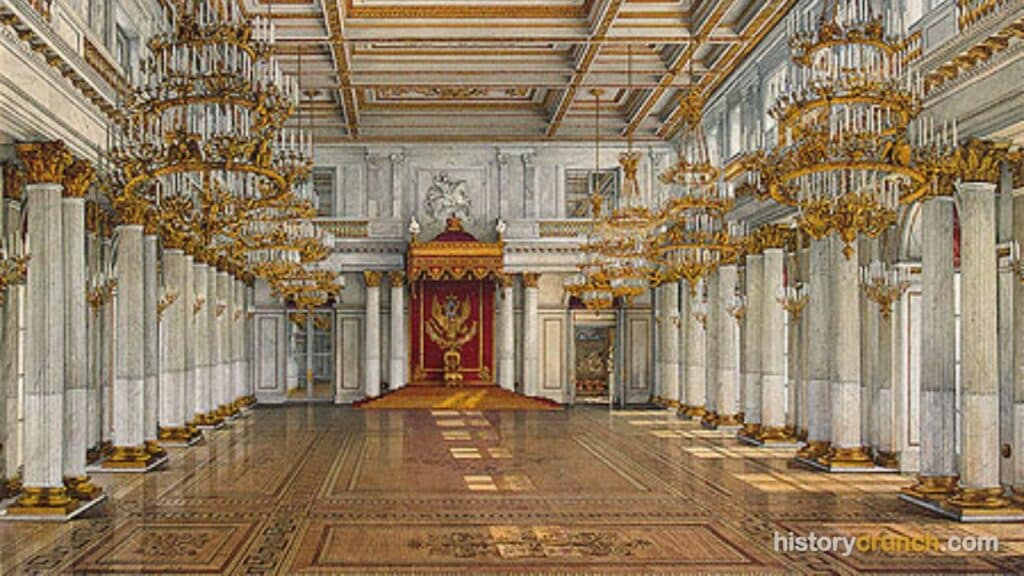
The Winter Palace was the enormous former royal residence of the Russian tsars, built in the 1700s along the Neva River in the heart of Petrograd. By 1917 the tsars no longer lived there, and the building was used instead as the headquarters of the Provisional Government. Because it was such a powerful symbol of authority in Russia, capturing it carried great meaning far beyond its military value.
Background of the Storming of the Winter Palace
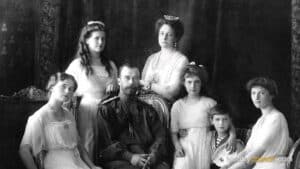
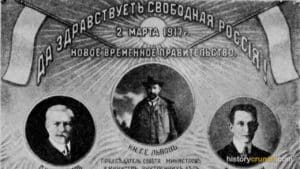
The road to the storming of the palace began with the February Revolution of 1917, the first phase of the Russian Revolution. That uprising forced Tsar Nicholas II to give up his throne, ending the centuries-old rule of the Romanov dynasty. In his place came the Provisional Government, a coalition of liberal and moderate socialist leaders who promised democratic reforms and an end to autocracy.
However, the Provisional Government quickly lost the support of the Russian people. It chose to keep Russia in World War I, a decision that led to heavy casualties and deepened the anger of soldiers and civilians alike. In fact, the government also failed to solve the shortage of food, to redistribute land to the peasants, and to address the deep social inequality that troubled the country.
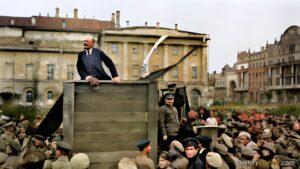
This growing discontent created an opening for the Bolshevik Party and its leader, Vladimir Lenin. The Bolsheviks were a radical group of revolutionary socialists who promised “peace, land, and bread” to a weary population. As stated above, the Provisional Government’s weakness allowed these more extreme ideas to spread rapidly, especially among factory workers, soldiers, and sailors.
By the fall of 1917, Lenin believed the moment had come to seize power by force. The Bolsheviks controlled the Petrograd Soviet, a powerful council of workers and soldiers, and organized armed groups known as the Red Guard. Planning for the takeover was largely directed by Leon Trotsky, who led the Military Revolutionary Committee of the Petrograd Soviet. More specifically, the plan was to seize the capital’s key locations and then capture the Provisional Government itself.
The forces on each side were badly mismatched. The Bolsheviks could call on thousands of armed Red Guards, rebellious soldiers from the Petrograd garrison, and sailors from the Kronstadt naval base who strongly supported the revolution. Defending the Winter Palace, by contrast, was only a small and uncertain force of military cadets, a group of Cossacks, and members of a Women’s Battalion. In reality, many of these defenders had little desire to fight and drifted away as the night wore on.
How the Storming of the Winter Palace Unfolded
The takeover began on October 24th, 1917, when Bolshevik Red Guards quietly moved through Petrograd and took control of the city’s most important points. They seized the railway stations, telegraph offices, bridges, and government buildings, cutting off the Provisional Government from the outside world. By the evening of October 25th, the Bolsheviks controlled almost the entire capital, and the Winter Palace stood nearly alone as the last stronghold of the old government.
Inside the palace, the ministers of the Provisional Government waited anxiously for help that never arrived. Their leader, Alexander Kerensky, had already slipped out of the city to search for loyal troops at the front, but he found none willing to march to his rescue. As a result, the ministers who remained were left with only their small and shrinking guard.
That evening, the Bolshevik squads surrounded the palace and prepared to move in. At about 9:40 in the evening, the cruiser Aurora, a warship anchored in the Neva River whose crew had joined the Bolsheviks, fired a single blank shot. This shot was not meant to damage the building. Instead, it served as the signal for the assault on the Winter Palace to begin.
Contrary to the dramatic images later shown in Soviet films and paintings, there was no fierce, heroic battle. The Red Guards, soldiers, and sailors advanced cautiously, and the assault unfolded slowly and unevenly over several hours. In fact, the Bolsheviks deliberately avoided a bloody fight, and the attackers were able to slip into the huge building through unguarded doors and windows rather than break through a determined defense.
As the night went on, the palace’s defenders gradually gave up. The cadets, Cossacks, and members of the Women’s Battalion had little reason to keep fighting for a government that almost no one supported, and many simply surrendered or left. With the defenders melting away, the attackers moved deeper into the palace, wandering through its many rooms and corridors.
In the early hours of October 26th, the Bolshevik forces finally reached the room where the ministers of the Provisional Government were meeting. The revolutionary commander Vladimir Antonov-Ovseenko led the arrest of the ministers, declaring that they were now prisoners of the revolution. With that arrest, the authority of the Provisional Government came to an end, and the storming was over almost without bloodshed.
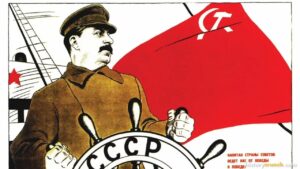
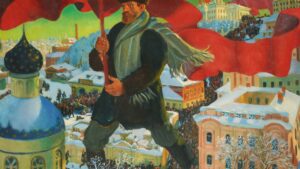
The event soon grew into a heroic legend far larger than the real night. Later Soviet leaders wanted a grand founding story for their new state, so films, paintings, and a famous staged reenactment in 1920 turned the quiet takeover into a scene of roaring cannons and surging crowds. In reality, the true storming was a slow, confused, and largely peaceful seizure of a poorly defended building.
Significance of Storming of the Winter Palace
The most important result of the storming of the Winter Palace was the fall of the Provisional Government and the rise of Bolshevik power in Russia. Once the ministers had been arrested, there was no longer any rival government to challenge the Bolsheviks in the capital. As such, the event marked the true climax of the October Revolution.
Right after the seizure of the palace, the Bolsheviks moved quickly to claim official power. The All-Russian Congress of Soviets, which was dominated by the Bolsheviks and their allies the Left Socialist-Revolutionaries, announced the creation of a new government called the Council of People’s Commissars. Lenin became the head of this new government, giving the Bolsheviks control over the Russian state.
The takeover of power, however, turned out to be only the beginning of a much harder struggle. Many groups across Russia refused to accept Bolshevik rule, and within months the country descended into a brutal Russian Civil War between the Bolshevik “Reds” and their opponents, the “Whites.” This war lasted from 1918 to 1922 and cost millions of lives before the Bolsheviks finally emerged victorious.
In the long run, the storming of the Winter Palace helped set Russia on the path toward becoming the Soviet Union, the world’s first Communist state. The event became a treasured symbol for the Soviet government, celebrated in art and film as the birth of a new era. For the world beyond Russia, it stood as the moment that launched roughly seventy years of Communist rule and reshaped much of twentieth-century history.
Frequently Asked Questions
When did the Storming of the Winter Palace happen?
The Storming of the Winter Palace took place on the night of October 25th to 26th, 1917, on the old Russian calendar. On the modern calendar used in most of the world today, this was November 7th to 8th, 1917. The difference in dates exists because Russia still used the older Julian calendar at the time, which ran about thirteen days behind the calendar used elsewhere.
Where is the Winter Palace located?
The Winter Palace is located in the city of St. Petersburg, Russia, which was called Petrograd in 1917. It sits along the bank of the Neva River in the center of the city and was originally built in the 1700s as the grand residence of the Russian tsars. Today the palace forms part of the Hermitage Museum, one of the largest and most famous art museums in the world.
Was the Storming of the Winter Palace violent?
The Storming of the Winter Palace was largely peaceful and involved very little real fighting. The building was poorly defended, and most of its guards surrendered or left rather than fight. The dramatic battle scenes shown in later Soviet films and paintings were exaggerations created to make the event appear far more heroic than it actually was.
What was the role of the cruiser Aurora?
The cruiser Aurora fired a single blank shot that signaled the start of the assault on the Winter Palace. The warship was anchored in the Neva River, and its crew had sided with the Bolsheviks during the revolution. The Aurora is still preserved in St. Petersburg today as a museum ship and remains a lasting symbol of the October Revolution.
What happened after the Winter Palace was captured?
After the palace was captured, the Bolsheviks declared themselves the new rulers of Russia and formed a government led by Vladimir Lenin. The arrested ministers of the Provisional Government were taken prisoner, though their leader Alexander Kerensky had already fled the city. Within months, opposition to Bolshevik rule grew into the Russian Civil War, a long and bloody conflict that lasted until 1922.
Cite This Article
To cite this article as a source, use one of the formats below.
MLA: Millar, B. “Storming of the Winter Palace: A Detailed Summary.” HistoryCrunch, 11 August 2026, https://historycrunch.com/storming-of-the-winter-palace/.
APA: Millar, B. (2026). Storming of the Winter Palace: A Detailed Summary. HistoryCrunch. https://historycrunch.com/storming-of-the-winter-palace/
Chicago: Millar, B. “Storming of the Winter Palace: A Detailed Summary.” HistoryCrunch. August 11, 2026. https://historycrunch.com/storming-of-the-winter-palace/
Sources
- J.M. Roberts & Odd Arne Westad, The Penguin History of the World.
- Jerry Bentley & Herbert Ziegler, Traditions & Encounters: A Global Perspective on the Past.