The Mensheviks were one of the most important political groups in the story of the Russian Revolution, and their choices helped shape how that revolution unfolded. They were a moderate socialist faction that argued for gradual, democratic change in Russia, and they stood in direct rivalry with the more radical Bolsheviks. Although the Mensheviks held real influence in the years before 1917, they were ultimately pushed aside by their rivals, and their defeat marked one of the key turning points in the rise of communist rule in Russia.
The term “Menshevik” comes from the Russian word for “minority,” and it described a faction within a larger socialist party rather than a fully separate party at first. Members believed that Russia needed to pass through a stage of capitalism and democratic reform before a true workers’ revolution could succeed. Because of this belief, the Mensheviks favored a large, open party and cooperation with other groups, which set them apart from the tightly controlled and revolutionary approach of the Bolsheviks.
What Was the Russian Revolution?
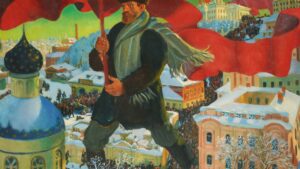
The Russian Revolution of 1917 was one of the most significant events of the early 20th century. It involved the downfall of the monarchy of Russia and led to the establishment of the world’s first communist state. In fact, the revolution transformed the course of history, not only for Russia but also for the entire world, and it left a lasting legacy on later events and ideologies.
The revolution took place in two main phases during the same year. The February Revolution forced Tsar Nicholas II to give up his throne and brought an end to centuries of imperial rule. The October Revolution then followed, in which the Bolsheviks seized power and set up a new socialist government. The Mensheviks were active in both phases, and their struggle with the Bolsheviks helped decide which direction the revolution would take.
To understand the Mensheviks, it helps to know that Russia in the early 1900s was ruled by a tsar, or emperor, who held nearly absolute power. Growing cities, harsh factory conditions, and widespread poverty created deep unrest among workers and peasants. Many revolutionary groups formed in response, and the Mensheviks were one of the socialist movements that hoped to replace tsarist rule with a fairer system.
How Did the Mensheviks Begin?
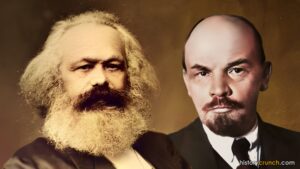
The roots of the Mensheviks can be traced back to a split within the Russian Social Democratic Labor Party, a Marxist party founded in 1898. This party was based on the ideas of Karl Marx, a German thinker who argued that history moved through stages and that workers would eventually rise up to overthrow the wealthy owning class. The party aimed to bring socialism to Russia, but its members did not all agree on how to reach that goal.
The division came to a head at the party’s congress in 1903, when members argued over how the party should be organized. More specifically, one group led by Vladimir Lenin wanted a small, tightly controlled party made up of dedicated, professional revolutionaries. Another group, led by Julius Martov, wanted a large and open party that ordinary workers could join, similar to the socialist parties of Western Europe.
When the members voted, Lenin’s faction won a key vote and took the name “Bolshevik,” meaning “majority.” Martov’s supporters became known as the “Menshevik,” meaning “minority.” In reality, the labels were somewhat misleading, because the Mensheviks often had more overall support than the Bolsheviks in the years that followed. Even so, the two names stuck, and the split slowly grew into a permanent divide between two rival movements.
What Did the Mensheviks Believe?
At the center of Menshevik thinking was the idea that revolution had to happen in stages. They argued that Russia was still a backward, largely rural country and that it first needed a period of capitalism and democratic government led by the middle class. Only after that stage, they believed, would the working class be ready to build a socialist society. This is often called a two-stage view of revolution.
Because of this belief, the Mensheviks were willing to work alongside other groups, including middle-class liberals, in order to bring about reform. They also supported building a mass party rooted in trade unions and workers’ organizations. As stated above, this set them apart from the Bolsheviks, who wanted an immediate seizure of power by a disciplined revolutionary elite.
The Mensheviks were also generally more friendly toward democracy than the Bolsheviks. They opposed the idea of a one-party dictatorship and favored a system with open debate and broad participation. For this reason, they are usually described as the more moderate wing of the Russian socialist movement.
Who Were the Main Leaders of the Mensheviks?
The Mensheviks did not have a single strongman in the way the Bolsheviks had Lenin. Instead, they were guided by several influential figures. The best known was Julius Martov, a thoughtful and respected writer who had once been a close friend of Lenin before their disagreement in 1903. Another leading figure was Pavel Axelrod, an older Marxist who helped shape the party’s ideas.
Other important Mensheviks included Fyodor Dan and Irakli Tsereteli, who became prominent during the events of 1917. For a time, Leon Trotsky was also associated with the Mensheviks, though he later broke with them. In fact, Trotsky eventually joined the Bolsheviks in 1917 and became one of their most important leaders, which shows how fluid these groups could be.
What Role Did the Mensheviks Play in 1917?
The Mensheviks had already taken part in the earlier Revolution of 1905, when they played a leading role in workers’ councils, known as soviets, in the capital. That experience gave them strong support among urban workers. Between 1905 and 1917, Menshevik figures were often more visible and active than the Bolshevik leaders, many of whom were in hiding, in prison, or in exile abroad.
When the February Revolution toppled the tsar in 1917, the Mensheviks helped organize the powerful Petrograd Soviet, which represented workers and soldiers in the capital. At the same time, a Provisional Government made up largely of middle-class liberals took charge of the country. Following their two-stage view, many Mensheviks decided to support and even join this government, and in May of 1917 they entered a coalition with other parties.
This decision created serious problems for the Mensheviks. The Provisional Government chose to keep Russia in World War I, a war that was deeply unpopular among exhausted soldiers and hungry city dwellers. By cooperating with a government that continued the fighting, the Mensheviks lost support among the very workers and soldiers they claimed to represent. The party also split internally, with a left wing under Martov criticizing cooperation and calling for peace, while a right wing defended the coalition.
Why Did the Mensheviks Lose to the Bolsheviks?
As the year went on, the Bolsheviks gained ground by promising an immediate end to the war, land for the peasants, and bread for the cities. These simple and direct demands appealed to a population that was tired of waiting. By October of 1917, the Bolsheviks had won a majority in the key soviets and were ready to seize power.
During the October Revolution, the Bolsheviks overthrew the Provisional Government and declared soviet power. Many Mensheviks protested by walking out of the Congress of Soviets, but this only left the field open to their rivals. Without control of the government or the soviets, the Mensheviks found themselves on the outside of the new order.
In the years that followed, the Bolsheviks tightened their grip on Russia and cracked down on rival parties. During the Russian Civil War, the Mensheviks were divided over how to respond, with some opposing the Bolsheviks and others reluctantly accepting them as a defense against the return of the old order. Over time, the party was suppressed, its leaders were arrested or forced into exile, and the Menshevik movement effectively came to an end within Soviet Russia.
Significance of Mensheviks
The historical significance of the Mensheviks lies in the fact that they represented a moderate, democratic path that Russia might have taken but ultimately did not. Their belief in gradual reform, open debate, and cooperation with other groups offered an alternative to the harsh one-party rule that the Bolsheviks put in place. For this reason, the Mensheviks are often studied as a road not taken in Russian history.
Their defeat also helps explain how the Bolsheviks were able to succeed. The Menshevik decision to support the Provisional Government and continue an unpopular war cost them the trust of workers and soldiers at the crucial moment. By losing that support, they left the door open for the Bolsheviks to take power and to shape the future Soviet Union along far more radical lines.
Finally, the story of the Mensheviks remains important because it shows how deeply divided the socialist movement in Russia truly was. The split of 1903 was not a small quarrel but a lasting divide over the meaning of revolution itself. In reality, the outcome of that divide helped decide the direction of Russia and influenced political struggles across the world throughout the 20th century.
Frequently Asked Questions
What does the word Menshevik mean?
The word “Menshevik” means “minority” in Russian. It came from a vote at the 1903 party congress in which Martov’s supporters ended up with fewer votes than Lenin’s group on a key question, even though the Mensheviks often had wider support in later years. The name stuck as a way to tell the two rival factions apart.
What is the difference between Mensheviks and Bolsheviks?
The main difference was that the Mensheviks were more moderate and the Bolsheviks were more radical. The Mensheviks wanted a large, open party and believed Russia had to pass through a stage of capitalism and democracy before socialism. The Bolsheviks wanted a small, disciplined party and an immediate workers’ revolution, and they were far more willing to use force to hold power.
Who led the Mensheviks?
The Mensheviks were led mainly by Julius Martov, along with figures such as Pavel Axelrod, Fyodor Dan, and Irakli Tsereteli. Unlike the Bolsheviks, who followed Lenin, the Mensheviks were guided by several influential leaders rather than a single commanding figure. This looser style of leadership fit with their belief in open debate.
Did the Mensheviks want communism?
The Mensheviks were socialists who ultimately hoped for a workers’ society, but they did not want to reach it through a sudden seizure of power or a one-party dictatorship. They believed change should come slowly and through democratic means. This made them very different from the Bolsheviks, who built the communist system that became the Soviet Union.
What happened to the Mensheviks after 1917?
After the Bolsheviks took power, the Mensheviks were gradually pushed out of political life. During the Russian Civil War the party was divided and weakened, and the new Soviet government cracked down on rival groups. Many Menshevik leaders were arrested or forced into exile abroad, and the movement effectively disappeared inside Soviet Russia by the early 1920s.
Cite This Article
To cite this article as a source, use one of the formats below.
MLA: Millar, B. “Mensheviks: A Detailed Summary.” HistoryCrunch, 11 August 2026, https://historycrunch.com/mensheviks/.
APA: Millar, B. (2026). Mensheviks: A Detailed Summary. HistoryCrunch. https://historycrunch.com/mensheviks/
Chicago: Millar, B. “Mensheviks: A Detailed Summary.” HistoryCrunch. August 11, 2026. https://historycrunch.com/mensheviks/
Sources
- Jerry Bentley & Herbert Ziegler, Traditions & Encounters: A Global Perspective on the Past.
- J.M. Roberts & Odd Arne Westad, The Penguin History of the World.