Social contract theory is one of the most important ideas to come out of the Age of Enlightenment, and it changed the way people understood the relationship between citizens and their governments. At its core, social contract theory argues that governments exist because people agree to give up some of their freedom in exchange for protection and order. This simple but powerful idea challenged the belief that kings and queens ruled because God had chosen them, and it helped inspire the great political revolutions of the 18th century. The thinkers who developed the theory, especially Thomas Hobbes, John Locke, and Jean-Jacques Rousseau, offered new answers to old questions about power, freedom, and the purpose of government.
More specifically, a social contract is an imagined agreement between the people of a society and the authority that governs them. It is not a real document that anyone signs. Instead, it is a way of explaining why people accept rules and obey leaders. According to the theory, individuals agree to follow laws and respect a government, and in return that government agrees to protect their safety and their rights. When the government upholds its side of the bargain, the people owe it their loyalty. When it fails, the agreement can be questioned.
What Was the Age of Enlightenment?
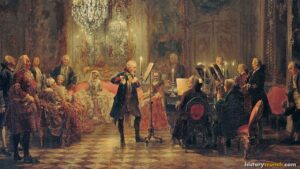
The Age of Enlightenment, also known as the Age of Reason, occurred during the 17th and 18th centuries and is known as a time period of great change and new ideas. It was an intellectual movement in which famous thinkers and philosophers challenged some of the basic foundations of society, including the role of government, basic human nature, sources of authority, and ideas centered on liberty. Rather than accepting old traditions without question, Enlightenment thinkers believed that human reason could be used to understand the world and improve human life.
In fact, the Enlightenment grew out of earlier developments such as the Scientific Revolution and the Renaissance. The Scientific Revolution showed that reason and careful observation could reveal the laws of nature, and this inspired people to apply the same methods to society and government. As these new ideas spread, thinkers began to ask whether governments were fair, whether rulers held too much power, and where authority truly came from. Social contract theory was one of the most influential answers they produced, and it fit perfectly into the Enlightenment’s overall goal of questioning tradition. You can read more in the [Age of Enlightenment overview](https://www.historycrunch.com/age-of-enlightenment-overview.html).
What Is the State of Nature?
To explain where governments come from, social contract thinkers imagined what human life would be like without any government at all. They called this imagined condition the “state of nature.” The state of nature is a thought experiment, meaning it describes what people might do if there were no laws, no police, and no ruler to keep order. By picturing this situation, philosophers tried to explain why people would choose to live under a government in the first place.
In reality, the three most famous social contract thinkers disagreed sharply about what the state of nature would actually be like. Some believed it would be dangerous and violent, while others believed it could be peaceful and free. These different views led them to very different conclusions about what kind of government people should have. As a result, comparing their ideas is one of the best ways to understand social contract theory as a whole.
What Did Thomas Hobbes Believe?
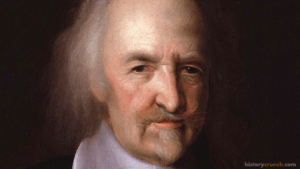
Thomas Hobbes was an English philosopher who lived from 1588 to 1679, and he gave social contract theory its first full explanation. Hobbes wrote during a time of civil war in England, and this experience shaped his dark view of human nature. In his famous book Leviathan, published in 1651, he argued that people are naturally selfish and driven by fear and the desire for power.
For instance, Hobbes believed that the state of nature would be a terrible place, a kind of constant war of everyone against everyone. Without a strong authority to keep order, he argued, life would be filled with fear and violence, and no one would be safe. To escape this misery, people would agree to give up most of their freedom and hand power to a strong ruler, such as a king. In exchange, that ruler would keep the peace and protect the people. Because Hobbes wanted order above all else, he believed the ruler should hold nearly absolute power, and he argued that people had no right to rebel once they had agreed to the contract.
What Did John Locke Believe?
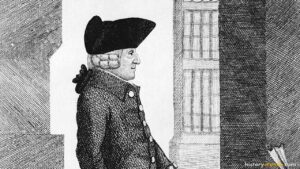
John Locke was another English philosopher, living from 1632 to 1704, and his version of social contract theory was very different from that of Hobbes. Locke also imagined a state of nature, but he did not see it as a war of all against all. Instead, he believed that people in the state of nature were mostly reasonable and were guided by a natural law that told them not to harm one another.
More specifically, Locke argued that all people are born with natural rights, which he described as the rights to life, liberty, and property. These rights belong to every person and cannot be taken away. According to Locke, people form governments mainly to protect these natural rights, since it is hard to defend them alone. This means the government’s power is limited, because its only real job is to serve and protect the people. If a government becomes tyrannical and violates the rights of the people, Locke argued that the people have the right to change it or even overthrow it. This idea would later have a huge influence on revolutionary movements around the world.
What Did Jean-Jacques Rousseau Believe?
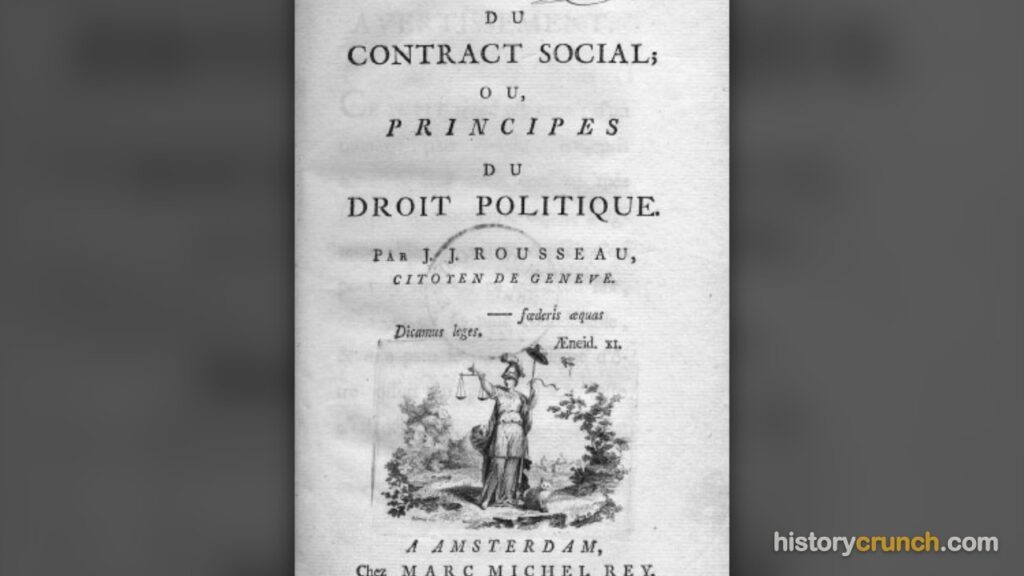
Jean-Jacques Rousseau was a philosopher who lived from 1712 to 1778, and he gave the theory its name in his book The Social Contract, published in 1762. Rousseau believed that people in the state of nature were originally good, free, and peaceful. In his view, it was the growth of society, with its wealth and private property, that corrupted people and created inequality.
As stated above, Rousseau’s famous opening line declares that people are born free but everywhere live in chains. To solve this problem, he argued that people should join together and agree to be governed by what he called the “general will,” meaning the shared interest of the whole community. Under Rousseau’s version of the social contract, the people themselves hold ultimate authority, and government should reflect what is best for everyone rather than the wishes of a single ruler. In this way, Rousseau’s ideas pointed strongly toward democracy and the belief that power should come from the people.
How Did Social Contract Theory Influence Revolutions?
The ideas of Hobbes, Locke, and Rousseau did not stay locked away in books. In fact, they spread across Europe and the Americas and helped inspire people to challenge their governments. The belief that authority should come from the consent of the people, rather than from God or tradition, was a revolutionary idea that frightened kings and excited reformers.
For instance, Locke’s ideas about natural rights and the right to overthrow an unjust government had a powerful effect on the American Revolution. When the American colonists declared their independence, they argued that governments exist to protect the rights of the people, an idea drawn directly from social contract thinking. Similarly, the leaders of the French Revolution used Rousseau’s ideas about the general will and the equality of citizens to justify their fight against the French monarchy. In both cases, social contract theory gave revolutionaries a clear argument for why the people had the right to change their government.
Significance of Social Contract Theory
Social contract theory is significant because it completely changed the way people thought about government and power. Before the Enlightenment, most rulers claimed that their authority came from God, an idea known as the divine right of kings. Social contract theory replaced this belief with the idea that governments exist only because the people agree to them, and that authority comes from the consent of the governed.
In reality, this shift laid the foundation for modern democracy and the protection of human rights. The idea that people have natural rights, that government power should be limited, and that leaders should serve the people are all central to democratic societies today. These principles can be seen in famous documents such as the American Declaration of Independence and the French Declaration of the Rights of Man and of the Citizen.
More broadly, social contract theory continues to shape political debates in the present day. Whenever people argue about the balance between freedom and security, or about what a government owes its citizens, they are drawing on questions first raised by these Enlightenment thinkers. For this reason, social contract theory remains one of the most lasting and influential ideas in the history of political thought.
Frequently Asked Questions
What Is Social Contract Theory in Simple Terms?
Social contract theory is the idea that people agree to give up some of their freedom in return for a government that protects them and keeps order. It explains why people accept rules and obey leaders even though no one signs an actual contract. The theory treats government as a kind of trade in which both the people and the rulers have responsibilities to each other.
Who Are the Three Main Social Contract Philosophers?
The three main social contract philosophers are Thomas Hobbes, John Locke, and Jean-Jacques Rousseau. Although they all agreed that government came from an agreement among people, each one reached different conclusions about human nature and how much power a government should have. Their debates form the heart of the theory and are still studied in classrooms today.
How Are Hobbes and Locke Different?
The biggest difference between Hobbes and Locke is that Hobbes wanted a strong, almost all-powerful ruler, while Locke wanted a limited government that protected people’s rights. Hobbes believed people were selfish and needed a powerful authority to prevent chaos. Locke, by contrast, trusted people more and believed they could remove a government that failed to protect them.
Why Is the Social Contract Important Today?
The social contract is important today because it forms the basis of modern democratic governments and the idea that leaders must answer to the people. Many of the rights and freedoms enjoyed in democracies, such as voting and legal protections, grew out of social contract thinking. It also gives citizens a way to judge whether their government is fulfilling its duties.
What Is the General Will According to Rousseau?
The general will is Rousseau’s idea that a community should be governed according to what is best for everyone as a whole, rather than the private interests of a single ruler or a small group. He believed that when people follow the general will, they remain free because they are obeying rules they helped create. This concept became an important foundation for later democratic ideas about self-government.
Cite This Article
To cite this article as a source, use one of the formats below.
MLA: Millar, B. “Social Contract Theory: A Detailed Summary.” HistoryCrunch, 9 August 2026, https://historycrunch.com/social-contract-theory/.
APA: Millar, B. (2026). Social Contract Theory: A Detailed Summary. HistoryCrunch. https://historycrunch.com/social-contract-theory/
Chicago: Millar, B. “Social Contract Theory: A Detailed Summary.” HistoryCrunch. August 9, 2026. https://historycrunch.com/social-contract-theory/
Sources
- Jerry Bentley & Herbert Ziegler, Traditions & Encounters: A Global Perspective on the Past.
- J.M. Roberts & Odd Arne Westad, The Penguin History of the World.