Roanoke Colony is one of the most important early chapters in the story of English settlement in North America, and it remains one of the great unsolved mysteries in American history. The Roanoke Colony was the site of two attempts by Sir Walter Raleigh to found the first permanent English settlement in North America, with the first colony established at Roanoke Island in 1585 as a military outpost and evacuated in 1586. A second group of settlers arrived in 1587, and when a supply ship finally returned in 1590, the people had vanished, leaving behind only a single carved word. That disappearance gave the settlement its lasting nickname, the “Lost Colony.”
The word “colony” refers to a settlement or territory that is controlled by a distant home country and populated, at least in part, by people from that country. In the case of Roanoke, England hoped to plant a colony far across the Atlantic Ocean that would strengthen the nation, provide a base against rival Spain, and open the door to trade and wealth in the New World.
What Was the Age of Exploration?
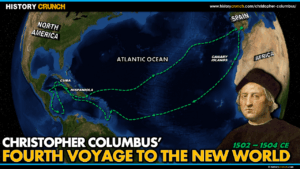
The Roanoke Colony belongs to a much larger period in world history known as the Age of Exploration. The Age of Exploration was a period of European overseas exploration that took place from the late 15th century through the 17th century, during which European sailors, navigators, and explorers ventured across the Atlantic, Pacific, and Indian Oceans in search of new trade routes, wealth, and territory. This era changed the course of history and connected continents that had been separated for thousands of years.
The four European nations most closely associated with the Age of Exploration were Portugal, Spain, France, and England, and each of these countries shared an important advantage in that they all bordered the Atlantic Ocean and had access to experienced sailors, well-developed sea ports, and the financial resources needed to fund long ocean voyages. For much of this era, Spain and Portugal led the way and grew rich from their overseas empires. England came late to the race for colonies, and Roanoke was one of its very first efforts to claim a foothold in the Americas.
The Age of Exploration also had lasting effects on the people who already lived in these lands. These expeditions resulted in the devastating conquest and colonization of indigenous peoples in the Americas, Africa, and Asia. At Roanoke, the arrival of English settlers among the Algonquian-speaking peoples of the region followed this same pattern, and the strained relations that resulted would help doom the colony.
Why Did England Want a Colony at Roanoke?
By the late 1500s, England was a rising power eager to compete with Spain, which had already built a huge empire in the Americas. A colony in North America would give England a base for exploration, a possible source of gold and other goods, and a place from which English ships could raid Spanish treasure fleets. The plan won the support of Queen Elizabeth I.
Fort Raleigh tells the story of England’s first attempts to settle in North America, through three 1580s voyages financed by explorer and statesman Sir Walter Raleigh with Queen Elizabeth’s blessing. Raleigh never sailed to Roanoke himself, but he organized and paid for the voyages and received a royal charter to claim new lands for England. The region he targeted lay along the coast of what is today North Carolina.
An early scouting expedition in 1584 explored the area and made contact with the local people. The 1584 expedition, often called the Amadas-Barlowe Expedition after its two leaders, explored the region and made contact with Indians whose main settlement was on Roanoke Island, and relations were friendly, with meat and fish acquired in exchange for cloth and wine; the local chief, Wingina, even entertained the Europeans with a great feast, and two Roanoke Indians then volunteered to accompany the explorers back to England, Manteo and Wanchese. These early friendly contacts encouraged England to try to build a real settlement.
What Happened to the First Roanoke Colony?
The first serious attempt at settlement came in 1585. Two attempts by Sir Walter Raleigh at settlement, in 1585-86 and 1587, failed because of supply problems and Indian attacks, and the first colony, originally consisting of 108 persons, was founded by Raleigh’s cousin, Sir Richard Grenville. This first group was made up mostly of men, and it was designed as a military and trading outpost rather than a permanent town for families.
The settlement was placed under the command of a governor named Ralph Lane. Roanoke Colony was founded by Governor Ralph Lane in 1585 on Roanoke Island in present-day Dare County, North Carolina, and poor relations with some of the local Native American tribes and a lack of supplies troubled Lane’s colony. The colonists struggled to feed themselves and grew increasingly dependent on the very people they were mistreating, which quickly turned early friendships into hostility.
Relations broke down badly, and violence followed. An attack on a Native American village and the murder of its chief would permanently sour relations for those that followed. With food running low and tensions high, the colonists seized a chance to leave. The first Roanoke colonists did not fare well, suffering from dwindling food supplies and Indian attacks, and in 1586 they returned to England aboard a ship captained by Sir Francis Drake. The first attempt at Roanoke had ended in failure.
Who Were the Lost Colonists of 1587?
Despite the first failure, Raleigh tried again the following year with a very different plan. This time the goal was a lasting community, so the settlers included women and children, not just soldiers. In 1587, Raleigh sent out another group of 100 colonists under John White. White was an artist and mapmaker who had taken part in the earlier voyage, and he now served as the governor of the new colony.
Over thirty years before the Pilgrims landed at Plymouth Rock, a group of 117 weary men, women, and children waded ashore and made history on Roanoke Island in July 1587, establishing the first attempted settlement of its kind in the Americas. Among the settlers were White’s own family members, and the group hoped to build a stable home in the wilderness.
Soon after their arrival, the colony welcomed a new arrival who became famous in American history. Fort Raleigh National Historic Site, on Roanoke Island, is the scene of the earliest English colonizing attempts within the limits of the present United States and the birthplace of the first English child born in the New World, Virginia Dare, on August 18th, 1587. Virginia Dare was John White’s granddaughter, and her birth was a hopeful sign for the struggling settlement.
Why Did John White Leave the Colony?
The colony was short on supplies almost from the start, so the settlers decided that their leader should sail home for help. Later that year, it was decided that John White, governor of the new colony, would sail back to England in order to gather a fresh load of supplies. He expected to be gone only a short time, leaving behind his daughter, his infant granddaughter, and the rest of the colonists.
Events in Europe made his return far harder than anyone imagined. Just as he arrived, a major naval war broke out between England and Spain, and Queen Elizabeth I called on every available ship to confront the mighty Spanish Armada. With England fighting for its survival at sea, ships could not be spared for a small colony across the ocean. As a result, White was stuck in England for three long years, unable to bring the promised relief.
What Was the Mystery of the Lost Colony?
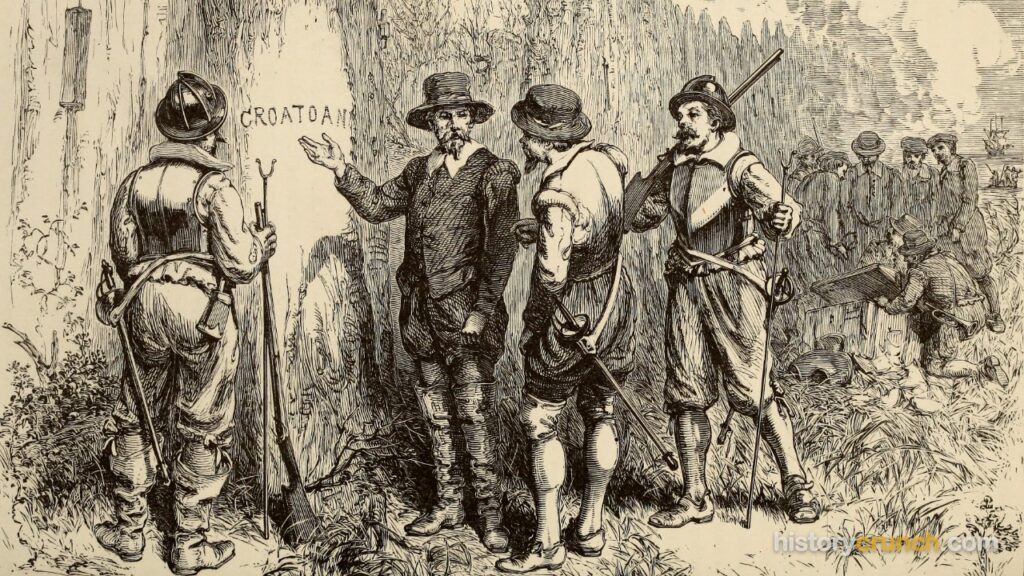
When White finally sailed back to Roanoke, he found a scene that has puzzled people ever since. In August 1590, White returned to Roanoke, where he had left his wife and daughter, his infant granddaughter, and the other settlers three long years before, and he found no trace of the colony or its inhabitants, and few clues to what might have happened, apart from a single word, “Croatoan,” carved into a wooden post. There were no bodies and no clear signs of a struggle.
The carved word offered the only real clue to where the people might have gone. “Croatoan” was the name of an island south of Roanoke that was home to a Native American tribe of the same name. White believed the message pointed to that nearby island, which was the home of Manteo’s people, the Algonquian ally who had helped the English. He hoped it meant the colonists had simply relocated rather than met with disaster.
Sadly, White was never able to solve the mystery himself. Before he could make further exploration, a great hurricane arose, damaging his ships and forcing him back to England, and despite repeated attempts he was never able to raise the funding and resources to make the trip to America again; Raleigh had given up hope of settlement, and White died many years later on one of Raleigh’s estates, ignorant of the fate of his family and the colony.
Ever since, people have offered many explanations for what became of the colonists. Historians and archaeologists have considered several possibilities, including whether the settlers died from natural causes such as a hurricane, disease, or starvation; whether they were attacked, either by Native Americans or Spanish explorers; or whether they left Roanoke Island voluntarily for another location, such as the Chesapeake area or points south. Many researchers today lean toward the idea that the colonists moved and blended into nearby Native American communities, but no theory has ever been fully proven.
Significance of Roanoke Colony
The Roanoke Colony is significant first because it marked England’s earliest serious attempt to plant a permanent settlement in North America. Roanoke was the site of two attempts by Sir Walter Raleigh to found the first permanent English settlement in North America. Though both attempts failed, they showed that England was determined to compete with Spain and other powers for a share of the New World.
Roanoke also taught hard lessons that shaped later, more successful colonies. Doomed to failure, this early colonial project lacked adequate planning and logistical support. The problems of poor supplies, weak planning, and violent conflict with Native peoples all pointed to mistakes that future colonists at Jamestown and Plymouth would try to avoid. In this way, the failure at Roanoke helped pave the road to permanent English settlement in the years that followed.
Finally, Roanoke holds a special place in American memory because of its unsolved mystery. The Roanoke Island colony was the first English settlement in the New World, and the mystery of its collapse has never fully been solved. The image of the deserted village and the single word carved into wood has fascinated people for centuries, keeping the story of the Lost Colony alive as one of the most enduring puzzles in the history of the Age of Exploration.
Frequently Asked Questions
Where Was the Roanoke Colony Located?
The Roanoke Colony was located on Roanoke Island, off the coast of what is today North Carolina. The island sits within the Outer Banks, a chain of narrow, sandy islands along the Atlantic coast, and the site is now protected as Fort Raleigh National Historic Site near the town of Manteo.
Who Founded the Roanoke Colony?
The Roanoke Colony was organized and paid for by Sir Walter Raleigh, an English explorer and statesman, under a charter from Queen Elizabeth I. Raleigh himself never traveled to Roanoke; instead he sent others, including his cousin Sir Richard Grenville, Governor Ralph Lane, and later Governor John White, to lead the voyages and settlements.
Who Was Virginia Dare?
Virginia Dare was the first English child born in the Americas, born on Roanoke Island in 1587. She was the granddaughter of Governor John White, and like the rest of the colonists she had vanished by the time White returned in 1590, which has made her name a lasting symbol of the Lost Colony’s mystery.
What Does the Word Croatoan Mean?
Croatoan was the name of a Native American tribe and an island south of Roanoke, in the area of present-day Hatteras Island. The colonists had agreed with White that if they left, they would carve their destination, so the word suggested they may have moved to live among the Croatoan people, who were allies of the English.
Why Is Roanoke Called the Lost Colony?
Roanoke is called the Lost Colony because its settlers disappeared without a clear explanation between 1587 and 1590. When John White returned with supplies, the entire community of more than one hundred people was gone, and because no one ever confirmed what happened to them, the settlement earned its famous nickname.
Cite This Article
To cite this article as a source, use one of the formats below.
MLA: Millar, B. “Roanoke Colony: A Detailed Summary.” HistoryCrunch, 2 August 2026, https://historycrunch.com/roanoke-colony/.
APA: Millar, B. (2026). Roanoke Colony: A Detailed Summary. HistoryCrunch. https://historycrunch.com/roanoke-colony/
Chicago: Millar, B. “Roanoke Colony: A Detailed Summary.” HistoryCrunch. August 2, 2026. https://historycrunch.com/roanoke-colony/
Sources
- Jerry Bentley & Herbert Ziegler, Traditions & Encounters: A Global Perspective on the Past.
- J.M. Roberts & Odd Arne Westad, The Penguin History of the World.