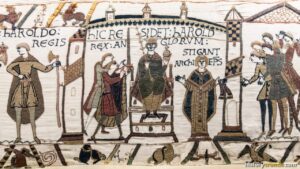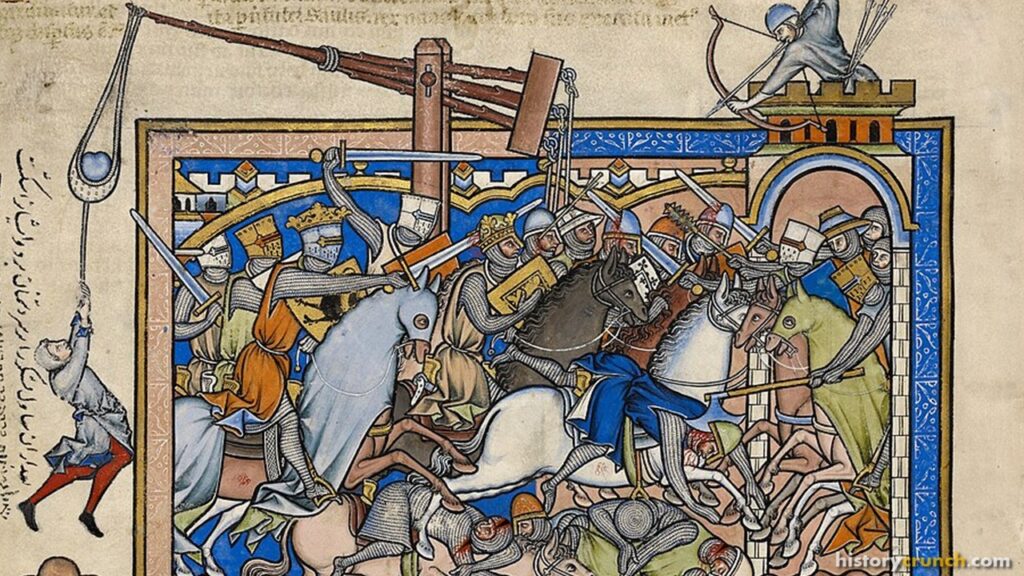
Medieval siege weapons were powerful machines designed to attack castles, fortresses, and other walled cities during the Middle Ages. They played a crucial role in warfare from roughly the 9th to the 15th centuries, when Europe was dominated by feudal lords and fortified castles. As castles became stronger and more complex, armies developed new siege technologies to break through defenses, tear down walls, and gain entry to enemy strongholds.
 FactsthatCrunch
 Evidence Photo
What Was the Middle Ages?
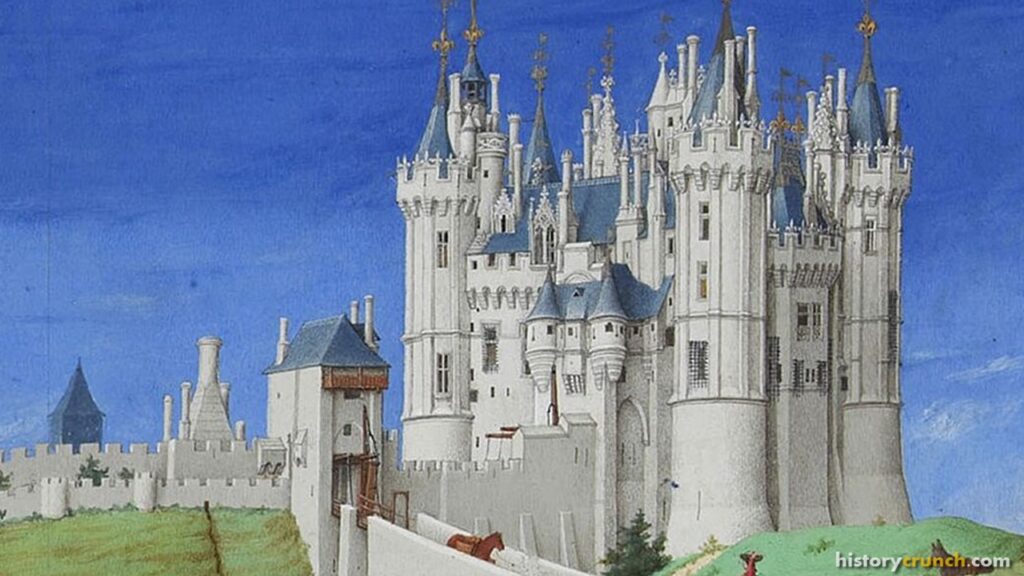
The Middle Ages (or Medieval Period) lasted for approximately 1000 years from the 5th century to the 15th century. Due to its timeframe, the Middle Ages in Europe is divided into three smaller periods referred to as the Early, High and Late Middle Ages. Throughout this time period castles played an important political, social and military role in European society. A castle is a fortified structure (usually out of stone) that was mainly for the nobility or royalty in European societies. While fortified structures existed for centuries, the classic Medieval Castle is considered to have first emerged in the 9th or 10th century. This is a highly debated topic among historians however by the 11th century there were many castles being built across Europe. At the time, Europe was divided among many different kingdoms which were often in conflict. As such, castles allowed for protection from attack.
Medieval Siege Weapons – Purpose
Due to the use of castles throughout the Middle Ages, European societies developed a wide array of different medieval siege weapons. These weapons were designed and used throughout the Middle Ages in battle in order to destroy the fortificationsWalls, gates, and other built structures meant to protect a castle or military position from attack. of a castle or to damage the defenses of the defending army. For example, the siege weapons were used in major conflicts from the Medieval Period such as the Crusades and the Hundred Years War. The most common or popular siege weapons of the Middle Ages included the following:
- Ballista
- Battering Ram
- Catapult
- Siege Tower
- Trebuchet
FactsthatCrunchSiege weapons gave attacking armies a way to break through stone castle walls, making them essential tools in major conflicts like the Crusades and the Hundred Years War.
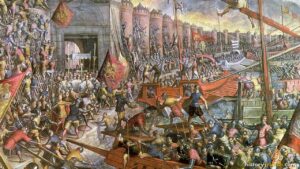
In the Crusades, armies fighting over fortified cities in the Holy Land depended on siege weapons because those cities were protected by thick stone walls that foot soldiers could not cross by direct assault.
The trebuchet and catapult let attackers launch heavy rocks and fire projectiles over high walls, destroying defenses from a distance and forcing defenders to choose between fighting and surrendering.
In the Hundred Years War, control of France depended heavily on holding fortified towns and castles, so armies that could bring effective siege weapons to a fight held a major advantage over those that could not.
As siege weapons improved across the 9th to 15th centuries, castle builders also had to keep strengthening walls and gates, meaning the two technologies pushed each other forward and shaped how medieval warfare was organized overall.
Medieval Siege Weapons – Examples
As stated above, there were several main examples of medieval siege weapons that were especially important in Europe during the events of the Middle Ages and the Crusades. For instance, this article details the ballista, battering ram, catapult, siege tower and trebuchet.
FactsthatCrunchHow did medieval siege weapons rank by firing range, from close-contact to long-distance?
Tap a point to read its detail.
Ballista
The ballista (also sometimes known as a bolt thrower) was a siege weapon that essentially launched a large projectile (bolt) at a distant target. In general, it can be thought of as a large crossbow. It used the tension of a series of springs, which allowed a single person to launch the large bolt. The ballista as a weapon had existed throughout much of Europe long before the timeframe of the Middle Ages. More specifically, it was first designed and used by Ancient Greeks and was a commonly used weapon throughout the Roman Empire which stretched from 27 BCE to 476 CE. However, variations of the ballista remained in use in the Middle Ages. With that said, later inventions such as the trebuchet made the ballista obsoleteNo longer useful because something newer and more effective has replaced it..
FactsthatCrunchTrue or False: The ballista worked much like a giant crossbow, using tension to launch a large bolt at a distant target.
Battering Ram
The battering ram was a siege weapon that was used to smash the fortifications (walls and gates) of castles and other encampments. In its simplest form, the battering ram was simply a large wooden log that was carried by several people and used to smash the defenses of the defending army. While this method proved effective it meant that those carrying the heavy log were defenseless against attack from above. For example, defenders on the wall of a castle could shoot arrows or drop rocks and other projectiles to injure and kill the people carrying the battering ram. As a result, over time the battering ram designs in the Middle Ages came to include canopies that protected the attackers operating the siege weapon. As well, these later designs included wheels to increase the speed and force of the battering ram.
FactsthatCrunchCatapult
The catapult was a device used to launch a projectile over a great distance in order to smash or set fire to enemy defenses. Similar to other siege weapons, the catapult was actually in use long before the timeframe of the Middle Ages. For example, the ancient Greeks and Romans used different versions of the catapult in their conflicts and wars. In the Middle Ages, catapults were ideal siege weapons as they allowed the attacking forces to launch projectiles into or over the high castle walls common throughout Europe. Besides heavy projectiles, people in the Middle Ages also launched incendiaryDesigned to start fires, like a projectile wrapped in burning material launched into an enemy’s castle. (fire) projectiles in order to light fire to the interiors of a castle. The following other siege weapons from the Middle Ages are considered to be variations of the traditional catapult: ballista, mangonel, onager and trebuchet. Each was used at different times throughout the Middle Ages.
Siege Tower
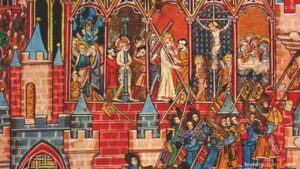
The siege tower was a siege weapon that looked and operated exactly as its name suggests. Essentially, it was a wooden tower on a frame with wheels that allowed it to be pushed up against the walls of a castle or other fortification. This allowed the attacking forces the ability to climb ladders or stairs inside of the siege tower while being protected from arrows and other projectiles from the defending forces of the castle. Siege towers were large structures and often took a long time to construct. As a result, they were usually only used after earlier attempts to take a castle by ladders or other attack were defeated. As well, the siege towers were generally constructed at the location of the attack since they were so difficult to move. Siege towers were used long before the time of the Middle Ages, especially by ancient Romans, Assyrians and Babylonians. With that said, they remained in use into the Middle Ages and even became more elaborate in their design and function. For instance, some siege towers in the Middle Ages were known to carry as many as 200 archers and their own line of catapults. Siege towers were always susceptible to fire but the use of gunpowder in cannons and firearms made the siege tower obsolete as a military tactic.
FactsthatCrunchBy the late 1300s and into the 1400s, attacking armies across Europe had long relied on the wooden siege tower to reach the tops of castle walls during sieges in the Middle Ages. Soldiers climbed inside while the tower rolled forward on wheels, sheltered from arrows and rocks dropped by defenders above. Now, gunpowder cannons were appearing on European battlefields, and commanders faced a choice about whether the siege tower still had a future in castle warfare.
Trebuchet
The trebuchet was a type of catapult that was commonly used throughout both ancient history and the Middle Ages. In general, the trebuchet is a siege weapon that launches projectiles such as rocks with the use of a large swinging arm. As such, it is considered to be a petraryA medieval term for any machine built to throw rocks or heavy projectiles at an enemy. which is a term for launching devices or ‘rock throwing machines’ from the timeframe of the Middle Ages. There were a few different types of trebuchets but they generally used similar methods in their operation. For instance, the traction trebuchetA type of trebuchet powered by people pulling ropes to swing the throwing arm. (also sometimes called a mangonel) was operated by using manpower to swing the arm of the device and launch the projectile. While the counterweight trebuchetA type of trebuchet that uses a heavy hanging weight and gravity to swing the throwing arm. used a heavy weight and gravity to swing the arm and launch the projectile. The traction trebuchet was more commonly used during the first few centuries of the Early Middle Ages, which occurred from approximately the 5th century to the 10th century. On the other hand, the counterweight trebuchet was in use during the years of the High and Late Middle Ages which occurred from approximately the 10th century to the 15th century. Similar to other siege weapons of the Middle Ages, the use of gunpowder eventually made the trebuchet obsolete.
FactsthatCrunchWhich trebuchet type matches each power source and era?
Explore Middle Ages · 476 – 1500 CE
Keep exploring Middle Ages with these History Crunch resources.
Key Vocabulary
Fortifications
Incendiary
Obsolete
Petrary
Traction trebuchet
Counterweight trebuchet
Frequently Asked Questions
What were the most common medieval siege weapons?
The most common medieval siege weapons were the ballista, battering ram, catapult, siege tower, and trebuchet. Each one had a different job, from smashing gates to launching heavy stones over walls. Armies used them in major conflicts such as the Crusades and the Hundred Years War.
How did a trebuchet work?
A trebuchet launched rocks and other projectiles using a large swinging arm. The traction type used people pulling ropes to swing the arm, while the counterweight type used a heavy weight and gravity. The counterweight design was stronger and became common during the High and Late Middle Ages.
What is the difference between a catapult and a trebuchet?
A trebuchet is actually a type of catapult that uses a swinging arm to hurl projectiles. The word catapult covers a wider group of machines, including the mangonel, onager, and ballista. All of them were built to throw heavy or flaming objects at enemy defenses.
Why was the siege tower used in castle attacks?
A siege tower let attackers reach the top of a castle wall while staying safe from arrows and dropped rocks. Soldiers climbed stairs or ladders inside the wooden tower, which rolled up to the wall on wheels. These towers were large and slow to build, so armies often made them right at the battle site.
Why did medieval siege weapons become obsolete?
Gunpowder weapons such as cannons and firearms made older siege weapons out of date. Cannons could break stone walls faster and from a greater distance than a trebuchet or catapult. By the end of the Middle Ages, these new weapons had replaced machines like the siege tower.
Were siege weapons invented during the Middle Ages?
No, many siege weapons existed long before the Middle Ages. The ancient Greeks and Romans used early versions of the ballista and catapult, and the Assyrians and Babylonians built siege towers. Medieval armies improved these older designs to attack the strong stone castles of their time.
Cite This Article
To cite this article as a source, use one of the formats below.
MLA: Beck, Elias. “Medieval Siege Weapons: A Detailed Summary.” HistoryCrunch, 15 October 2026, https://historycrunch.com/medieval-siege-weapons/.
APA: Beck, E. (2026). Medieval Siege Weapons: A Detailed Summary. HistoryCrunch. https://historycrunch.com/medieval-siege-weapons/
Chicago: Beck, Elias. “Medieval Siege Weapons: A Detailed Summary.” HistoryCrunch. October 15, 2026. https://historycrunch.com/medieval-siege-weapons/
Sources
- Chris Wickham, Medieval Europe.
- Barbara Rosenwein, A Short History of the Middle Ages.