The Grapes of Wrath is one of the most important novels ever written about the Great Depression, and it gave millions of Americans a way to understand the suffering unfolding around them. Published in 1939, the book was written by American author John Steinbeck and it told the fictional story of the Joad family, poor farmers from Oklahoma who lose their land and travel west to California in search of work. Although the Joads were invented, their journey mirrored the real experiences of hundreds of thousands of people during the 1930s. As such, the novel became one of the most powerful and lasting symbols of the economic hardship of the era.
The Grapes of Wrath is a work of historical fiction, which means it is an invented story set against the backdrop of real historical events. Steinbeck used the made-up Joad family to represent the very real struggles of migrant farm workers, and he blended their story with short descriptive chapters that explained the wider conditions of the time. In this way, the novel worked as both a family drama and a form of social commentary on the injustice and poverty of the Great Depression.
What Was the Great Depression?
The Great Depression was a worldwide economic recession that occurred primarily during the 1930s. A recession is a term that refers to a general economic downturn resulting in high levels of unemployment and a loss in consumer spending. In fact, the Great Depression was the most severe economic downturn in modern history, and it caused enormous hardship for ordinary people in the United States and around the world.
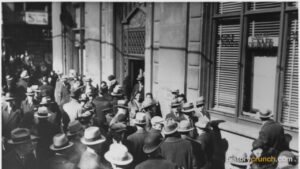
Historians have identified several different causes of the Great Depression. These included the stock market crash of 1929, the purchasing of stocks on margin, the wide income gap between the wealthy and the poor, the loss of consumer spending, the failure of banks to deal with the crisis, protectionism, and the weather conditions of the American Midwest. More specifically, the crisis began with the collapse of the American stock market in October of 1929, and it quickly spread as jobs, businesses, and savings were wiped out on a massive scale.
As the crisis deepened, unemployment climbed to shocking levels and reached roughly 25 percent of American workers by 1933. Families lost their homes, banks failed by the thousands, and people struggled to afford even basic food and clothing. This was the world into which The Grapes of Wrath was written, and it explains why the novel struck such a deep chord with readers who were living through the very same hardships.
How Did the Dust Bowl Shape the Novel?
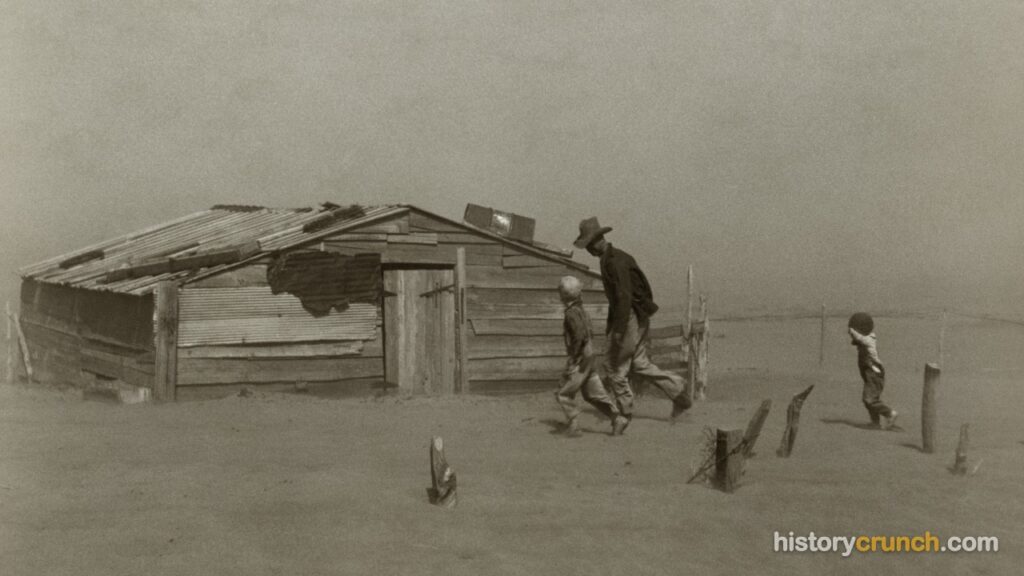
A major cause of the migration described in the novel was the Dust Bowl. The Dust Bowl is the term used to refer to the drought conditions that occurred across North America during the 1930s and the time period of the Great Depression. It was generally centered on farms in Colorado, Kansas, Oklahoma, and Texas, and it turned huge areas of once productive farmland into barren, dusty ground.
This region of the United States was historically dry and received a relatively low amount of rain per year. As well, the area had a thin layer of top soil that had traditionally only supported dry grasses, so it was not ideal for extensive farming. Farming practices used at the time, such as deep plowing and mechanization, contributed to the over-farming of the region, and when severe drought struck in the 1930s the exposed soil dried out and blew away in enormous dust storms.
Because of these conditions, many families were forced from their farms and had to search for work elsewhere. Roughly 2.5 million people left the Dust Bowl states in one of the largest migrations in American history. In The Grapes of Wrath, the Joad family lives through exactly this experience, as failing crops and bank foreclosures drive them off the land their family had farmed for generations.
Who Wrote The Grapes of Wrath?
The Grapes of Wrath was written by John Steinbeck, an American author who was born in 1902 in Salinas, California. He grew up in an agricultural region and worked on ranches and farms as a young man, which gave him a close understanding of the lives of rural laborers. This background helped him write about farm workers with unusual sympathy and detail.
To prepare for the novel, Steinbeck spent time among real migrant families and visited the camps and tent cities where they lived. He saw firsthand the terrible living conditions that displaced workers endured, and he used what he learned to make his fictional story feel accurate and real. In fact, this careful research is one of the reasons the novel remains such a valuable window into the period.
Steinbeck built the book in an unusual way. He alternated the chapters about the Joad family with shorter chapters that stepped back to describe the wider situation facing all migrants. These shorter sections allowed him to explain the social and economic forces at work, while the Joad chapters kept readers emotionally connected to a single struggling family.
What Is the Story of The Grapes of Wrath?
The novel begins with a young man named Tom Joad returning home after being released from prison, where he had served time for manslaughter. When he arrives, he discovers that his family’s farm has been abandoned and that the land has been repossessed by the bank because of the drought and hard economic times. Along the way he meets a former preacher named Jim Casy, who decides to join the family.
The Joads are drawn to California by handbills advertising plentiful jobs picking fruit in the orchards of the state. Hoping for a better life, the family loads all of their belongings onto an old, battered truck and sets out along the highway toward the West. The journey is long and difficult, and several family members do not survive the trip.
When the Joads finally reach California, they do not find the promised land they had imagined. Instead they discover thousands of other desperate migrants competing for a small number of jobs, along with low wages, poor camps, and hostility from local residents. As stated above, the family faces exploitation and prejudice, and the story ends with the Joads still struggling to survive but holding onto their dignity and their care for one another.
Why Were Migrants Called “Okies”?
The migrants who traveled west during the Dust Bowl were often called “Okies,” a nickname that referred especially to poor farmers from Oklahoma. In reality, the term was loosely applied to migrants from across the south-central region, including states such as Texas, Arkansas, and Missouri, no matter where they had actually come from. It began as an insult but later became tied to survival, endurance, and hardship in the 1930s.
Between 1935 and 1940, California received more than 250,000 migrants from the Southwest, and many of them headed for the state’s central farming valleys. Because the picking season could bring nearly twice as many migrants as there were jobs, these workers often became a new class of poor. For instance, many locals treated the newcomers with suspicion and contempt, blaming them for lowering wages and straining schools, housing, and services in small farm towns.
The Grapes of Wrath brought this experience to a national audience. Steinbeck was not the first to write about the migrants, but his novel made sure their story would not be forgotten, turning the Dust Bowl migrants into one of the enduring symbols of the Great Depression.
How Did People React to the Novel?
When The Grapes of Wrath was published in 1939, it caused an immediate sensation. It became the best-selling novel of the year and won the Pulitzer Prize in 1940, one of the most respected awards in American writing. The book was praised by working-class readers who recognized their own struggles in the story of the Joad family.
At the same time, the novel was highly controversial. Many business and government officials attacked the book for its harsh criticism of powerful landowners and banks, and some accused Steinbeck of promoting radical or socialist ideas. In fact, in some California counties, including places where the story was set, the book was banned from libraries and schools, and copies were even burned.
Despite this backlash, the novel’s popularity only grew. A film version was released in 1940, which spread the story to an even larger audience. Years later, the book was cited when Steinbeck received the Nobel Prize in Literature in 1962, cementing its place as one of the most important works in American literature.
Significance of The Grapes of Wrath and the Great Depression
The Grapes of Wrath is significant because it captured the human cost of the Great Depression in a way that facts and figures alone could not. By following a single family through eviction, migration, and hardship, the novel helped readers across the country feel the suffering of people they had never met. In this way, it built sympathy and understanding for the poor and displaced during one of the darkest periods in American history.
The book was also significant because it drew attention to serious problems facing migrant farm workers, such as low wages, poor housing, and unfair treatment. Its powerful portrayal of these conditions added to public debate about how workers should be treated and helped shape support for reforms during the era of the New Deal, the series of government programs designed to fight the Depression. As a result, the novel had an influence that reached far beyond the world of fiction.
Finally, The Grapes of Wrath remains significant today as a lasting historical record of the 1930s. It is still widely read in schools, and it continues to teach new generations about the Dust Bowl, the Great Depression, and the resilience of ordinary people facing extraordinary hardship. For this reason, it is remembered as both a great work of literature and an important source for understanding American history.
Frequently Asked Questions
When Was The Grapes of Wrath Published?
The Grapes of Wrath was published in 1939, near the end of the Great Depression. It appeared at a time when the country was still recovering from years of economic hardship, which is one reason it connected so strongly with readers. The novel quickly became the best-selling book of that year.
Is The Grapes of Wrath a True Story?
The Grapes of Wrath is a work of fiction, meaning the Joad family and their specific journey were invented by John Steinbeck. However, the story was based on real events and real conditions that Steinbeck observed while spending time with migrant families. As such, the novel is fictional but historically accurate in the way it describes life during the Dust Bowl and the Great Depression.
Where Does the Title The Grapes of Wrath Come From?
The title comes from a line in “The Battle Hymn of the Republic,” a famous American song from the 1800s. It was suggested to Steinbeck by his wife, Carol. The phrase suggests building anger and injustice, which fit the novel’s themes of poverty, exploitation, and the growing frustration of struggling families.
Why Was The Grapes of Wrath Banned?
The Grapes of Wrath was banned in some places because officials believed it was too critical of businesses, banks, and landowners. Some claimed the book contained radical or socialist ideas, and certain California counties removed it from libraries and schools and even burned copies. Despite these efforts, the book remained hugely popular and continued to be widely read.
What Was the Main Message of The Grapes of Wrath?
The main message of The Grapes of Wrath is that ordinary people deserve dignity and fair treatment even in the hardest times. The novel highlights the importance of family, community, and helping others, while also criticizing the powerful forces that crushed the poor during the Great Depression. Through the Joad family, Steinbeck showed both the cruelty of the era and the strength of the human spirit.
Cite This Article
To cite this article as a source, use one of the formats below.
MLA: Millar, B. “The Grapes of Wrath and the Great Depression: A Detailed Summary.” HistoryCrunch, 14 August 2026, https://historycrunch.com/grapes-of-wrath-and-the-great-depression/.
APA: Millar, B. (2026). The Grapes of Wrath and the Great Depression: A Detailed Summary. HistoryCrunch. https://historycrunch.com/grapes-of-wrath-and-the-great-depression/
Chicago: Millar, B. “The Grapes of Wrath and the Great Depression: A Detailed Summary.” HistoryCrunch. August 14, 2026. https://historycrunch.com/grapes-of-wrath-and-the-great-depression/
Sources
- FDR Presidential Library
- Eric Rauchway, The Great Depression and the New Deal: A Very Short Introduction.
- Liaquat Ahamed, Lords of Finance.
- David M. Kennedy, Freedom from Fear.