Bank runs and bank failures were among the most damaging features of the Great Depression, and they turned an ordinary economic downturn into the worst financial crisis in American history. When large numbers of frightened depositors rushed to pull their savings out of banks at the same time, they drained the banks of cash and forced thousands of them to close their doors for good. These events wiped out the life savings of ordinary families, choked off loans that businesses needed to survive, and deepened the misery of the 1930s.
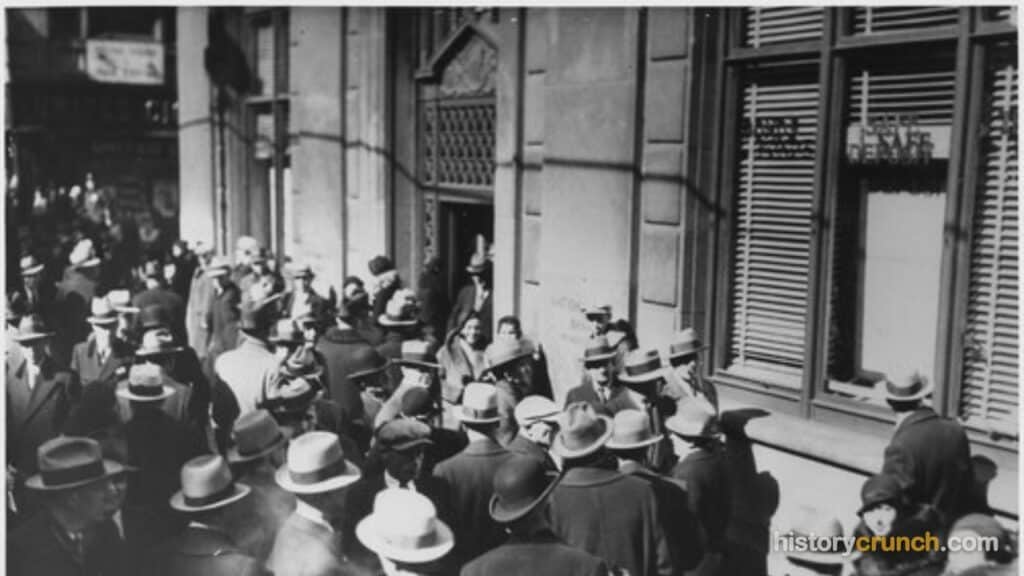
A bank run is a situation in which a large group of people attempt to withdraw their money from a bank at the same time. Banks do not keep all of their customers’ deposits sitting in a vault. Instead, they lend most of that money out or invest it in order to earn a profit. Because of this, a bank never has enough cash on hand to pay every single customer at once, so when panic spreads and everyone demands their money together, even a healthy bank can be forced to close.
What Was the Great Depression?
The Great Depression was a worldwide economic recession that occurred primarily during the 1930s. A recession is a term that refers to a general economic downturn resulting in high levels of unemployment and a loss in consumer spending. It was a significant event in world history and was of particular importance to American history, because it reshaped the economy, politics, and everyday life of the United States for years to come.
Most historians identify the stock market crash in October of 1929 as the start of the Great Depression in the United States. The crash saw the market lose more than one third of its total value in a matter of weeks. This shattered public confidence and set off a chain of problems, including a sharp drop in consumer spending, a steep rise in unemployment, and a series of bank runs and bank closures. In fact, banking troubles became one of the main reasons the downturn spread so far and lasted so long.
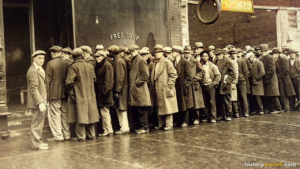
The suffering during these years was enormous. At its worst, industrial production in the United States fell by nearly half, the overall size of the economy shrank by about a third, and unemployment climbed as high as 20 percent. Families lost their jobs, their homes, and their savings, and many were left with no way to recover what they had lost.
How Did Bank Runs Start?
Bank runs grew directly out of fear. After the stock market crash of 1929, the American public was extremely nervous and easily frightened by rumors of financial disaster. Many banks had invested heavily in the stock market themselves, so when the market collapsed, those banks suffered heavy losses along with everyone else. Afraid they would lose their own savings, people rushed to any bank that was still open to withdraw their money in cash.
This massive rush to pull out cash created a crisis, because no bank keeps enough actual money on hand to pay every customer at once. As a result, banks were forced to sell off loans and other assets quickly and at low prices just to find cash. This lowered the value of their holdings even further and pushed struggling banks over the edge. More specifically, the panic often fed on itself, because news that one bank had closed frightened depositors at nearby banks and started fresh runs there.
Another problem made the situation worse. Businesses were scaling back their operations to save money, so they borrowed far less from banks than they once had. Since banks made much of their income from lending, this loss of business further weakened their ability to survive the crisis. In reality, a bank could be perfectly honest and still fail simply because it could not turn its assets into cash fast enough to satisfy panicked customers.
When Did the Banking Crises Happen?
The banking troubles of the Great Depression came in waves rather than all at once. For a short time after the 1929 crash, the economy actually appeared poised to recover, much as it had after earlier downturns. In the fall of 1930, the economy appeared poised for recovery, but in November 1930 a series of crises among commercial banks turned what had been a typical recession into the beginning of the Great Depression.
This first wave began in the South. A significant increase in bank failures occurred following the collapse of a large financial conglomerate, Caldwell and Company, in Nashville, Tennessee. On November 7, the Bank of Tennessee, owned by Caldwell and Company, failed, and two other Caldwell-affiliated banks in Knoxville failed five days later. The demise of Caldwell triggered runs by depositors in Tennessee, and panic spread quickly to banks in other states such as Kentucky, Arkansas, and North Carolina.
The largest single collapse of this period came in New York City. On December 11, 1930, the Bank of the United States, which despite its name was an ordinary commercial bank, failed, and with deposits of about $200 million it was then the largest bank failure in United States history. Efforts by other New York banks to rescue it by merging it into a larger institution did not succeed. During 1930, there were about 1,350 bank suspensions.
More waves followed. A second banking crisis struck in 1931, and the nature of the trouble changed that fall. The financial crisis changed in the fall of 1931, when the commercial banking crisis spread throughout the entire nation, and on September 21, 1931, Great Britain left the gold standard. This frightened people who held dollars, and the panic became national rather than regional. The overall number of banks that failed kept climbing, and the yearly total of bank suspensions rose steadily before reaching its peak in 1933.
Why Did So Many Banks Fail?
Several weaknesses in the American banking system allowed the crisis to grow out of control. Once a bank closed, its clients had no way to recover any of their savings. Since there was no government program to protect deposits at the time, ordinary people who did not reach the bank in time simply lost everything they had put away. This is why the sight of a crowd forming outside a bank could quickly turn into a full run, as depositors raced to be first in line.
The banking system was also fragile because it was made up of thousands of small, separate banks that had little protection during hard times. Many of these smaller banks were not part of the Federal Reserve System, which meant they had limited access to emergency help when depositors demanded cash. As stated above, a wave of failures in one region could easily spread to another, because worried depositors elsewhere would begin pulling out their own money before their bank could be caught in the same trap.
The crisis reached its climax in early 1933. By that point, so many banks had closed and so many depositors were hoarding cash at home that state after state ordered its banks shut to stop the runs. In fact, by the time a new president took office in March of 1933, thousands of banks across the country had already been closed, and even the Federal Reserve Banks themselves shut their doors during the worst of the panic.
How Did the Government Respond?
The turning point came when Franklin D. Roosevelt became president in March of 1933. He acted almost immediately to rebuild public confidence in the banks. He called a special session of Congress the day after the inauguration and declared a four-day banking holiday that shut down the banking system, including the Federal Reserve. During this holiday, no bank could open, which stopped the runs by giving officials time to act.
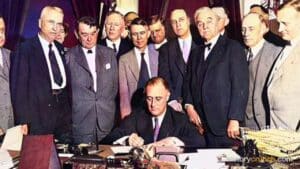
Congress then passed the Emergency Banking Act. Signed by President Roosevelt on March 9, 1933, the legislation was aimed at restoring public confidence in the nation’s financial system after a weeklong bank holiday. Under the new law, federal officials examined the banks and allowed only the healthy ones to reopen, while weaker banks were given help or closed. This meant that when banks reopened, people could trust that the ones open for business were sound.
Roosevelt also spoke directly to the public in the first of his famous radio broadcasts, known as fireside chats. He explained why he had closed the banks and promised that reopened banks would be safe. He told listeners that it was safer to keep their money in a reopened bank than under the mattress. His words worked, and when the banks reopened, many people came back to deposit their money rather than withdraw it, which signaled the end of the banking panic.
Lasting reforms followed later that year. A new banking law separated ordinary banking from risky stock market investing, and it created the Federal Deposit Insurance Corporation, or FDIC, to protect people’s deposits. This law created the Federal Deposit Insurance Corporation, or FDIC, which insured personal bank deposits up to $2,500. With deposits now guaranteed by the government, ordinary depositors no longer had a reason to start a run, and the era of widespread bank panics came to an end.
Significance of Bank Runs and Bank Failures in the Great Depression
Bank runs and bank failures were among the most important events of the Great Depression because they turned a stock market crash into a nationwide catastrophe. When banks collapsed, families lost their savings, businesses lost access to loans, and the whole economy lost the money it needed to grow. For instance, without loans, companies could not expand or hire, so unemployment climbed even higher and the downturn dragged on for years.
The scale of the destruction was staggering. Because of the banking panics, 20 percent of banks in existence in 1930 had failed by 1933. The loss of so many banks shrank the amount of money available for lending across the country, which made the Great Depression far deeper and longer than it might otherwise have been.
The lasting importance of these events lies in the reforms they produced. The banking crisis convinced the government that ordinary people needed protection from losing their savings, and the creation of federal deposit insurance changed American banking forever. In reality, the FDIC still protects bank deposits today, which is a direct result of the painful lessons learned during the bank runs of the 1930s.
Frequently Asked Questions
What Is a Bank Run in Simple Terms?
A bank run is when many customers try to take their money out of a bank at the same time because they are afraid the bank will fail. The problem is that banks lend out most of their deposits, so they never hold enough cash to pay everyone at once. When too many people demand cash together, even a healthy bank can run out of money and be forced to close.
How Many Banks Failed During the Great Depression?
About one in five American banks that existed in 1930 had failed by 1933. Thousands of banks closed each year during the worst of the crisis, and the yearly number of failures kept rising until it peaked in 1933. Many of the failed banks were small and located in rural areas, where a single closing could spread panic quickly.
Why Did People Lose Their Savings When Banks Failed?
People lost their savings because there was no government insurance to protect their deposits before 1933. When a bank closed, the money customers had placed there was simply gone, and there was no way to get it back. This is why the government later created the FDIC, which now repays depositors if a bank fails.
What Was the Bank Holiday of 1933?
The bank holiday of 1933 was a nationwide shutdown of all banks ordered by President Roosevelt shortly after he took office. It closed every bank for several days so that the panic and runs would stop and officials could inspect the banks. Only banks that were found to be healthy were allowed to reopen, which helped restore public trust.
How Were Bank Runs Finally Stopped?
Bank runs were finally stopped by a combination of quick action and lasting reform. Roosevelt’s bank holiday and reassuring fireside chat calmed the public in the short term, and the reopening of only sound banks convinced people their money was safe. In the long term, federal deposit insurance removed the main reason people started runs, since depositors no longer feared losing their savings.
Cite This Article
To cite this article as a source, use one of the formats below.
MLA: Millar, B. “Bank Runs and Bank Failures in the Great Depression: A Detailed Summary.” HistoryCrunch, 14 August 2026, https://historycrunch.com/bank-runs-and-bank-failures-in-the-great-depression/.
APA: Millar, B. (2026). Bank Runs and Bank Failures in the Great Depression: A Detailed Summary. HistoryCrunch. https://historycrunch.com/bank-runs-and-bank-failures-in-the-great-depression/
Chicago: Millar, B. “Bank Runs and Bank Failures in the Great Depression: A Detailed Summary.” HistoryCrunch. August 14, 2026. https://historycrunch.com/bank-runs-and-bank-failures-in-the-great-depression/
Sources
- FDR Presidential Library
- Eric Rauchway, The Great Depression and the New Deal: A Very Short Introduction.