
The Age of Imperialism is the period in which a handful of countries came to rule most of the world. It runs from a trading company's charter in 1600 to the fall of the empires it created, and it happened in India, China, Africa and the Pacific at the same time. This is the wide view: the Scramble for Africa has its own timeline, and this one sets it beside what the same powers were doing everywhere else.
From a company charter signed in London in 1600 to Hong Kong going back to China in 1997.
The Age of Imperialism is the period in which a handful of countries came to rule most of the world. It runs from a trading company's charter in 1600 to the fall of the empires it created, and it happened in India, China, Africa and the Pacific at the same time. This is the wide view: the Scramble for Africa has its own timeline, and this one sets it beside what the same powers were doing everywhere else.
Europeans had traded with Asia and Africa for centuries without ruling them. What changed?
Factories, medicine, guns and an argument that made it feel right.
Almost nobody conquers a continent believing they are doing wrong. What did they believe instead?
Science, religion, duty, and a poem.
The connection between industry and empire is the most important one on the timeline, and the least obvious.
Raw materials in, finished goods out, and who is not allowed to compete.
Conquest is one problem. Governing at a distance of six thousand miles is a harder one.
The steamship, the telegraph, the railway and the filing cabinet.
They went first, they mapped the interior, and some of them exposed the worst abuses of the period.
Conversion, schools, hospitals, and the Congo campaign.
The British East India Company was a trading firm with shareholders. By 1857 it governed more people in India than lived in all of Britain.
A charter, a battle, a tax revenue and an army of 267,000.
Three thousand Company troops beat fifty thousand. The reason is not military.
A bribe, a defection, and what it bought.
The same event has two names, and the name you use is an argument about what it was.
What happened, who joined, and why the naming matters.
The arithmetic looks impossible. Work out how it was actually done.
Local rulers, Indian soldiers, an Indian civil service and the railway.
The Great Famine of 1876 to 1878 killed six to ten million people in British India while grain was exported.
Drought, policy, and the argument officials made at the time.
Most accounts start with the Company. Start earlier and the story changes shape.
The Mughal Empire at its height, and what happened to it.
China banned opium in 1799. Britain kept selling it and went to war twice when China tried to stop.
The trade triangle, the ban, and the argument Britain actually made.
The phrase is Chinese and it is precise: the obligations ran one way.
Nanking, Tientsin, Peking, and what each one took.
A movement whose members believed they could not be hurt by bullets, crushed by eight empires at once.
Drought, missionaries, foreign privilege, and a siege.
Hong Kong was taken in 1842 and handed back in 1997. Almost nothing else on this timeline runs that long.
One clause of one treaty, and a century and a half of consequences.
Britain wanted tea. China wanted almost nothing Britain made. So what balanced the books?
Three countries, one triangle, and a drug in the middle of it.
Japan faced the same western pressure as China and ended up on the other side of it.
Two countries, the same problem, opposite answers.
It is the most famous part of the period, and it happened at the same time as India, China and the Pacific.
The short version; the Scramble for Africa timeline has the long one.
Leopold II never visited the Congo and owned it personally for twenty-three years.
A hired explorer, a humanitarian promise and a rubber boom.
The United States began as a colony that rebelled. In 1898 it took colonies of its own.
A doctrine, a battleship, a treaty and a war nobody teaches.
Three and a half years, far longer and bloodier than the war against Spain, and it rarely appears in a textbook.
A declared republic, a refused recognition, and a guerrilla war.
The story is usually told as Europe acting and everybody else being acted upon. The evidence says otherwise.
Armies, risings, boycotts and lawyers.
Gandhi never commanded troops. He ended British rule over 400 million people.
Non-cooperation, swadeshi, salt, and why each was chosen.
The armies that conquered and garrisoned the empires were mostly made up of the people being conquered.
Sepoys, Senegalese riflemen, Filipino scouts and the men who paid them.
Twice in six years two European powers nearly went to war over Morocco. Then they went to war over Serbia.
Rivalry, alliances and how much weight the argument carries.
By 1900 the map was full. The pressure did not stop; it turned inward.
The last unclaimed places, and where the competition went next.
Railways, schools and hospitals on one side. Famine, extraction and imposed borders on the other.
How to weigh it, and why the question is harder than it looks.
Borders, official languages, economies and grievances, all set between about 1850 and 1914.
What was decided then and is still in force now.
Between one and two million dead, and about 15 million people crossing the new borders, in a few weeks.
The deadline, the border, and thirty years of divide and rule.
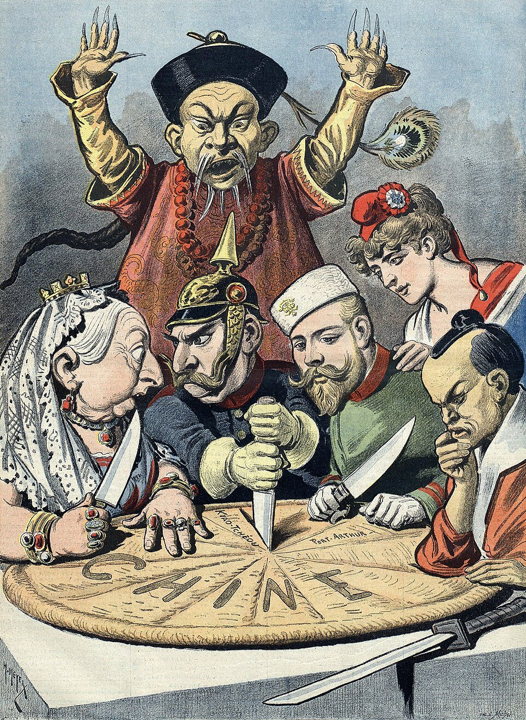
China as a pastry being carved. Uncle Sam demanding a slice. Leopold as a snake.
Public opinion, read off the pictures people laughed at.
Before empires took countries, companies did. The British East India Company was chartered on the last day of 1600 to trade, and in 1612 an English king was politely asking a Mughal emperor for a foothold. India was then the richest place Britain had ever traded with, ruling a quarter of the human race. When the Mughal Empire began to come apart after 1707 the Company filled the gap, and by 1778 a private firm with shareholders in London had an army of 67,000 men.
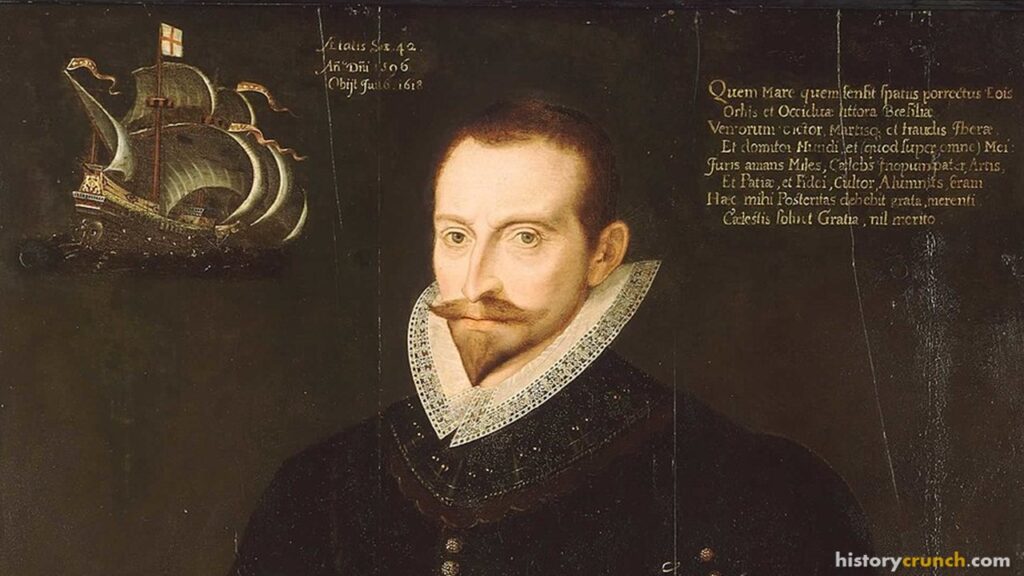
The British East India Company was established on 31 December 1600 to promote British trade in the Far East, which at the time meant India, China and Japan. It was a chartered company: privately owned by shareholders, with a royal charter giving it a monopoly on English trade east of Africa.
LEARN MORESHOW LESSwhy it matters · key numbers · 1 key figureECONOMICEverything on this timeline starts from an idea that sounds harmless: let a company do it. Two hundred years later that company had an army of 67,000 men and collected taxes from more people than the government of William Pitt the Younger did.
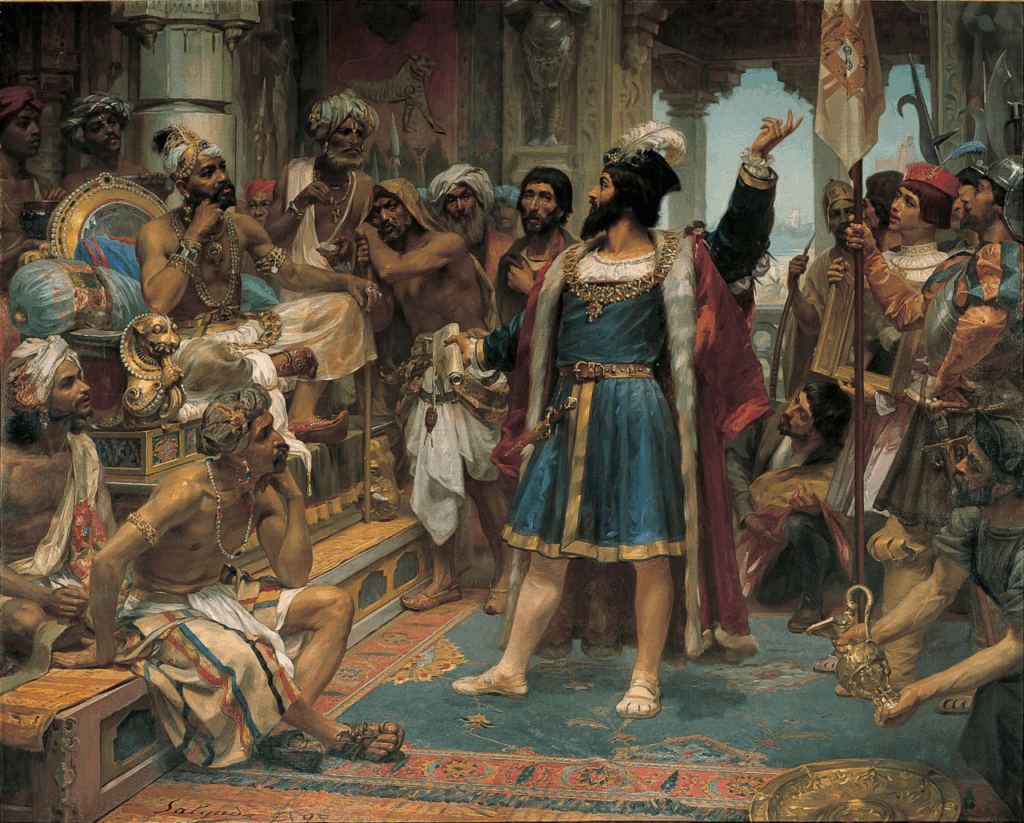
In 1601 James Lancaster sailed in a ship called the Red Dragon and reached the Far East by the route around the Cape of Good Hope. He returned in 1603 and was knighted by James I. The Company sent a voyage every year from 1606 to 1615.
LEARN MORESHOW LESSwhy it mattersECONOMICThe sea route the Portuguese had opened a century earlier was now a road anyone with a ship and a charter could use. The Age of Exploration made the Age of Imperialism possible.
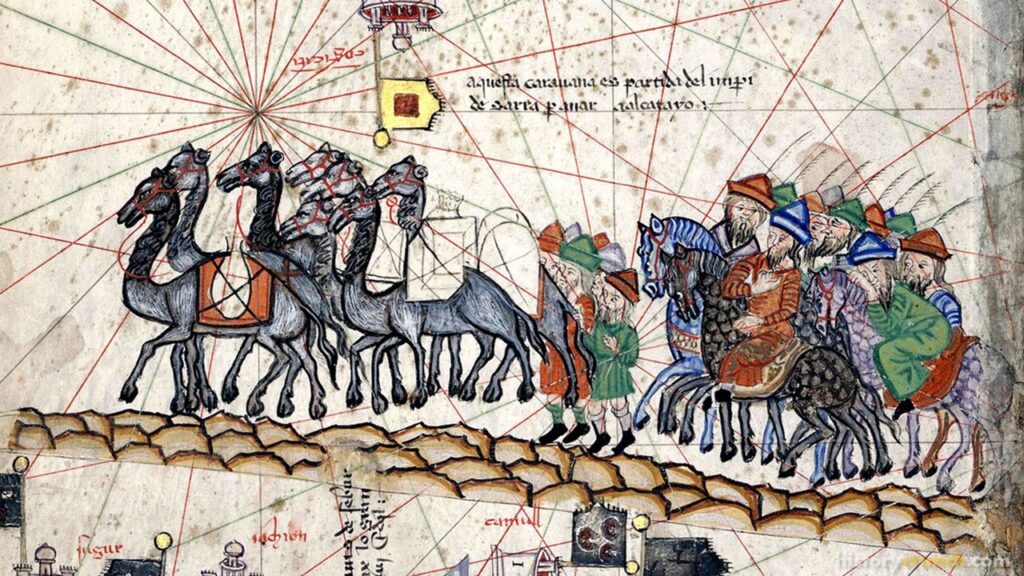
In 1612 James I wrote to the Mughal Emperor Jahangir asking that the British East India Company be allowed onto the Indian mainland. Permission was granted. The Mughal Empire was at that point one of the richest and most powerful states on earth.
LEARN MORESHOW LESSwhy it matters · 2 key figuresPOLITICALIt is worth pausing on who was asking whom. In 1612 England was a small kingdom petitioning a superpower for a trading post, and the tone of the relationship reversed completely within 150 years.
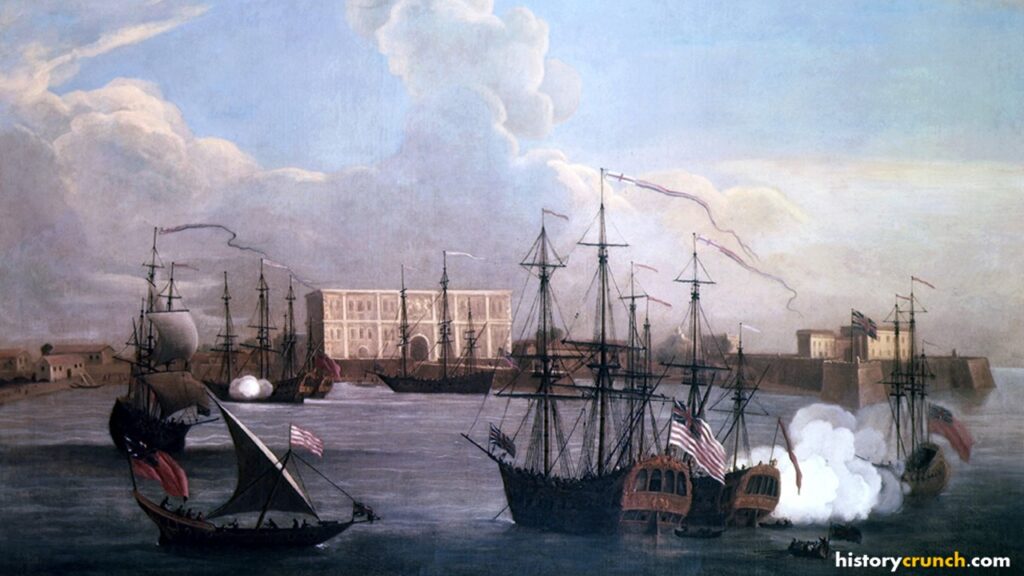
By 1647 the British East India Company had 23 factories in India, including at Bengal, Madras and Bombay. A factory in this sense was a fortified warehouse and trading post, not a place where things were made.
LEARN MORESHOW LESSwhy it matters · key numbersECONOMICEach one needed walls, guards and a local agreement. The Company acquired soldiers the way a shop acquires a lock on the door, and then found it had an army.
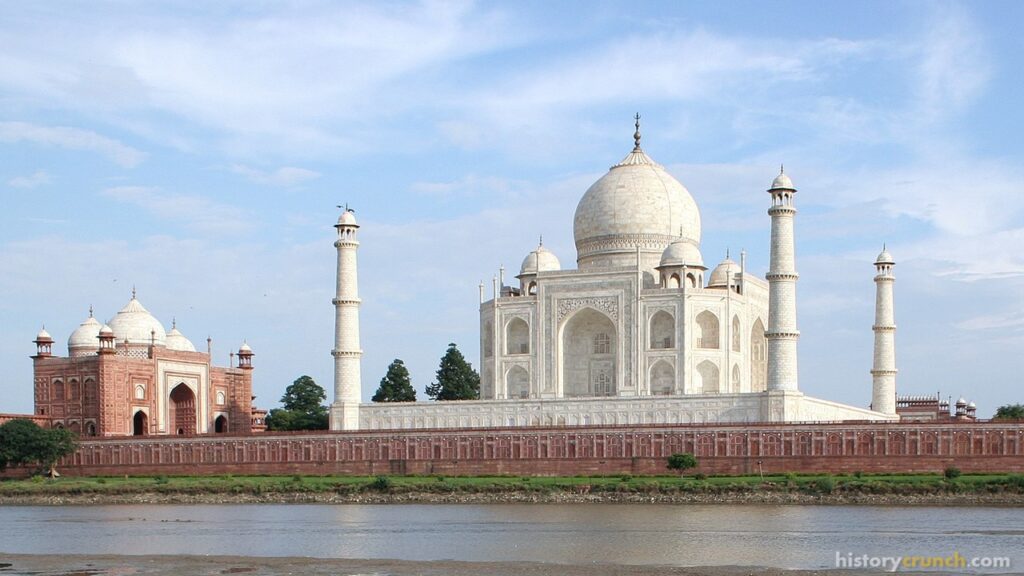
The Taj Mahal was built between 1632 and 1653 by Shah Jahan, who ruled the Mughal Empire from 1628 to 1658, as a tomb for his wife Mumtaz Mahal.
LEARN MORESHOW LESSwhy it matters · 1 key figureSOCIALA useful corrective for a class that meets India first as a British colony. This is what the Mughal Empire could afford and build while England was fighting a civil war.
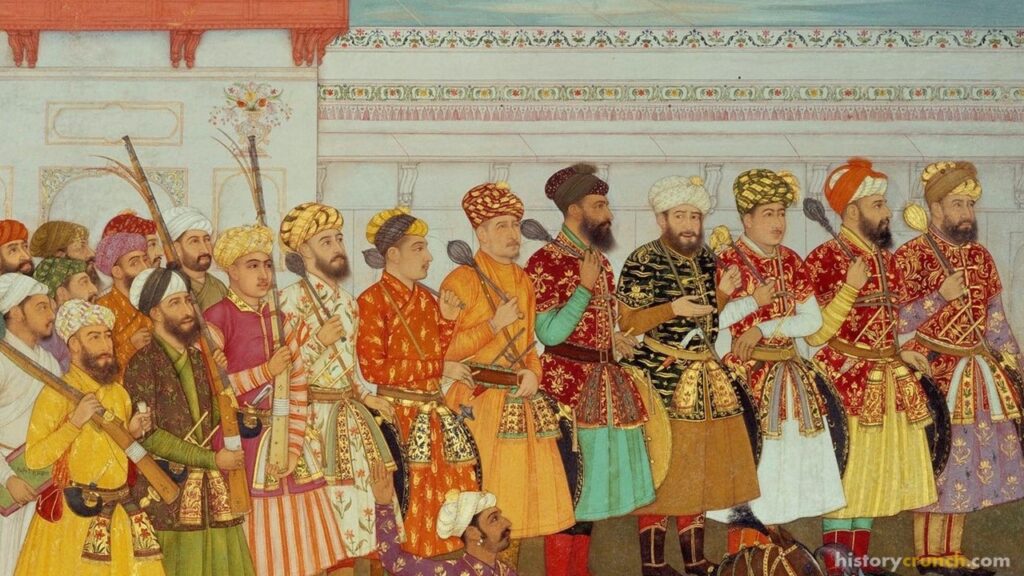
At its height in 1700, under the emperor Aurangzeb, the Mughal Empire ruled about 158 million people, which was 23 per cent of the world's population, and India had one of the strongest economies on the planet.
LEARN MORESHOW LESSwhy it matters · key numbers · 1 key figurePOLITICALThis is the number that makes the rest of the timeline surprising. India was not a poor place that Britain developed. It was the richest place Britain had ever traded with, and the question is what happened to that wealth.
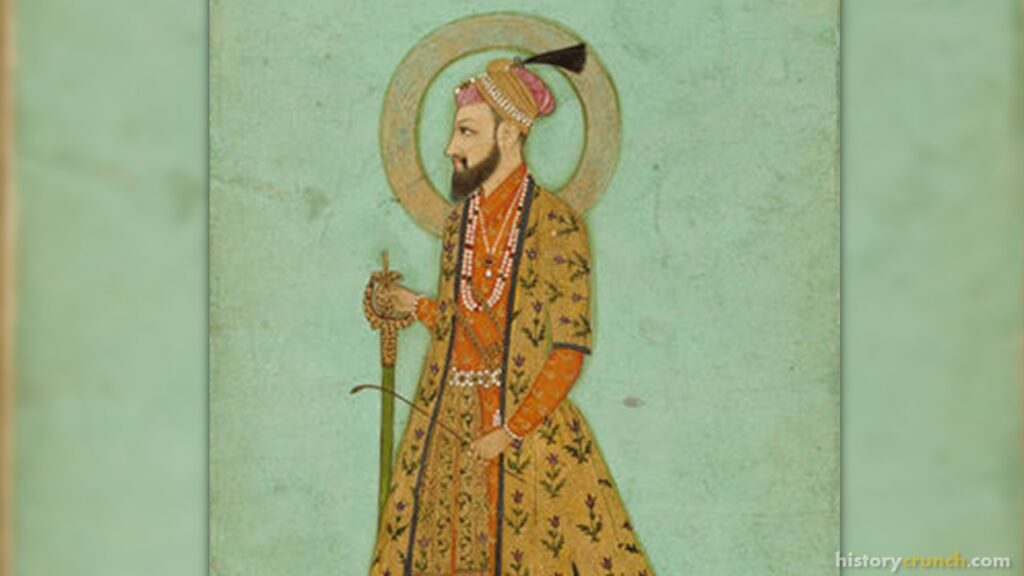
Aurangzeb died in 1707 and was succeeded by his son Bahadur Shah I, who died in 1712. A run of short reigns and weak central authority followed, and Mughal control over its vast territory loosened.
LEARN MORESHOW LESSwhy it mattersPOLITICALNo European power took India from a strong Mughal Empire. They moved into a vacuum left by its decline, backing rival Indian rulers against each other. That is a different story from conquest and it is the accurate one.

By 1720 about 15 per cent of all imports into England came from India, and the British East India Company handled almost all of it: cotton, silk, indigo, tea and spices.
LEARN MORESHOW LESSwhy it matters · key numbersECONOMICFollow the money and the politics follow. A company carrying a seventh of a country's imports has friends in Parliament, and it used them.
In 1750 the British East India Company had about 3,000 soldiers of its own.
LEARN MORESHOW LESSwhy it matters · key numbersMILITARYPut this card beside the one dated 1778 and the whole change is visible in two numbers.
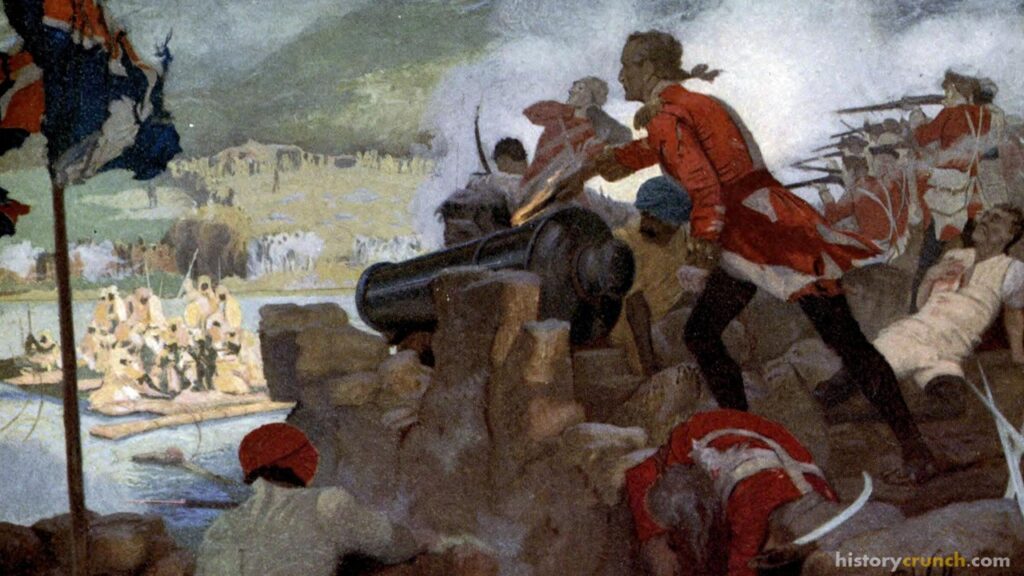
Robert Clive, born in Shropshire in 1725, went to India as a Company clerk and turned out to be a natural soldier. His defense of Arcot in 1751 against a far larger force made his name.
LEARN MORESHOW LESSwhy it matters · 1 key figureMILITARYThe Company's empire was built by men like this: employees, not officers of the crown, acting on their own initiative thousands of miles from anyone who could stop them.
On 23 June 1757 Robert Clive led Company forces to victory over the Nawab of Bengal and his French allies at Plassey. The battle was decided as much by a bribed Indian commander changing sides as by fighting.
LEARN MORESHOW LESSwhy it matters · key numbers · 2 key figuresMILITARYA company won a province. From here the British East India Company collected taxes from tens of millions of people, which is not trade, and nobody in London had voted for it.
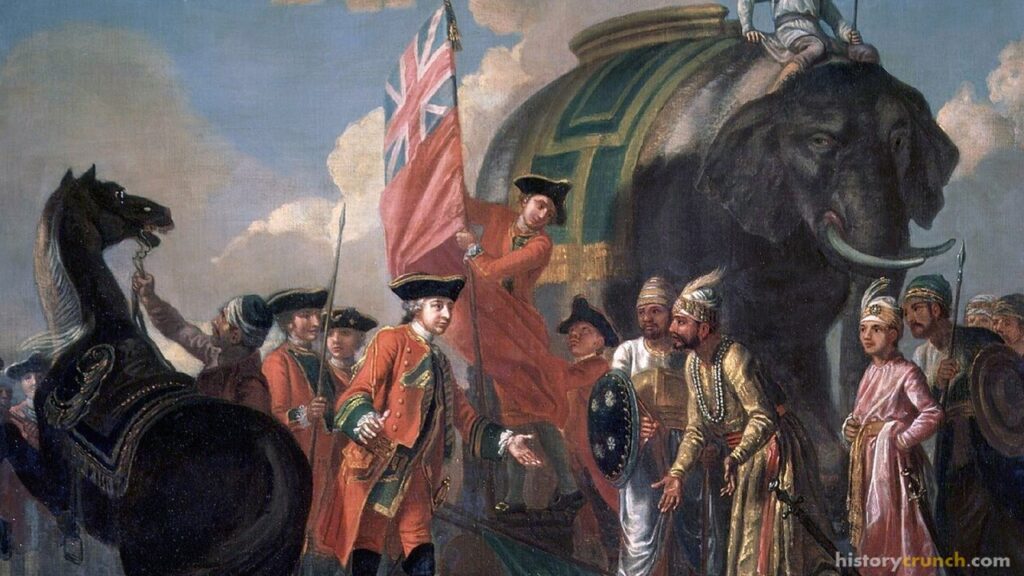
After Plassey the Company installed Mir Jafar, the commander whose defection had decided the battle, as Nawab of Bengal. He ruled in name while the Company took the revenue.
LEARN MORESHOW LESSwhy it matters · 2 key figuresPOLITICALThis is the method, and it is used again in a dozen places over the next century: keep the local ruler, take the money. It costs less than governing and it looks less like conquest.
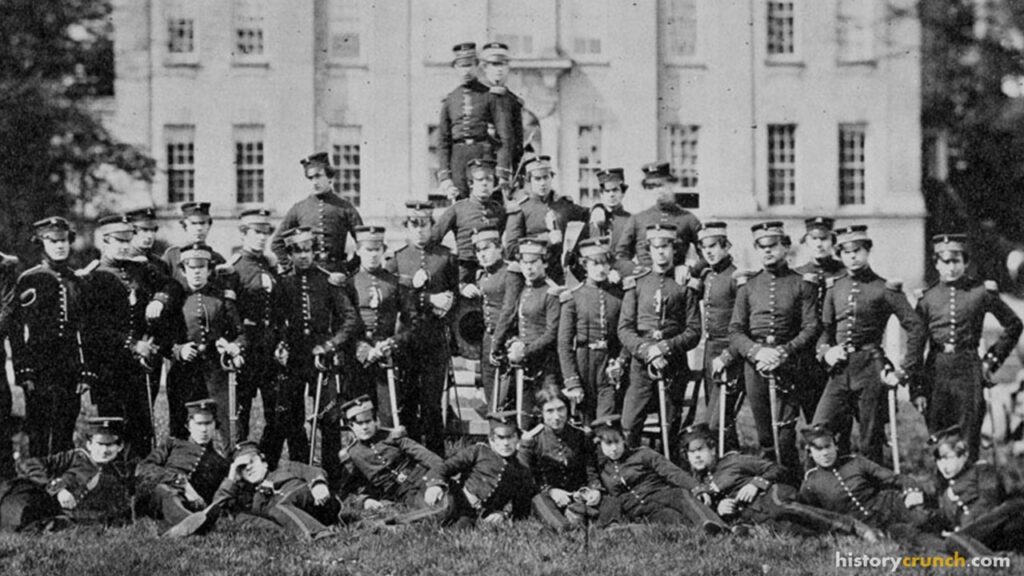
By 1778 the British East India Company's forces had grown from about 3,000 men to over 67,000. By 1857 its armies totalled as many as 267,000 soldiers, most of them Indian.
LEARN MORESHOW LESSwhy it matters · key numbersMILITARYA private company with the third largest army in the world. Nothing in English law had been written with that possibility in mind, and Parliament spent the next eighty years trying to get control of it.
In 1793 the British East India Company took direct control of the former Mughal province of Bengal-Bihar, settling the land revenue with local landholders on permanent terms.
LEARN MORESHOW LESSwhy it mattersPOLITICALThe fiction of Mughal authority is wearing thin. The emperor is still in Delhi and the taxes of his richest province are being collected by shareholders in London.
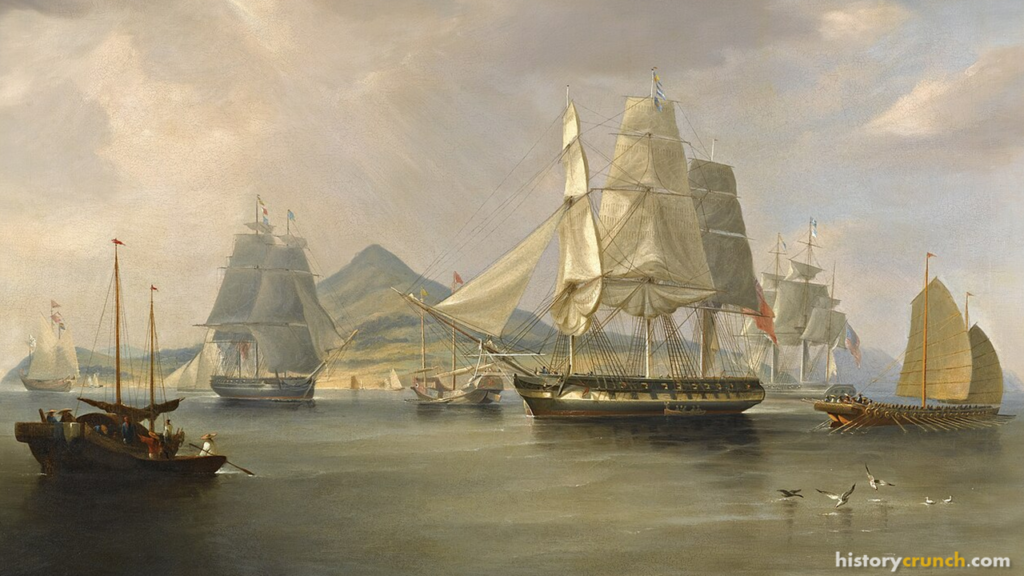
The Qing emperor banned the sale of opium in China in 1799, worried about its effect on families and businesses. British merchants, many of them working with the East India Company, went on shipping it from India anyway.
LEARN MORESHOW LESSwhy it matters · key numbersECONOMICThe two halves of this timeline meet here. Opium grown in British-controlled India paid for tea bought in China, and when China tried to stop it, Britain went to war to keep the trade open.
Industry is the engine under everything that follows. Factories needed raw materials Europe did not have and made goods faster than Europe could buy them, and steam and iron gave Europe the means to go and get both. In the same decades the United States drew a line around its own hemisphere, and Britain went to war with China to keep selling a drug that China had banned.
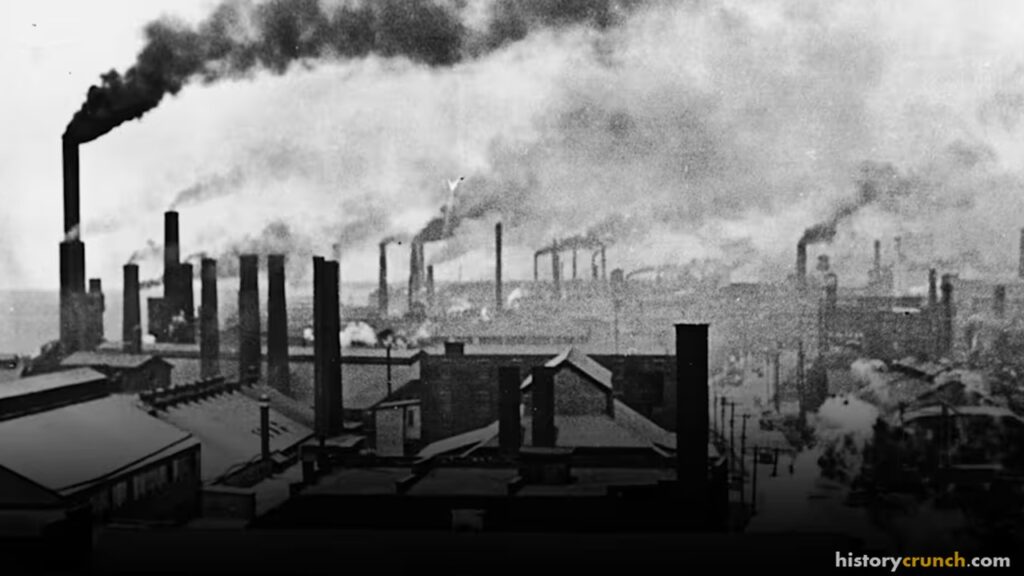
The Industrial Revolution turned European and North American societies from farming economies into industrial ones. Factories needed raw materials they did not have at home, and produced goods faster than home markets could absorb.
LEARN MORESHOW LESSwhy it mattersTECHNOLOGYThis is the engine under everything else. Colonies were not mainly about glory, and the ethnocentrism that justified them came later; they were places to get cotton and rubber cheaply and to sell cloth and machinery dearly.
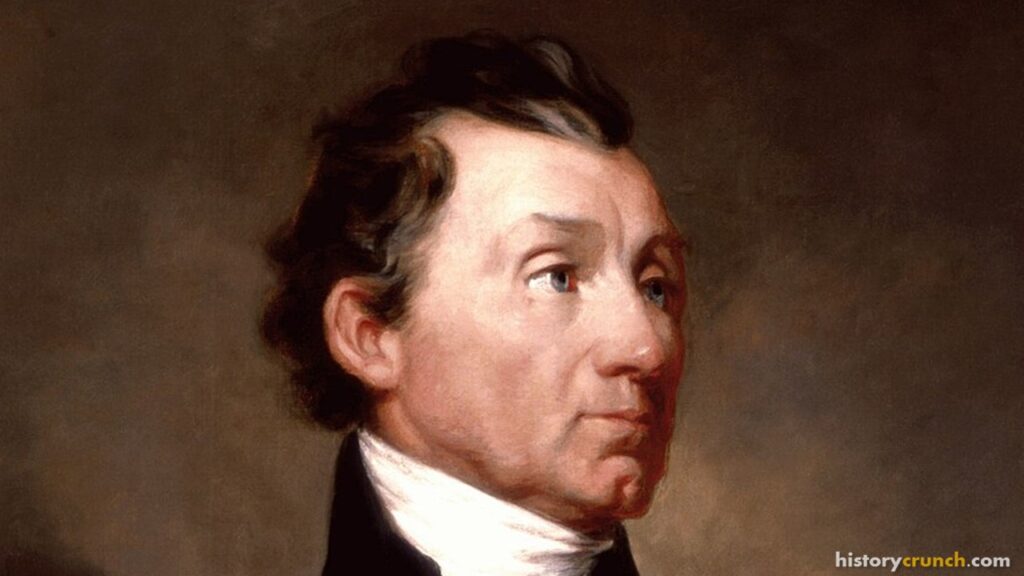
On 2 December 1823, in his seventh State of the Union address, President James Monroe declared that any further European intervention in the Americas would be treated as an act of aggression.
LEARN MORESHOW LESSwhy it matters · key numbers · 1 key figurePOLITICALA country with almost no navy told the empires of Europe to stay out of half the world. It was mostly bluff in 1823. By 1898 it was not, and the United States was using it to justify intervening itself.
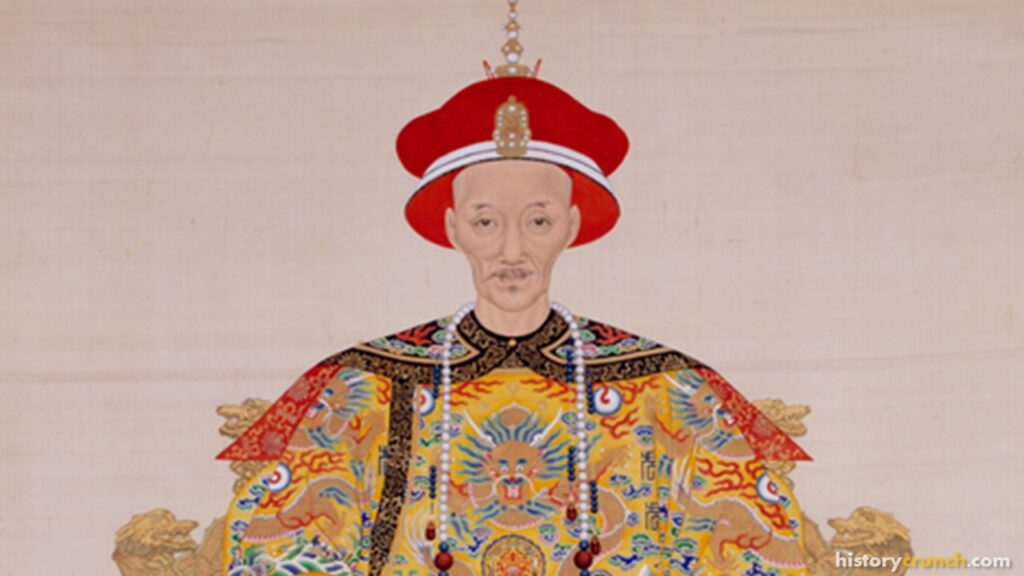
In 1839 Commissioner Lin Zexu wrote an open letter to Queen Victoria about the sale of opium in China, and seized and destroyed the British opium stocks at Canton.
LEARN MORESHOW LESSwhy it matters · 2 key figuresPOLITICALLin's letter asks a simple question: your country bans this drug at home, so why do you sell it to mine? He never got an answer. He got a war.
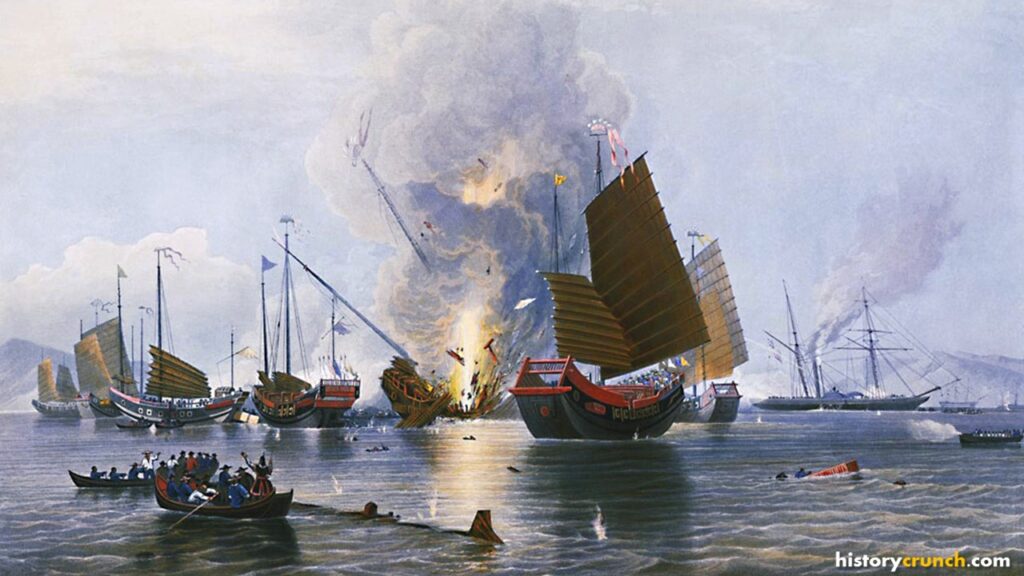
The First Opium War was fought between Qing China and Britain from 4 September 1839 to 29 August 1842. A British expeditionary force with steam gunboats arrived in June 1840 and worked its way up the coast and the Pearl River.
LEARN MORESHOW LESSwhy it matters · key numbersMILITARYAn industrial navy against a state that had not needed one. The iron steamer Nemesis could move against wind and current, up rivers, and destroy wooden war junks without being touched.
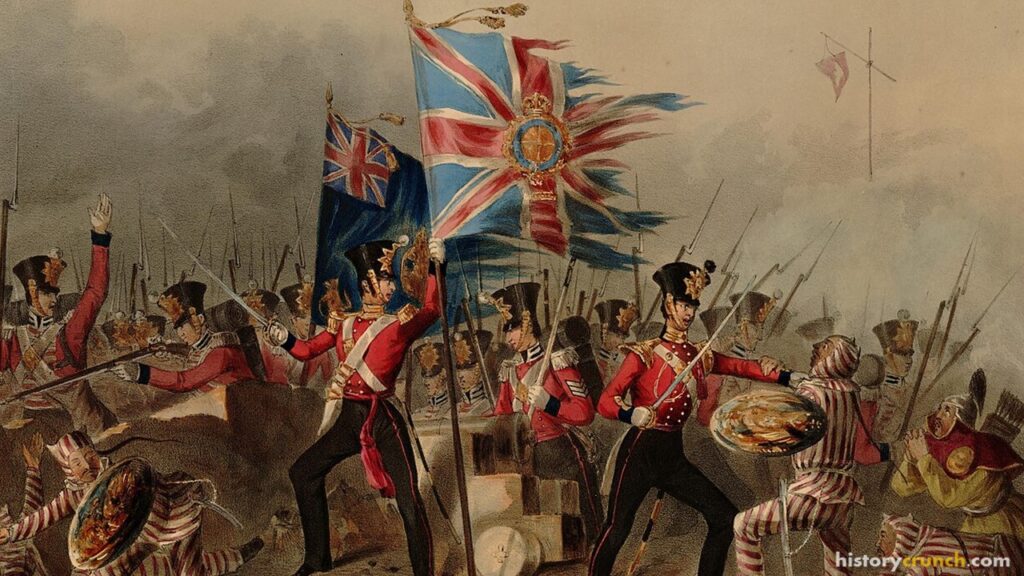
Through the winter and spring of 1841 British forces pushed up the Pearl River and along the coast, taking Chinese-held ports including Zhoushan and Amoy.
LEARN MORESHOW LESSwhy it mattersMILITARYThe war was fought entirely on Chinese soil and water, by a force that had sailed halfway around the world, over the right to sell a drug that China had banned.
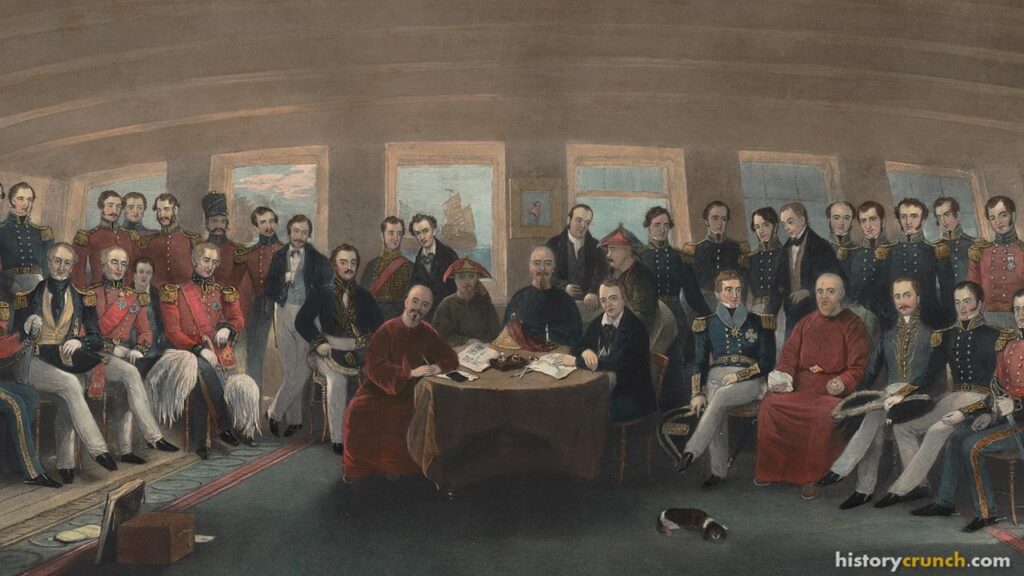
The Treaty of Nanking was signed on 29 August 1842. China opened ports to British trade, paid an indemnity and ceded Hong Kong. The Chinese called it an unequal treaty, the name they gave to the whole series that followed.
LEARN MORESHOW LESSwhy it matters · key numbersPOLITICALThe phrase is theirs and it is exact: the obligations ran one way. A century of Chinese politics is shaped by the memory of these treaties, and the Communist Party still refers to the period they opened.
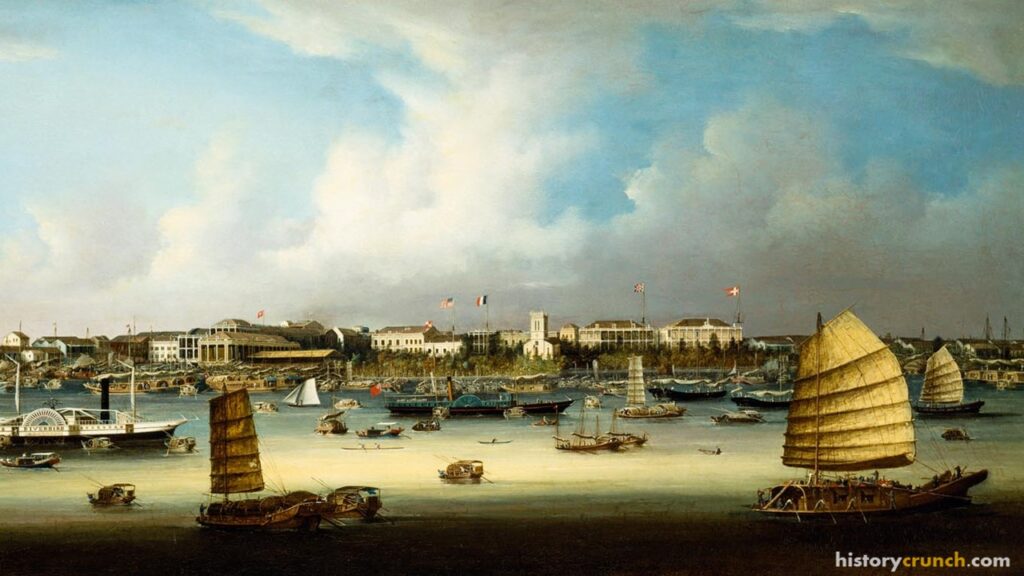
Hong Kong was ceded to Queen Victoria under the Treaty of Nanking and remained under British control until 1997, when it was returned to the People's Republic of China.
LEARN MORESHOW LESSwhy it matters · key numbersPOLITICALThe longest-running consequence on this entire timeline. Something decided in 1842 was still being negotiated between governments in the 1980s and still shapes the news now.
Four years that reset everything. The sepoys rose in 1857 and nearly ended British rule in India; British and French forces burned the Summer Palace outside Peking in 1860. At the end of it the East India Company had been abolished, the Crown governed India directly, China had signed away more of its sovereignty, and the Suez Canal had just made Egypt the most strategically important country in Africa.
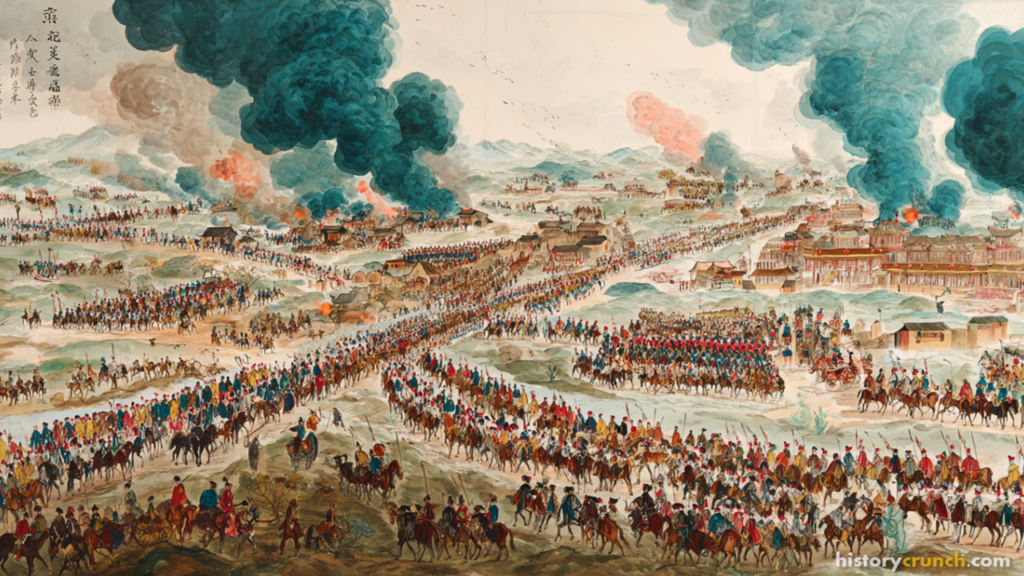
Chinese authorities boarded a British-registered cargo ship called the Arrow in October 1856. Britain, joined by France, used it as the pretext for a second war, fought from 8 October 1856 to 24 October 1860.
LEARN MORESHOW LESSwhy it matters · key numbersMILITARYBritain wanted opium legalized and more of China opened. The Arrow was the occasion, not the reason, and telling those two apart is most of what historical thinking is.
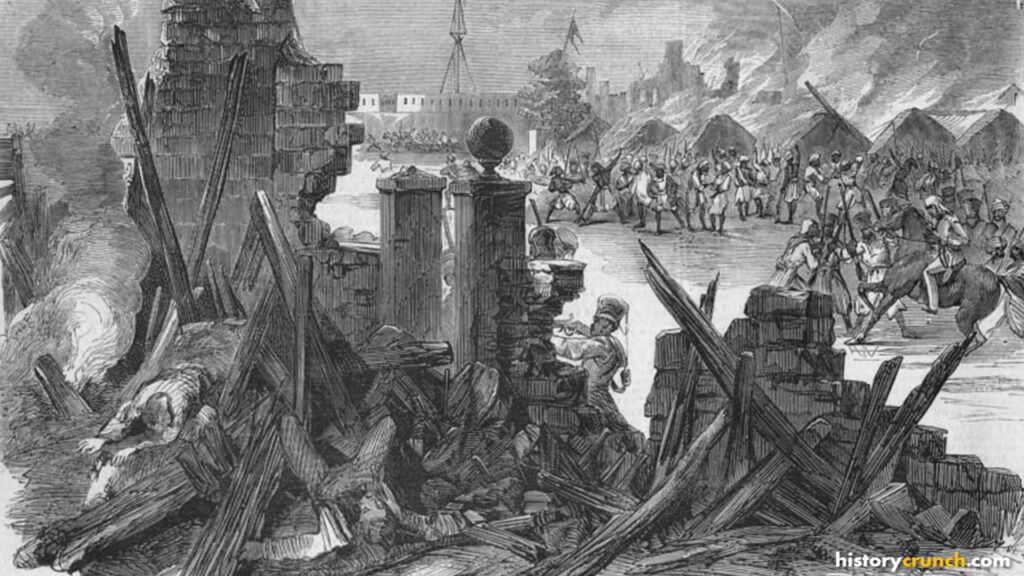
On 10 May 1857 Indian soldiers of the British East India Company rose at Meerut, and within six weeks the rebellion had spread to local rulers and civilians across northern India. It lasted 18 months, until 1 November 1858.
LEARN MORESHOW LESSwhy it matters · key numbersMILITARYThe largest challenge to European rule anywhere in the nineteenth century, and it came from inside the Company's own army. It is called a mutiny in Britain and the First War of Independence in India, and both names are arguments.
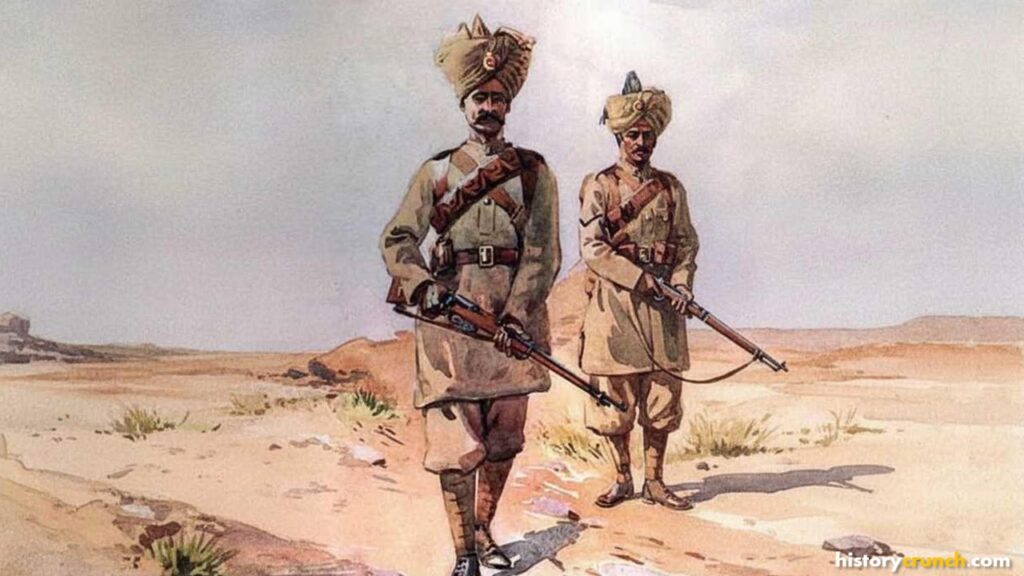
In 1857 the British East India Company's armies contained over 267,000 Indian sepoys and only about 50,000 British soldiers.
LEARN MORESHOW LESSwhy it matters · key numbersMILITARYFive to one. British India was held by Indian soldiers, which is why the rebellion was so dangerous and why the recruiting policy changed completely afterwards.
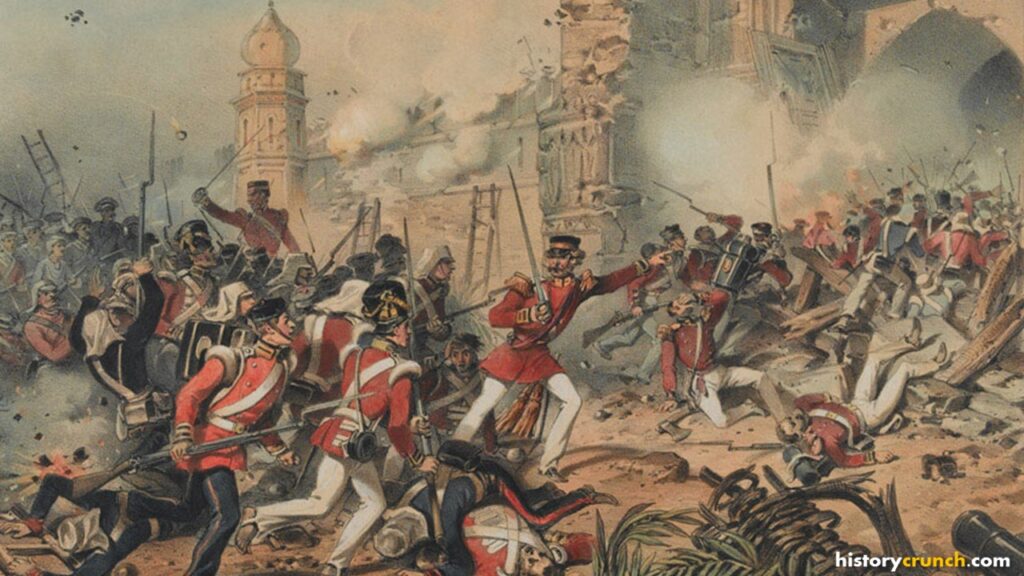
The rebels had taken Delhi and proclaimed the last Mughal emperor, Bahadur Shah II, as their sovereign. British forces retook the city after a siege, and the reprisals were severe.
LEARN MORESHOW LESSwhy it matters · 1 key figureMILITARYThe Mughal Empire ends here, three hundred and thirty-one years after Babur founded it, with an elderly poet-emperor tried and exiled to Burma.
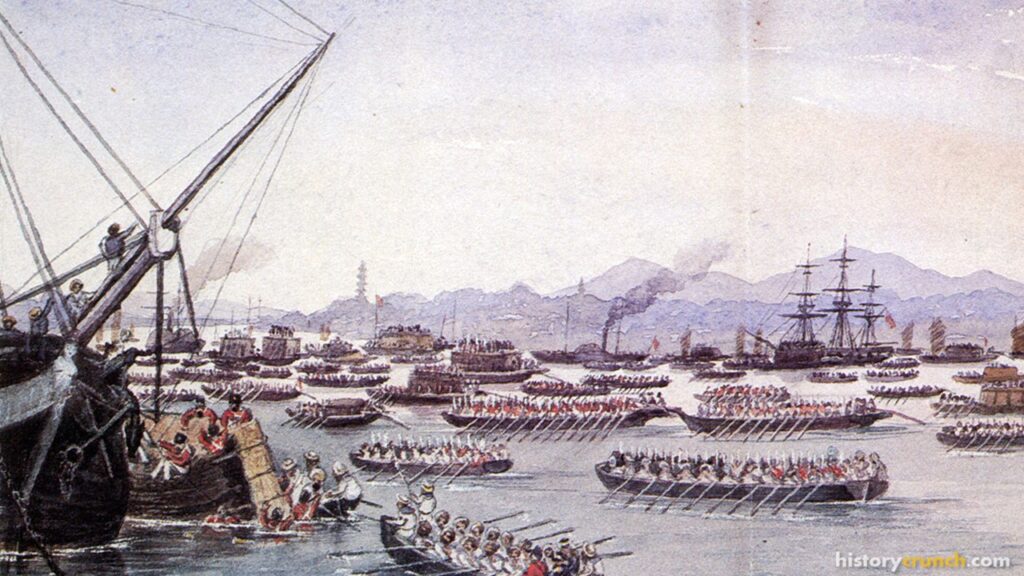
From 28 to 31 December 1857 British and French forces stormed the city of Canton and defeated the Qing garrison.
LEARN MORESHOW LESSwhy it mattersMILITARYTwo European powers acting together against China while Britain was simultaneously fighting for its life in India. The empires were badly overstretched in these two years and did not lose either fight.
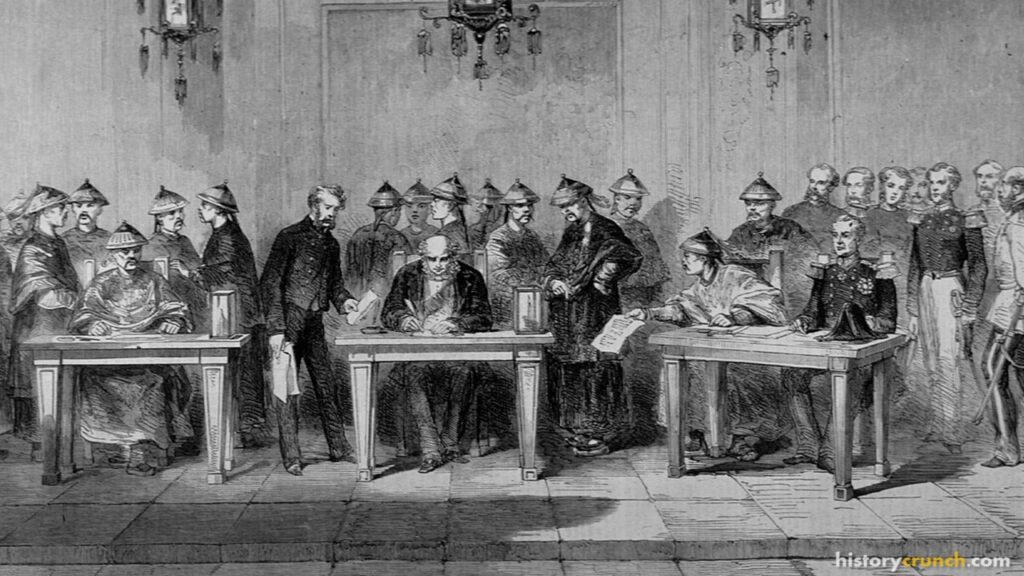
The first part of the Second Opium War ended in June 1858 with four Treaties of Tientsin, opening more ports, allowing foreign legations in Peking and permitting missionaries to travel inland. The fighting resumed and continued to 1860.
LEARN MORESHOW LESSwhy it mattersPOLITICALEach round of treaties took a little more sovereignty. By the end China had foreign courts on its soil, foreign gunboats on its rivers and a customs service run by foreigners.
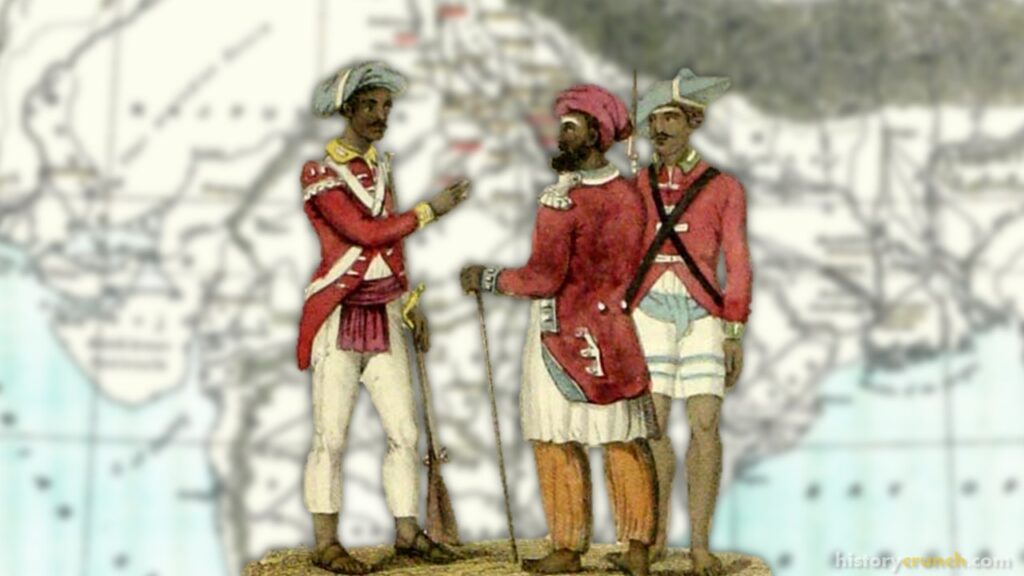
On 2 August 1858 the British Parliament passed the Government of India Act, which ended the British East India Company and transferred all its powers in India to the Crown.
LEARN MORESHOW LESSwhy it matters · key numbersPOLITICALTwo hundred and fifty-eight years after a charter was signed in London, the company that had accidentally acquired a country was wound up and the government took over what it had built.
The Sepoy Rebellion was formally ended on 1 November 1858 after eighteen months of fighting and reprisals on both sides.
LEARN MORESHOW LESSwhy it mattersMILITARYWhat followed was a deliberate policy of separation: British and Indian communities kept further apart, the army restructured so no single group could rise again, and a promise not to interfere with religion.
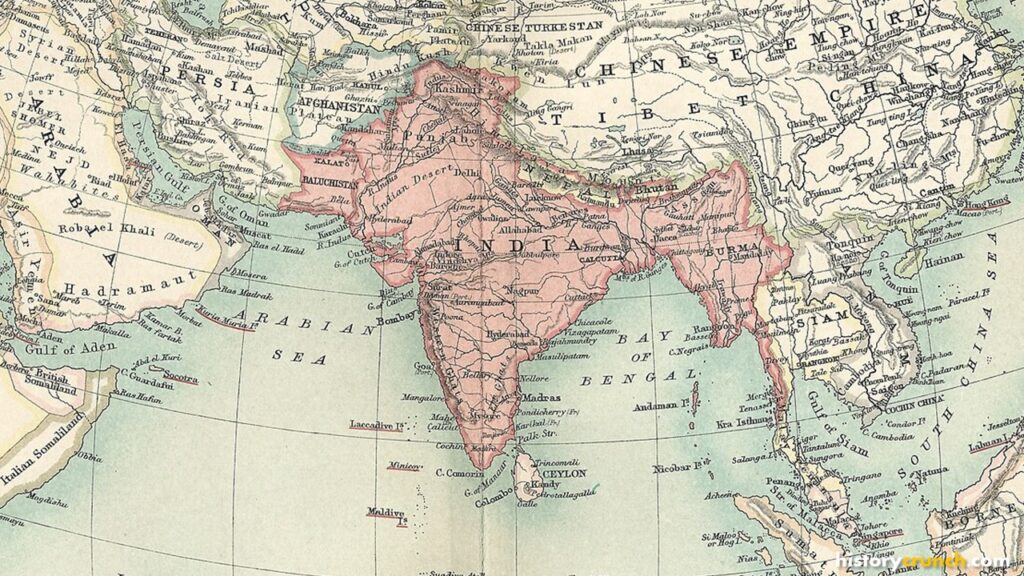
The British Raj, the direct rule of India by the British Crown, ran from 1858 until 1947. It governed alongside and through hundreds of local Indian rulers who kept their thrones.
LEARN MORESHOW LESSwhy it matters · key numbersPOLITICALThree hundred million people governed by a few thousand British officials. That only works with the cooperation of Indian rulers, Indian soldiers and an Indian civil service, which is the fact the word Raj tends to hide.
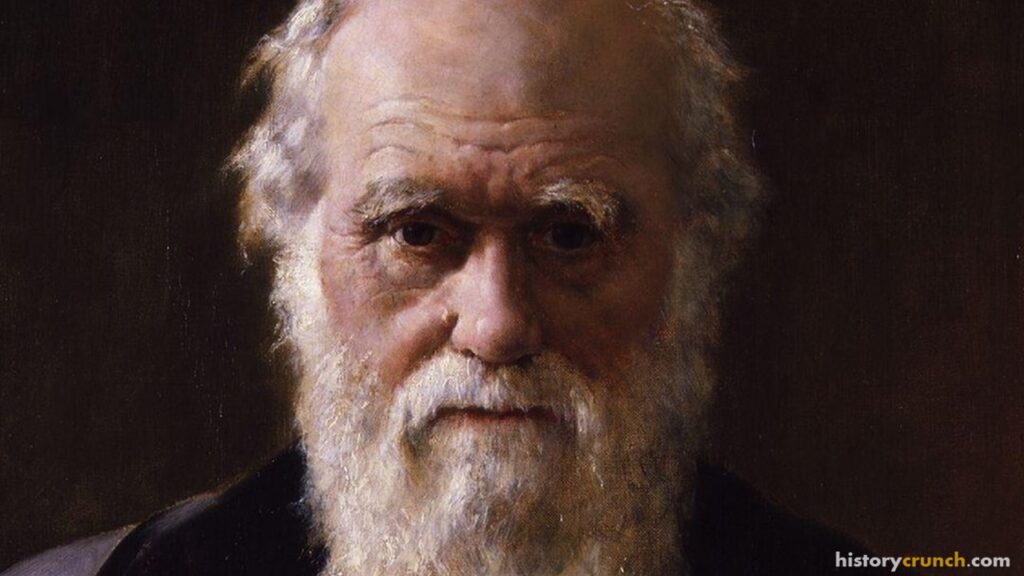
Charles Darwin published On the Origin of Species in 1859. It is about how species change through natural selection and says nothing about some peoples being fit to rule others. Social Darwinism, which claimed exactly that, was built on his name within a generation.
LEARN MORESHOW LESSwhy it matters · 1 key figureIDEASIt gave conquest a scientific-sounding excuse at precisely the moment Europe was acquiring the weapons to carry it out. The excuse was not Darwin's and he did not make it.
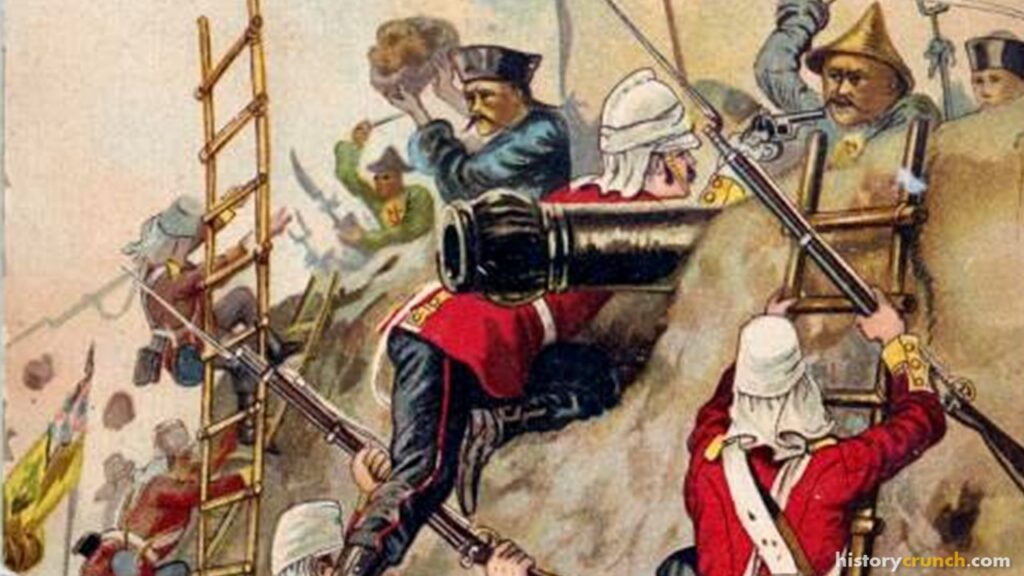
In October 1860 British and French forces burned the Summer Palace outside Peking, a complex of palaces, gardens and libraries, in reprisal for the mistreatment of a negotiating party. It burned for days and was looted first.
LEARN MORESHOW LESSwhy it mattersMILITARYIt is the single act from this period that Chinese schoolchildren are most likely to be taught, and objects taken from it are still in European museums and still being argued about.
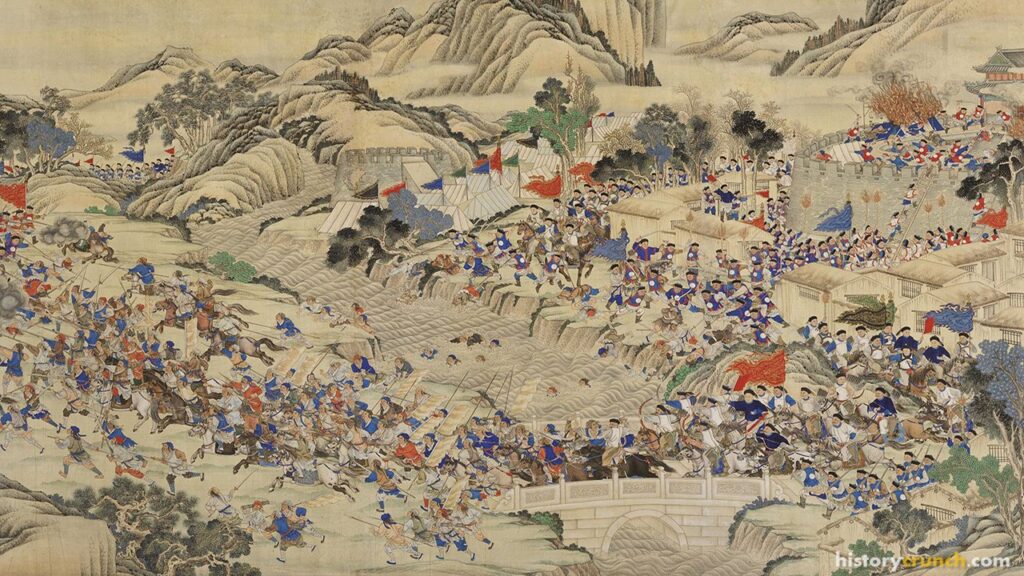
The Second Opium War ended on 24 October 1860 with the Convention of Peking, agreed with Britain, France and Russia. Opium was legalized, more ports opened, and Russia took a large stretch of northern China as its own sphere of influence.
LEARN MORESHOW LESSwhy it mattersPOLITICALChina was not colonized outright. It was divided into spheres of influence, which is a different arrangement and in some ways a worse one: nobody was responsible for governing, and everybody had a claim.
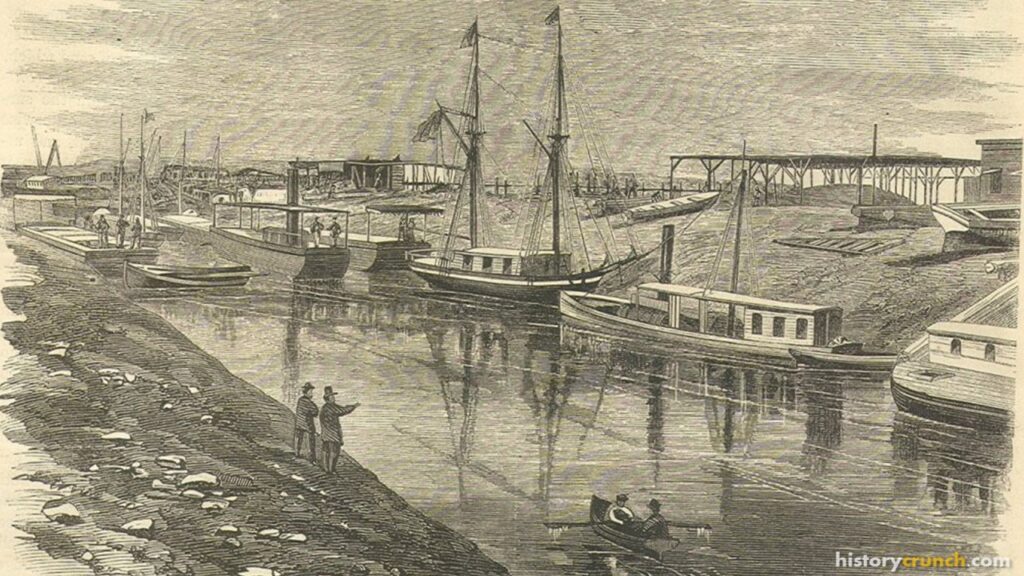
The Suez Canal opened on 17 November 1869 after ten years of construction, linking the Mediterranean to the Red Sea and cutting the voyage from Europe to India by thousands of miles.
LEARN MORESHOW LESSwhy it matters · key numbersTECHNOLOGYIndia is the reason Britain cared about Egypt, and Egypt is the reason Britain ended up in Africa. This card is the hinge between the two halves of the whole timeline.
The stretch of the period most people have heard of. Fourteen states met in Berlin and agreed the rules for dividing a continent none of them had been invited from, a Belgian king took a territory seventy-six times the size of his country as personal property, and Queen Victoria was proclaimed Empress of India in the same years that six to ten million Indians died in a famine. It ends with a group of English-educated Indian lawyers founding the organization that would eventually end the whole thing.
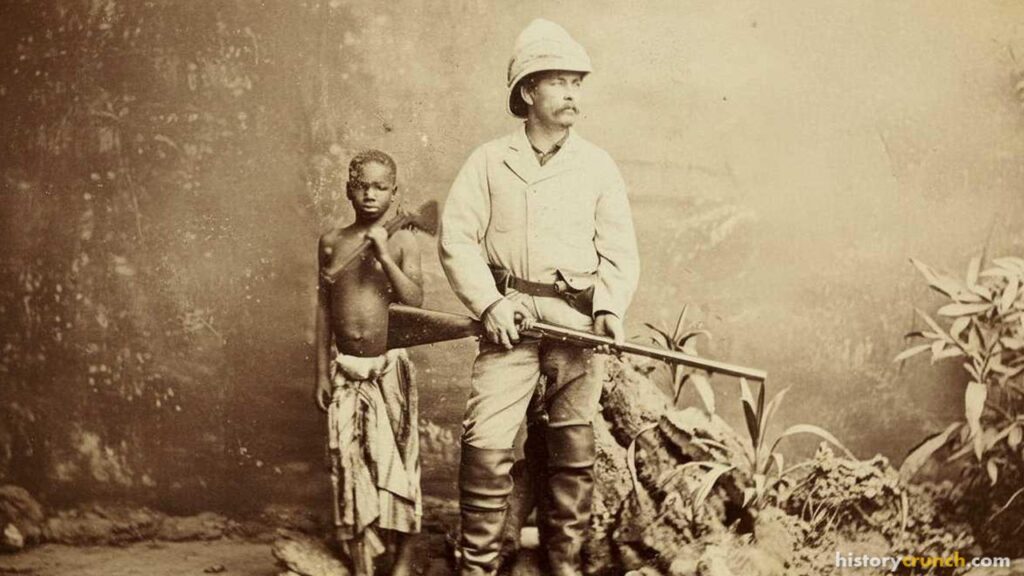
From about 1870 to 1914 the European powers took almost the whole of Africa. In 1870 they held scattered coastal posts; by 1914 every African state but Liberia and Ethiopia was under European rule. This timeline carries the shape of it; the Scramble for Africa timeline carries the detail.
LEARN MORESHOW LESSwhy it matters · key numbersPOLITICALForty-four years to divide a continent. It is the most famous part of the Age of Imperialism and it happened faster than almost anyone at the time expected.
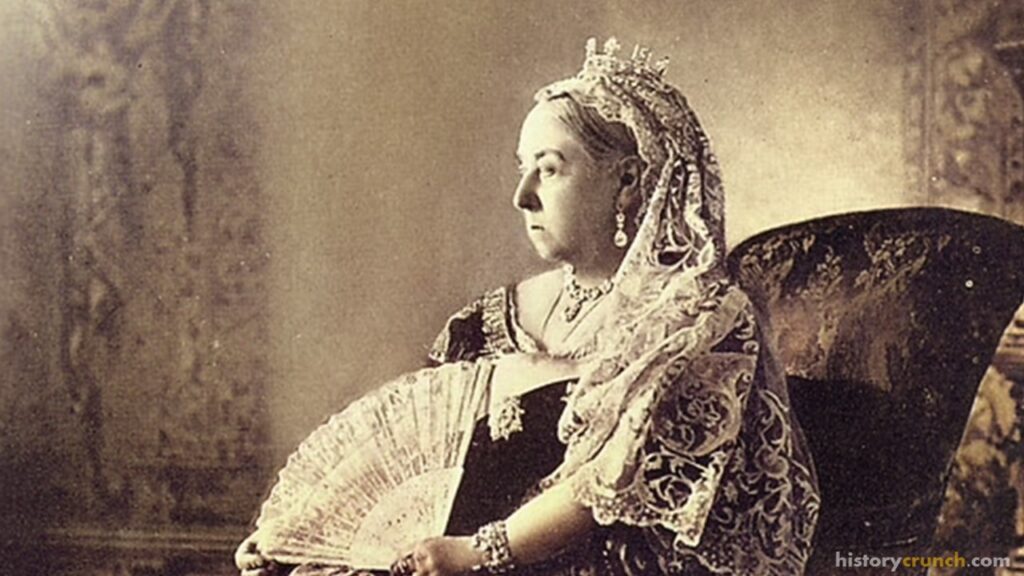
Queen Victoria formally became Empress of India on 1 May 1876. She never visited the country.
LEARN MORESHOW LESSwhy it matters · 1 key figurePOLITICALThe title was Disraeli's idea and it was aimed at a British audience as much as an Indian one. It made the empire something the public could feel patriotic about rather than a set of company accounts.
The Great Famine of 1876 to 1878 killed between six and ten million people in British India. Grain continued to be exported during it, and relief was limited by officials who believed interference in the market would do more harm than good.
LEARN MORESHOW LESSwhy it matters · key numbersSOCIALIt happened in the same years as the Empress title and the imperial pageantry, and it is the hardest fact to set beside the argument that British rule developed India.
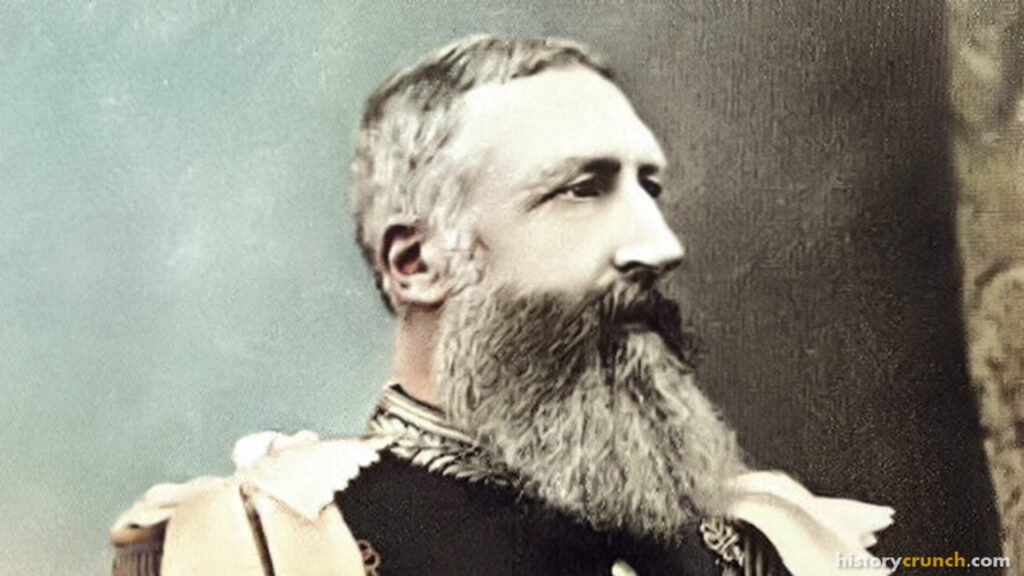
In 1878 Leopold II, King of the Belgians, hired Henry Morton Stanley to sign treaties with rulers in the Congo basin on his behalf. He was acting as a private individual, not as the Belgian state.
LEARN MORESHOW LESSwhy it matters · 2 key figuresECONOMICBelgium did not want an empire; its king bought one personally. That distinction let him run the Congo with no parliament, no press and no oversight for twenty-three years.
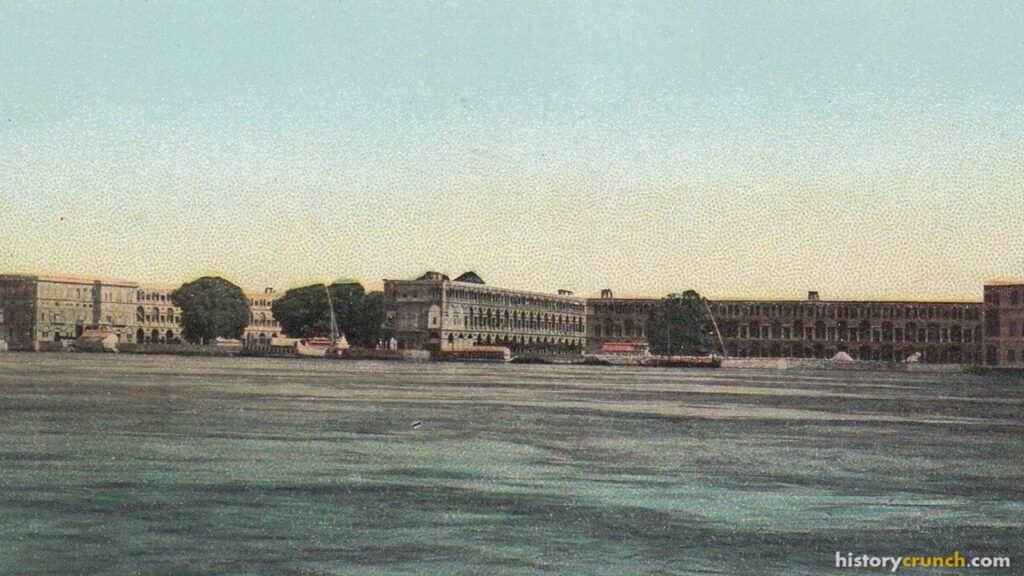
Britain fought the Anglo-Egyptian War from July to September 1882 and took control of the country, fearing that Egyptian nationalists would take charge of the Suez Canal. The occupation was described as temporary and lasted until 1956.
LEARN MORESHOW LESSwhy it matters · key numbersMILITARYSeventy-four years of temporary. It is the clearest case on the timeline of an emergency measure becoming permanent by simply never ending.
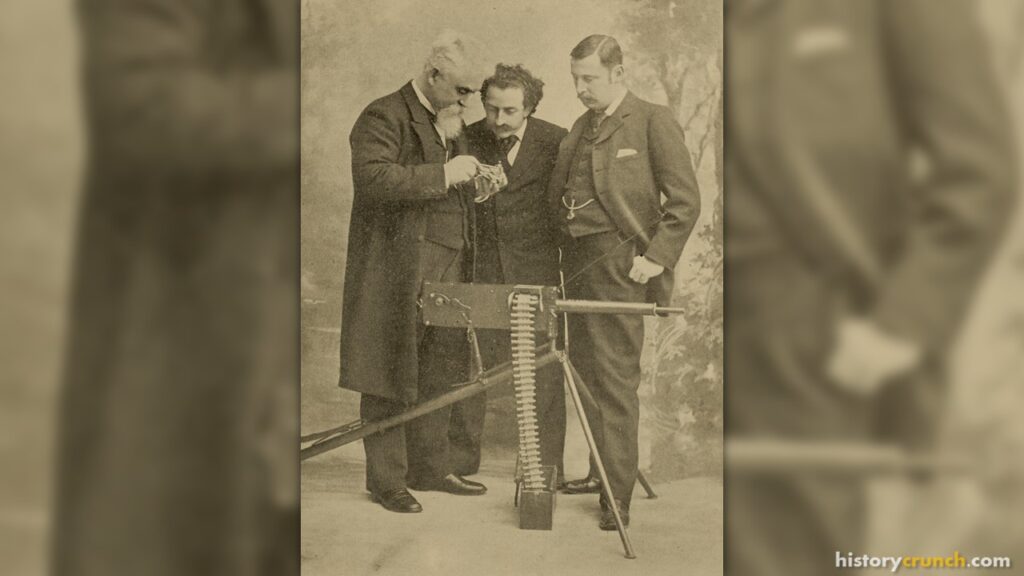
The Maxim gun, invented in 1884, used the recoil of each shot to load the next, firing continuously while the trigger was held. It is widely considered one of the main reasons small European forces could defeat far larger armies.
LEARN MORESHOW LESSwhy it matters · key numbers · 1 key figureTECHNOLOGYThe same year as the Berlin Conference. Europe agreed the rules for dividing Africa in the same twelve months that it acquired the weapon for enforcing them.
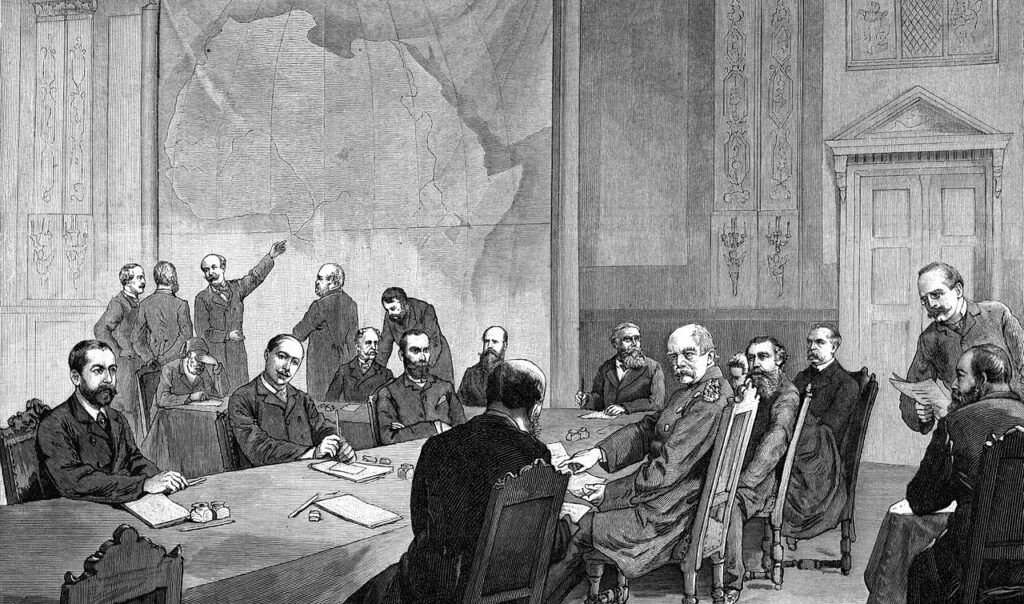
Called by Otto von Bismarck, the Berlin Conference ran from 15 November 1884 to 26 February 1885. Fourteen states agreed rules for claiming African territory, chiefly that a claim counted only if you controlled the ground. No African was invited.
LEARN MORESHOW LESSwhy it matters · key numbers · 1 key figurePOLITICALThe rule they agreed turned a paper argument into an invasion, because now somebody had to be physically there. Most of Africa's borders today descend from the claims made in the fifteen years that followed.
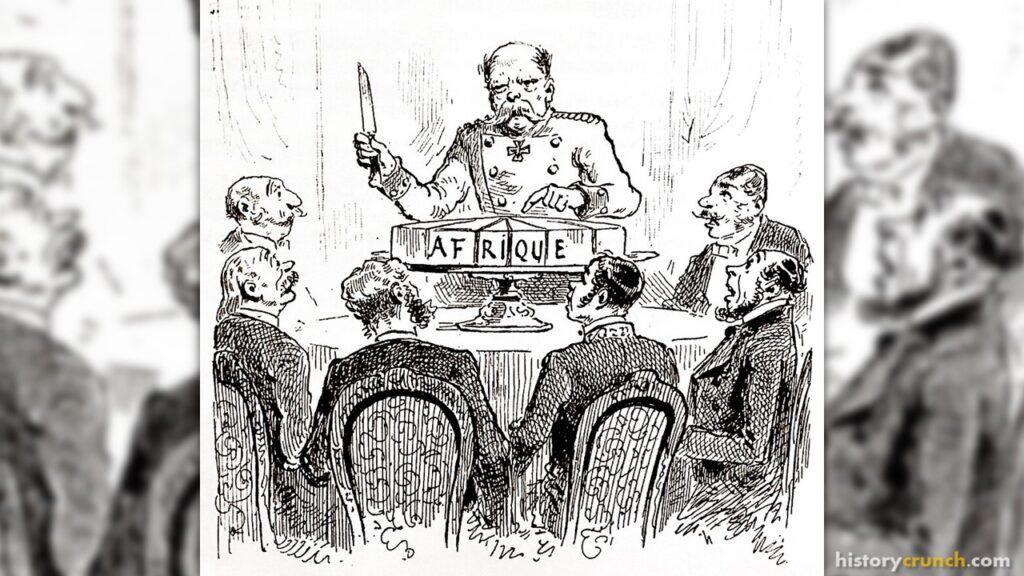
A French cartoon of 1885 shows the Berlin Conference as a group of Europeans carving up the continent between them. Contemporaries understood exactly what was happening and said so in print.
LEARN MORESHOW LESSwhy it mattersSOCIALNobody was fooled, then or now. The argument at the time was not about what was being done but about whether it was justified, which is a different argument and the one worth having with a class.
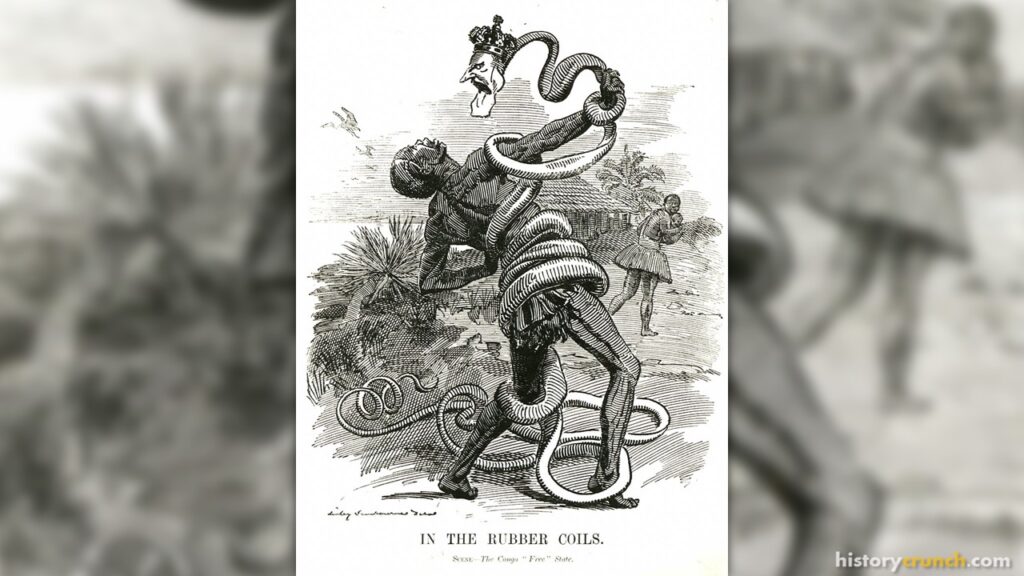
Leopold II formally created the Congo Free State in 1885 and ruled it personally, having persuaded the Berlin powers that his interest was humanitarian. What he ran was a forced-labor system built on rubber quotas, hostage-taking and mutilation.
LEARN MORESHOW LESSwhy it matters · 1 key figureECONOMICAn area seventy-six times the size of Belgium became one man's property, won by promising to end slavery there. It took twenty-three years and an international press campaign to stop him.
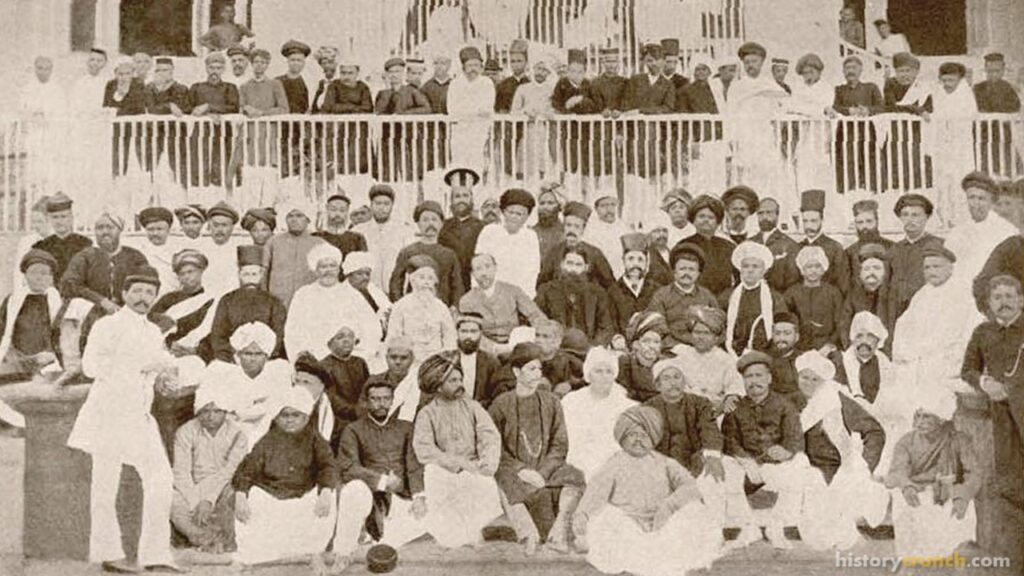
The Indian National Congress was founded on 23 December 1885 in Bombay. It began as a forum of educated Indians petitioning for a greater say in their own government, and became the organization that ended British rule.
LEARN MORESHOW LESSwhy it matters · key numbersPOLITICALThe men in that first session were lawyers and civil servants educated in English by the British system, asking for the rights that system said they had. It is the most important card in the second half of the timeline.
Japan and the United States join in, and the people being governed push back on three continents at once. Japan beat China and took its place among the powers. The United States went to war with Spain over Cuba and came out holding the Philippines, which had already declared its own independence. And within eighteen months there was a war in South Africa, a war in the Philippines and a rising in China, all of them against foreign rule.
Japan and China went to war over control of Korea in the First Sino-Japanese War of 1894 to 1895. Japan won decisively, took Taiwan, and joined the powers dividing China rather than being divided itself.
LEARN MORESHOW LESSwhy it matters · key numbersMILITARYJapan is the exception that tests every explanation of this period. Faced with the same western pressure as China, it industrialized, built a modern navy, and within forty years was doing the colonizing.
The Cuban rebellion against Spanish colonial rule began in 1895. American newspapers covered the Spanish reprisals heavily, and American opinion swung towards intervention.
LEARN MORESHOW LESSwhy it mattersMILITARYThe United States entered the imperial business by promising to free somebody else's colony. What happened to Cuba and the Philippines afterwards is the test of whether it meant it.
Filipino revolutionaries had been fighting for independence from Spanish colonial rule since 1896, two years before the United States arrived.
LEARN MORESHOW LESSwhy it mattersMILITARYThis card matters because of what comes next. The Filipinos were not liberated by the Americans; they were already fighting, and they went on fighting against the new arrivals.
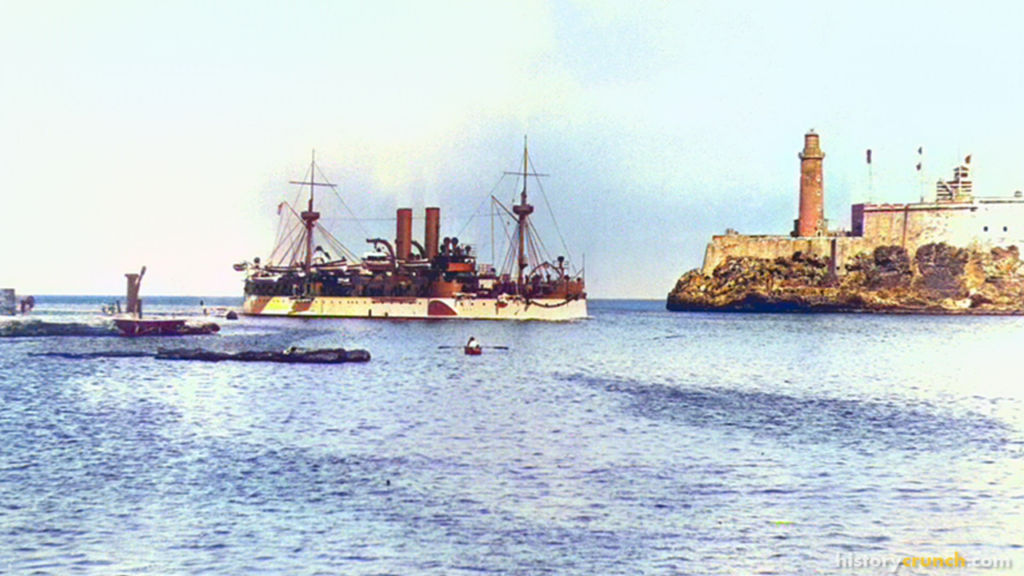
The battleship Maine blew up in Havana harbour on 15 February 1898, killing most of her crew. The cause was never established with certainty. The American press blamed Spain, and the slogan Remember the Maine carried the country into war.
LEARN MORESHOW LESSwhy it matters · key numbersMILITARYA cause of war that may have been an accident. It is a good, clean case for asking a class how much of what starts a war is the event and how much is what people were already prepared to believe.
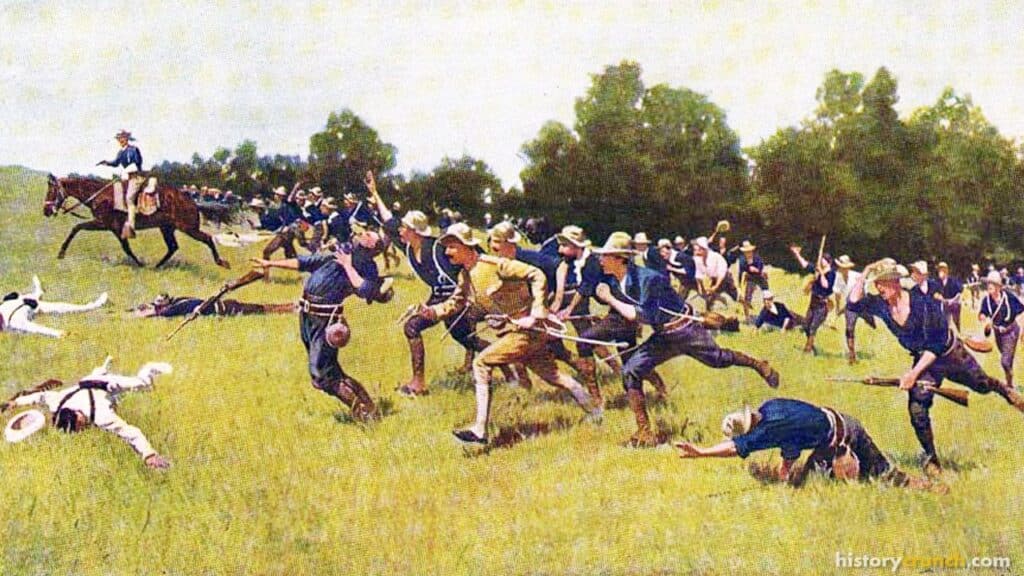
The Spanish-American War ran from 21 April to 10 December 1898. American forces landed in Cuba in June and attacked Puerto Rico in May, and the fighting was over in a few months.
LEARN MORESHOW LESSwhy it matters · key numbersMILITARYA short war that turned the United States into a colonial power almost by accident, and produced a future president in Theodore Roosevelt and his Rough Riders.
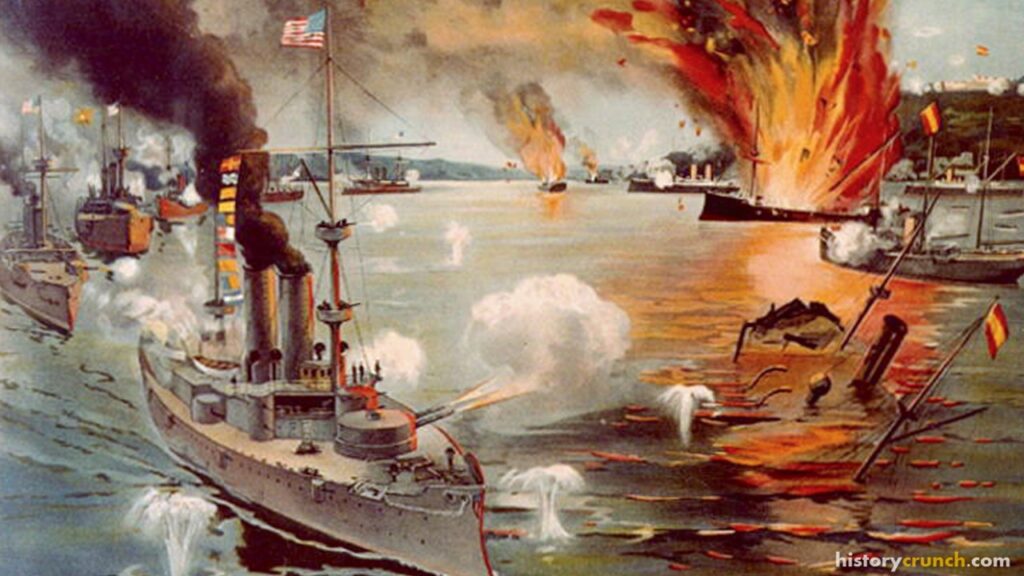
On 1 May 1898 an American squadron destroyed the Spanish fleet at Manila Bay in the Philippines, on the other side of the world from Cuba, where the war had started.
LEARN MORESHOW LESSwhy it mattersMILITARYThe war was about Cuba and the first battle was in Asia. Once the fleet was destroyed the United States had to decide what to do with the Philippines, and that decision made it an empire.
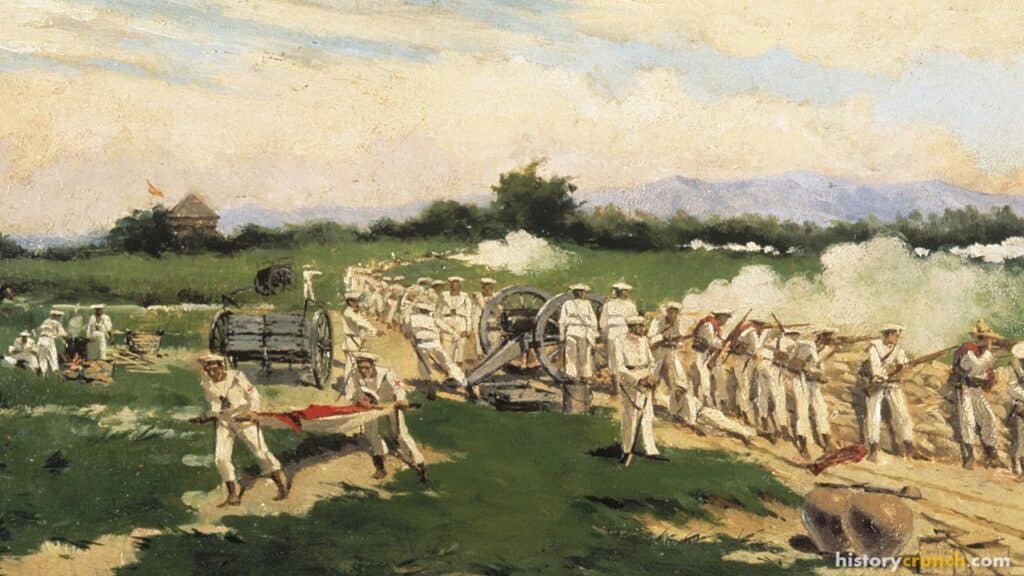
Led by Emilio Aguinaldo, Filipino nationalists declared independence from Spain on 12 June 1898 and established the First Philippine Republic.
LEARN MORESHOW LESSwhy it matters · 1 key figurePOLITICALThey declared it, they had an army, and they had been fighting for two years. The United States did not recognize the republic, and that refusal is the whole cause of the war that follows.
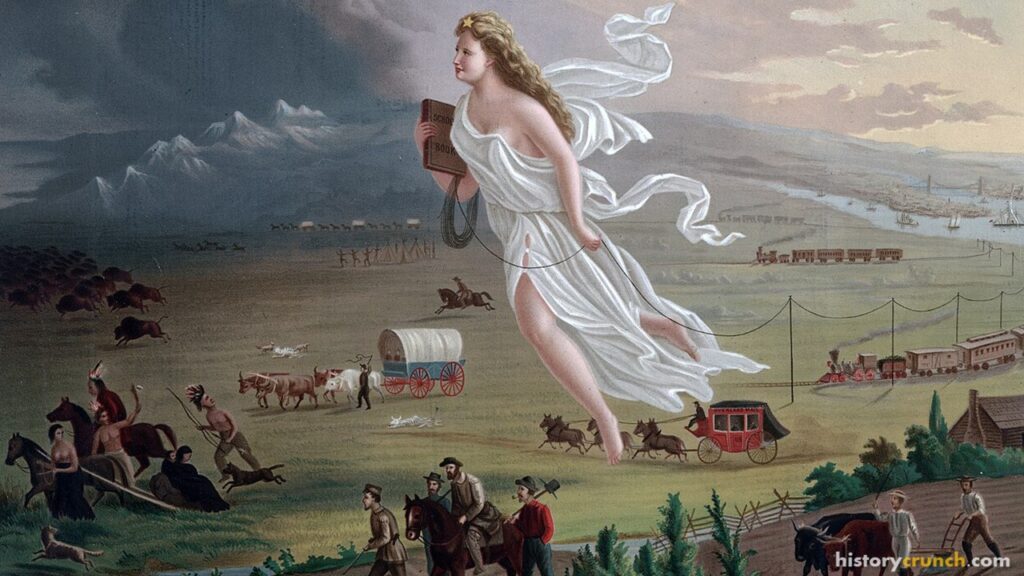
The United States annexes Hawaii in 1898, the first main event of American imperialism, bringing an independent Pacific kingdom under American control.
LEARN MORESHOW LESSwhy it mattersPOLITICALA country founded in a war against an empire acquiring an overseas territory of its own. Mark Twain and others argued loudly that it contradicted everything the United States claimed to stand for.
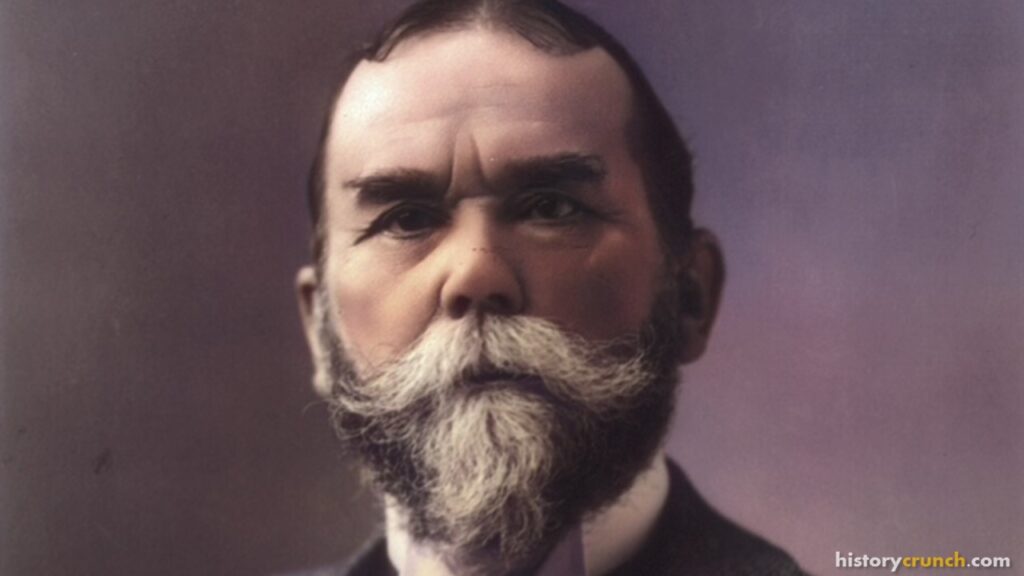
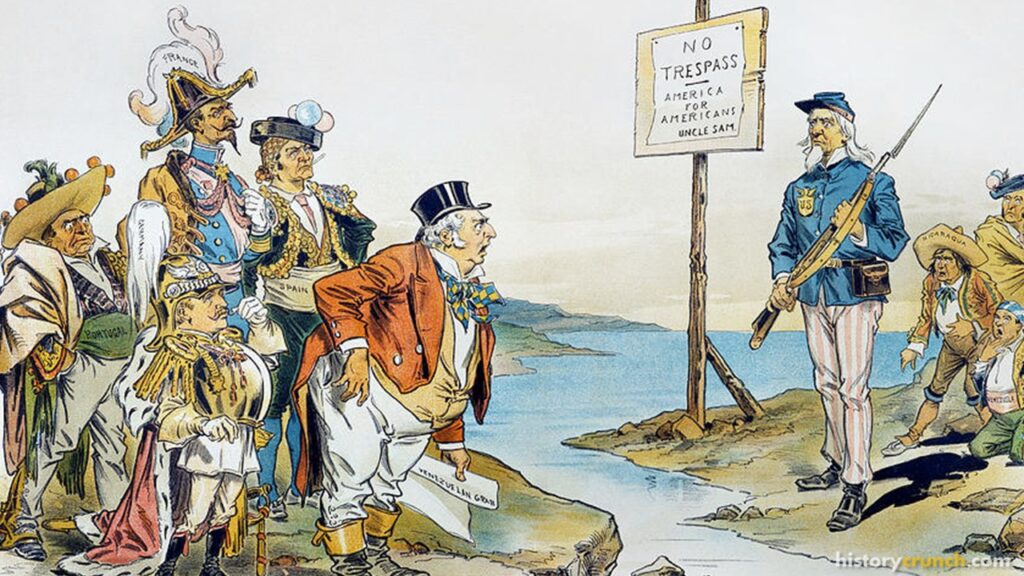
In 1898 President William McKinley called for an open door allowing all foreign nations access to the Chinese market. The Open Door Policy was pressed by his Secretary of State, John Hay.
LEARN MORESHOW LESSwhy it matters · 2 key figuresECONOMICThe United States arrived in Asia too late to take a sphere of influence, so it argued for a rule that no one should have exclusive ones. Self-interest and principle in exactly the same sentence.
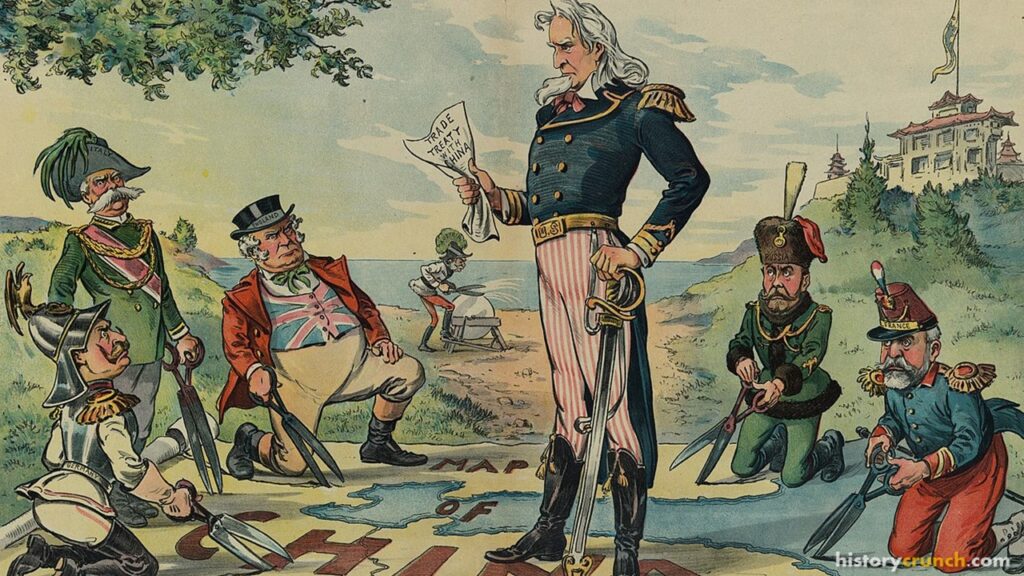
A French cartoon of 1898 shows China as a pastry divided between Britain, Germany, Russia, France and Japan, with a Qing official throwing up his hands, powerless. An American cartoon of 1899 shows Uncle Sam demanding a share.
LEARN MORESHOW LESSwhy it mattersSOCIALBoth cartoons were drawn by people who thought the process was obvious and slightly funny. Neither imagined a Chinese reader, which is exactly how the memory of this period was formed in China.
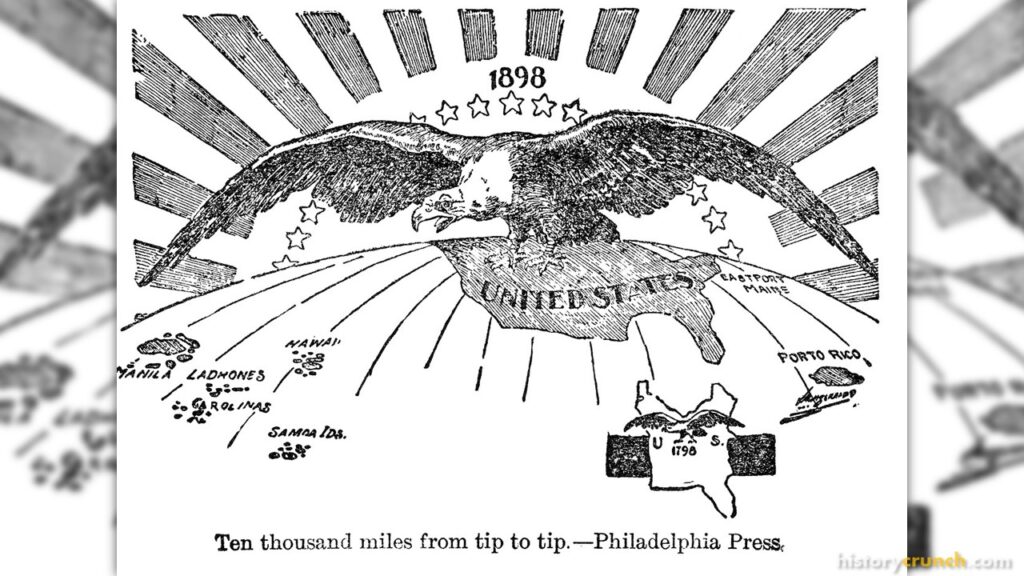
The Spanish-American War ended with the Treaty of Paris on 10 December 1898. Spain gave up Cuba and transferred the Philippines, Puerto Rico and Guam to the United States. No Filipino was party to the treaty.
LEARN MORESHOW LESSwhy it matters · key numbersPOLITICALA republic that already existed, with its own president and army, was transferred between two empires by a document neither of its representatives signed.
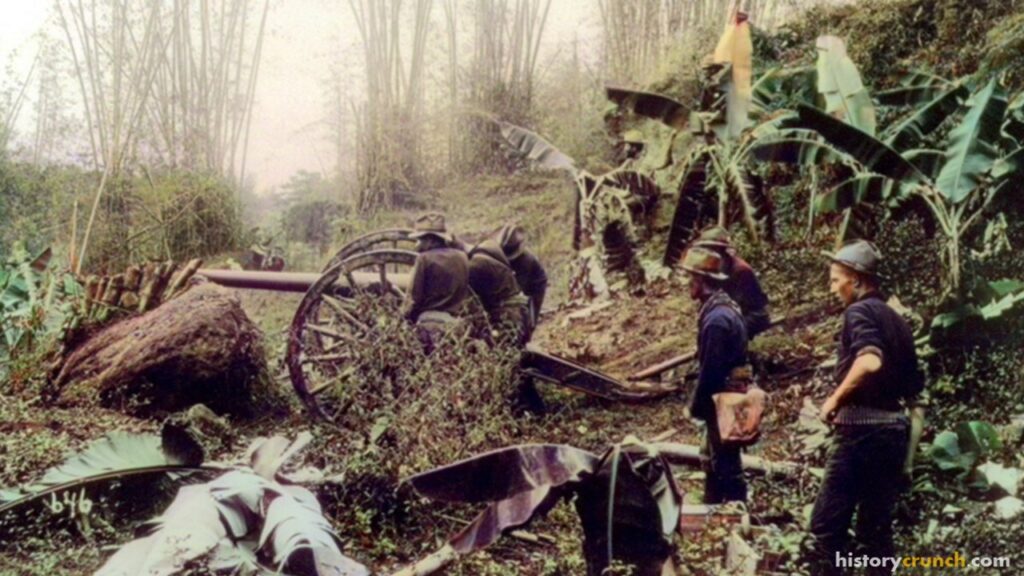
Fighting broke out between American and Filipino forces near Manila on 4 February 1899 and continued until 2 July 1902. It was far longer and far bloodier than the war against Spain that preceded it.
LEARN MORESHOW LESSwhy it matters · key numbersMILITARYThe United States spent three and a half years suppressing the independence movement it had said it was helping. It is the least-taught war in this period and the one that most tests the American story about itself.
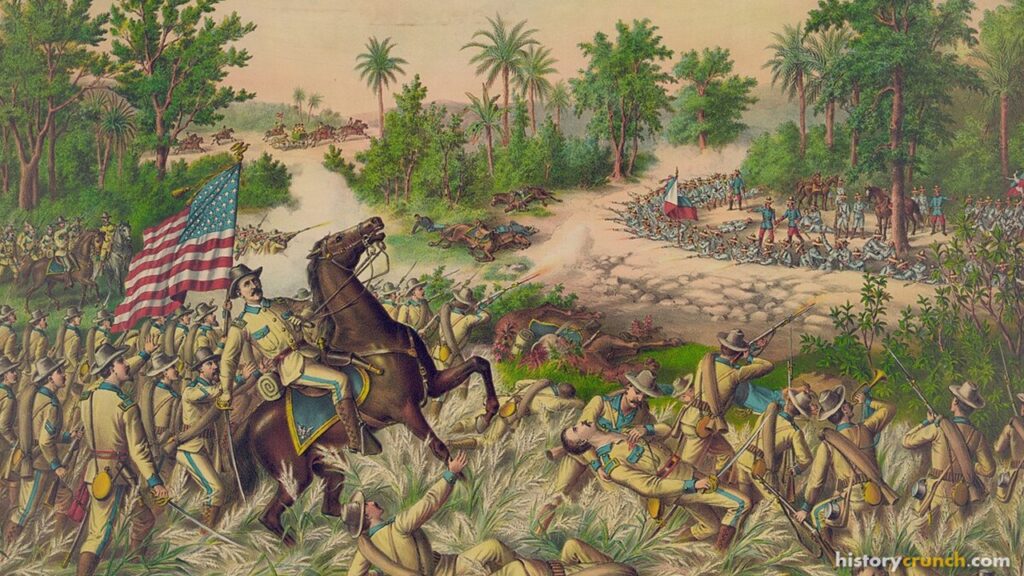
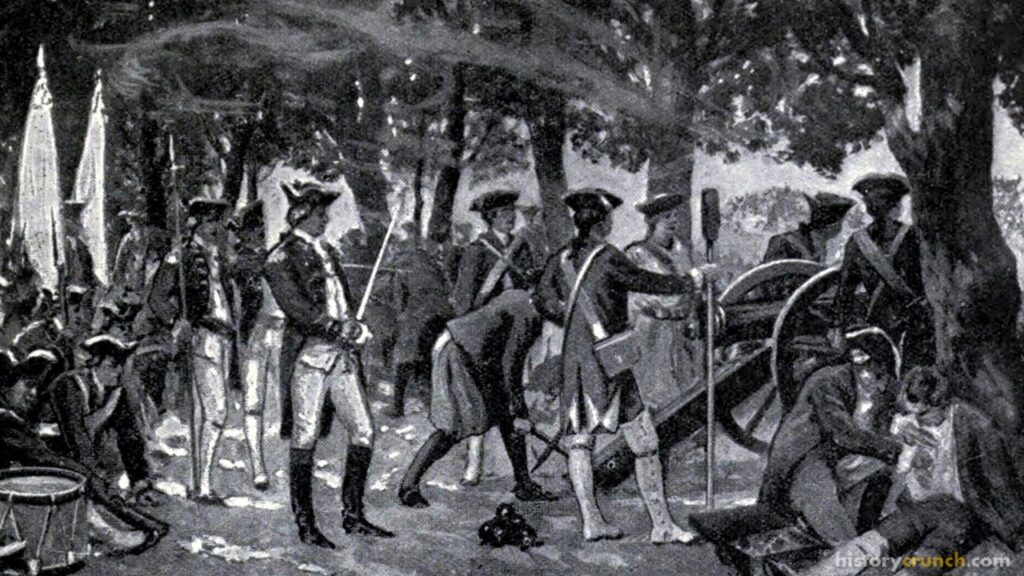
The Battle of Quingua in 1899 was one of the set-piece engagements early in the Philippine-American War, before the Filipino forces turned to guerrilla warfare.
LEARN MORESHOW LESSwhy it mattersMILITARYOnce the conventional battles were lost the war became a guerrilla campaign, and the American response to that campaign is what makes the conflict so contested.
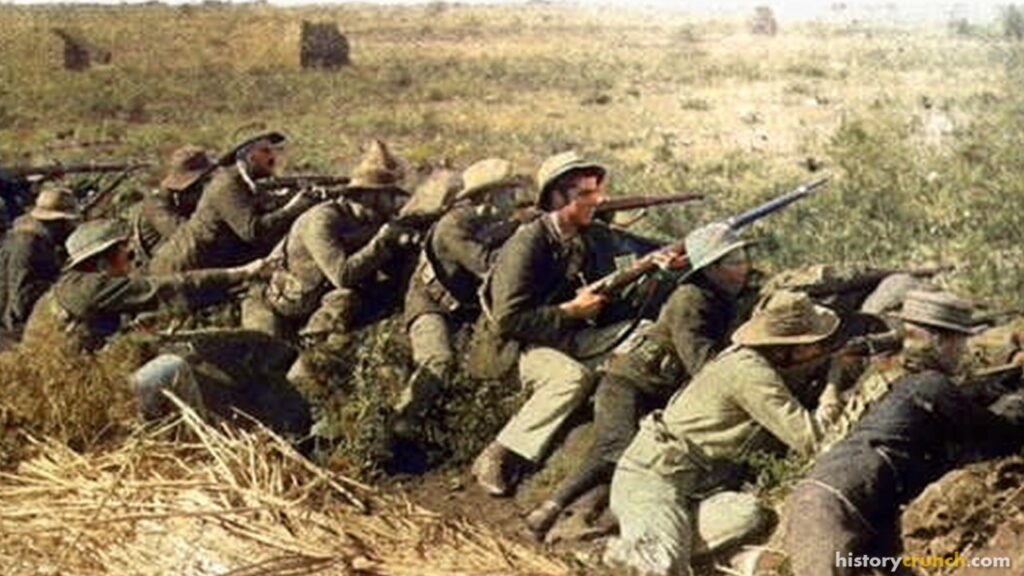
Britain went to war with the Boer republics of the Transvaal and the Orange Free State on 2 October 1899. It took 180,000 soldiers and two and a half years to win, and Britain burned farms and held civilians in camps to do it.
LEARN MORESHOW LESSwhy it mattersMILITARYThe empire at its most powerful, struggling badly against two small farming republics, in a war watched closely by every rival. It shook British confidence at exactly the wrong moment.
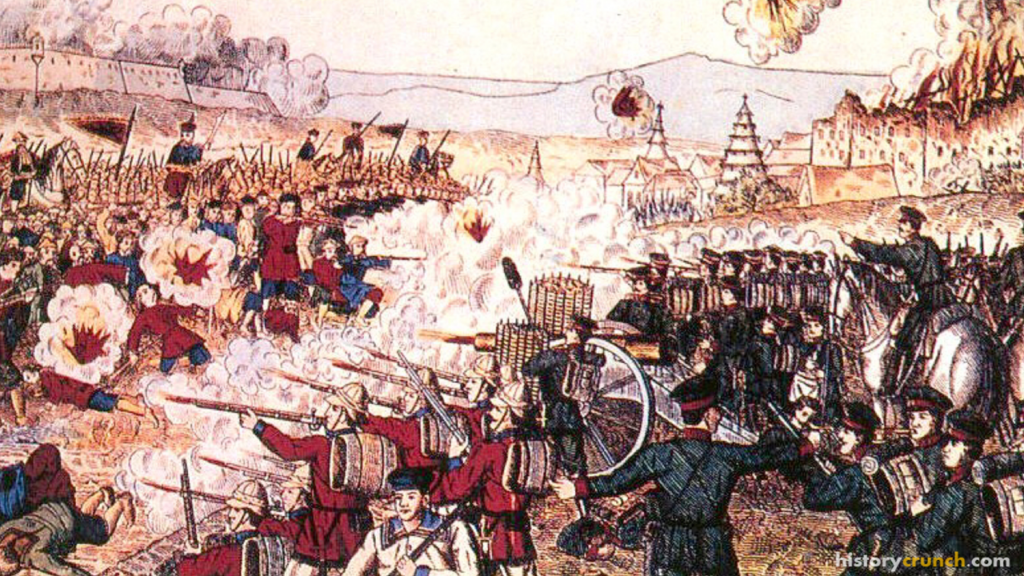
The Boxer Rebellion ran from 2 November 1899 to 7 September 1901. Drought and flood in Shandong, and anger at foreign privilege and missionary activity, produced a movement whose members believed they could withstand foreign weapons.
LEARN MORESHOW LESSwhy it matters · key numbersMILITARYAn anti-foreign rising in China at the same moment as an anti-British war in South Africa and an anti-American war in the Philippines. Three continents pushing back in the same eighteen months.
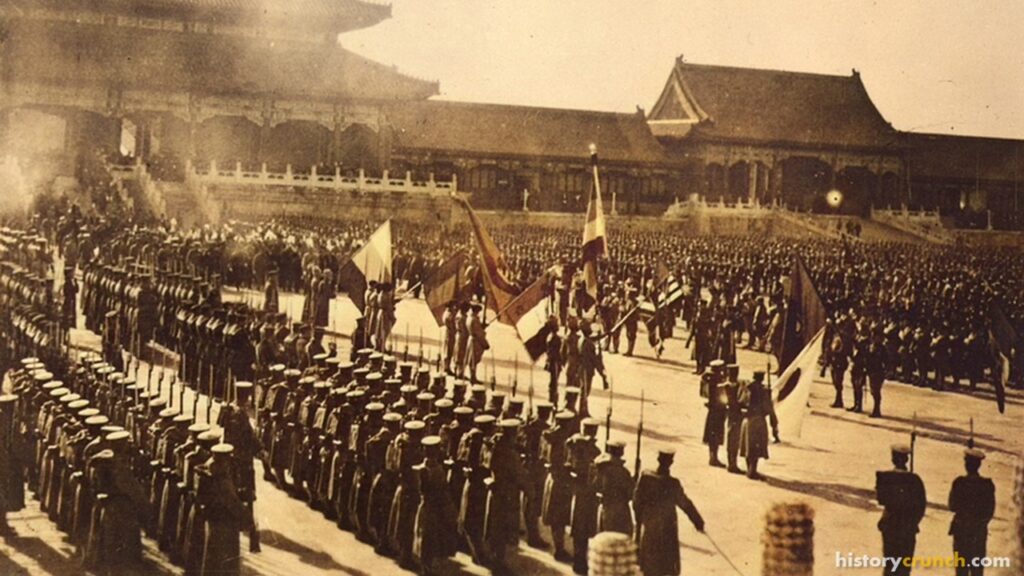
Boxers and Qing troops besieged the foreign legation quarter in Peking from 20 June to 14 August 1900. An eight-nation alliance, including Japan and the United States, marched to relieve it and then occupied the city.
LEARN MORESHOW LESSwhy it matters · key numbersMILITARYEight empires cooperating against one country. Foreign armies assembled inside the Forbidden City, and the looting that followed is still remembered in China as the low point of the whole period.
American forces captured Emilio Aguinaldo, the leader of the Filipino resistance, in March 1901. Organized resistance continued for another year.
LEARN MORESHOW LESSwhy it matters · 1 key figureMILITARYCapturing the leader did not end the war, which is the same lesson Britain learned in South Africa in the same months. Movements outlast the people who start them.
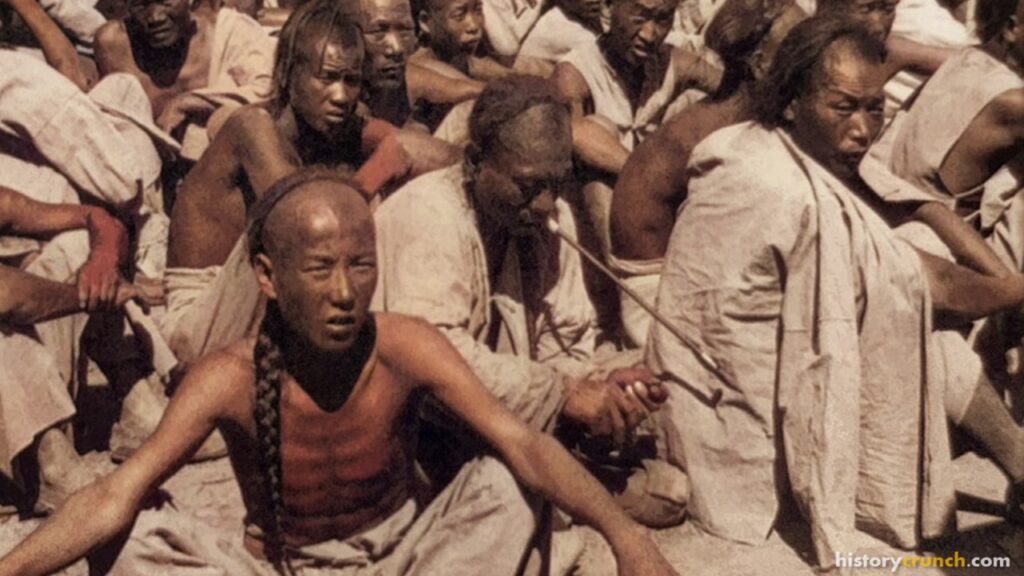
The Boxer Rebellion ended formally on 7 September 1901 with the Boxer Protocol, which imposed an enormous indemnity on China, allowed foreign troops to be stationed in Peking, and required the punishment of officials who had supported the Boxers.
LEARN MORESHOW LESSwhy it matters · key numbersPOLITICALThe indemnity was to be paid over thirty-nine years and came to more than the Qing government's annual revenue several times over. The dynasty did not survive the humiliation for long.
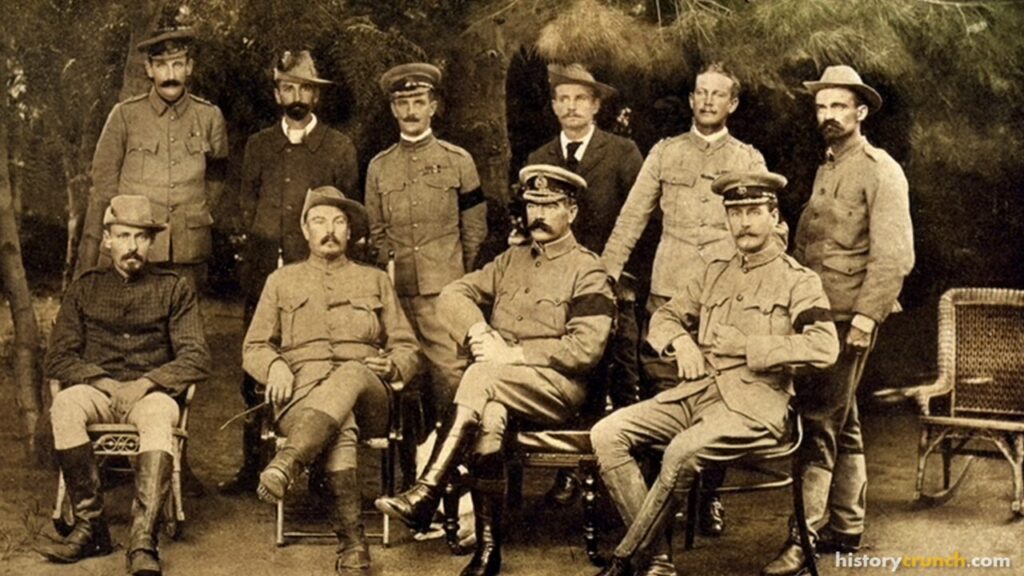
The Boer War ended with the Treaty of Vereeniging in May 1902. Britain won, at a cost to its money, its army and its reputation that shaped everything it did up to 1914.
LEARN MORESHOW LESSwhy it mattersPOLITICALWithin eight years the men Britain had beaten were governing the Union of South Africa, and the Black majority had been left out of the settlement entirely.
The Philippine-American War was declared over on 2 July 1902. The Philippines remained under American colonial rule until 1946.
LEARN MORESHOW LESSwhy it mattersMILITARYForty-four more years of rule over a country that had declared its own independence in 1898. The Age of Imperialism's American chapter lasts longer than most of the European ones.
The map was full. With nothing left to claim, the powers began colliding with each other instead: twice over Morocco, in crises that ended peacefully and left Europe more dangerous each time. Meanwhile the Qing dynasty fell after three centuries, India answered the partition of Bengal with a boycott, and Belgium took the Congo away from its own king.
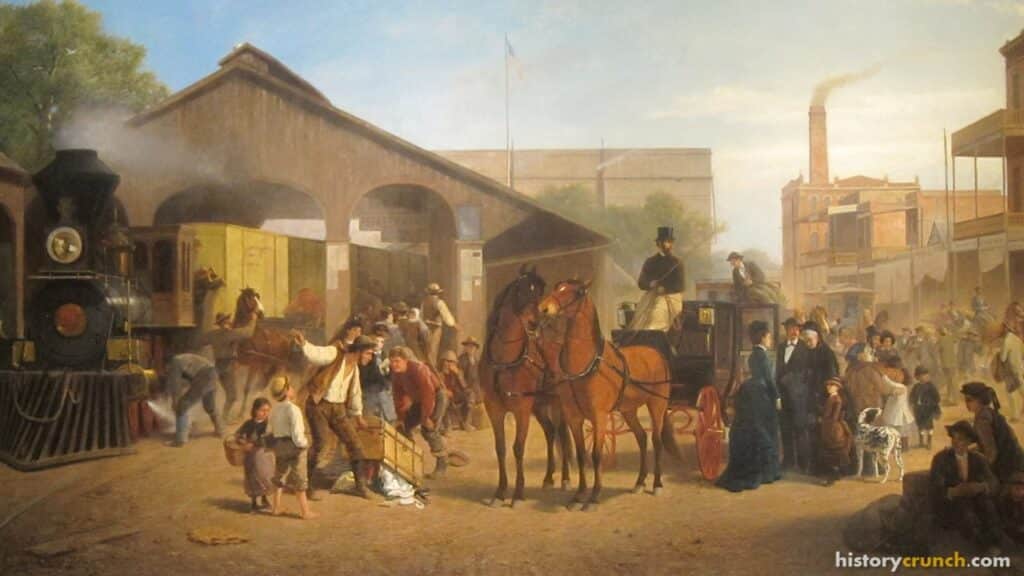
In his 1904 State of the Union address Theodore Roosevelt added a corollary to the Monroe Doctrine: the United States would itself intervene in the affairs of Latin American states to keep European powers out.
LEARN MORESHOW LESSwhy it matters · 1 key figurePOLITICALThe doctrine of 1823 said Europe must not interfere. The corollary of 1904 said the United States would, and it was used to justify interventions across the Caribbean and Central America for thirty years.
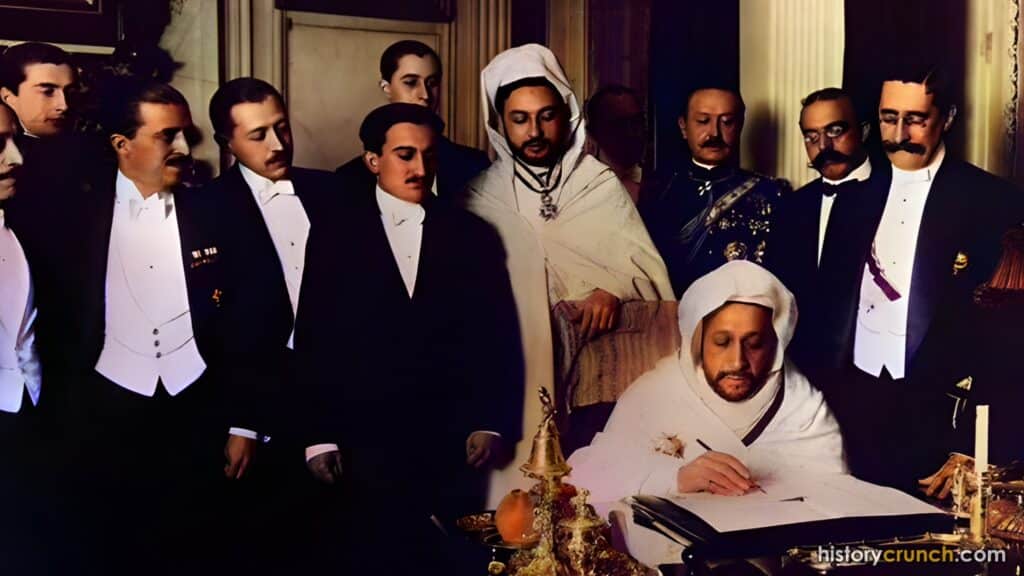
The Entente Cordiale of 8 April 1904 settled the colonial quarrels between Britain and France, giving France a free hand in Morocco and Britain one in Egypt.
LEARN MORESHOW LESSwhy it mattersPOLITICALTwo empires swapped pieces of Africa to fix a European relationship, without consulting Morocco, Egypt or Germany. The resentment that produced runs straight into 1914.
The Panama Canal was built between 1904 and 1914, after the United States backed Panama's separation from Colombia and secured rights to the canal zone.
LEARN MORESHOW LESSwhy it matters · key numbersTECHNOLOGYThe same logic as Suez, in the American hemisphere: a waterway short enough to change the shape of world trade, and a strip of another country's territory taken to build it.
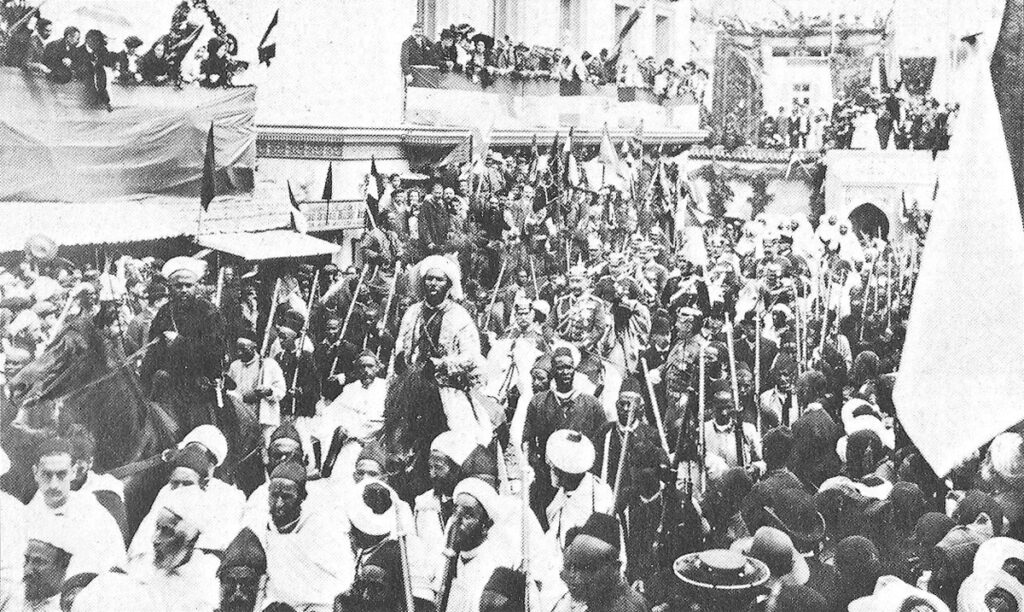
Kaiser Wilhelm II visited Tangier on 31 March 1905 and spoke for Moroccan independence, challenging French influence. France and Germany came close to war through that spring and summer.
LEARN MORESHOW LESSwhy it matters · 1 key figurePOLITICALA state visit lasting a few hours nearly caused a European war. By 1905 the empires had run out of unclaimed territory and were colliding with each other instead.
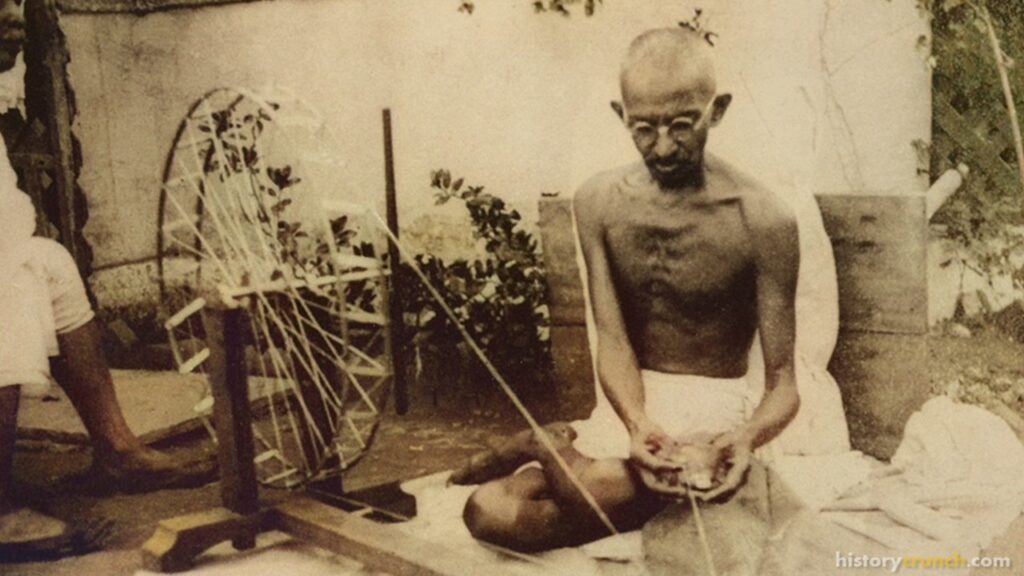
In 1905 the British split Bengal along religious lines. Indians read it as divide and rule, and answered with swadeshi, a boycott of British goods in favor of Indian-made ones.
LEARN MORESHOW LESSwhy it mattersPOLITICALThis is where Indian nationalism becomes a mass movement rather than a petition. Swadeshi gave ordinary people something to do, and Gandhi built his whole method on it twenty years later.
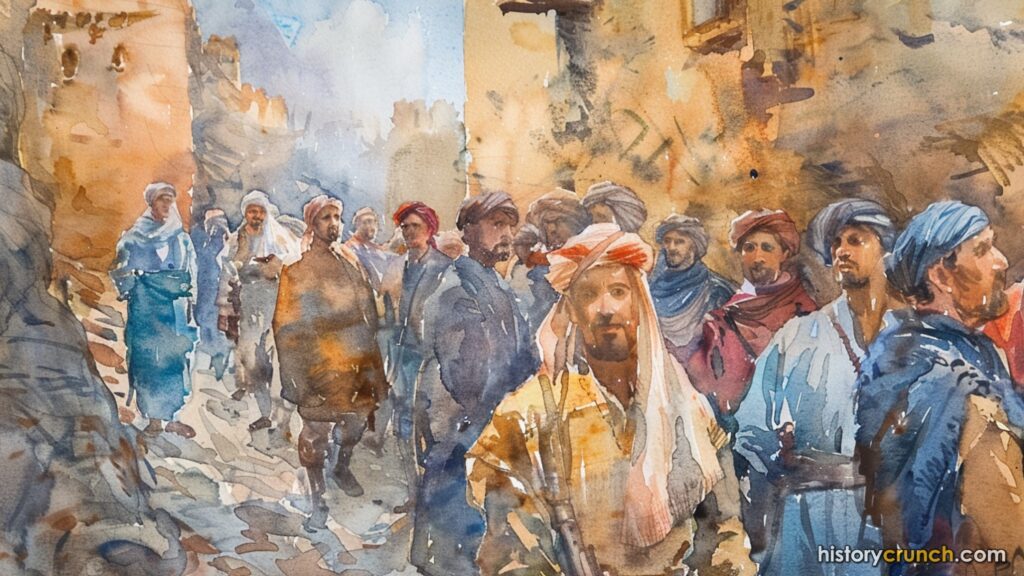
The Algeciras Conference of January to April 1906 settled the first Moroccan crisis. France was supported by Britain, Italy, Russia, Spain and the United States. Germany was backed only by Austria-Hungary.
LEARN MORESHOW LESSwhy it matters · key numbersPOLITICALGermany called the conference expecting to break the Entente and found itself isolated. Every alliance that fought the First World War is visible in that seating plan.
After years of international reporting on forced labor and mass death, the Belgian parliament in Brussels voted to take the Congo Free State from Leopold II in 1908. He was paid for handing it over.
LEARN MORESHOW LESSwhy it matters · 1 key figurePOLITICALThe one case in this period where journalism, photographs and public campaigning forced a European state to seize a colony from its own monarch. It shows what could be done, and how rarely it was.
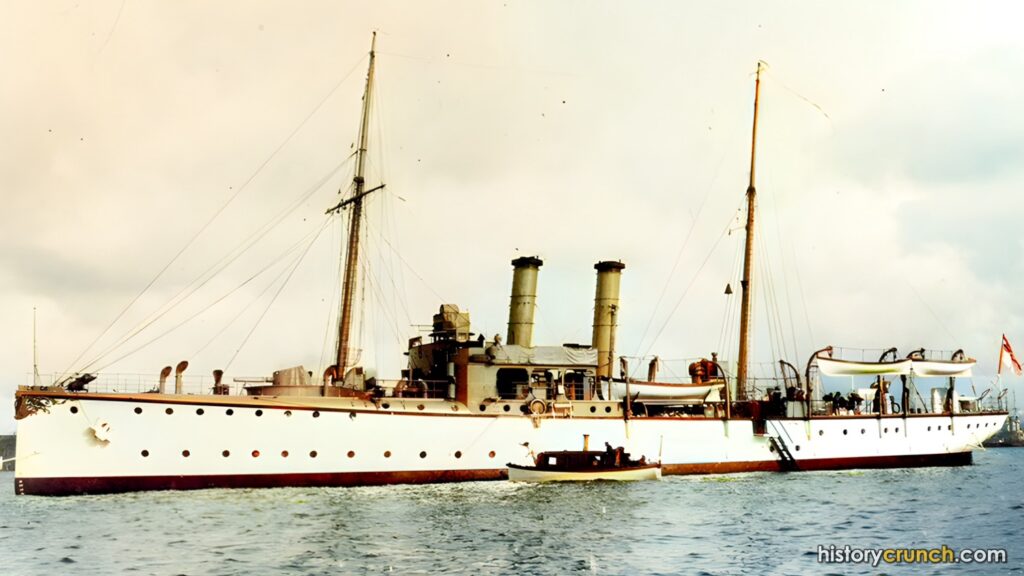
The Agadir Crisis began in April 1911 when Germany sent the gunboat SMS Panther to Morocco in response to French troop movements. It was settled by France taking control in Morocco and Germany receiving territory in the French Congo.
LEARN MORESHOW LESSwhy it mattersMILITARYThe second near-war over Morocco in six years. Territory and the people on it were traded between two European governments to settle an argument neither had with Morocco.
The Qing Dynasty, which had ruled since the early 1600s, was replaced by the Republic of China in 1912. Seventy years of unequal treaties, indemnities and lost sovereignty had destroyed its authority.
LEARN MORESHOW LESSwhy it matters · key numbersPOLITICALImperialism did not colonize China; it broke the state that governed it. What followed was decades of warlords, civil war and invasion, and a politics organized around never being in that position again.
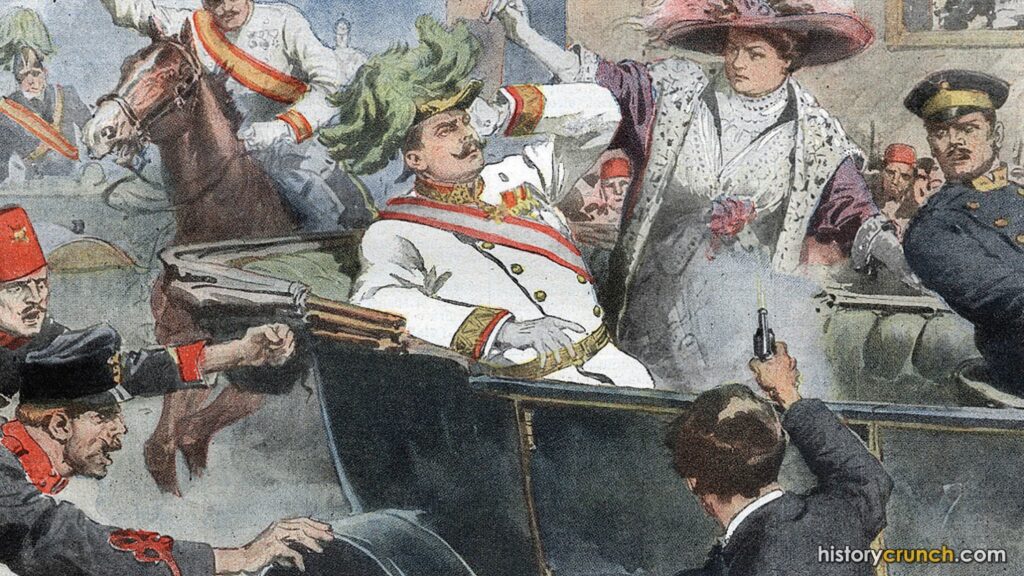
The rivalry the Age of Imperialism created among the European powers is counted by historians among the causes of the First World War, which broke out in 1914.
LEARN MORESHOW LESSwhy it matters · key numbersMILITARYForty-four years of competing for other people's countries, ended by a war fought in Europe over a killing in Sarajevo. Troops and carriers from every colony served in it, on both sides.
The Panama Canal opened in August 1914, the same month that war broke out in Europe.
LEARN MORESHOW LESSwhy it mattersTECHNOLOGYThe coincidence is worth pointing out. The last great engineering project of the imperial age was finished in the week the age itself ended.
The empires survived the First World War and did not survive what followed. Gandhi came home in 1915 with a method tested on a different empire, took over the Indian National Congress, and ended British rule over 400 million people without an army. India was divided in a few weeks in 1947 at a cost of a million lives or more. The last card is 1997, when Hong Kong went back to China, 155 years after a war about opium.
In 1915, with Europe at war and unable to intervene, Japan issued the Twenty-One Demands on China, seeking sweeping political and economic control.
LEARN MORESHOW LESSwhy it mattersPOLITICALThe European empires were busy destroying each other, and the gap was filled immediately. The Age of Imperialism did not stop in 1914; the cast changed.
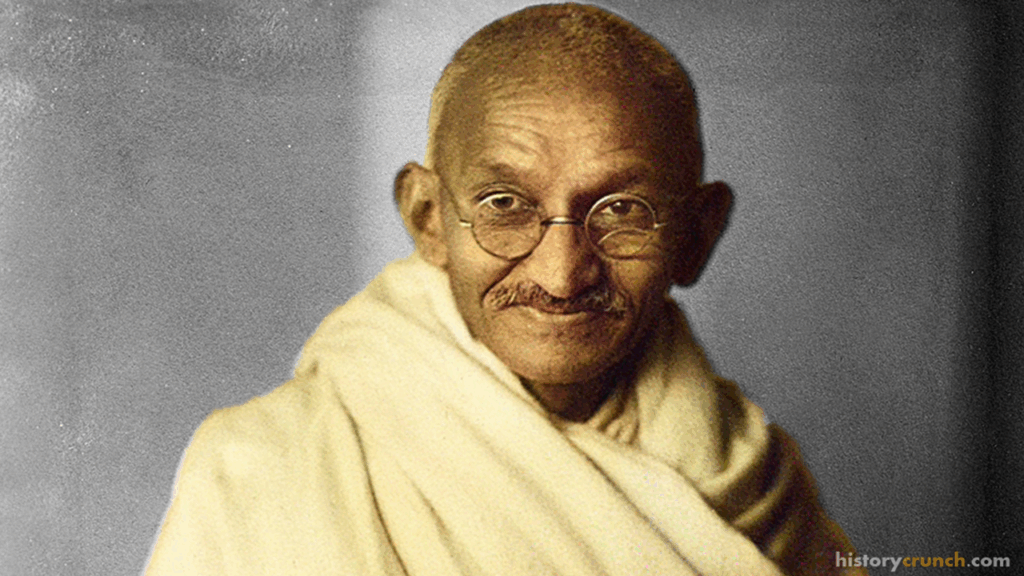
Mahatma Gandhi returned to India in 1915 after twenty years in South Africa, where he had developed the methods of non-violent resistance he would use against British rule.
LEARN MORESHOW LESSwhy it matters · 1 key figurePOLITICALThe single most important card in the last chapter. He arrived with a technique tested on a different empire in a different continent, and it turned a movement of lawyers into a movement of millions.
Gandhi became leader of the Indian National Congress in 1920 and reorganized it around mass non-cooperation: boycotts of British goods, courts, schools and titles.
LEARN MORESHOW LESSwhy it matters · 1 key figurePOLITICALNon-cooperation is a strategy built on a fact about empire: a few thousand officials cannot govern three hundred million people who decline to help. He made that fact visible.
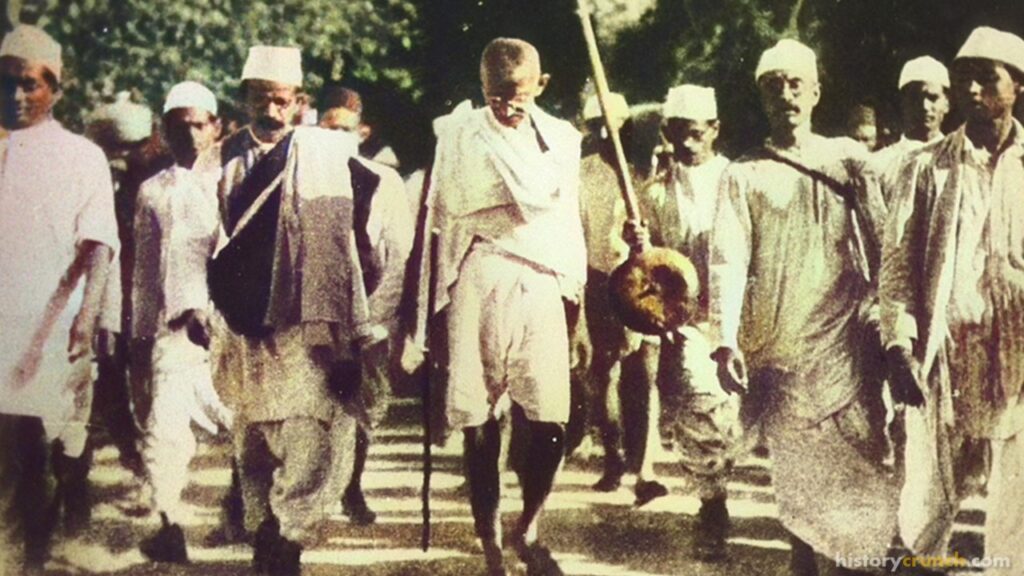
From 12 March to 6 April 1930 Gandhi walked 240 miles to the sea to make salt in defiance of the 1882 Salt Act, which gave Britain a monopoly on it. The march took 24 days and millions broke the salt laws in the weeks afterwards.
LEARN MORESHOW LESSwhy it matters · key numbers · 1 key figureSOCIALHe picked the one British law that touched every single person in India, including the poorest, and broke it in a way anyone could copy. It is the best-designed act of protest in modern history.
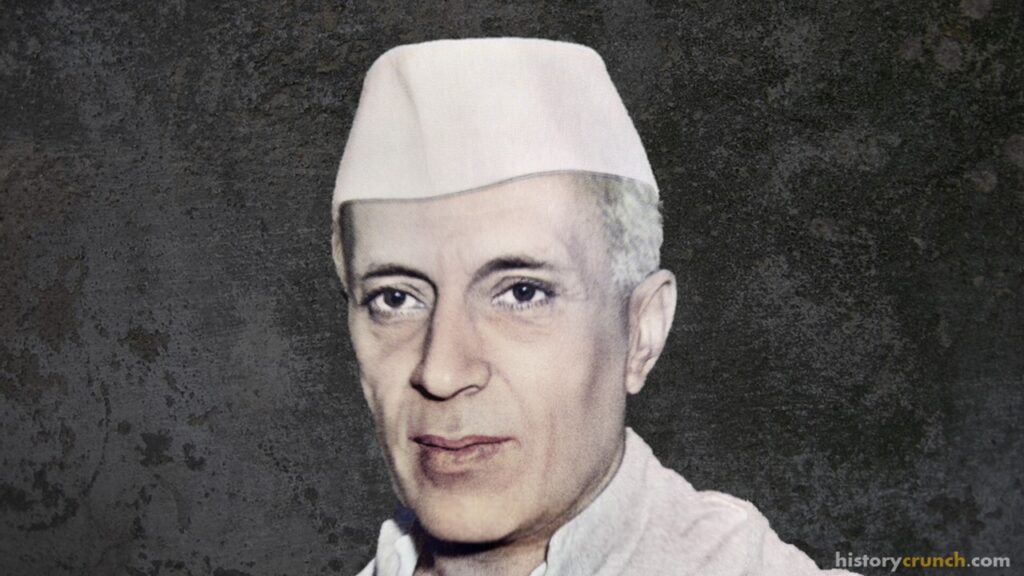
Time magazine named Gandhi Man of the Year for 1930, on the strength of the Salt March and the mass civil disobedience that followed it.
LEARN MORESHOW LESSwhy it matters · 1 key figureSOCIALThe argument was now being had in the imperial powers' own newspapers, in their own language, on terms Gandhi had set. That is what the march was for.
The Commonwealth of the Philippines was established in 1935 as a transitional self-governing state, with full independence promised for a decade later.
LEARN MORESHOW LESSwhy it mattersPOLITICALThirty-seven years after a republic was declared and refused recognition, the same country was granted self-government by the power that had refused it.
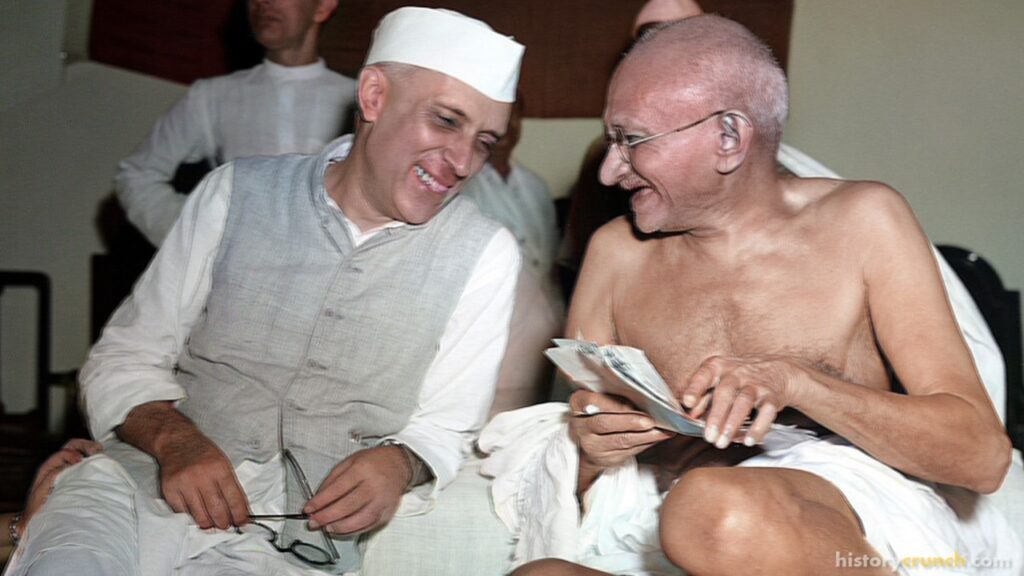
Mahatma Gandhi and Jawaharlal Nehru met through 1946 as independence came into view. Nehru would become the first Prime Minister of India; Gandhi held no office at all.
LEARN MORESHOW LESSwhy it matters · 2 key figuresPOLITICALTwo very different visions of what a free India should be: Nehru's industrial, secular and centralized, Gandhi's rural, spiritual and local. Nehru's won, and the argument has never really stopped.
The Philippines gained full independence from the United States in 1946, forty-eight years after Filipino nationalists first declared it.
LEARN MORESHOW LESSwhy it matters · key numbersPOLITICALIt is worth putting the two dates beside each other, 1898 and 1946, and asking a class what the intervening years were for.
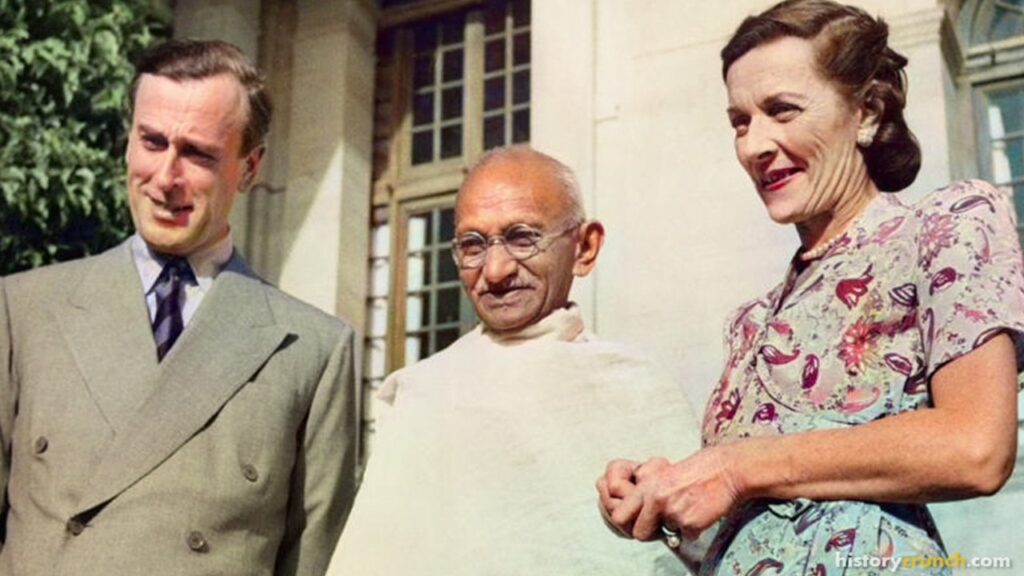
Lord Mountbatten, the last Viceroy, moved the date of British withdrawal forward to August 1947, giving a few weeks to divide an empire of 400 million people between two new states.
LEARN MORESHOW LESSwhy it matters · a debate · 2 key figuresPOLITICALThe speed is the argument. Historians still divide over whether the haste limited the violence by ending the uncertainty, or caused it by leaving no time to prepare.
Did the speed of the British withdrawal cause the violence of Partition, or limit it?
Moving in ten weeks ended a dangerous period of uncertainty in which communal violence was already rising, and Britain no longer had the troops, money or authority to hold the country together while a slower settlement was negotiated.
A few weeks was nowhere near enough to move populations, divide an army and a treasury, or even publish the border, which was announced after independence. The result was somewhere between one and two million dead and about fifteen million people driven across the new border.
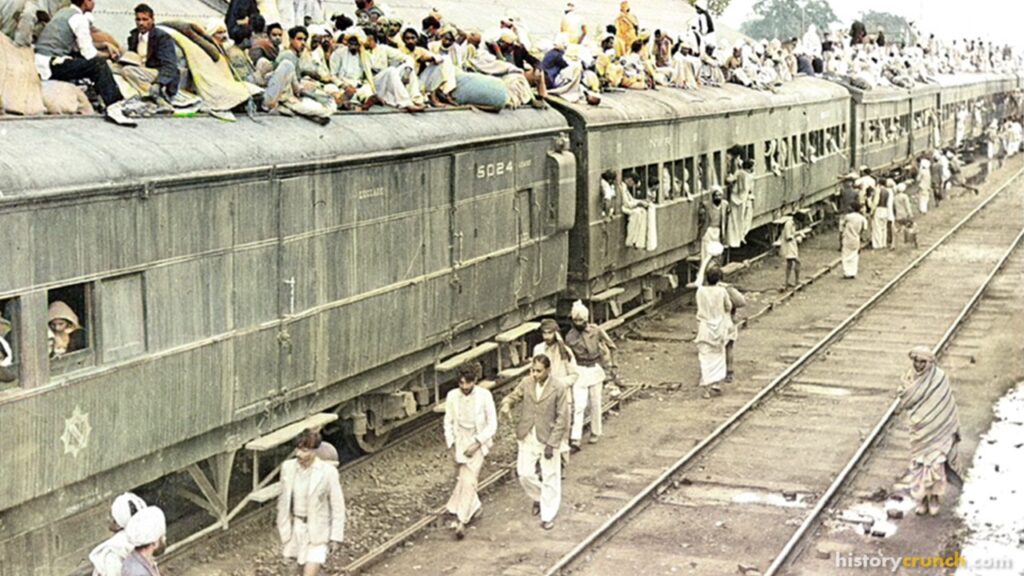
British rule in India ended in August 1947 with the country divided into India and Pakistan. Millions crossed the new borders in both directions and enormous numbers were killed in the violence that accompanied it.
LEARN MORESHOW LESSwhy it matters · key numbersSOCIALAn empire of 400 million people losing the possession that had given it its name, and the moment the rest of the colonial world understood that independence was possible. Within twenty years most of the empires on this timeline were gone.
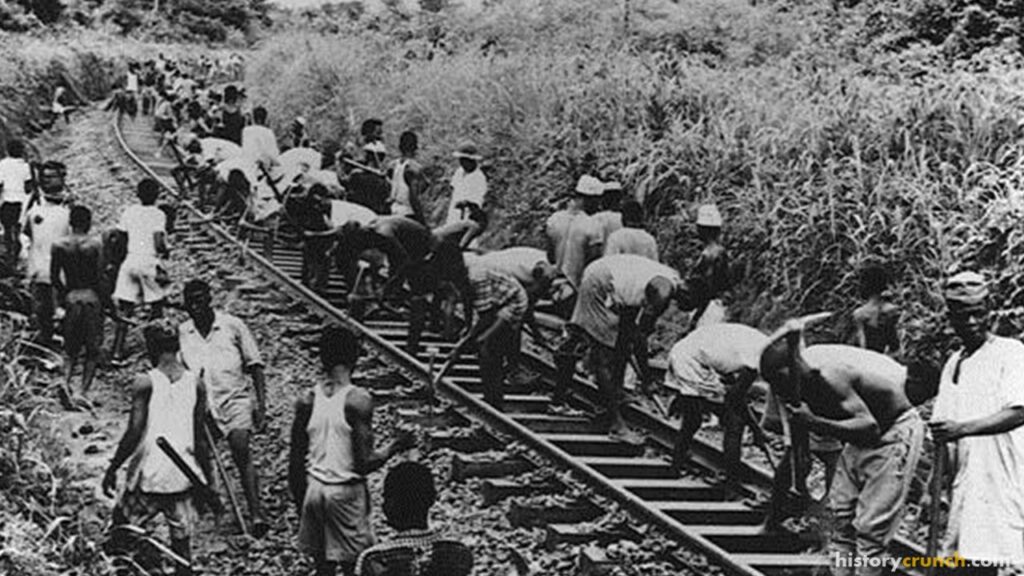
British forces did not formally leave Egypt until June 1956, seventy-four years after the temporary occupation of 1882. Later that year Britain and France tried to take the canal back by force and failed.
LEARN MORESHOW LESSwhy it matters · key numbersPOLITICALThe Suez crisis of 1956 is usually taken as the moment Britain and France stopped being world powers. It happened over the same canal that had drawn them into Africa in the first place.
Hong Kong, ceded to Britain by the Treaty of Nanking in 1842, was returned to the People's Republic of China on 1 July 1997.
LEARN MORESHOW LESSwhy it matters · key numbersPOLITICALThe last card on the timeline closes something opened 155 years earlier by a war over the opium trade. Nothing else on this page ran so long or ended so precisely.

I'm a passionate history and geography teacher with over 15 years of experience working with students in the middle and high school years. I have an Education Degree with a focus in World History. I have been writing articles for History Crunch since 2015 and love the challenge of creating historical content for young learners!

K.L. is a content writer for History Crunch. She is a fantastic history and geography teacher that has been helping students learn about the past in new and meaningful ways since the mid-2000s. Her primary interest is Ancient History, but she is also driven by other topics, such as economics and political systems.

I'm the founder of History Crunch, which I first began in 2015 with a small team of like-minded professionals. I have an Education Degree with a focus in Social Studies education. I spent nearly 15 years teaching history, geography and economics in secondary classrooms to thousands of students. Now I use my time and passion researching, writing and thinking about history education for today's students and teachers.
To cite this timeline as a source, use one of the formats below.
MLA: Beck, E., et al. “Age of Imperialism Timeline.” HistoryCrunch, 13 September 2026, https://historycrunch.com/age-of-imperialism-timeline/.
APA: Beck, E., Woida, K.L., & Millar, B. (2026). Age of Imperialism Timeline. HistoryCrunch. https://historycrunch.com/age-of-imperialism-timeline/
Chicago: Beck, E., K.L Woida, and B. Millar. “Age of Imperialism Timeline.” HistoryCrunch. September 13, 2026. https://historycrunch.com/age-of-imperialism-timeline/
© History Crunch
Europeans had traded with Asia and Africa for centuries without ruling them. What changed?
Almost nobody conquers a continent believing they are doing wrong. What did they believe instead?
The connection between industry and empire is the most important one on the timeline, and the least obvious.
Conquest is one problem. Governing at a distance of six thousand miles is a harder one.
They went first, they mapped the interior, and some of them exposed the worst abuses of the period.
The British East India Company was a trading firm with shareholders. By 1857 it governed more people in India than lived in all of Britain.
Three thousand Company troops beat fifty thousand. The reason is not military.
The same event has two names, and the name you use is an argument about what it was.
The naming argument is a real historiographical dispute, not a matter of taste. The case for 'mutiny' rests on its origin inside the Company army, the specific military grievances, and the absence of a unified political programme or leadership. The case for 'first war of independence' rests on how far it spread beyond the army, the proclamation of the Mughal emperor as sovereign, and the participation of rulers and civilians with political aims. Most historians now describe it as a rebellion that began as a mutiny and became something larger without ever becoming a national movement, which satisfies nobody entirely.
The arithmetic looks impossible. Work out how it was actually done.
The Great Famine of 1876 to 1878 killed six to ten million people in British India while grain was exported.
Most accounts start with the Company. Start earlier and the story changes shape.
China banned opium in 1799. Britain kept selling it and went to war twice when China tried to stop.
The phrase is Chinese and it is precise: the obligations ran one way.
A movement whose members believed they could not be hurt by bullets, crushed by eight empires at once.
Hong Kong was taken in 1842 and handed back in 1997. Almost nothing else on this timeline runs that long.
Britain wanted tea. China wanted almost nothing Britain made. So what balanced the books?
Japan faced the same western pressure as China and ended up on the other side of it.
It is the most famous part of the period, and it happened at the same time as India, China and the Pacific.
Leopold II never visited the Congo and owned it personally for twenty-three years.
The United States began as a colony that rebelled. In 1898 it took colonies of its own.
Three and a half years, far longer and bloodier than the war against Spain, and it rarely appears in a textbook.
The story is usually told as Europe acting and everybody else being acted upon. The evidence says otherwise.
Gandhi never commanded troops. He ended British rule over 400 million people.
The armies that conquered and garrisoned the empires were mostly made up of the people being conquered.
Twice in six years two European powers nearly went to war over Morocco. Then they went to war over Serbia.
By 1900 the map was full. The pressure did not stop; it turned inward.
Railways, schools and hospitals on one side. Famine, extraction and imposed borders on the other.
This is the oldest argument about the period and it is not settled. One position points to infrastructure, administration, education and legal systems that outlasted independence. Another argues these served extraction and control, that colonial economies were reshaped around exporting raw materials and often still are, and that the human cost, from famine in India to forced labor in the Congo, cannot be offset by railways. A third holds the question is badly framed, because it compares colonized countries to an imagined version of themselves that never got to exist, rather than to what they were actually doing beforehand: India was the world's largest textile producer in 1700.
Borders, official languages, economies and grievances, all set between about 1850 and 1914.
Between one and two million dead, and about 15 million people crossing the new borders, in a few weeks.
China as a pastry being carved. Uncle Sam demanding a slice. Leopold as a snake.
No question matches that word.
Research question 1Europeans had traded with Asia and Africa for centuries without ruling them. What changed?
Research question 2Almost nobody conquers a continent believing they are doing wrong. What did they believe instead?
Research question 3The connection between industry and empire is the most important one on the timeline, and the least obvious.
Research question 4Conquest is one problem. Governing at a distance of six thousand miles is a harder one.
Research question 5They went first, they mapped the interior, and some of them exposed the worst abuses of the period.
Research question 6The British East India Company was a trading firm with shareholders. By 1857 it governed more people in India than lived in all of Britain.
Research question 7Three thousand Company troops beat fifty thousand. The reason is not military.
Research question 8The same event has two names, and the name you use is an argument about what it was.
Research question 9The arithmetic looks impossible. Work out how it was actually done.
Research question 10The Great Famine of 1876 to 1878 killed six to ten million people in British India while grain was exported.
Research question 11Most accounts start with the Company. Start earlier and the story changes shape.
Research question 12China banned opium in 1799. Britain kept selling it and went to war twice when China tried to stop.
Research question 13The phrase is Chinese and it is precise: the obligations ran one way.
Research question 14A movement whose members believed they could not be hurt by bullets, crushed by eight empires at once.
Research question 15Hong Kong was taken in 1842 and handed back in 1997. Almost nothing else on this timeline runs that long.
Research question 16Britain wanted tea. China wanted almost nothing Britain made. So what balanced the books?
Research question 17Japan faced the same western pressure as China and ended up on the other side of it.
Research question 18It is the most famous part of the period, and it happened at the same time as India, China and the Pacific.
Research question 19Leopold II never visited the Congo and owned it personally for twenty-three years.
Research question 20The United States began as a colony that rebelled. In 1898 it took colonies of its own.
Research question 21Three and a half years, far longer and bloodier than the war against Spain, and it rarely appears in a textbook.
Research question 22The story is usually told as Europe acting and everybody else being acted upon. The evidence says otherwise.
Research question 23Gandhi never commanded troops. He ended British rule over 400 million people.
Research question 24The armies that conquered and garrisoned the empires were mostly made up of the people being conquered.
Research question 25Twice in six years two European powers nearly went to war over Morocco. Then they went to war over Serbia.
Research question 26By 1900 the map was full. The pressure did not stop; it turned inward.
Research question 27Railways, schools and hospitals on one side. Famine, extraction and imposed borders on the other.
Research question 28Borders, official languages, economies and grievances, all set between about 1850 and 1914.
Research question 29Between one and two million dead, and about 15 million people crossing the new borders, in a few weeks.
Research question 30China as a pastry being carved. Uncle Sam demanding a slice. Leopold as a snake.