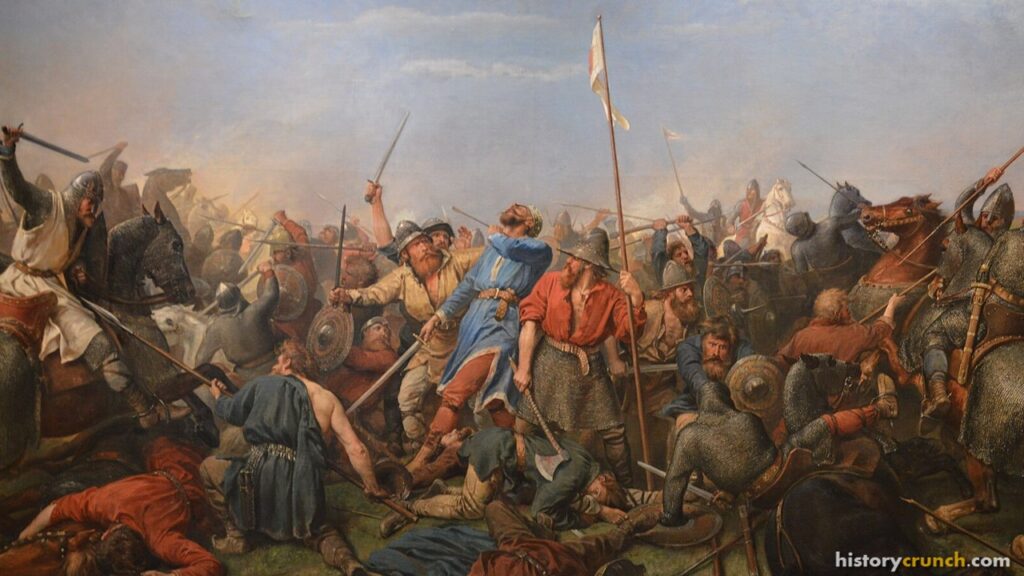
The Viking invasions of England were one of the most significant series of events in the history of medieval England and the Middle Ages. Beginning in the late 8th century, Viking raiders from Scandinavia launched a series of attacks on the coasts and rivers of England that lasted for nearly three centuries and had a profound impact on the political, social and cultural life of the country. The Viking invasions of England were not simply a story of raid and destruction but also involved settlement, trade and the eventual integration of Viking peoples into English society. In general, the Viking invasions of England shaped the development of the English nation in important and lasting ways.

What Were the Middle Ages?
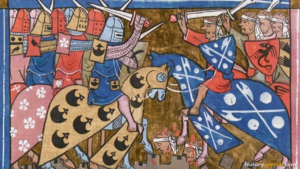
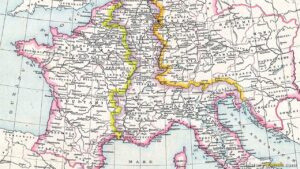
The Middle Ages, also known as the Medieval Period, refers to the period of European history that stretched from the 5th century to the 15th century. More specifically, historians generally place the beginning of the Middle Ages at 476 CE, with the fall of the Western Roman Empire, and its end at approximately 1500 CE, with the start of the Renaissance. Due to its length, the Middle Ages is divided into three smaller periods, including: the Early Middle Ages, the High Middle Ages and the Late Middle Ages. The Viking invasions of England took place primarily during the Early Middle Ages and were one of the most important events of that period in English history.
Who Were the Vikings?
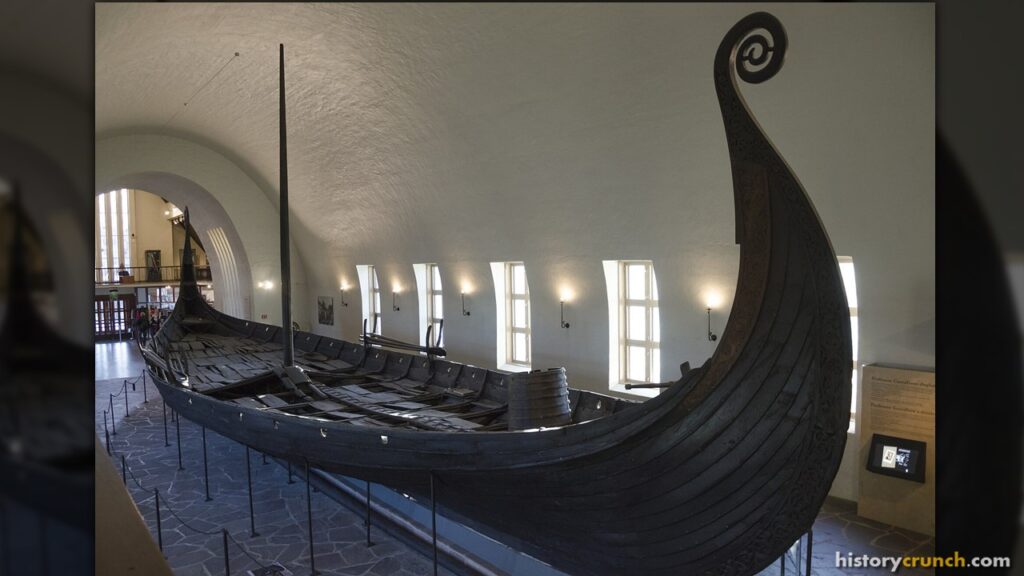
The Vikings were a seafaring people from Scandinavia, which includes the modern-day countries of Norway, Sweden and Denmark, who played a major role in the history of medieval Europe through their raids, trade and exploration. The Vikings are often remembered as fierce warriors and raiders, but they were also skilled traders, explorers and settlers who had a profound impact on the development of many regions of Europe during the Middle Ages. The Vikings built some of the most advanced ships of the medieval world, known as longshipsFast, lightweight boats that could sail both open oceans and shallow rivers, giving Vikings a major military advantage., which were fast, lightweight and capable of navigating both the open ocean and shallow rivers. This gave the Vikings a significant military advantage, as they could appear suddenly from the sea or along a river and attack before defenders had time to respond.
First Viking Raids on England
The Viking Age in England is traditionally considered to have begun with the raid on the monastery of Lindisfarne on the northeastern coast of England in 793 CE. Lindisfarne was a famous and wealthy monastery that had been an important center of Christian learning and culture in England for over a century. The raid shocked the Christian world because monasteries were considered sacred places and had previously been largely immune from attack. For instance, the scholar Alcuin of York wrote at the time that the raid was a sign of God’s punishment and expressed the horror felt across Christian Europe at the attack on such a holy site.
The raid on Lindisfarne was followed by many more Viking attacks on monasteries, churches and coastal towns across England in the years and decades that followed. For instance, the monastery of Jarrow, another famous center of Christian learning in northeastern England, was raided in 794 CE, just one year after Lindisfarne. As well, Viking raiders began to push further inland along the rivers of England, attacking towns and settlements that had previously felt safe from seaborne attack. As such, the early Viking raids on England were devastating for many communities and caused widespread fear and disruption across the country.
FactsthatCrunchAlcuin was at Charlemagne's court when news of the raid reached him, and he wrote to Higbald, the Bishop of Lindisfarne. He argued that the attack was God's punishment for moral failure, saying that slipped monastic discipline and the sins of the community had brought the disaster upon them. He also wrote to Ethelred I, King of Northumbria, criticizing the king's self-indulgent habits and urging stronger spiritual and military resolve.
Great Heathen Army
The nature of the Viking presence in England changed significantly in 865 CE with the arrival of what the Anglo-Saxon Chronicle, which was the main historical record of events in medieval England, called the Great Heathen ArmyA large Viking force that arrived in England in 865 CE intending to conquer and settle permanently, not merely raid.. The Great Heathen Army was a large Viking force that landed in East Anglia in 865 CE and was very different from the small raiding parties that had previously attacked England. Instead of simply raiding and returning home, the Great Heathen Army intended to conquer and settle in England permanently.
The Great Heathen Army was led by several Viking chieftains, including the brothers Halfdan and Ivar the Boneless. Over the following years, the army moved across England, conquering several of the Anglo-Saxon kingdoms that controlled different parts of the country at the time. For instance, the Viking army captured the city of York in 866 CE, which was one of the most important cities in northern England, and made it the capital of a new Viking kingdom known as the Kingdom of Jorvik. As well, the kingdoms of Northumbria, Mercia and East Anglia all fell to the Great Heathen Army in the years that followed. As such, the arrival of the Great Heathen Army marked a major turning point in the history of the Viking invasions of England and transformed the Viking presence from a series of raids into a full-scale conquest and settlement.
Why was the Great Heathen Army of 865 CE different from earlier Viking raids on England?
Alfred the Great and the Resistance to the Vikings
The Viking conquest of England was eventually halted by Alfred the Great, King of Wessex, who is one of the most celebrated rulers in English history. By the late 870s CE, the Viking forces had conquered most of England and Wessex, which was the kingdom in the south of England ruled by Alfred, was the last major Anglo-Saxon kingdom that had not fallen to the Vikings. In 878 CE, a surprise Viking attack forced Alfred to flee into the marshes of Somerset with a small group of followers, and it seemed as though the Viking conquest of England would be complete.
However, Alfred rallied his forces and defeated the Viking army under their leader Guthrum at the Battle of Edington in May of 878 CE. This victory was one of the most important in English history and prevented the complete Viking conquest of England. Following the Battle of Edington, Alfred negotiated a peace treaty with Guthrum known as the Treaty of Wedmore, under which Guthrum agreed to convert to Christianity and withdraw his forces to a region in the north and east of England that became known as the DanelawThe large area of northern and eastern England placed under Danish control and law after the Treaty of Wedmore in 878 CE.. The Danelaw was the area of England under Danish control and law and covered a large portion of the north and east of the country. As such, the Treaty of Wedmore effectively divided England into two zones: the Anglo-Saxon south and west under Alfred’s control, and the Viking Danelaw in the north and east.
Alfred used the peace that followed to strengthen the defenses of Wessex and prepare for future Viking attacks. For instance, he built a network of fortified towns known as burhsFortified towns built across Wessex by Alfred the Great to serve as refuges and military bases against Viking attacks. across Wessex that could serve as refuges and military bases in the event of a Viking attack. As well, Alfred reorganized the military forces of Wessex to make them more effective and built a fleet of ships to challenge the Vikings at sea. Alfred also promoted education and literacy in his kingdom and had important historical and religious texts translated from Latin into Old English so that more of his subjects could read them. As such, Alfred the Great is remembered not only as a successful military leader but also as an important patron of learning and culture in medieval England.
FactsthatCrunchAlfred and his advisors saw the treaty as a clear victory that secured Wessex from further Viking conquest. Guthrum's agreement to convert to Christianity was especially important, because it brought the Viking leader into the same religious world as the Anglo-Saxon kingdoms and made him easier to deal with as a ruler. The treaty also gave Alfred time and space to build his network of fortified towns and rebuild his military forces.
Guthrum and his followers saw the treaty as a practical settlement that gave them legal control over a large region of northern and eastern England, which became known as the Danelaw. Within that territory, Viking settlers could live under their own laws and customs, and trade and build communities without constant warfare. The conversion to Christianity was a political act as much as a religious one, and it gave Guthrum the standing of a recognized ruler rather than a raider.
The Danelaw and Viking Settlement
The establishment of the Danelaw following the Treaty of Wedmore in 878 CE marked the beginning of a period of significant Viking settlement in northern and eastern England. Within the Danelaw, Viking settlers established their own communities, laws and customs alongside the existing Anglo-Saxon population. For instance, many of the place names of northern and eastern England today still reflect the Viking settlement of the area, with endings such as -by, -thorpe and -thwaite all deriving from Old NorseThe language spoken by the Vikings, whose words survive today in English place-name endings such as -by, -thorpe, and -thwaite., the language spoken by the Vikings.
The city of York, known to the Vikings as Jorvik, was the most important center of Viking culture and trade in England during this period. For instance, archaeological excavations at the Coppergate site in York have uncovered extraordinary evidence of Viking life in the city, including: tools, jewelry, textiles and food remains that give a vivid picture of daily life in Viking-age England. As such, the Viking settlement of the Danelaw was not simply a military occupation but involved the establishment of a thriving and distinctive culture that left a lasting mark on the north and east of England.
FactsthatCrunchAfter the Treaty of Wedmore in 878 CE divided England between Alfred the Great and the Danish-controlled Danelaw, Viking settlers built hundreds of new communities across northern and eastern England. They named these places using Old Norse words from their Scandinavian homeland. The ending -by meant 'farm' or 'village', -thorpe meant 'outlying settlement', and -thwaite meant 'clearing' or 'meadow'.
Those Old Norse place-name endings survive in everyday use across northern and eastern England today. Towns and villages such as Grimsby, Scunthorpe, and Braithwaite carry names that have been in continuous use for over a thousand years. Historians and linguists use the map of these endings to trace where Viking settlers actually lived and farmed.
Every time someone reads a train timetable or addresses a letter to a town ending in -by or -thorpe, they are using a word that Viking settlers coined in the early Middle Ages.
Later Viking Invasions
The peace established by Alfred the Great and his successors did not last permanently. Alfred’s son Edward the Elder and his grandson Athelstan gradually reconquered the Danelaw during the early 10th century and united most of England under a single Anglo-Saxon ruler for the first time. However, Viking raids on England resumed in the late 10th century, as new waves of Viking attackers from Scandinavia took advantage of the weakness of the English king Ethelred II, who was known as Ethelred the Unready.
For instance, Ethelred attempted to buy off the Viking raiders by paying them large sums of silver known as DanegeldLarge payments of silver given by English rulers to Viking raiders in hopes of making them stop attacking., but this strategy simply encouraged further attacks. The situation reached its lowest point when the Danish king Sweyn Forkbeard invaded England in 1013 CE and forced Ethelred to flee to Normandy in France. Sweyn was recognized as King of England shortly before his death in 1014 CE, and his son Cnut went on to become one of the most powerful kings of medieval England, ruling over a North Sea empire that included England, Denmark and Norway. As such, the later Viking invasions of England resulted in the country being ruled by a Danish king for a period of nearly three decades in the early 11th century.
FactsthatCrunchA cycle of weakness and payment drew new Viking invaders to England in the late 10th and early 11th centuries. That cycle ended with a Danish king, Cnut, ruling England as part of a North Sea empire.
End of the Viking Age in England
The Viking Age in England came to an end in 1066 CE, the same year as the Norman Conquest. In September of 1066 CE, the Norwegian king Harald Hardrada launched a major invasion of northern England with a large Viking army. Harald Hardrada was defeated and killed at the Battle of Stamford Bridge on September 25th, 1066 CE, by the English king Harold II. The Battle of Stamford Bridge is generally considered to be the last major Viking invasion of England and the end of the Viking Age in the country.
With that said, the Norman Conquest that followed just weeks later in October of 1066 CE had its own Viking connections, as the Normans were themselves descended from Viking settlers who had been granted land in northern France in the early 10th century. As such, the end of the Viking Age in England was not a clean break from the Viking past but was part of a broader transformation of English society that had been shaped by centuries of Viking contact, raid and settlement.
FactsthatCrunchThe Normans who conquered England in October 1066 CE were themselves descended from Vikings.
Just weeks earlier, King Harold II had defeated the Norwegian king Harald Hardrada at the Battle of Stamford Bridge on September 25th, 1066 CE, the last major Viking invasion of England. The Normans who came next traced their roots to Viking settlers granted land in northern France in the early 10th century.
Significance of the Viking Invasions of England
In conclusion, the Viking invasions of England were one of the most significant events in the history of medieval England and the Middle Ages. From the first raid on Lindisfarne in 793 CE to the defeat of Harald Hardrada at the Battle of Stamford Bridge in 1066 CE, the Vikings shaped the political, cultural and linguistic development of England in profound and lasting ways. As such, understanding the Viking invasions of England is important for gaining a complete picture of the history of medieval England and for understanding how the country developed into the nation it eventually became.
FactsthatCrunchHow Did Viking Words Change the English Language?
When Viking settlers moved into the Danelaw region of northern and eastern England after 878 CE, they brought Old Norse words that blended into everyday English speech over time. Common English words such as 'sky,' 'knife,' 'window,' and 'they' trace back to Old Norse, the language spoken by the Vikings. Place names across northern and eastern England also carry Norse roots, with endings like -by, -thorpe, and -thwaite still visible in town names today.
Explore Middle Ages · 476 – 1500 CE
Keep exploring Middle Ages with these History Crunch resources.
Key Vocabulary
Longships
Great Heathen Army
Burhs
Danelaw
Danegeld
Old Norse
Frequently Asked Questions
When did the Viking invasions of England begin?
The Viking Age in England is traditionally said to have begun in 793 CE. In that year, raiders attacked the monastery of Lindisfarne on the northeastern coast. The raid shocked Christian Europe because monasteries were seen as sacred and safe. Many more attacks on churches and coastal towns soon followed.
What was the Great Heathen Army?
The Great Heathen Army was a large Viking force that landed in East Anglia in 865 CE. Unlike earlier raiders, it aimed to conquer and settle in England for good. Led by chieftains such as Halfdan and Ivar the Boneless, it captured York and toppled several Anglo-Saxon kingdoms. Its arrival turned raids into a full conquest.
How did Alfred the Great stop the Vikings?
Alfred the Great, King of Wessex, defeated the Viking leader Guthrum at the Battle of Edington in May of 878 CE. This win stopped the complete Viking conquest of England. Afterward, Alfred made the Treaty of Wedmore, which split the country between Anglo-Saxon and Viking control. He also built fortified towns called burhs to strengthen his defenses.
What was the Danelaw?
The Danelaw was the area of northern and eastern England under Danish control and law. It was set up by the Treaty of Wedmore in 878 CE and brought large-scale Viking settlement. Many modern place names there still end in -by, -thorpe and -thwaite, which come from Old Norse. York, known as Jorvik, became its main center of trade and culture.
When did the Viking Age in England end?
The Viking Age in England ended in 1066 CE, the same year as the Norman Conquest. The Norwegian king Harald Hardrada was defeated and killed at the Battle of Stamford Bridge on September 25th, 1066 CE. The English king Harold II won that battle, which is seen as the last major Viking invasion. Just weeks later, the Normans, who were themselves descended from Vikings, conquered England.
What was Danegeld?
Danegeld was a large payment of silver that English rulers gave Viking raiders to make them leave. King Ethelred II, known as Ethelred the Unready, used this method in the late 10th century. Instead of ending the attacks, the payments only encouraged more raids. This weakness helped the Danish king Sweyn Forkbeard seize control of England in 1013 CE.
Cite This Article
To cite this article as a source, use one of the formats below.
MLA: Millar, B. “Viking Invasions of England: A Detailed Summary.” HistoryCrunch, 15 October 2026, https://historycrunch.com/viking-invasions-of-england/.
APA: Millar, B. (2026). Viking Invasions of England: A Detailed Summary. HistoryCrunch. https://historycrunch.com/viking-invasions-of-england/
Chicago: Millar, B. “Viking Invasions of England: A Detailed Summary.” HistoryCrunch. October 15, 2026. https://historycrunch.com/viking-invasions-of-england/
Sources
- Fordham Medieval Sourcebook
- Jacques Le Goff, Medieval Civilization 400-1500.