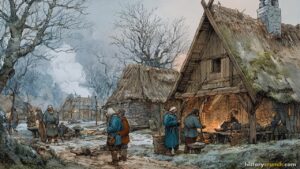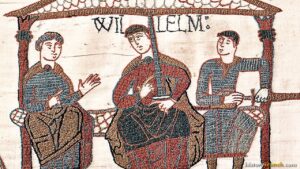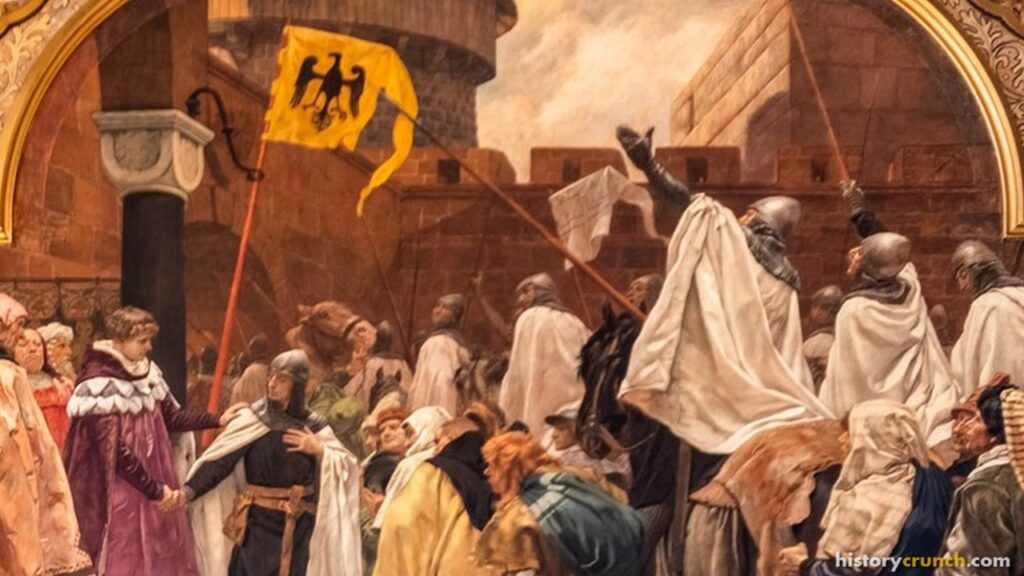
The Holy Roman Empire in the Middle Ages was one of the most important political entities in medieval Europe. It was a large and complex empire that dominated much of central Europe throughout the medieval period and played a major role in the political and religious history of Europe. The Holy Roman Empire is closely connected to many of the most significant events of the Middle Ages, including the Crusades and the ongoing conflict between the Pope and the secular rulers of Europe. In general, the Holy Roman Empire in the Middle Ages was defined by its close relationship with the Catholic Church, its complex political structure and its central position in the history of medieval Europe.
What Were the Middle Ages?
The Middle Ages, also known as the Medieval Period, refers to the period of European history that stretched from the 5th century to the 15th century. More specifically, historians generally place the beginning of the Middle Ages at 476 CE, with the fall of the Western Roman Empire, and its end at approximately 1500 CE, with the start of the Renaissance. Due to its length, the Middle Ages is divided into three smaller periods, including: the Early Middle Ages, the High Middle Ages and the Late Middle Ages. The Holy Roman Empire was a central part of the history of the Middle Ages throughout all three of these periods and its emperors were among the most powerful rulers in medieval Europe.
What Was the Holy Roman Empire?
The Holy Roman Empire was a large empire centered in central Europe that existed from 800 CE to 1806 CE, though its most important period was during the Middle Ages. It covered a vast territory that included much of what is now Germany, Austria, Switzerland, the Czech Republic and parts of Italy and France. The Holy Roman Empire was not a single unified state in the way that modern countries are. Instead, it was made up of hundreds of smaller kingdoms, duchies, principalitiesSmall territories ruled by a prince, one of the many semi-independent units that made up the empire. and city-states, each with its own rulers, that were loosely united under the authority of the Holy Roman Emperor. As such, the Holy Roman Empire was a highly complex and often difficult to govern political entity throughout much of its history.
The name Holy Roman Empire reflected the close relationship between the empire and the Catholic Church. The term ‘holy’ referred to the religious mission of the empire as a defender of the Christian faith, while ‘Roman’ was a reference to the ancient Roman Empire, which the Holy Roman Emperors sought to position themselves as the successors of. As such, the identity of the Holy Roman Empire was deeply connected to both the religious authority of the Catholic Church and the political legacy of ancient Rome.
 FactsthatCrunch
Key takeaways
The Holy Roman Empire covered a wide band of central Europe, stretching from parts of modern France in the west to the Czech Republic in the east, and from Germany south into parts of Italy.
It was never a single unified country but was instead made up of hundreds of smaller territories, each with its own ruler, laws, and army.
The core of the empire grew from the eastern portion of Charlemagne's divided realm and remained centered in the German-speaking lands throughout the medieval period.
Origins of the Holy Roman Empire
The origins of the Holy Roman Empire can be traced back to the reign of Charlemagne, also known as Charles the Great, who was the King of the Franks and one of the most powerful rulers of the Early Middle Ages. Charlemagne united much of western Europe under his rule, with his kingdom stretching from modern-day France and Germany into parts of Italy and Spain. On Christmas Day in 800 CE, Pope Leo III crowned Charlemagne as Emperor of the Romans in a ceremony in Rome. This event is considered to be the foundation of what would eventually become the Holy Roman Empire, as it established the idea of a Christian emperor ruling over a united western Europe under the blessing of the Pope.
Following the death of Charlemagne in 814 CE, his empire was divided among his grandsons under the Treaty of Verdun in 843 CE. The eastern portion of the empire, which covered much of what is now Germany, eventually developed into the core territory of the Holy Roman Empire. The empire was formally established in 962 CE when Pope John XII crowned the German king Otto I as Holy Roman Emperor. This event is generally considered by historians to mark the true beginning of the Holy Roman Empire as a distinct political institution. As such, the Holy Roman Empire grew directly out of the political and religious legacy of Charlemagne and the Frankish kingdom of the Early Middle Ages.
FactsthatCrunchThe Holy Roman Empire did not officially begin with Charlemagne. Historians usually date it to 962 CE, when Pope John XII crowned the German king Otto I as emperor.
Charlemagne's crowning in 800 CE set up the idea of a Christian emperor in the west. But his empire was split in 843 CE, and its eastern part, mostly modern Germany, became the core of the empire Otto I ruled.
Structure of the Holy Roman Empire
One of the most distinctive features of the Holy Roman Empire was its unusual political structure. Unlike most medieval kingdoms, which were governed by a single hereditary monarch, the Holy Roman Emperor was elected rather than inheriting the throne automatically. The emperor was chosen by a group of powerful rulers known as the Prince-ElectorsA select group of powerful kings, dukes, and archbishops who voted to choose the Holy Roman Emperor., who were a select group of the most important kings, dukes and archbishops within the empire. This system of election meant that the position of Holy Roman Emperor was always subject to negotiation and competition among the powerful rulers of the empire.
As stated above, the Holy Roman Empire was made up of hundreds of smaller political units, each governed by its own ruler. These rulers, who included kings, dukes, counts, bishops and the leaders of free cities, all had their own armies, laws and courts. The Holy Roman Emperor was expected to lead and coordinate these many different rulers but in practice had limited direct authority over them. This made the Holy Roman Empire very different from a centralized monarchy such as France or England, where the king held much more direct power over his subjects. As such, the political history of the Holy Roman Empire was often defined by conflict between the emperor and the powerful rulers within the empire who sought to maintain and extend their own independence.
FactsthatCrunchHow was the Holy Roman Emperor chosen, and who held the power to decide?
The Holy Roman Empire and the Catholic Church
One of the most important aspects of the Holy Roman Empire in the Middle Ages was its relationship with the Catholic Church. The empire defined itself as the defender of the Christian faith in Europe, and the emperor’s authority was closely tied to the blessing and recognition of the Pope. For instance, the Pope played a central role in the coronation of the Holy Roman Emperor, and the support of the papacyThe office and authority of the Pope as head of the Catholic Church. was considered essential to the legitimacy of the emperor’s rule.
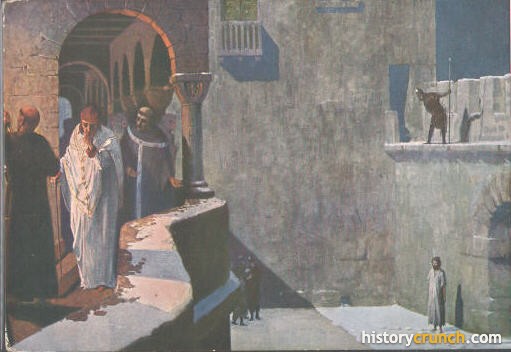
With that said, the relationship between the Holy Roman Emperor and the Pope was not always a cooperative one. In fact, one of the most significant conflicts of the Middle Ages was the ongoing power struggle between the papacy and the Holy Roman Emperors over who had the right to appoint bishops and other Church officials within the empire. This conflict, known as the Investiture ControversyAn 11th–12th century power struggle over who had the right to appoint bishops and Church officials inside the empire., took place primarily in the 11th and 12th centuries. The most dramatic moment of the Investiture Controversy came in 1076 CE when Pope Gregory VII excommunicatedFormally expelled from the Catholic Church, stripping a ruler of religious legitimacy over his subjects. the Holy Roman Emperor Henry IV, meaning he was formally expelled from the Catholic Church. This was an enormous blow to Henry IV’s authority, as it meant that his subjects were no longer bound by their oaths of loyalty to him. Henry IV was eventually forced to travel to the town of Canossa in Italy in January of 1077 CE and stand barefoot in the snow for three days to beg the Pope for forgiveness. This event, known as the Walk to Canossa, is one of the most dramatic episodes in the history of the Middle Ages and illustrates just how powerful the papacy was at the height of its authority during the medieval period.
FactsthatCrunchIn the name of Almighty God, Father, Son and Holy Ghost, I withdraw … from Henry … the rule over the whole kingdom of the Germans and over Italy. And I absolve all Christians from the bonds of the oath which they have made or shall make to him; and I forbid any one to serve him as king.
Pope Gregory VII · Lenten Synod, Rome · February 22nd, 1076
In January 1076 CE, Henry IV gathered his bishops at Worms and demanded that Gregory VII step down as Pope. Gregory answered with this decree at a church council in Rome, cutting Henry off from the Catholic Church and freeing his subjects from their oaths of loyalty. The blow to Henry's authority was so great that in January of 1077 CE he traveled to Canossa in Italy and stood barefoot in the snow for three days to beg the Pope for forgiveness.
The Holy Roman Empire and the Crusades
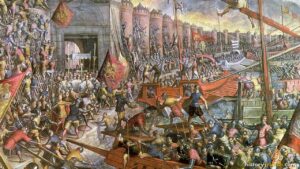
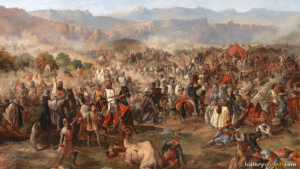
The Holy Roman Empire played an important role in the Crusades, which were one of the most significant events of the Middle Ages. The Crusades were a series of religious wars carried out by Christian crusaders from Europe beginning in 1095 CE, in which European knights and noblemen traveled to the Middle East in an attempt to capture the Holy Land from Muslim control. Holy Roman Emperors participated in several of the major Crusades throughout the history of the movement.
For instance, Frederick Barbarossa, who was one of the most powerful Holy Roman Emperors of the Middle Ages, participated in the Third Crusade, which took place from 1189 to 1192 CE. Barbarossa led a large army of approximately 15,000 crusaders on a land route across Europe toward the Holy Land. However, Barbarossa died on June 10th, 1190 CE when he drowned while crossing a river on horseback, which caused many of his crusaders to abandon the crusade and return home. As such, the Holy Roman Empire was an important participant in the Crusades throughout the medieval period, even if its contributions were not always decisive.
FactsthatCrunchHow did Frederick Barbarossa's Third Crusade come to a sudden end in 1190?
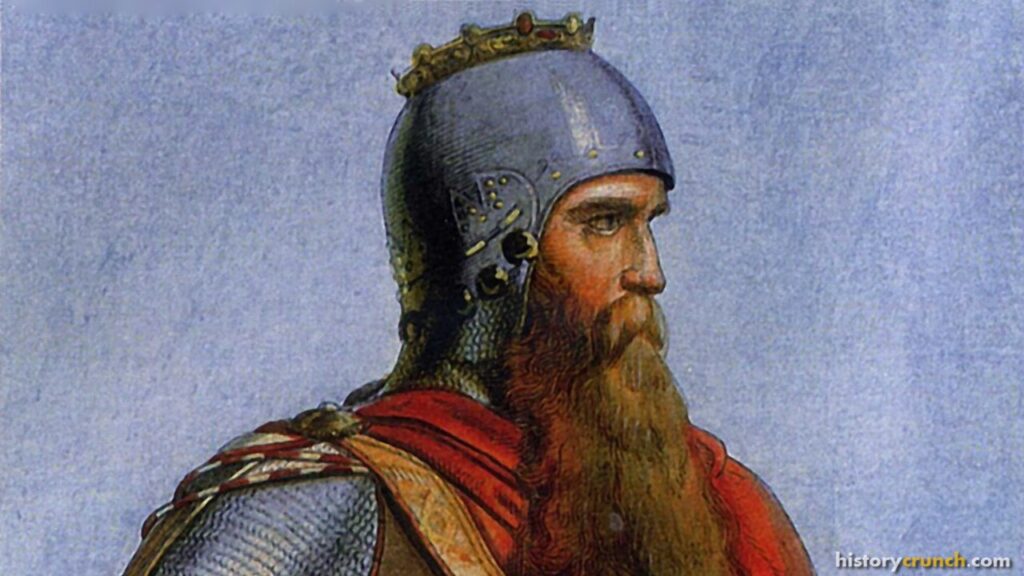
Important Rulers of the Holy Roman Empire
Throughout the Middle Ages, the Holy Roman Empire was ruled by a series of important emperors who shaped the history of both the empire and Europe more broadly. As stated above, Charlemagne is considered the founding figure of the empire, and his reign in the late 8th and early 9th centuries is seen as one of the high points of the Early Middle Ages. Otto I, who was crowned Holy Roman Emperor in 962 CE, is considered the true founder of the Holy Roman Empire as a formal institution and was one of the most powerful rulers of the 10th century.
Frederick Barbarossa, who ruled from 1155 to 1190 CE, was one of the most celebrated Holy Roman Emperors of the High Middle Ages. He was known for his military skill, his strong leadership and his efforts to extend the authority of the emperor within the empire. Frederick II, who ruled from 1220 to 1250 CE, was another remarkable emperor who was known for his wide-ranging intellectual interests and his unusual approach to the Crusades. For instance, Frederick II negotiated a treaty with the Muslim sultan of Egypt in 1229 CE that returned Jerusalem to Christian control without fighting, which was a remarkable diplomatic achievement but was criticized by the Pope and many other Christian leaders who felt that the emperor should have fought for the Holy Land rather than negotiating with Muslim rulers.
FactsthatCrunchDecline of the Holy Roman Empire in the Middle Ages
By the Late Middle Ages, the Holy Roman Empire had become increasingly weak and fragmentedBroken into many separate, weakly connected pieces with little central control.. The ongoing conflicts between the emperor and the powerful rulers within the empire had gradually eroded imperial authority, and the empire had lost much of the political cohesionThe quality of being united and working together as one body, which the empire gradually lost in its later centuries. it had possessed during the reigns of rulers such as Charlemagne and Frederick Barbarossa. As well, the Black Death, which devastated Europe in the 14th century, caused widespread social and economic disruption that further weakened the institutions of the empire.
Furthermore, the rise of powerful independent city-states and the growing strength of the nobility within the empire made it increasingly difficult for the emperor to exercise meaningful authority over the many different rulers and territories that made up the Holy Roman Empire. By the end of the Middle Ages, the Holy Roman Empire remained an important symbolic institution but had lost much of the political power and authority it had possessed during the height of the medieval period. As such, the decline of the Holy Roman Empire during the Late Middle Ages was part of the broader transformation of European political life that accompanied the end of the medieval period and the beginning of the Renaissance.
FactsthatCrunch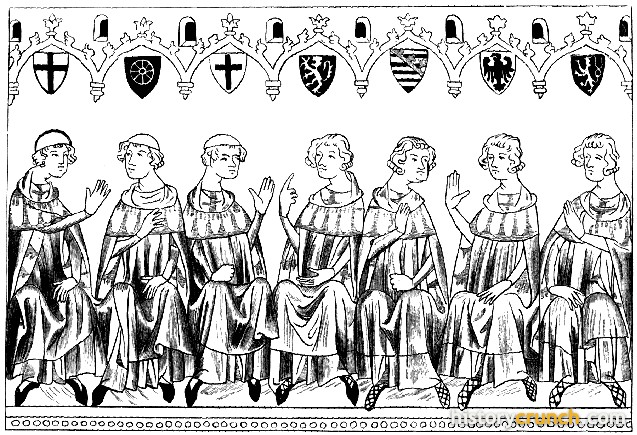
Significance of the Holy Roman Empire
In conclusion, the Holy Roman Empire in the Middle Ages was one of the most important and influential political entities of the medieval period. Its close relationship with the Catholic Church, its central role in the Crusades and its complex political structure all made it a defining feature of medieval European history. As such, understanding the Holy Roman Empire in the Middle Ages is important for gaining a complete picture of the political, religious and cultural life of Europe during the Middle Ages and for understanding the major events and developments that shaped the continent during this significant period in history.
FactsthatCrunchGregory VII held that no emperor or king had any right to appoint bishops or other Church officials, a position he set out in his 1075 document the Dictatus papae, which listed 27 claims of papal authority and stated plainly that the pope alone could depose an emperor. When Henry IV called a synod at Worms on January 24th, 1076 CE and demanded that Gregory resign, Gregory answered by excommunicating Henry at the Lenten synod of 1076 in Rome and releasing Henry's subjects from their oath of loyalty to him. Gregory believed that spiritual authority stood above imperial authority, and he acted on that belief even after Henry's supporters formally declared the pope deposed.
Key Vocabulary
Principalities
Prince-Electors
Papacy
Investiture Controversy
Excommunicated
Cohesion
Fragmented
Frequently Asked Questions
When did the Holy Roman Empire begin?
The Holy Roman Empire is generally said to have begun in 962 CE, when Pope John XII crowned the German king Otto I as Holy Roman Emperor. Its roots reach further back to Charlemagne, who was crowned Emperor of the Romans on Christmas Day in 800 CE. Historians often treat Otto I as the founder of the empire as a formal institution.
Why was the Holy Roman Emperor elected instead of inheriting the throne?
The Holy Roman Emperor was chosen by a group of powerful rulers called the Prince-Electors. These electors included the most important kings, dukes and archbishops within the empire. This made the empire very different from France or England, where the throne usually passed by birth. The election system meant the title was always open to negotiation and rivalry.
What was the Walk to Canossa?
The Walk to Canossa happened in January of 1077 CE, when Emperor Henry IV begged Pope Gregory VII for forgiveness. Henry stood barefoot in the snow for three days outside a castle in Italy. The Pope had excommunicated him in 1076 CE, which freed his subjects from their oaths of loyalty. The event shows how much power the papacy held during the Middle Ages.
How was the Holy Roman Empire involved in the Crusades?
Several Holy Roman Emperors took part in the Crusades, which began in 1095 CE. Frederick Barbarossa joined the Third Crusade and led about 15,000 crusaders toward the Holy Land. He drowned crossing a river on June 10th, 1190 CE, and many of his troops turned back. Later, Frederick II regained Jerusalem by treaty in 1229 CE without fighting.
Why did the Holy Roman Empire decline in the Late Middle Ages?
The empire weakened because the emperor kept losing authority to powerful local rulers. These rulers each had their own armies, laws and courts, which left the emperor with little direct control. The Black Death in the 14th century added social and economic damage across Europe. Rising city-states and a stronger nobility also made the empire harder to govern.
What territory did the Holy Roman Empire cover?
The Holy Roman Empire stretched across much of central Europe. It included land that is now Germany, Austria, Switzerland, the Czech Republic and parts of Italy and France. The empire was not a single unified state like a modern country. Instead it held hundreds of smaller kingdoms, duchies, principalities and city-states, each with its own ruler.
Cite This Article
To cite this article as a source, use one of the formats below.
MLA: Millar, B. “Holy Roman Empire in the Middle Ages: A Detailed Summary.” HistoryCrunch, 15 October 2026, https://historycrunch.com/holy-roman-empire-in-the-middle-ages/.
APA: Millar, B. (2026). Holy Roman Empire in the Middle Ages: A Detailed Summary. HistoryCrunch. https://historycrunch.com/holy-roman-empire-in-the-middle-ages/
Chicago: Millar, B. “Holy Roman Empire in the Middle Ages: A Detailed Summary.” HistoryCrunch. October 15, 2026. https://historycrunch.com/holy-roman-empire-in-the-middle-ages/
Sources
- Fordham Medieval Sourcebook
- Chris Wickham, Medieval Europe.
- The Met (Heilbrunn Timeline): medieval art
- Jacques Le Goff, Medieval Civilization 400-1500.