Women played an important role in the society and economy of the Middle Ages, even though they faced significant limitations in terms of rights, freedom and social status. The lives of women during the Middle Ages varied greatly depending on their social class, with peasant women, noblewomen and women in religious life all experiencing the medieval period in very different ways. In general, women in the Middle Ages were expected to fulfill roles centered on the home and family, but many also contributed to the economic, religious and cultural life of their communities.
 FactsthatCrunch
Medieval women lived very differently depending on whether they were peasants, noblewomen, or members of religious communities.
What Were the Middle Ages?
The Middle Ages, also known as the Medieval Period, refers to the period of European history that stretched from the 5th century to the 15th century. More specifically, historians generally place the beginning of the Middle Ages at 476 CE, with the fall of the Western Roman Empire, and its end at approximately 1500 CE, with the start of the Renaissance. Throughout this period, European society was shaped by two major institutions: feudalism and the Catholic Church. Both of these institutions had a significant influence on the lives of women during the Middle Ages and shaped the roles, expectations and opportunities available to them.
Rights and Status of Women in the Middle Ages
In general, women in the Middle Ages had far fewer rights and freedoms than men. Medieval European society was heavily patriarchalA society where power and authority are held mainly by men., meaning that power and authority were held primarily by men. For instance, women were generally not allowed to own property, hold political office or participate in government. In most cases, a woman’s legal identity was tied to the men in her life, whether that was her father before marriage or her husband afterward. As such, women had very little independence in terms of making decisions about their own lives.
The Catholic Church also played an important role in shaping the status of women during the Middle Ages. The Church taught that women were subordinatePlaced in a lower or less powerful position than someone else. to men and should be obedient to their husbands and fathers. At the same time, the Church held up the Virgin Mary as a model of feminine virtue and piety, which gave women a form of religious significance even as it limited their social and political power. With that said, the rights and status of women varied somewhat depending on their social class and the time period within the Middle Ages. For instance, some noblewomen held significant influence over their households and estates, particularly when their husbands were away at war or on crusade.
FactsthatCrunchPeasant Women in the Middle Ages
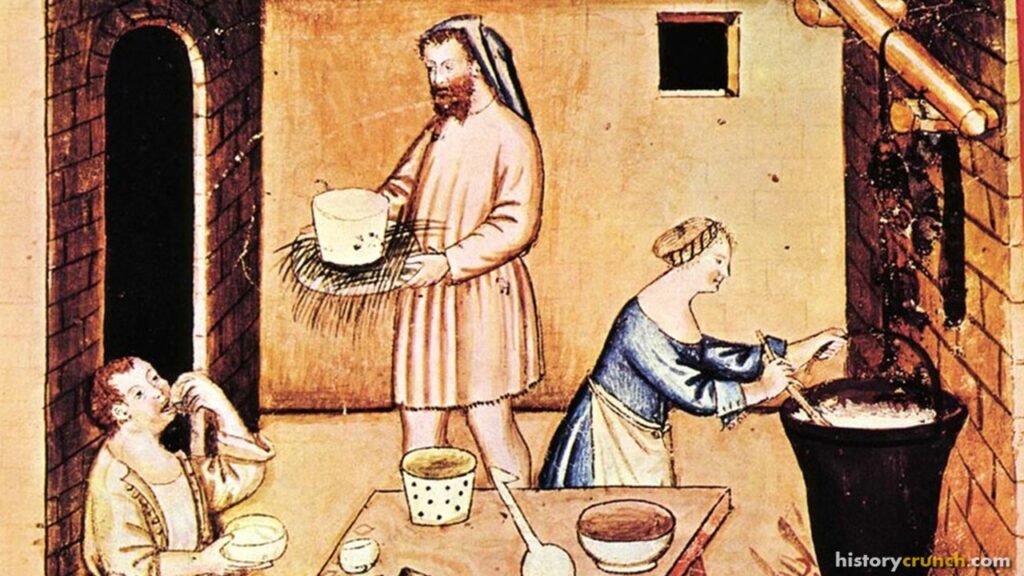
The majority of women in the Middle Ages were peasants who lived and worked on the land under the feudal systemA medieval social order in which people worked land owned by lords in exchange for protection. and the Manor SystemThe economic arrangement in which peasants lived and worked on a lord’s estate called a manor.. Peasant women led very difficult lives and were expected to contribute to the economic survival of their families alongside men. For instance, peasant women worked in the fields during planting and harvest seasons, helped care for livestock, and produced food and goods for their families and the lord of the manor. As well, peasant women were responsible for the running of the household, including cooking, cleaning, making clothing and caring for children.
In addition to their work at home and on the land, some peasant women also participated in local trade and markets. For example, women were known to sell goods such as eggs, butter and cheese at local markets, which gave them a small degree of economic independence. Some women also worked as brewers, bakers and spinners, producing goods that were sold locally. With that said, peasant women had very little social or political power and were subject to the authority of their husbands, local lords and the Catholic Church. As such, life for peasant women in the Middle Ages was defined by hard work, limited freedom and a constant struggle for survival.
FactsthatCrunchWhy could some peasant women earn a small amount of money of their own in the Middle Ages?
Noblewomen in the Middle Ages
The lives of noblewomen in the Middle Ages were very different from those of peasant women, though they were still subject to significant restrictions in terms of rights and independence. Noblewomen were born into or married into wealthy and powerful families and lived in castles or manor houses rather than the small homes of peasant serfs. They were generally better educated than peasant women and were expected to be skilled in areas such as music, needlework and the management of a large household.
One of the most important roles of a noblewoman in the Middle Ages was that of wife and mother. Noble marriages were typically arranged by families for political or economic reasons, rather than for love, and women had little say in the choice of their husband. Once married, a noblewoman was expected to manage the affairs of the household, oversee the servants and care for the children. Furthermore, when a nobleman was away at war or on crusade, his wife was often left in charge of the estate and was responsible for managing its lands, finances and people. In this way, some noblewomen exercised considerable authority and responsibility, even if they lacked formal political power.
Some noblewomen also played a role in the political and diplomatic life of the Middle Ages. For instance, queens and high-ranking noblewomen could exercise influence over their husbands and sons, and in some cases acted as regentsPeople who governed a kingdom on behalf of a king who was young or absent., governing a kingdom in the name of a young or absent king. As such, while noblewomen in the Middle Ages were still subject to many of the same restrictions as other women, their social position gave them greater opportunities to exercise influence and authority than was available to most women at the time.
FactsthatCrunchHow did daily life and authority look different for peasant women and noblewomen in the Middle Ages?
Women and the Catholic Church
The Catholic Church was one of the most important institutions in the lives of women during the Middle Ages. As stated above, the Church taught that women were subordinate to men and placed great emphasis on virtues such as obedience, piety and humility. However, the Church also offered women one of the few paths to a life outside of marriage and family through religious life. Women who entered conventsCommunities where women called nuns lived together and dedicated their lives to religious practice. as nuns were able to pursue education, engage in intellectual and creative work and exercise a degree of independence that was not available to most women in medieval society.
Convents were communities of women who dedicated their lives to religious practice and were an important part of medieval society. For instance, nuns provided care for the sick, educated children and produced important works of art, music and literature. Some abbessesWomen who led and held authority over a convent of nuns., who were the leaders of convents, held significant authority and were respected figures in their communities. As well, some women in religious life became important spiritual figures whose writings and teachings had a lasting impact on the history of Christianity. For example, Hildegard of Bingen, a 12th century German abbess, was a remarkable figure who wrote extensively on topics including theology, medicine and music and is remembered as one of the most significant women of the Middle Ages.
FactsthatCrunch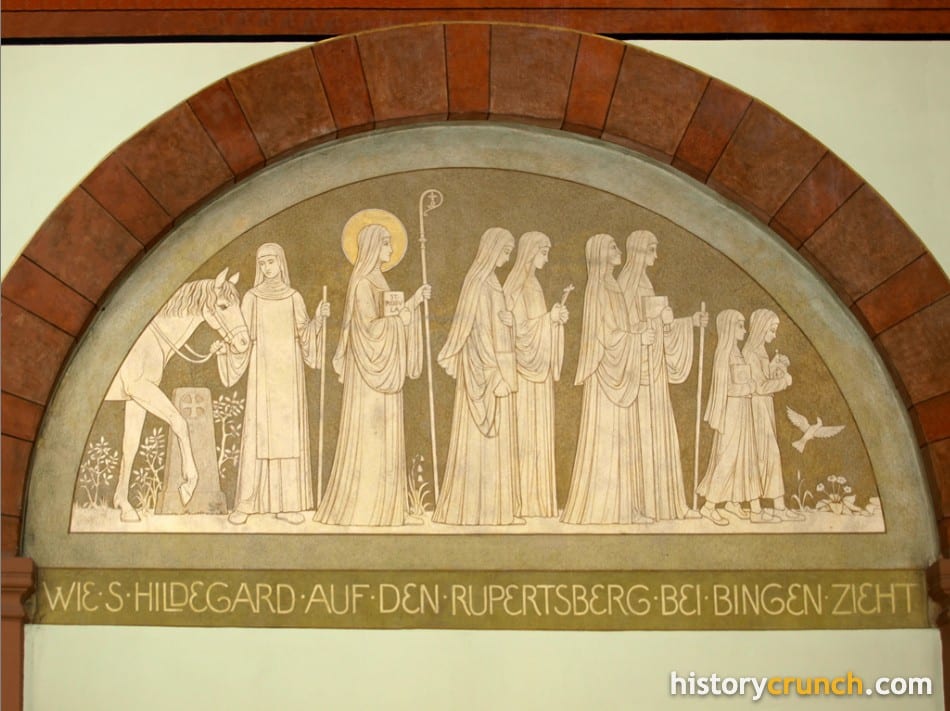
Significance of Women in the Middle Ages
In conclusion, the lives of women in the Middle Ages were shaped by the major institutions and social structures of the time, including feudalism, the Manor System and the Catholic Church. While women faced significant limitations in terms of rights, freedom and social status, they played a vital and often overlooked role in the economy, religious life and cultural development of medieval European society. As such, understanding the lives of women in the Middle Ages is important for gaining a complete picture of what life was like during this significant period in the history of Europe.
FactsthatCrunchWomen in the Middle Ages contributed far more to economic, religious, and cultural life than their limited legal rights might suggest, making their role one that historians have worked to recover and recognize.
Explore Middle Ages · 476 – 1500 CE
Keep exploring Middle Ages with these History Crunch resources.
Key Vocabulary
Patriarchal
Subordinate
Feudal system
Manor System
Convents
Abbesses
Regents
Frequently Asked Questions
What rights did women have in the Middle Ages?
Women in the Middle Ages had far fewer rights than men and lived in a patriarchal society. They usually could not own property, hold political office or take part in government. A woman’s legal identity was tied to her father before marriage and her husband afterward, so she had little independence.
What was life like for peasant women in the Middle Ages?
Peasant women led hard lives and worked to help their families survive under the feudal system. They labored in the fields, cared for livestock, made food and clothing, and raised children. Some also sold goods like eggs, butter and cheese at local markets, which gave them a little economic independence.
How were noblewomen’s lives different from peasant women’s?
Noblewomen lived in castles or manor houses and were usually better educated than peasant women. They were trained in skills such as music, needlework and the running of a large household. When their husbands were away at war or on crusade, many noblewomen managed the entire estate and its finances.
How did the Catholic Church affect women in the Middle Ages?
The Church taught that women were subordinate to men and should be obedient, pious and humble. Yet it also offered women a rare path outside of marriage through life in a convent. Nuns could pursue education, do creative work and gain a degree of independence that most women never had.
Who was Hildegard of Bingen?
Hildegard of Bingen was a German abbess who lived in the 12th century and became one of the most famous women of the Middle Ages. She wrote widely on theology, medicine and music. Her teachings and writings had a lasting effect on the history of Christianity.
Cite This Article
To cite this article as a source, use one of the formats below.
MLA: Millar, B. “Women in the Middle Ages: a Detailed Summary.” HistoryCrunch, 14 October 2026, https://historycrunch.com/women-in-the-middle-ages/.
APA: Millar, B. (2026). Women in the Middle Ages: a Detailed Summary. HistoryCrunch. https://historycrunch.com/women-in-the-middle-ages/
Chicago: Millar, B. “Women in the Middle Ages: a Detailed Summary.” HistoryCrunch. October 14, 2026. https://historycrunch.com/women-in-the-middle-ages/
Sources
- The Met (Heilbrunn Timeline): medieval art
- Fordham Medieval Sourcebook