The Spanish Inquisition was a powerful court system established in 1478 by the Catholic monarchs of Spain, King Ferdinand II and Queen Isabella I, with the authority of Pope Sixtus IV. It was created to identify and punish people living in Spain who were considered to be hereticsPeople who held beliefs that went against the official teachings of the Catholic Church., meaning those who did not follow the teachings of the Catholic Church. The Spanish Inquisition became one of the most feared and powerful institutions of the late Middle Ages and is remembered today for its brutal methods, including the widespread use of torture and public punishment.
What Were the Middle Ages?
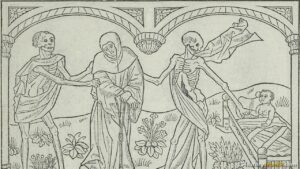
The Middle Ages, also known as the Medieval Period, was a period of European history that lasted from approximately 500 CE to 1500 CE. It began with the fall of the Western Roman Empire and ended with the emergence of the Renaissance. During this time, the Catholic Church held enormous power over the lives of people across Europe, influencing everything from the laws of kingdoms to the daily routines of ordinary people. Kings and nobles were expected to uphold the teachings of the Church, and people who held beliefs that went against Church doctrine, known as heretics, were viewed as a serious threat to the social and religious order of society. It was within this world that the Spanish Inquisition developed as a powerful tool of religious and political control.
Causes of the Spanish Inquisition
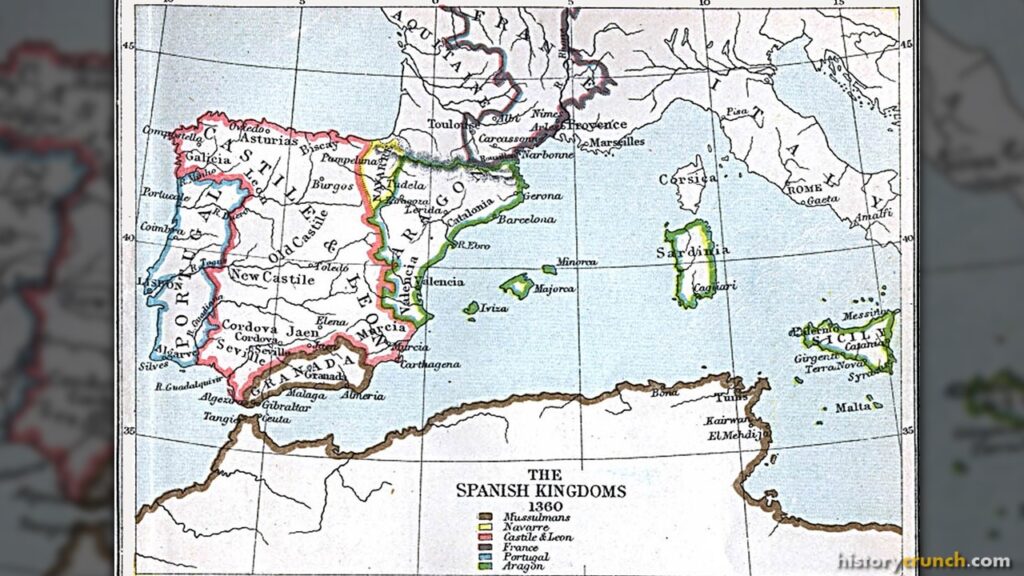
To understand the Spanish Inquisition, it is important to understand the history of Spain in the centuries before it was established. For much of the Middle Ages, the Iberian Peninsula was home to Christian, Jewish, and Muslim populations living alongside one another. While this coexistence was not always peaceful, the three groups had managed to live together within the same region for centuries. However, tensions between these groups grew steadily over time, particularly as Christian kingdoms fought to reclaim territory from the Muslim rulers who had controlled much of the peninsula since the early 700s CE. This long military campaign by Christian kingdoms is known as the ReconquistaThe long military campaign by Christian kingdoms to reclaim territory from Muslim rulers on the Iberian Peninsula., and it shaped the religious and political atmosphere of Spain in important ways.
As the Reconquista progressed and Christian rulers gained more control over the peninsula, pressure on Jewish and Muslim communities increased significantly. In 1391, violent anti-Jewish riots broke out across Spain, during which thousands of Jewish people were killed and many more were forced to convert to Christianity in order to survive. Those who converted became known as conversosJewish or Muslim people who converted to Christianity, also called New Christians, often under threat of violence., or New Christians. While some conversos genuinely adopted their new faith, many others continued to practice Judaism in secret. These people were viewed with deep suspicion by Spanish authorities and by the Catholic Church, and it was largely the question of what to do about insincere conversos that led Ferdinand and Isabella to seek the creation of the Spanish Inquisition.
 FactsthatCrunch
 Why Ferdinand and Isabella Created the Spanish Inquisition
Establishment of the Spanish Inquisition
The Spanish Inquisition was officially established on November 1st, 1478, when Pope Sixtus IV issued a papal bullAn official written order or decree issued by the Pope carrying the full authority of the Catholic Church. authorizing King Ferdinand II and Queen Isabella I to appoint inquisitors in Spain. The stated purpose of the Inquisition was to identify and punish conversos who were secretly continuing to practice Judaism or Islam rather than following the Catholic faith they had publicly adopted. In practice, however, the Spanish Inquisition also served as a powerful tool for Ferdinand and Isabella to consolidate their political authority over the newly unified Spanish kingdom.
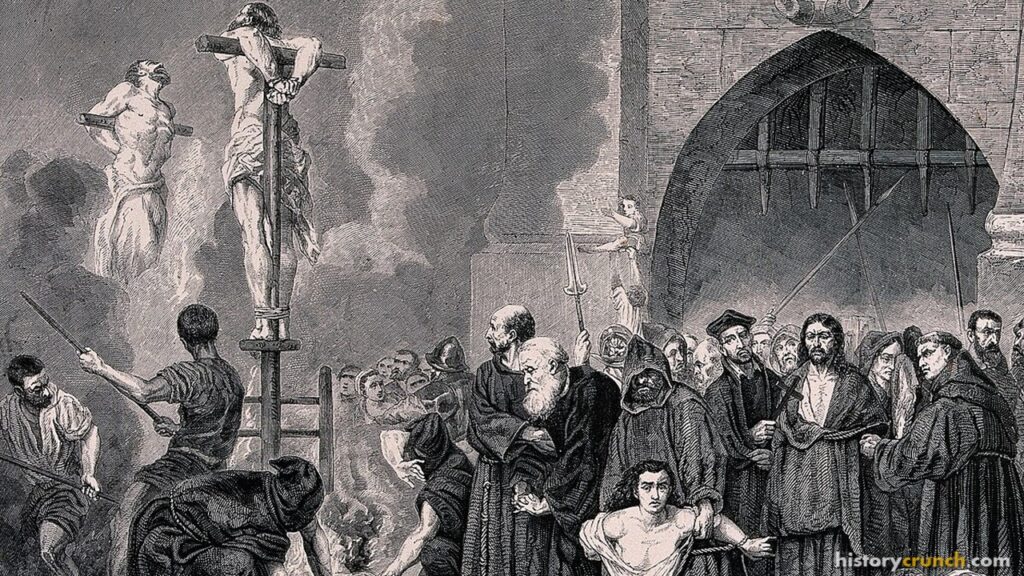
The early years of the Inquisition were marked by extreme brutality. In 1483, Tomás de Torquemada was appointed as the first Grand Inquisitor of Spain, a position that gave him enormous authority over the entire institution. Torquemada established courts across the country, developed formal procedures for investigating and trying accused heretics, and made torture a routine part of the process of extracting confessions. Under his leadership, thousands of people were put on trial, and an estimated 2,000 were burned at the stake during his time as Grand Inquisitor alone.
FactsthatCrunchWho was Tomás de Torquemada?
Tomás de Torquemada was appointed the first Grand Inquisitor of Spain in 1483, giving him authority over the entire Spanish Inquisition. He set up courts across the country, created formal procedures for trying accused heretics, and made torture a routine way to get confessions. An estimated 2,000 people were burned at the stake while he was Grand Inquisitor.
Methods of the Spanish Inquisition
The methods used by the Spanish Inquisition were designed to identify, try, and punish those accused of heresy, and they were carried out in ways that gave the accused very little chance of defending themselves. When inquisitors arrived in a town or region, they would typically offer a period of grace during which people could come forward and confess their own involvement in heresy in exchange for lighter punishment. These confessions were then used to identify other suspected heretics, who would be brought before a tribunal for trial.
The trials themselves were deeply unfair by any standard. The accused were often not told the specific charges against them, were given no meaningful opportunity to defend themselves, and frequently had confessions extracted from them through torture. Common methods of torture included the strappadoA torture method in which the accused was suspended by their arms tied behind their back., in which the accused was suspended by their arms tied behind their back, and waterboarding-style methods that simulated drowning. Once found guilty, a sentence was announced at a public ceremony known as an auto-da-fé, which translates to “act of faith.” These were large public events attended by crowds of people, at which the condemned were paraded, their sentences were read aloud, and punishments were carried out. The most severe punishment was being burned at the stake, which was carried out by the civil authorities rather than the Church itself.
FactsthatCrunchWhat stages did an accused person face under the Spanish Inquisition, from the opening grace period to the final public sentence?
Tap a point to read its detail.
Expulsion of the Jewish People
One of the most significant events connected to the Spanish Inquisition was the expulsion of the Jewish population from Spain in 1492. Torquemada persuaded Ferdinand and Isabella that as long as a Jewish population remained in Spain, conversos would always be tempted to return to their original faith. As a result, on March 31st, 1492, Ferdinand and Isabella issued the Alhambra DecreeThe 1492 royal order requiring all Jewish people in Spain who refused to convert to Christianity to leave permanently., which ordered all Jewish people who refused to convert to Christianity to leave Spain permanently. Historians estimate that approximately 40,000 to 100,000 Jewish people were expelled as a result of the decree, with most fleeing to Portugal, North Africa, and the Ottoman Empire. Those who chose to remain and convert faced continued suspicion and monitoring by the Inquisition. The expulsion of the Jews had a significant impact on Spain, as Jewish communities had played an important role in Spanish trade, finance, and professional life for centuries.
How many Jewish people were expelled from Spain under the Alhambra Decree of 1492?
Significance of the Spanish Inquisition
The Spanish Inquisition lasted for over 350 years, officially coming to an end in 1834 when it was abolished by the Spanish queen regent María Cristina. During that time, it had a profound impact on Spanish society, politics, and culture. It strengthened the power of the Spanish monarchy, enforced religious uniformity across the country, and spread into Spanish territories in the Americas as part of the broader colonial enterprise. At the same time, it drove out or silenced many of Spain’s most talented scholars, merchants, and professionals, and historians have argued that its long-term effects contributed to Spain’s economic and intellectual decline in later centuries.
Today the Spanish Inquisition is remembered as one of the most troubling examples of the abuse of religious and political power in the history of Europe. Its methods of torture, forced confession, and public punishment reflected the dangers of a system in which those in power faced no meaningful limits on their authority. For students of the Middle Ages and early modern history, the Spanish Inquisition is an important case study in the relationship between religion, politics, and the treatment of minority communities throughout history.
FactsthatCrunchThe Spanish Inquisition shaped Spain for over 350 years by giving the monarchy tools to enforce religious and political uniformity at a lasting cost to the country's talent and wealth.
It strengthened the power of Ferdinand and Isabella over a newly unified Spain, letting the crown use religious courts to silence political opponents and consolidate control.
The expulsion of Jewish communities under the Alhambra Decree of 1492 removed people who had long supported Spanish trade, finance, and professional life, weakening the economy for generations.
The Inquisition spread into Spanish territories in the Americas as part of the overall colonial enterprise, extending its reach far beyond the Iberian Peninsula and shaping colonial religious policy.
Historians argue that by driving out or silencing skilled scholars and merchants over its long history, the Inquisition contributed to Spain's intellectual and economic decline in later centuries. It ran for more than 350 years before queen regent María Cristina abolished it in 1834.
Explore Middle Ages · 476 – 1500 CE
Keep exploring Middle Ages with these History Crunch resources.
Key Vocabulary
Heretics
Reconquista
Conversos
Papal bull
Strappado
Alhambra Decree
Frequently Asked Questions
When was the Spanish Inquisition established and who created it?
The Spanish Inquisition was officially established on November 1st, 1478, when Pope Sixtus IV issued a papal bull. The bull gave King Ferdinand II and Queen Isabella I the power to appoint inquisitors in Spain. Its stated goal was to find and punish people who did not truly follow the Catholic faith.
What was a converso?
A converso was a Jewish or Muslim person who converted to Christianity, often called a New Christian. Many conversos changed faith to survive violent riots, such as those against Jewish people in 1391. Some truly accepted their new religion, but others kept practicing their old faith in secret. Spanish authorities viewed these secret believers with deep suspicion.
Who was Tomás de Torquemada?
Tomás de Torquemada was appointed the first Grand Inquisitor of Spain in 1483. He set up courts across the country and made torture a routine part of trials. An estimated 2,000 people were burned at the stake during his time in charge. He also convinced the monarchs to expel the Jewish population.
What was an auto-da-fé?
An auto-da-fé was a public ceremony where the sentences of the condemned were read aloud. The phrase means “act of faith.” These were large events attended by crowds, during which the guilty were paraded and punished. The most severe punishment was being burned at the stake, carried out by civil authorities rather than the Church.
What was the Alhambra Decree?
The Alhambra Decree was issued by Ferdinand and Isabella on March 31st, 1492. It ordered all Jewish people who refused to convert to Christianity to leave Spain forever. Historians estimate that 40,000 to 100,000 Jewish people were expelled, with most fleeing to Portugal, North Africa, and the Ottoman Empire. This loss hurt Spanish trade and finance for years.
When did the Spanish Inquisition end?
The Spanish Inquisition was abolished in 1834 by the Spanish queen regent María Cristina. It had lasted for more than 350 years and even spread to Spanish territories in the Americas. Many historians argue that it drove out talented scholars and merchants and helped cause Spain’s later decline.
Cite This Article
To cite this article as a source, use one of the formats below.
MLA: Millar, B. “Spanish Inquisition: A Detailed Summary.” HistoryCrunch, 17 October 2026, https://historycrunch.com/spanish-inquisition/.
APA: Millar, B. (2026). Spanish Inquisition: A Detailed Summary. HistoryCrunch. https://historycrunch.com/spanish-inquisition/
Chicago: Millar, B. “Spanish Inquisition: A Detailed Summary.” HistoryCrunch. October 17, 2026. https://historycrunch.com/spanish-inquisition/
Sources
- The Met (Heilbrunn Timeline): medieval art
- Barbara Rosenwein, A Short History of the Middle Ages.
- Fordham Medieval Sourcebook
- Chris Wickham, Medieval Europe.