No Man’s Land in World War I: A Detailed Summary

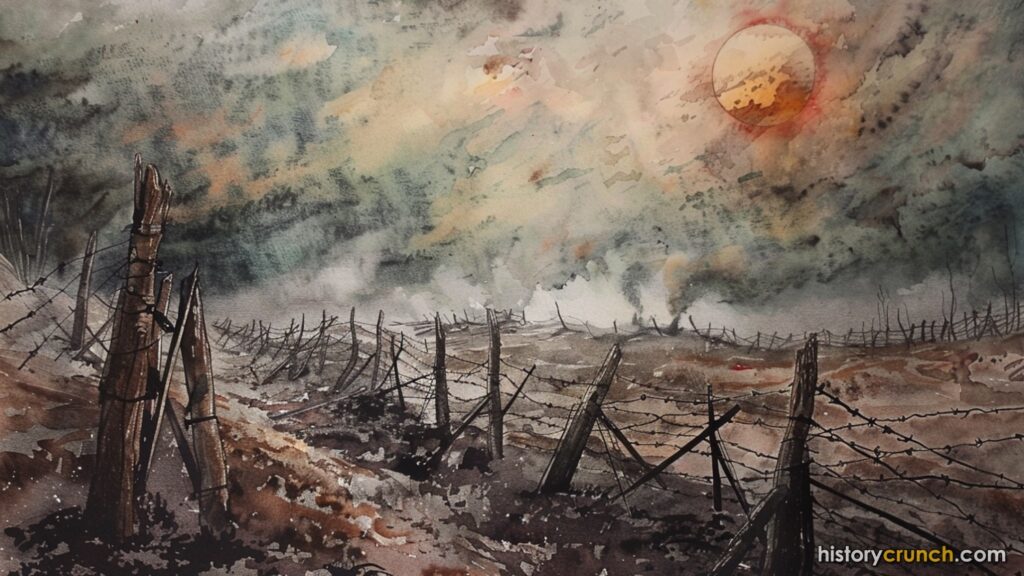
Barren, muddy No Man's Land full of shell craters between the opposing trench lines of World War I
No Man's Land in World War I was a desolate and dangerous stretch of land between the opposing trench systems.

Table of Contents

No Man's Land in World War I was a dangerous and terrible place for the soldiers of the First World War. In fact, the barren landscape of No Man's Land has become characteristic of World War I.

‘No Man’s Land’ in World War I was the stretch of land between the two opposing frontline trenchesLong ditches dug by each side where soldiers lived and fought closest to the enemy..  ‘No Man’s Land’ was named because it symbolized the likelihood of advancing soldiers dying in this region.  This is because it was likely the most dangerous place for the soldiers of World War I.  Furthermore, the destroyed landscape of ‘No Man’s Land’ has become characteristic of World War I as a whole.  For instance, the mud of World War I has become a key component of World War I and its historical significance.​

“The old Lie: Dulce et decorum est / Pro patria mori.”
Wilfred Owen, Craiglockhart War Hospital, Scotland, 1917
The Latin phrase means it is sweet and fitting to die for one's country, a saying from the Roman poet Horace that was often taught to schoolboys. Owen, a British officer who fought in the trenches of the Western Front and was treated for shell shock, called it a lie after describing a soldier dying in a poison gas attack.
Source: Imperial War Museums© factsthatcrunch.comFacts that Crunch

Why Was No Man’s Land So Dangerous?

Trench warfare was a strategy that heavily favored the defenders and helped lead to the massive death tolls caused during World War I. ‘No Man’s Land’ was a major contributor to the death tolls of World War I since it created conditions that made it difficult and dangerous for soldiers to cross.  For instance, ‘No Man’s Land’ was the stretch of land that World War I soldiers were tasked with crossing when they were ordered ‘over the topA military order telling soldiers to climb out of their trench and charge across open ground toward the enemy.’.  When soldiers were ordered ‘over the top’ they climbed out of their own frontline trench and crossed ‘No Man’s Land’ towards the enemy’s frontline trench. Along the way, the soldiers faced heavy opposition and numerous different types of dangers.  For instance, soldiers attempting to cross ‘No Man’s Land’ were met with barbed wire, mines, artillery fire, enemy machine gun fire and the mud of Northern France.
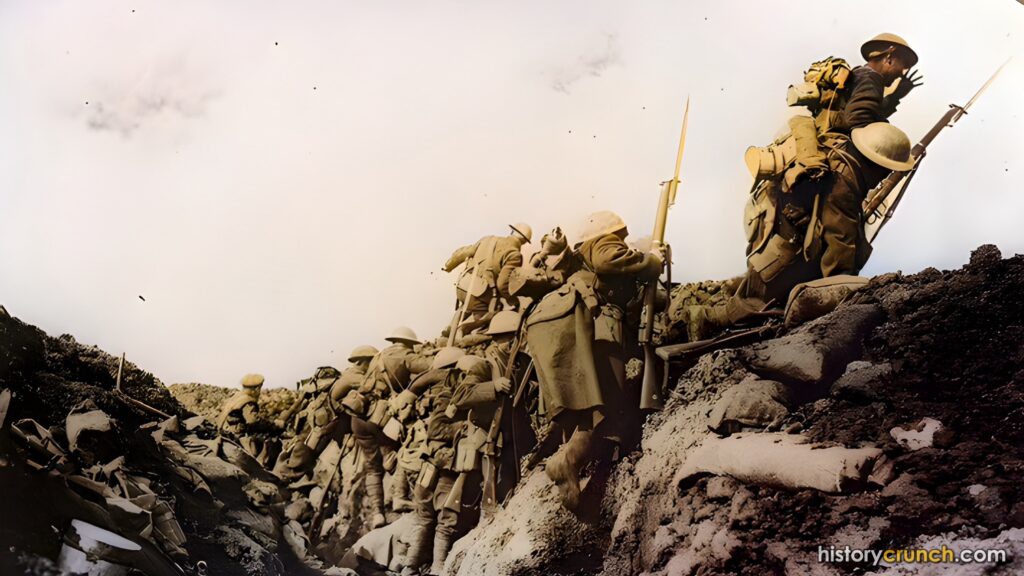
Colorized photo of Canadian soldiers charging through muddy trenches at the Battle of the Somme
Canadian soldiers charge at the Battle of the Somme. (Colorized by historycrunch.com)

The mud of ‘No Man’s Land’ made crossing the stretch of land almost impossible at times. Artillery bombardmentsHeavy, repeated attacks using large cannons that destroy land, buildings, and vegetation over a wide area. had torn up the land and destroyed all trees, grass and vegetation.  Rain turned the dead landscape into a thick layer of mud that was sometimes up to the knees of the soldiers and sometimes deep enough that soldiers could become stuck and drown.  Soldiers trying to cross ‘No Man’s Land’ struggled to avoid enemy fire, machine guns and other weapons while dealing with the deep mud.  The muddy conditions were not just present in ‘No Man’s Land’ and made life in the trenches difficult as well.  As such, ‘No Man’s Land’ was a key feature of soldier life in World War I and is especially related to life in the trenches.​

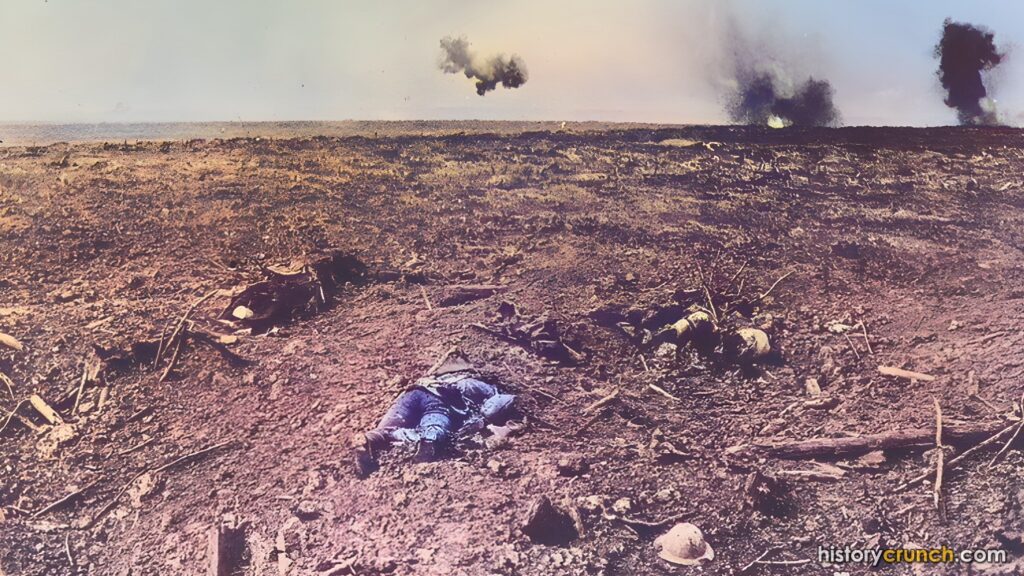
Barren, shell-cratered No Man's Land at the Battle of the Somme in 1918
No Man’s Land on the battlefield of the Battle of the Somme in 1916.
World War IMultiple ChoiceInteractive
Facts that CrunchFactsthatCrunch

Why did the deep mud of No Man's Land make attacking soldiers especially easy to kill?

Tap an option.
ExplanationArtillery bombardments tore up the land and rain turned it into thick mud that could reach soldiers' knees. This slowed movement, meaning soldiers spent more time in the open and were easier targets for machine gun and rifle fire.
Source: The National Archives, UK© factsthatcrunch.comMore World War I Facts →

What Did No Man’s Land in World War I Look Like?

As stated above, No Man’s Land in World War I was a dangerous and devastating place for soldiers to experience. For example, it was a barren and devastated landscape characterized by shell craters, barbed wire entanglementsTwisted wire with sharp points stretched across ground to slow down or trap enemy soldiers trying to advance., and the remnants of destroyed buildings and trees. The terrain was often muddy and waterlogged due to the constant shelling and trench warfareA style of fighting where both armies dig long ditches and defend them, making it very hard for either side to advance., making movement difficult and treacherous.

No Man’s Land was also characterized by other hazards such as unexploded munitionsShells or bombs fired during battle that landed but never went off, leaving hidden deadly hazards in the ground. and enemy traps, and it was subjected to constant sniper fire from both sides. Soldiers who ventured into No Man’s Land risked being caught in the crossfire or falling victim to hidden dangers.

The conditions in No Man’s Land were grim and contributed to the psychological tollThe lasting mental and emotional damage caused by experiencing extreme danger, fear, and suffering over a long period. of the war on soldiers who had to endure the constant threat of death and the harsh realities of trench warfare.
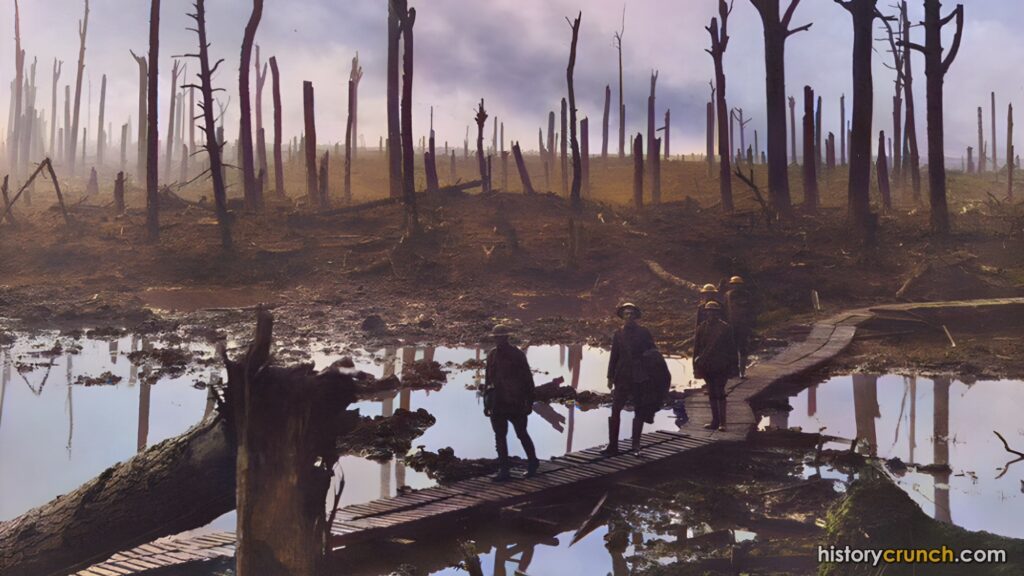
Australian soldiers advancing through mud during the Third Battle of Ypres, 1917
Australian soldiers during the Third Battle of Ypres in 1917. (Colorized by historycrunch.com)
World War ISpectrumInteractive
Facts that CrunchFactsthatCrunch

Which hazards of No Man's Land in World War I were soldiers facing all the time, and which struck only now and then?

Constant ThreatOccasional Danger
Machine Gun Fire Enemy machine guns covered the open ground between trenches at all times. Any soldier who climbed over the top immediately came under fire from gunners who held fixed positions and rarely stopped watching.
Sniper Fire Snipers on both sides watched No Man's Land continuously, targeting any soldier who appeared in the open. Even a brief exposure was enough to draw a shot.
Deep Mud Artillery bombardments destroyed all vegetation, and rain turned the bare ground into thick mud. In places it reached soldiers' knees and was sometimes deep enough that a man could become stuck and drown.
Barbed Wire Barbed wire entanglements were stretched across No Man's Land to slow advancing soldiers. A man caught in the wire while under fire had almost no way to free himself quickly.
Artillery Shells Both sides fired artillery across No Man's Land regularly, though heavy bombardments were ordered for specific attacks rather than around the clock. The shelling left deep craters that covered the ground.
Unexploded Munitions Shells fired during battle sometimes landed without going off, leaving hidden deadly hazards buried in the ground. Soldiers crossing No Man's Land could not know where these lay.
Enemy Traps Defending forces set deliberate traps at specific points rather than spreading them everywhere. They added an unpredictable danger on top of the other hazards already present.
Machine Gun FireEnemy machine guns covered the open ground between trenches at all times. Any soldier who climbed over the top immediately came under fire from gunners who held fixed positions and rarely stopped watching.
Sniper FireSnipers on both sides watched No Man's Land continuously, targeting any soldier who appeared in the open. Even a brief exposure was enough to draw a shot.
Deep MudArtillery bombardments destroyed all vegetation, and rain turned the bare ground into thick mud. In places it reached soldiers' knees and was sometimes deep enough that a man could become stuck and drown.
Barbed WireBarbed wire entanglements were stretched across No Man's Land to slow advancing soldiers. A man caught in the wire while under fire had almost no way to free himself quickly.
Artillery ShellsBoth sides fired artillery across No Man's Land regularly, though heavy bombardments were ordered for specific attacks rather than around the clock. The shelling left deep craters that covered the ground.
Unexploded MunitionsShells fired during battle sometimes landed without going off, leaving hidden deadly hazards buried in the ground. Soldiers crossing No Man's Land could not know where these lay.
Enemy TrapsDefending forces set deliberate traps at specific points rather than spreading them everywhere. They added an unpredictable danger on top of the other hazards already present.

Tap a point to read its detail.

Source: US National Archives© factsthatcrunch.comMore World War I Facts →

Main Parts of the World War I Trenches – Infographic
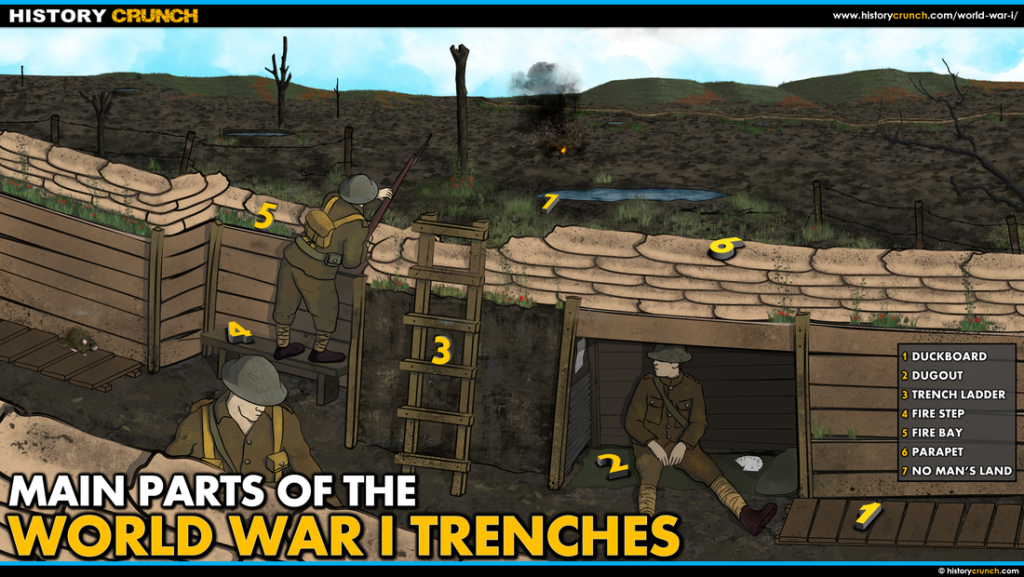
Labeled diagram showing the main parts of World War I trenches and their names
Diagram showing the main parts of the World War I trenches. (Created by historycrunch.com)

Key Vocabulary

Frontline trenches
Long ditches dug by each side where soldiers lived and fought closest to the enemy.
Over the top
A military order telling soldiers to climb out of their trench and charge across open ground toward the enemy.
Trench warfare
A style of fighting where both armies dig long ditches and defend them, making it very hard for either side to advance.
Artillery bombardments
Heavy, repeated attacks using large cannons that destroy land, buildings, and vegetation over a wide area.
Barbed wire entanglements
Twisted wire with sharp points stretched across ground to slow down or trap enemy soldiers trying to advance.
Unexploded munitions
Shells or bombs fired during battle that landed but never went off, leaving hidden deadly hazards in the ground.
Psychological toll
The lasting mental and emotional damage caused by experiencing extreme danger, fear, and suffering over a long period.

Frequently Asked Questions

What was No Man’s Land in World War I?

No Man’s Land was the open ground between the two opposing frontline trenches. It got its name because soldiers who crossed it were very likely to die. The land was often destroyed and muddy from heavy shelling. It became one of the best known images of the war.

Why was No Man’s Land so dangerous?

No Man’s Land was dangerous because soldiers crossing it faced many deadly threats at once. These included barbed wire, mines, artillery fire, and enemy machine gun fire. Trench warfare favored defenders, so attackers often died in large numbers. The thick mud also slowed soldiers and made them easy targets.

What did it mean to go “over the top”?

Going “over the top” meant soldiers climbed out of their own trench to attack the enemy. They then had to cross No Man’s Land toward the opposing frontline trench. Along the way they met heavy fire and other hidden dangers. This order often led to huge losses of life.

Why was No Man’s Land so muddy?

The mud came from constant artillery bombardments that tore up the land. Shelling destroyed all the trees, grass, and other vegetation. Rain then turned the bare ground into deep, thick mud. In some places the mud was deep enough for soldiers to become stuck and drown.

What did No Man’s Land look like?

No Man’s Land was a barren and ruined landscape shaped by war. It was covered with shell craters, barbed wire, and the remains of destroyed buildings and trees. The ground was often muddy and waterlogged from shelling and rain. Unexploded munitions and enemy traps added even more danger.

How did No Man’s Land affect soldiers mentally?

The grim conditions of No Man’s Land added to the psychological toll of the war. Soldiers faced the constant threat of death from sniper fire and hidden hazards. Living near such danger for long periods wore down their minds. The harsh realities of trench warfare left lasting effects on many men.

Cite This Article

To cite this article as a source, use one of the formats below.

MLA: Beck, Elias. “No Man's Land in World War I: A Detailed Summary.” HistoryCrunch, 29 September 2026, https://historycrunch.com/no-mans-land-in-world-war-i/.

APA: Beck, E. (2026). No Man's Land in World War I: A Detailed Summary. HistoryCrunch. https://historycrunch.com/no-mans-land-in-world-war-i/

Chicago: Beck, Elias. “No Man's Land in World War I: A Detailed Summary.” HistoryCrunch. September 29, 2026. https://historycrunch.com/no-mans-land-in-world-war-i/

Sources

  • John Keegan, The First World War.
  • Imperial War Museum
Facebook
X
Reddit
Pinterest
LinkedIn

We strive to produce educational content that is accurate, engaging and appropriate for all learners. If you notice any issues with our content, please contact us and let us know!

AUTHOR INFORMATION
Picture of Elias Beck

Elias Beck

I'm a passionate history and geography teacher with over 15 years of experience working with students in the middle and high school years. I have an Education Degree with a focus in World History. I have been writing articles for History Crunch since 2015 and love the challenge of creating historical content for young learners!
Front page of The Evening Herald from June 1914 with the headline Assassination May Lead to War
World War I

The July Crisis of 1914: A Detailed Summary

The July Crisis of 1914 was an important event in the outbreak of World War I. It resulted from the assassination of Franz Ferdinand and led to a crisis between Austria-Hungary and Serbia that eventually escalated into the First World War.

World War I Alliances Map
Maps

World War I Alliances Map

This World War I alliances map was created by History Crunch to help students and teachers understand the two main alliance systems that divided Europe before and during the First World War. It shows the member nations of the Triple Alliance and the Triple Entente and how these alliances shaped the outbreak and course of the war. Designed for students in grades 5 to 12.

Colorized photo of Russian soldiers marching to the front line on the Eastern Front of World War I
World War I

Eastern Front of World War I: A Detailed Summary

The Eastern Front of World War I was a region of fighting that primarily occurred between Germany and Russia. The Eastern Front was fought from the Baltic Sea in the north to the Black Sea in the south and took over large portions of Eastern Europe.

Colorized photo of Australian soldiers silhouetted against the evening sky near Ypres in 1917
World War I

Australia in World War I: A Detailed Summary

Australia in World War I played an important role in the overall war effort, across multiple regions. For instance, Australian soldiers fought in Europe, the Middle East and the Pacific region.

Colorized prison photo of Gavrilo Princip looking at the camera in 1915
World War I

Gavrilo Princip: A Detailed Biography

Gavrilo Princip assassinated Franz Ferdinand in June of 1914. This act plunged the world into the events of World War I, which lasted from 1914 until 1918.