Second Balkan War: A Detailed Summary

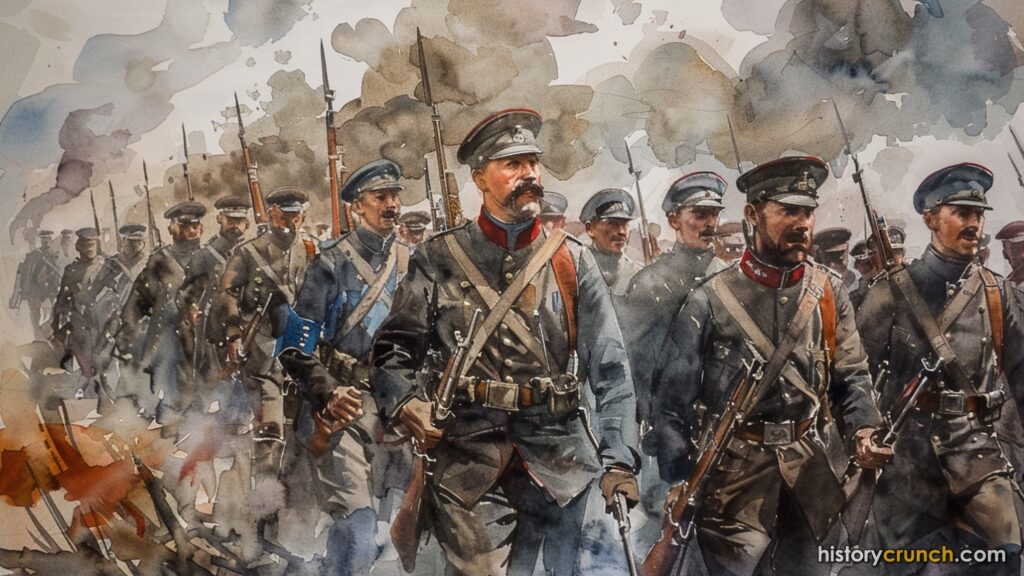
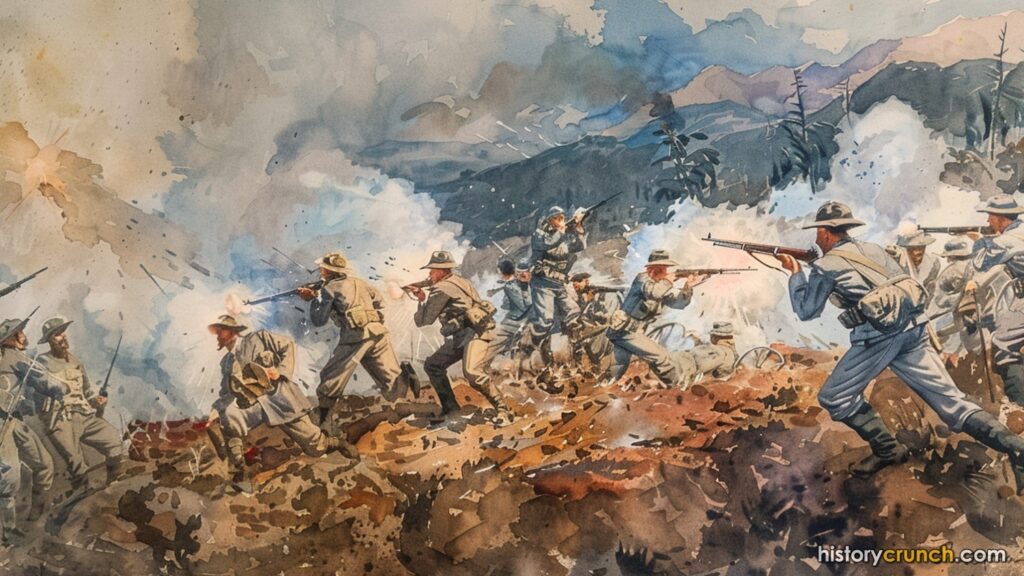
Watercolor painting of soldiers firing rifles as they advance across a smoky mountain battlefield
The Second Balkan War, which occurred in 1913, involved Bulgaria clashing with its former Balkan League allies—Serbia, Greece, and Romania—over territorial disputes following their joint victory in the First Balkan War against the Ottoman Empire.

Table of Contents

The Second Balkan War was an important conflict in relation to European nationalism in the years before World War I. As such, historians consider it to be significant to the outbreak of the First World War in 1914.

The Second Balkan War was a significant conflict that occurred in 1913 immediately following the events of the First Balkan War.  In fact, the Second Balkan War was a direct result of the First Balkan War, as it saw the former allies of the First Balkan War turn on each other along with other new combatants.  More specifically, the Second Balkan War saw Bulgaria face off against: Greece, Montenegro, Ottoman Empire, Romania and Serbia.

Due to the timeframe in which it occurred, the Second Balkan War (along with the earlier First Balkan War) is considered to be important to World War I.  In fact, historians consider the events of both Balkans Wars to be important causes of World War I, which began in 1914 following the assassination of Austrian Archduke Franz Ferdinand.​

Irredentism
noun
Irredentism is the political goal of uniting people of the same ethnic or national background who live under a foreign government into one country. In the Balkans before World War I, several nations claimed territories controlled by neighbors, which fueled conflicts including the Second Balkan War.
Source: Imperial War Museums© factsthatcrunch.com

What Caused the Second Balkan War?

As stated above, the First Balkan War and the tensions present in the Balkans led to the events of the Second Balkan War.  First, the Balkans (along with the rest of Europe) experienced a growth of nationalismA strong pride in one’s country or ethnic group that often drives the desire to expand territory and power. in the 19th century and early 20th century.  This growth in nationalism caused nations within the Balkans to seek to expand their territory and influence in the region.  Ultimately, the growth of nationalism led to the outbreak of the First Balkan War, which was the most direct cause of the Second Balkan War.​

The First Balkan War occurred from 1912 until 1913 and was fought between the Ottoman Empire and the member nations of the Balkan LeagueAn alliance of Bulgaria, Greece, Montenegro, and Serbia that fought together against the Ottoman Empire in the First Balkan War., which included: Bulgaria, Greece, Montenegro and Serbia.  These four nations formed an alliance and took on the Ottoman Empire and its control over southeastern Europe.  At the time, the Ottoman Empire was in a state of decline and struggled to fight back. As a result, the First Balkan War finally ended on May 30th, 1913 with the signing of the Treaty of LondonThe agreement signed on May 30th, 1913 that ended the First Balkan War and transferred Ottoman territory to Balkan League members.. 

With this treaty, the Ottoman Empire gave up large sections of territory in the Balkans, which was taken over by the member nations of the Balkan League.  However, soon after the end of the First Balkan War, Bulgaria expressed frustration with the lands that they received.  This is what ultimately led to the start of the Second Balkan War.​

Soldiers fighting during the First Balkan War in the early twentieth century
Historians consider the First Balkan War (and the Second Balkan War) to be significant causes of World War I, which began in 1914.
World War IFlow ChartInteractive
Facts that CrunchFactsthatCrunch
In orderHow did the First Balkan War set off a second conflict among the victors?

Follow the chain from top to bottom. Tap any step to read what happened.

▼
▼
▼
▼
▼
The Balkan League WinsIn October 1912, Bulgaria, Serbia, Greece, and Montenegro formed the Balkan League and went to war against the Ottoman Empire. By May 1913, the Ottomans had lost nearly all of their European territory. The four allies now controlled a large block of land but had no agreed plan for dividing it. | swords
The Treaty of London, May 1913The Treaty of London, signed on the 30th of May, 1913, ended the First Balkan War and forced the Ottoman Empire to give up most of its remaining European holdings. The treaty set the outer borders of the new territory but left the division among the Balkan allies unsettled. That unresolved question immediately became a source of conflict between former partners.
Bulgaria Disputes the DivisionBulgaria had fielded the largest army in the war and believed it deserved the biggest share of Macedonia. Serbia and Greece had quietly agreed between themselves to split much of Macedonia, leaving Bulgaria with less than its leaders expected. Bulgarian commanders pressed for a redivision that the other allies refused to accept.
Serbia Seeks CompensationAustria-Hungary had blocked Serbia from gaining an outlet to the Adriatic Sea after the First Balkan War, denying Serbia ports it had hoped to control. Serbia responded by demanding a larger portion of Macedonia to compensate for that loss. This put Serbian and Bulgarian territorial claims directly against each other.
Bulgaria Attacks, June 29th, 1913On the 29th of June, 1913, Bulgarian forces attacked Serbian and Greek positions in Macedonia without a formal declaration of war. Bulgaria's leaders calculated that a quick strike would force a renegotiation on better terms. Instead, the surprise attack brought Serbia, Greece, Romania, and the Ottoman Empire into the fight against Bulgaria.
The Second Balkan War BeginsRomania entered the war against Bulgaria from the north, and Ottoman forces moved to retake Thrace from the south. Bulgaria was quickly surrounded and unable to hold its gains. The resulting Treaty of Bucharest, signed on the 10th of August, 1913, stripped Bulgaria of most of what it had won in the first war and left deep resentment that fed into the overall tensions leading toward World War I.
Step 1 of 6
Source: Library of Congress© factsthatcrunch.comMore World War I Facts →

Major Events of the Second Balkan War

Ferdinand I of Bulgaria was upset following the First Balkan War, because he believed that Bulgaria had not gained the territories that it was owed.  As such, Bulgaria was the country that began the Second Balkan War.​

The Second Balkan War officially began on June 29th, 1913 following a period in which Bulgaria readied its armies.  The main opponents that the Bulgarians faced in the conflict were Serbia and Greece, which were both former allies to Bulgaria in the First Balkan War.  Both Serbia and Greece had signed a secret alliance before the outbreak of the Second Balkan War and were the main nations that Bulgaria argued with over territories in the Balkans.

The Bulgarian armies attacked Serbian forces on June 29th.  The two nations fought in bloody battles that included the Battle of Bregalnica, where the Bulgarians suffered heavy losses and were forced to retreat, and the Battle of Kalimanci, where Bulgaria stopped a Serbian advance.  Bulgaria did much better against the Greek forces but did not obtain any meaningful victory.  For instance, in the Battle of Kresna Gorge, which took place in July of 1913, both sides suffered losses.

As a result, the battle was a stalemateA situation in a battle where neither side can defeat the other and the fighting produces no clear winner. and neither Greece nor Bulgaria was able to defeat the other.  At the same time, both Romania and the Ottoman Empire attacked Bulgaria.  Romania had lingering tensions from the First Balkan War with Bulgaria and wanted to capture some more territories for themselves.  As well, the Ottoman Empire used the Second Balkan War as an opportunity to recapture territories that they had just lost in the First Balkan War.  The roles of both Romania and the Ottoman Empire were brief and did not carry the same intensity as the fighting carried out by both Serbia and Greece.

Regardless, Bulgaria suffered heavy losses in the Second Balkan War and sought a way out when the opposing forces threatened to capture the capital city Sofia.  The Second Balkan War ended on August 10th, 1913.​

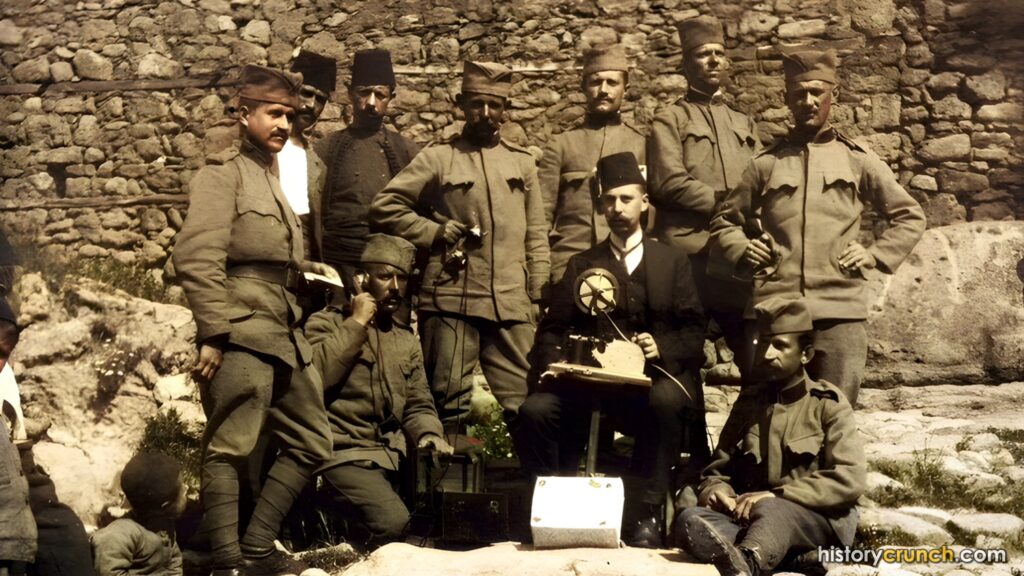
Colorized photo of Serbian soldiers during the Second Balkan War, June 1913
Serbian troops during the Second Balkan War in June of 1913. (Colorized by historycrunch.com)
World War INotebook Timeline
Facts that CrunchFactsthatCrunch
World War I
Second Balkan War, 1913
June 29th, 1913: Bulgaria attacks Serbian and Greek positions in Macedonia.
July 1913: Serbia defeats Bulgaria at the Battle of Bregalnica, forcing a retreat.
July 1913: Romania invades Bulgaria from the north, and Ottoman troops retake Adrianople.
July 1913: Greek and Bulgarian armies fight to a standstill at Kresna Gorge.
August 10th, 1913: The Treaty of Bucharest ends the war and takes land from Bulgaria.
Source: Imperial War Museums© factsthatcrunch.comMore World War I Facts →

Outcomes of the Second Balkan War

As stated above, the Second Balkan War did not last long.  In fact, the total duration of the war was just over a month.  It ended in August of 1913 when Bulgaria sought an end to the war, after suffering terrible losses.  What resulted were two treaties: the Treaty of BucharestThe August 10th, 1913 agreement that forced Bulgaria to give up territories to Romania, Serbia, Montenegro, and Greece. and the Treaty of Constantinople.  The Treaty of Bucharest was completed first and involved Bulgaria and its main Balkan opponents in the war, which included: Romania, Serbia, Montenegro and Greece.

The Treaty of Bucharest was signed on August 10th, 1913 and modified the terms of the Treaty of London, which ended the First Balkan War.  In general, Bulgaria was forced to give up territories to each of the Balkan nations.  The Treaty of Constantinople was signed on September 29th, 1913 and was in regard to Bulgaria and the Ottoman Empire.  It was similar to the Treaty of Bucharest, in that it forced Bulgaria to provide territories to the Ottoman Empire.​

Besides the treaties mentioned above, historians consider the Second Balkan War to be significant for the role it played in the build up to World War I. In fact, both the First Balkan War and the Second Balkan War are considered to be significant causes of World War I, which began in 1914.​

The event that sparked World War I was the assassination of the Austrian Archduke Franz Ferdinand on June 28th, 1914.  Austria blamed Serbia for this action, since Ferdinand was murdered by Gavrilo Princip – a Bosnian Serb nationalist who had been armed and trained by the Black HandA secret organization dedicated to promoting Serbian and Slavic nationalism that armed and trained the men who assassinated Archduke Franz Ferdinand..  The Black Hand was a secret organization aimed at promoting Serbian (and Slavic) nationalism, and helped plan the assassination of Ferdinand in protest of Austria’s influence in the Balkans.  As such, this displays that World War I was a direct result of the Bosnian Crisis of 1908 and the two Balkan Wars.

Achille Beltrame artwork showing Gavrilo Princip shooting Archduke Franz Ferdinand in Sarajevo
The assassination of Franz Ferdinand artwork by Achille Beltrame from an Italian newspaper. It shows Gavrilo Princip killing Archduke Franz Ferdinand of Austria in Sarajevo. (1914)
World War IComparison Table
Facts that CrunchFactsthatCrunch

Two treaties ended the Second Balkan War of 1913, but they settled different conflicts and left different borders.

Treaty of Bucharest (1913)Treaty of Constantinople (1913)
SignedAugust 10th, 1913September 29th, 1913
PartiesBulgaria, Serbia, Greece, Romania, MontenegroBulgaria and the Ottoman Empire
Conflict settledSecond Balkan War among Balkan statesBulgarian-Ottoman fighting in the Second Balkan War
Main territorial changeBulgaria lost much of the land it had won in the First Balkan WarBulgaria returned Edirne and eastern Thrace to the Ottomans
Key outcomeRedrawn Balkan borders increased tensions among great powersOttoman Empire recovered significant European territory it had lost in 1912 and 1913
Role in WWI pathLeft Bulgaria bitter toward Serbia, and Bulgaria joined the Central Powers in 1915Showed the Ottoman Empire could still win back land in Europe
Treaty of Bucharest (1913)
Signed
August 10th, 1913
Parties
Bulgaria, Serbia, Greece, Romania, Montenegro
Conflict settled
Second Balkan War among Balkan states
Main territorial change
Bulgaria lost much of the land it had won in the First Balkan War
Key outcome
Redrawn Balkan borders increased tensions among great powers
Role in WWI path
Left Bulgaria bitter toward Serbia, and Bulgaria joined the Central Powers in 1915
Treaty of Constantinople (1913)
Signed
September 29th, 1913
Parties
Bulgaria and the Ottoman Empire
Conflict settled
Bulgarian-Ottoman fighting in the Second Balkan War
Main territorial change
Bulgaria returned Edirne and eastern Thrace to the Ottomans
Key outcome
Ottoman Empire recovered significant European territory it had lost in 1912 and 1913
Role in WWI path
Showed the Ottoman Empire could still win back land in Europe
Source: The National Archives, UK© factsthatcrunch.comMore World War I Facts →

World War I timeline · 1914 – 1918

Four years of industrial war that killed about 8.5 million soldiers and ended four empires. The timeline sets the battles, the home fronts and the peace talks in order.
View Timeline →

Key Vocabulary

Nationalism
A strong pride in one’s country or ethnic group that often drives the desire to expand territory and power.
Balkan League
An alliance of Bulgaria, Greece, Montenegro, and Serbia that fought together against the Ottoman Empire in the First Balkan War.
Treaty of London
The agreement signed on May 30th, 1913 that ended the First Balkan War and transferred Ottoman territory to Balkan League members.
Stalemate
A situation in a battle where neither side can defeat the other and the fighting produces no clear winner.
Treaty of Bucharest
The August 10th, 1913 agreement that forced Bulgaria to give up territories to Romania, Serbia, Montenegro, and Greece.
Black Hand
A secret organization dedicated to promoting Serbian and Slavic nationalism that armed and trained the men who assassinated Archduke Franz Ferdinand.

Frequently Asked Questions

When did the Second Balkan War take place?

The Second Balkan War lasted from June 29th, 1913 until August 10th, 1913. It began just weeks after the First Balkan War ended with the Treaty of London. The whole conflict lasted only about six weeks, making it one of the shortest wars of the era.

Why did Bulgaria start the Second Balkan War?

Bulgaria started the war because it felt cheated out of land after the First Balkan War. Ferdinand I of Bulgaria believed his country deserved more territory than it received. Bulgaria then attacked its former allies, Serbia and Greece, over these disputed lands.

Which countries fought against Bulgaria?

Bulgaria faced Serbia, Greece, Montenegro, Romania, and the Ottoman Empire. Serbia and Greece were the main opponents, and they had signed a secret alliance beforehand. Romania and the Ottoman Empire joined later to grab territory while Bulgaria was weakened.

How did the Second Balkan War end?

The war ended when Bulgaria sought peace after suffering heavy losses in battle. Enemy forces even threatened to capture Sofia, the Bulgarian capital. Two treaties followed, the Treaty of Bucharest and the Treaty of Constantinople, both forcing Bulgaria to give up land.

How is the Second Balkan War connected to World War I?

The Second Balkan War left deep tensions in the region that helped set the stage for World War I. The war built anger and rivalry between nations, especially Serbia and Austria-Hungary. These tensions later exploded after the assassination of Archduke Franz Ferdinand in 1914.

Cite This Article

To cite this article as a source, use one of the formats below.

MLA: Beck, Elias. “Second Balkan War: A Detailed Summary.” HistoryCrunch, 29 September 2026, https://historycrunch.com/second-balkan-war/.

APA: Beck, E. (2026). Second Balkan War: A Detailed Summary. HistoryCrunch. https://historycrunch.com/second-balkan-war/

Chicago: Beck, Elias. “Second Balkan War: A Detailed Summary.” HistoryCrunch. September 29, 2026. https://historycrunch.com/second-balkan-war/

Sources

  • Hew Strachan, The First World War.
  • Imperial War Museum
  • Fordham Modern History Sourcebook
Facebook
X
Reddit
Pinterest
LinkedIn

We strive to produce educational content that is accurate, engaging and appropriate for all learners. If you notice any issues with our content, please contact us and let us know!

AUTHOR INFORMATION
Picture of Elias Beck

Elias Beck

I'm a passionate history and geography teacher with over 15 years of experience working with students in the middle and high school years. I have an Education Degree with a focus in World History. I have been writing articles for History Crunch since 2015 and love the challenge of creating historical content for young learners!
Portrait painting of Victor Emmanuel III in military dress uniform with sash and medals
World War I

Victor Emmanuel III: A Detailed Biography

Victor Emmanuel III was the King of Italy from 1900 to 1946 whose hesitant leadership brought Italy into World War I and whose fateful decision to appoint Mussolini as Prime Minister in 1922 enabled the rise of Italian fascism. This article details the life and significance of Victor Emmanuel III.

Colorized photo of U.S. Marines during the Meuse-Argonne Offensive in France in 1918
World War I

Meuse–Argonne Offensive in World War I: A Detailed Summary

The Meuse-Argonne Offensive in World War I was a major event on the Western Front. In particular, it was especially important to the United States, since it is the second deadliest campaign in United States history, behind only the Normandy Invasion of World War II.

World War I Schlieffen Plan Map
Maps

World War I Schlieffen Plan Map

This World War I Schlieffen Plan map was created by History Crunch to help students and teachers understand Germany’s pre-war military strategy for fighting a two-front war. It shows the planned German invasion route through Belgium and into France, why the plan failed and how its failure led directly to the development of the Western Front stalemate. Designed for students in grades 5 to 12.

Scramble for Africa Map
Maps

Scramble for Africa Map

This Scramble for Africa map was created by History Crunch to help students and teachers understand the geographic extent of European colonization of the African continent between approximately 1870 and 1914. It shows which European powers controlled which regions of Africa and the small number of territories that remained independent. Designed for students in grades 5 to 12.

Weapons of World War I Infographic
Infographics

Weapons of World War I: Infographic

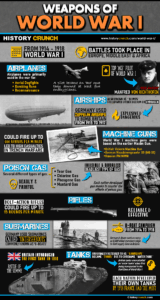
This Weapons of World War I infographic was created by History Crunch to help students and teachers quickly understand the most important weapons used in the First World War. It covers airplanes, airships, machine guns, poison gas, rifles, submarines and tanks, and explains how these weapons shaped the nature of the conflict. Designed for students in grades 5 to 12.