The Gulf of Tonkin Incident was the naval confrontation in August of 1964 that helped push the United States deeper into the Vietnam War. The Gulf of Tonkin Incident involved clashes and reported clashes between United States destroyers and North Vietnamese forces on August 2nd and August 4th, 1964, and it led directly to the Gulf of Tonkin Resolution and a major escalation of American involvement in Vietnam. As such, historians consider the Gulf of Tonkin Incident as an importance cause of the Vietnam War.
GULF OF TONKIN INCIDENT – BACKGROUND
The Gulf of Tonkin Incident grew out of the larger crisis in Vietnam after the division of the country in 1954. North Vietnam was led by Ho Chi Minh, a Marxist-Leninist, while South Vietnam was backed by the United States. By 1964, the government of South Vietnam was unstable, and the northern communist forces were gaining strength. At the same time, President Lyndon B. Johnson’s administration was already looking for ways to increase pressure on North Vietnam. Regardless, the United States Navy was carrying out patrols in the Gulf of Tonkin while the United States also backed South Vietnamese operations against the North Vietnamese coast. This ultimately set the stage for the events of the Gulf of Tonkin Incident.
GULF OF TONKIN INCIDENT – EVENTS OF AUGUST 1964
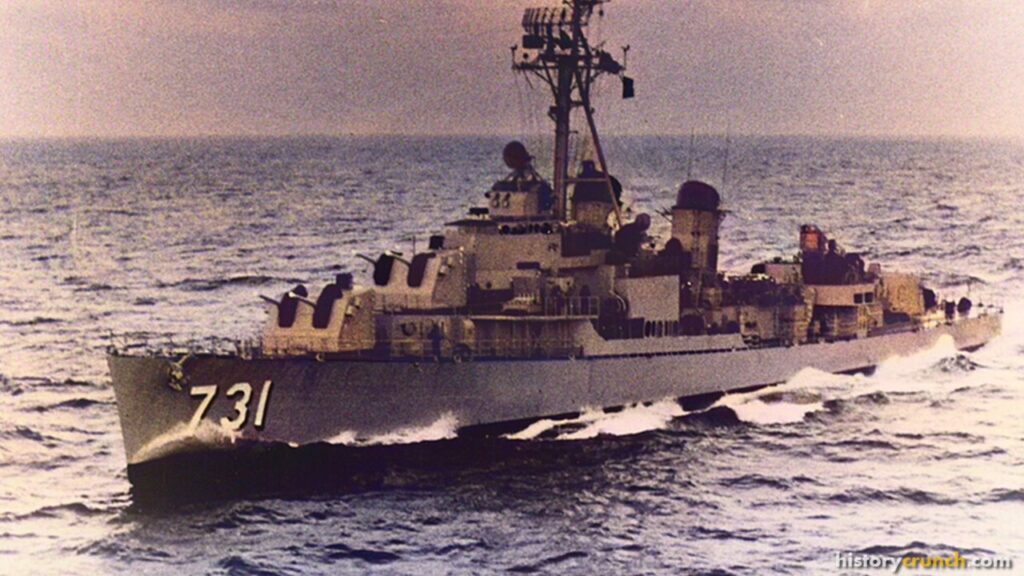
The first part of The Gulf of Tonkin Incident took place on August 2nd, 1964. On that day, the American destroyer USS Maddox was in the Gulf of Tonkin when it encountered three North Vietnamese torpedo boats. A short naval clash followed. Historians generally agree that this first attack happened and resulted in a rise in tensions in the United States.
The second part of The Gulf of Tonkin Incident was reported on August 4th, 1964. The Maddox, now joined by the USS Turner Joy, reported another attack in rough weather and darkness. However, doubts about the accuracy of the report appeared almost immediately. The Maddox captain later sent messages suggesting that radar problems, bad weather and mistaken readings may have created false reports of enemy action. Later investigations strengthened those doubts and historians now generally agree that the August 4th attack did not actually take place.
GULF OF TONKIN RESOLUTION
Regardless, President Johnson treated The Gulf of Tonkin Incident as proof of North Vietnamese aggression. He quickly asked Congress for broad authority to respond. On August 7th, 1964, Congress passed the Gulf of Tonkin Resolution, and Johnson signed it on August 10th, 1964. The resolution gave the president the power to take military action in Southeast Asia without a formal declaration of war. This was a major turning point because it gave Johnson the legal and political support he wanted for wider war.
After The Gulf of Tonkin Incident, American involvement in Vietnam expanded sharply. The Johnson administration used the resolution to justify stronger military action, including air attacks against North Vietnam and the later deployment of large numbers of United States ground troops.
GULF OF TONKIN INCIDENT – SIGNIFICANCE
The Gulf of Tonkin Incident was important because it changed the direction of the Vietnam War. Before August of 1964, the United States had already become deeply involved in supporting South Vietnam, but after the Gulf of Tonkin Incident that involvement became much more direct and much larger. The incident helped turn Vietnam from a conflict with advisers and limited support into a major American war.
The Gulf of Tonkin Incident is also important because it remains controversial. Historians agree that the first clash on August 2nd was real, but the second reported attack on August 4th was not. This means that the Gulf of Tonkin Incident has become a major example of how confusion, intelligence problems, and political decisions can shape the course of a war. It also shows how one disputed event can have enormous consequences in world history.