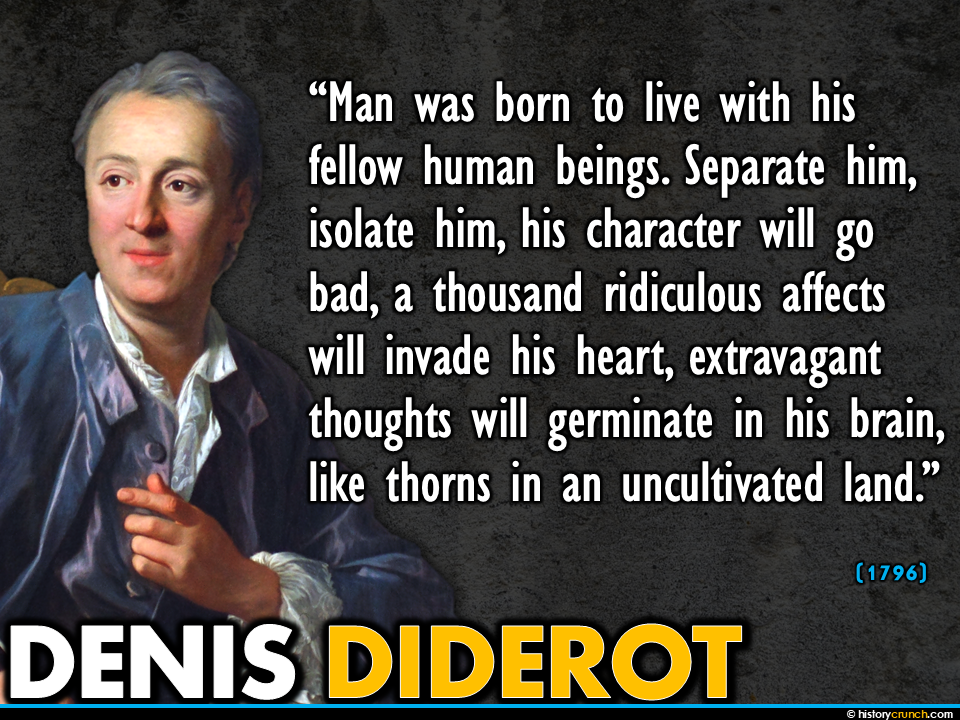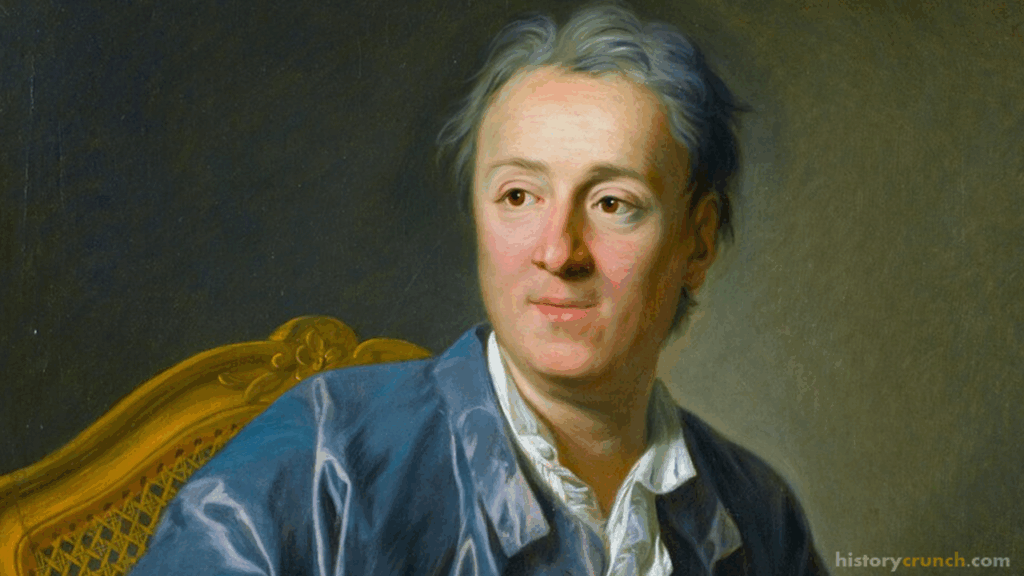
Denis Diderot was an important figure during the time of the Age of Enlightenment. In fact, he is best known as the chief editor and driving force behind the ‘Encyclopedia’, which was one of the most significant intellectual projects of the 18th century. As such, historians consider him to be one of the most significant voices during the Age of Enlightenment, alongside others, such as: Baron de Montesquieu, John Locke, Jean-Jacques Rousseau and Voltaire.
DENIS DIDEROT – EARLY LIFE
Denis Diderot, born on October 5th, 1713 in Langres, France, was an important figure in the European Enlightenment. Diderot was initially educated for the priesthood. However, he abandoned religious studies, moved to Paris, and began a life focused on literature and philosophy. He had earned a Master of Arts degree in philosophy by the time he was nineteen years old. Soon after he began to study to enter the clergy, but soon abandoned the clergy in order to study law at the Paris Law Faculty. This too was short lived, as by 1734, he left law school and sought to be a writer.
In Paris, Diderot lived modestly, working as a tutor and translator while he translated and wrote essays on a wide range of subjects. This allowed him to gain recognition in intellectual circles and exposed him to a broad set of Enlightenment ideals. In fact, by the 1740s, Diderot had begun writing philosophical works that questioned traditional forms of authority, such as monarchs and the Church.
DENIS DIDEROT – AGE OF ENLIGHTENMENT
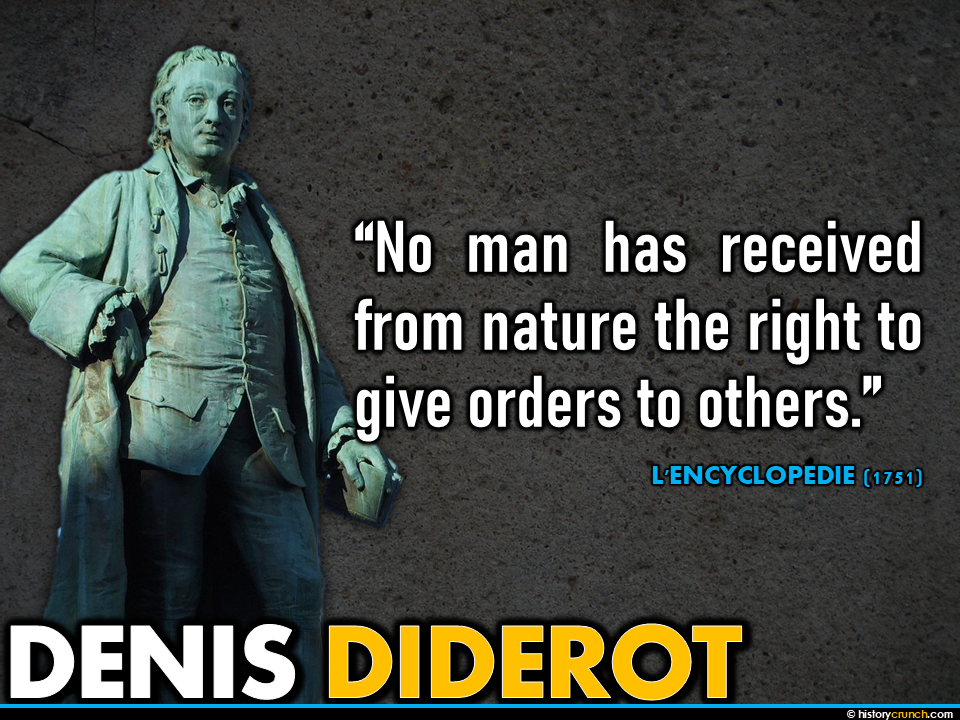
While Diderot was not known in his lifetime for being a classic Enlightenment writer, he was a contemporary and friend of some including Jean-Jacques Rousseau. Today, Diderot is best known for assembling and contributing to the ‘Encyclopedia, or the Dictionary of the Sciences, Arts and Crafts’. The ‘Encyclopedia’, which was first published in 1751, was a collection of some of the most important works of the time, into a single source. Famous Enlightenment thinkers contributed to the work, including: Voltaire, Baron de Montesquieu, Jean-Jacques Rousseau and several others. Diderot contributed many articles as well, and oversaw the editing and assembling of the rest of the articles.
In general, the Encyclopedia contained the main ideas of the Enlightenment, including topics such as: religion, philosophy, literature, government and authority. Diderot produced the work in the hopes that it would help “change the way people think”. As such, historians consider the Encyclopedia to be a significant aspect of the Age of Enlightenment because it encouraged readers to question tradition, think for themselves, and consider new political and moral ideas. In total, the Encyclopedia contained 28 volumes, with over 71,000 articles, from over 140 different writers.
DENIS DIDEROT – LATER LIFE AND DEATH
While Diderot would go on to write several articles of his own, he would generally not be known for these until after his death. He died in Paris, France on July 31st, in 1784 from a blocked artery in his lungs. Diderot is remembered as having contributed to the ideas of the Enlightenment by helping spread the movement’s ideals through his work on the Encyclopedia. Diderot was also a respected art critic, writing reviews and reflections that created public discussions about painting and theater.
DENIS DIDEROT – SIGNIFICANCE
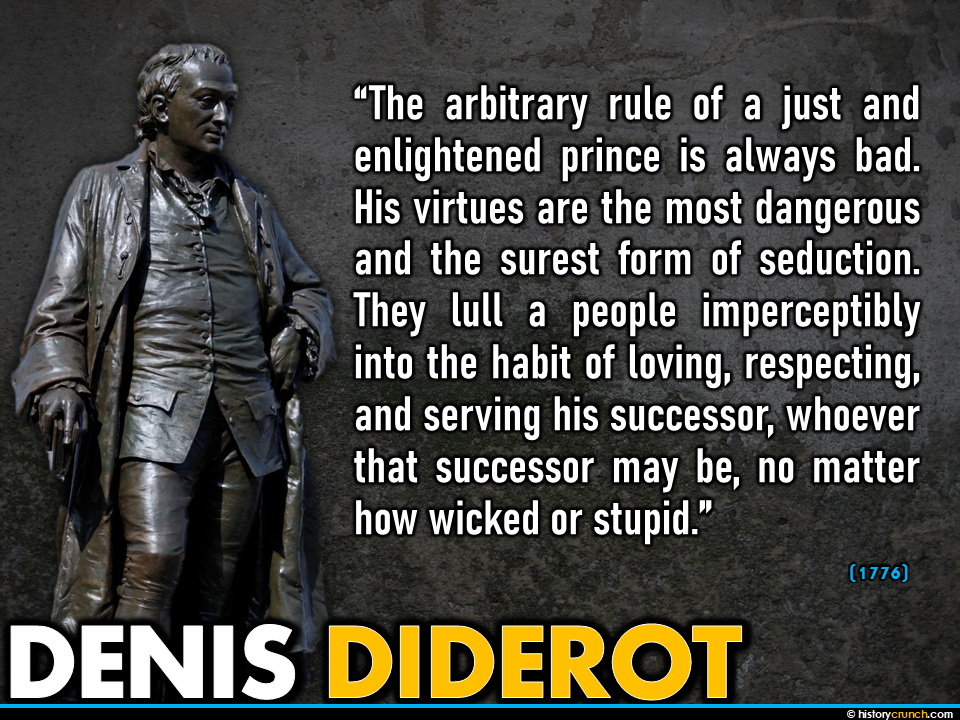
As stated previously, Denis Diderot was a significant person during the events of the Age of Enlightenment. In fact, his most celebrated work, the Encyclopedia, became an important tool for thinkers and writers during the Enlightenment. It centralized huge portions of human knowledge and centered them on the main ideals that were emerging from the main thinkers of the time. More specifically, historians acknowledge the impact of Diderot’s work on world history. This can especially be seen with the events of the French Revolution, which was partially caused by the spread of Enlightenment ideas. Diderot’s calls for reason, equality, and justice helped set the stage for revolutionary change, both in France and beyond.
For decades, his contributions were overshadowed by more politically active or popular Enlightenment figures. However, in the 19th and 20th centuries, scholars rediscovered Diderot’s profound insights and celebrated him as an important thinker and philosopher of freedom. Today, Diderot is remembered as a foundational figure in modern philosophy.