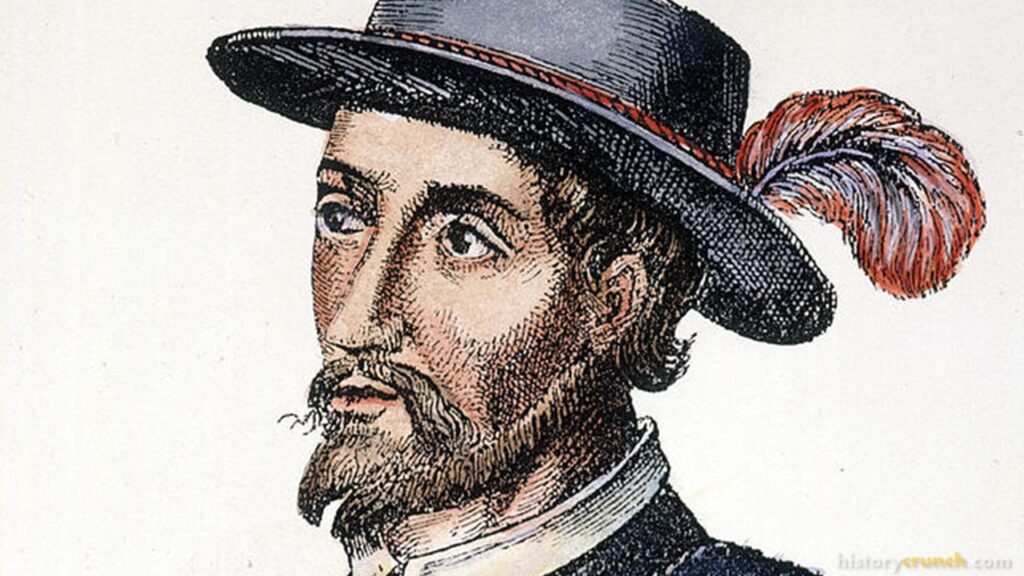
Juan Ponce de León was a Spanish conquistador whose ventures in the early 16th century contributed significantly to Spain’s expansion into the Americas during the Age of Exploration. He is likely best known for his expedition to modern-day Florida and his famed search for the mythical ‘Fountain of Youth’. Regardless, Ponce de León’s was the first European to lead an official expedition through territory that became the United States.
JUAN PONCE DE LEÓN – EARLY LIFE
Juan Ponce de León was born around the year 1474 in the village of Santervas de Campos in the northern part of Spain. The exact date of his birth is debated among historians. The identity of Juan’s parents is not known, however he seems to have been from a noble family. As a young man, he participated in the Reconquista, fighting against the Moors in Spain, which helped shape the militaristic and expansionist worldview that many Spaniards brought with them to the New World.
Ponce de León moved abroad, and in 1493, he joined Christopher Columbus and many other sailors for a voyage to the New World. The fleet explored large areas of the Caribbean. Although not part of Columbus’ inner circle, the experience introduced him to the opportunities for land, power, and wealth in Spain’s new empire. He settled in Hispaniola (modern-day Dominican Republic and Haiti) and quickly gained influence through military service and governance.
JUAN PONCE DE LEÓN – VOYAGES IN THE AGE OF EXPLORATION
In 1508, Ponce de León was authorized by the Spanish Crown to explore and colonize the island of San Juan Bautista, which are now known as Puerto Rico. He led a successful expedition, established settlements, and subdued the indigenous Taíno population through both force and exploitation.
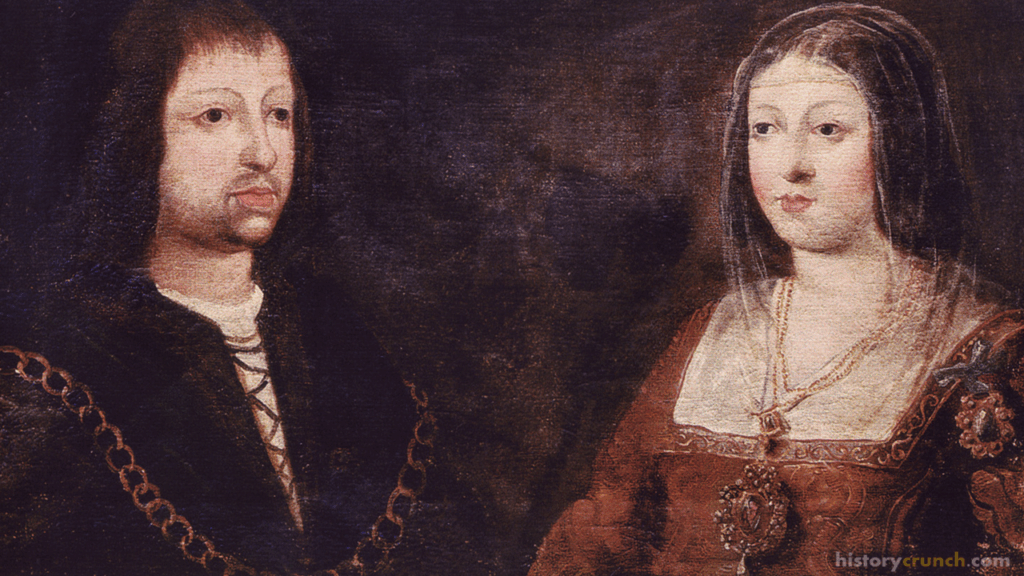
Next, he was appointed the first governor of Puerto Rico, but political rivalries—especially with Diego Colón, the son of Christopher Columbus—led to his removal in 1511. Despite this setback, King Ferdinand of Spain still saw value in Ponce de León and offered him another opportunity: the chance to discover and claim new lands to the northwest. In fact, he heard of undiscovered islands that he wanted to go and explore.
As a result, in 1513, Ponce de León set out on his most famous voyage, sailing northwest in search of new territory. This is the famous voyage in which he was supposedly searching legendary island of riches or the mythical ‘Fountain of Youth’. On April 2nd, 1513, he spotted the coast of what he believed to be an island, naming it ‘La Florida’, which means ‘land of flowers’. Regardless, his arrival was significant as he is now credited as the first recorded European to land on the mainland of North America. Historians believe he made landfall likely near present-day St. Augustine, along the northeast coastline of the state of Florida. He then sailed south around the peninsula and explored the Florida Keys and Gulf Coast. Although he claimed the land for Spain, the expedition was limited in scope and did not result in immediate colonization. Nonetheless, it marked the beginning of Spanish claims in what would later become the southeastern United States. He returned to Spain in 1515.
JUAN PONCE DE LEÓN – DEATH AND SIGNIFICANCE
Ponce de León travelled back to Florida in 1521 in order to try and establish a Spanish colony. This time, however, he encountered fierce resistance from the Calusa, a powerful indigenous group in the region. During a skirmish, Ponce de León was wounded by a poisoned arrow. As a result, the colonization was abandoned. He retreated to Cuba, where he died from his wounds later that year, around July of 1521. He was buried in Havana and later reinterred in San Juan, Puerto Rico, where his tomb remains today.
Juan Ponce de León was a significant figure from the Age of Exploration. For instance, he was the first recorded European explorer to main landfall in the mainland of the area that eventually became the United States. His 1513 voyage to Florida marked the beginning of European exploration of North America’s Atlantic coast and established Spain’s territorial claims there. As such, Ponce de León expanded Spain’s reach in the Caribbean and North America. He served as both explorer and colonizer, setting the pattern for future Spanish expansion, which blended military conquest with the establishment of settlement.
Finally, Juan Ponce de León is often talked about today in regards to the myth of the ‘Fountain of Youth’. Though the story was likely fabricated after his death, is has became part of his legend.