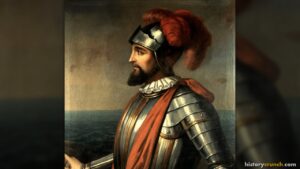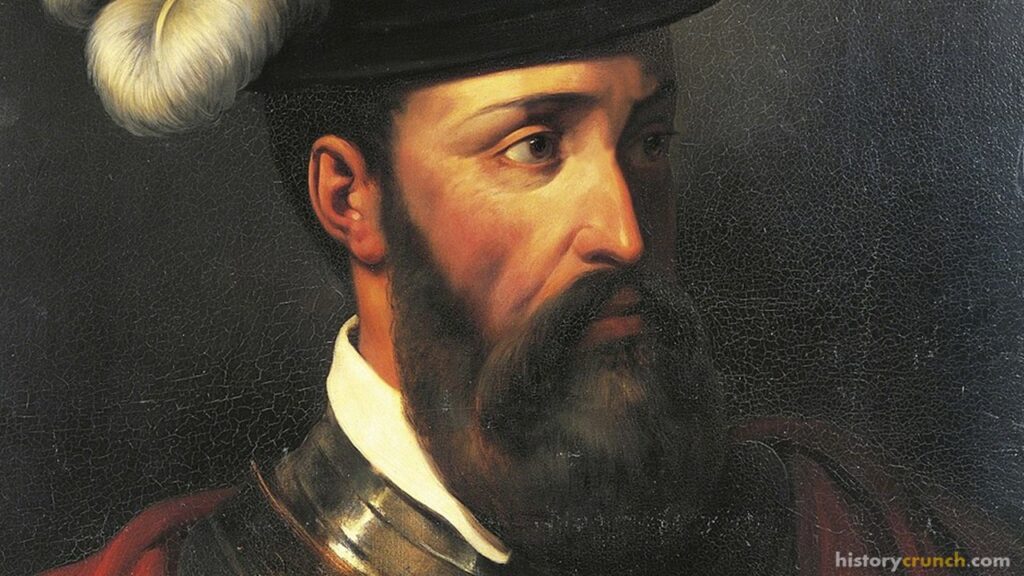
Francisco Pizarro was a Spanish conquistador who led the conquest of the Inca during the Age of Exploration. Pizarro’s famous expedition had a significant impact on both Spain, the nation he sailed for, and the Americas. For instance, his conquest of the Inca led to the collapse of the Inca Empire, while generating wealth and territory for the Spanish Crown. As such, historians consider him to be one of the most significant European explorers during the time of the Age of Exploration.
FRANCISCO PIZARRO – EARLY LIFE
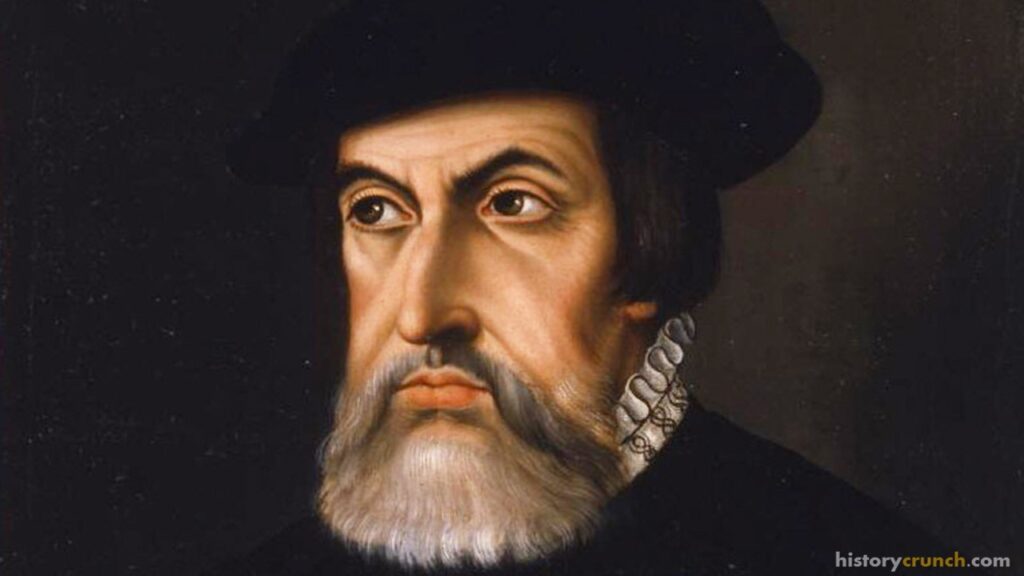
Francisco Pizarro was born around 1475 in Trujillo, Spain. His exact date of birth is unknown, but historians generally accept that he was born in the 1470s. As such, 1475 is often used as his possible birth year. Regardless, Pizarro was the illegitimate son of Gonzalo Pizarro who was an infantry colonel, and Francisca Gonzalez. Pizarro grew up poor, and was not educated, so he could not read or write, despite his father being the cousin of the famous conquistador Hernan Cortes.
Like many men of his era and background, Pizarro was drawn to the New World. In the early 1500s, he traveled to the Americas, initially settling in the Spanish colony of Hispaniola, and later participating in expeditions to both Panama and Colombia.
His first expedition with fellow conquistador Alonzo de Ojeda failed, but soon Pizarro set sail again, and in 1513 he went to Cartagena where he joined Martin Fernandez de Enciso and his fleet. Over the course of the next few years, Pizarro became friends with the governor, Davila, and Pizarro was assigned the role of repartimiento of cattle and natives. Later, Pizarro was ordered to arrest conquistador Vasco Núñez de Balboa and bring him to Davila for trial. Davila was grateful for Pizarro’s loyalty and as a result Pizarro was made lawyer and magistrate of Panama City.
These early ventures gave Pizarro experience as a soldier and explorer, and he became aware of the details regarding Hernan Cortés’s conquest of the Aztecs. This was important because Pizarro would go on to carry out the conquest of the Inca Empire.
FRANCISCO PIZARRO – CONQUEST OF THE INCA EMPIRE
As stated above, the conquest of the Inca Empire was one of the most significant events in the history of the Age of Exploration. In fact, the conquest of the Inca Empire was one of the most important campaigns of the Spanish colonization of the Americas.
The Inca conquest has been compared to that of Cortes’ and the Aztecs. In fact, Pizarro was inspired by the earlier actions of Cortes and had even read Cortes’ account of his conquest of the Aztecs. However, Pizarro had fewer men and much less resources and as a result, Pizarro’s conquest of the Inca has been said to have been one of the most improbable military victories in recorded history.
Francisco Pizarro and other Spanish conquistadors came upon the Inca Empire in 1532. At the time it was one of the largest empires in the world. The Inca civilization arose from the highlands of Peru sometime in the early 13th century. The empire included the territory between the Pacific coast and the Amazon River basin and stretched from Ecuador to northern Chile. In total, the Inca Empire included a diverse population with many different groups of people and contained a population in the millions.
The conquest of the Inca Empire unfolded as a series of major events. First, European diseases had spread throughout the region of the Inca Empire in the years before Pizarro first encountered the civilization. Earlier explorers to the area had unknowingly transmitted their diseases to the native peoples and this had a profound effect on the overall Inca Empire. The Inca Empire that Pizarro eventually encountered was weakened drastically by the spread of these diseases which also helped lead to a civil war. Arguably, this aided Pizarro’s conquest of the empire because it was in a weakened state and more easily conquerable.
The Inca were led by Atahualpa who ruled over the Inca people as an emperor. When Pizarro and his 168 men first encountered the Inca, Atahualpa sent an Inca warrior to meet the conquistadors and to act as an interpreter. In a bold and calculated move, Pizarro captured Atahualpa during the Battle of Cajamarca, using deception and superior weaponry, including horses and firearms.
The capture of Atahualpa would prove to be extremely beneficial to the Spanish and Pizarro. Pizarro would use Atahualpa to control the Incan people and remaining resistance against the Spanish in the region. For example, soon after capture, Pizarro forced Atahualpa to order his military leaders to back down and to not fight against the Spanish. This was important for Pizarro as he was heavily outnumbered in the region and was afraid of an Incan attack.
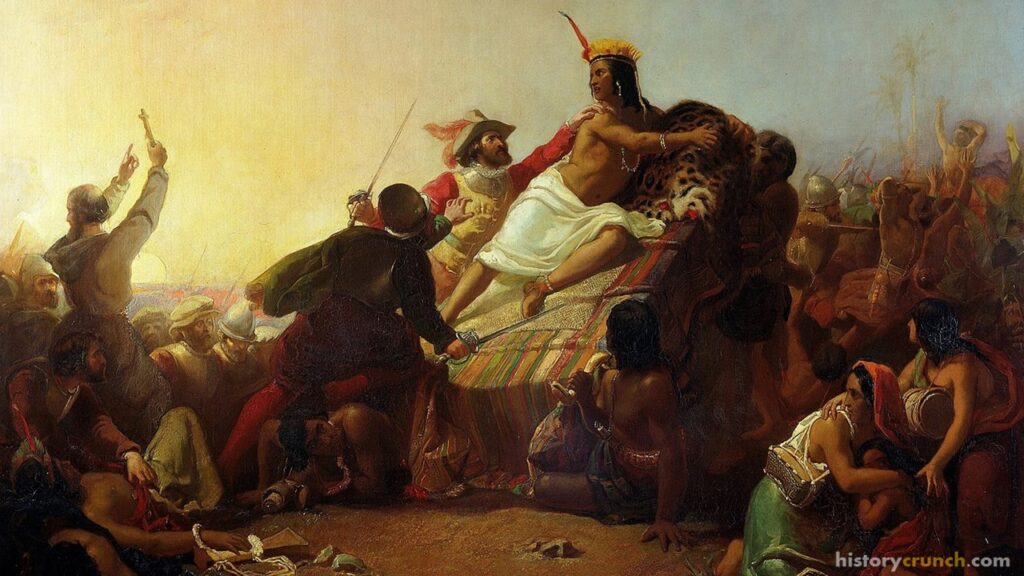
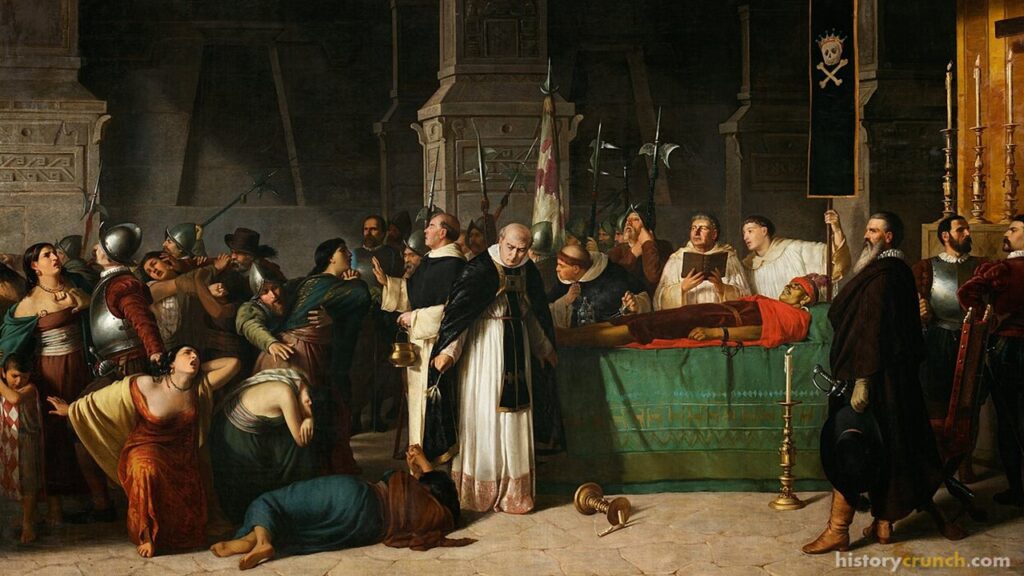
In exchange for his freedom Atahualpa promised Pizarro a room filled with gold and silver. Pizarro, at first, agreed to the request and the Spanish conquistadors oversaw the Incan people gathering trinkets of gold and silver from across the Incan Empire. By May of 1533, the Incas had collected the amount promised by Atahualpa and the Spanish began to melt it down in order to prepare it for shipment out of the Inca territory. Having received their gold and silver, the Spanish were faced with the issue of what to do with Atahualpa. In general, there was a disagreement among the conquistadors with some wanting him to be returned to Spain and others calling for his death. In the end, he was baptized as a Christian and killed by strangulation.
Following the death of Atahualpa, the Inca Empire effectively collapsed under the pressure of the Spanish conquistadors. There were other Inca rulers who were either controlled by the Spanish or unable to properly fight against them. It took several more years to finalize the conquest of the Inca Empire but essentially, with the death of Atahualpa the Incan Empire had lost its ability to combat the Spanish, and the remaining Inca warriors loyal to Atahualpa were quickly defeated by Spanish forces.
FRANCISCO PIZARRO – FOUNDING LIMA
After securing Cuzco, Pizarro focused on strengthening Spanish rule in the region. In 1535, he famously founded the city of Lima, which became the capital of the Viceroyalty of Peru and remains Peru’s capital today. Lima served as a central hub for Spanish administration, commerce, and the Catholic Church in South America. As such, it played a role in the colonization of the region during the Age of Exploration. Under his rule, Peru became a major source of wealth for the Spanish Empire, especially through the mining of silver and gold.
FRANCISCO PIZARRO – DEATH AND SIGNIFICANCE
Pizarro’s success brought both positives and negatives to his life. For instance, while the conquest brought him fame and wealth, it also led to conflict among other conquistadors. In fact, tensions grew between rival conquistadors, particularly between the followers of Pizarro and those of Diego de Almagro, a fellow explorer who had helped in the conquest but felt cheated in the division of the financial rewards of the venture. This rivalry, eventually, erupted into open conflict. Almagro was ultimately captured and executed by Pizarro’s forces in 1538. In retaliation, supporters of Almagro, assassinated Francisco Pizarro on June 26th, 1541. He had been stabbed to death in his own palace.
Francisco Pizarro was a highly significant figure during the Age of Exploration and had a profound impact on world history. For instance, his conquest of the Inca Empire brought an end to one of the most advanced pre-Columbian civilizations, known for its engineering, agriculture, and sophisticated government. Furthermore, his conquest secured vast territories and wealth for Spain, which allowed it to be one of the most powerful nations at the time.