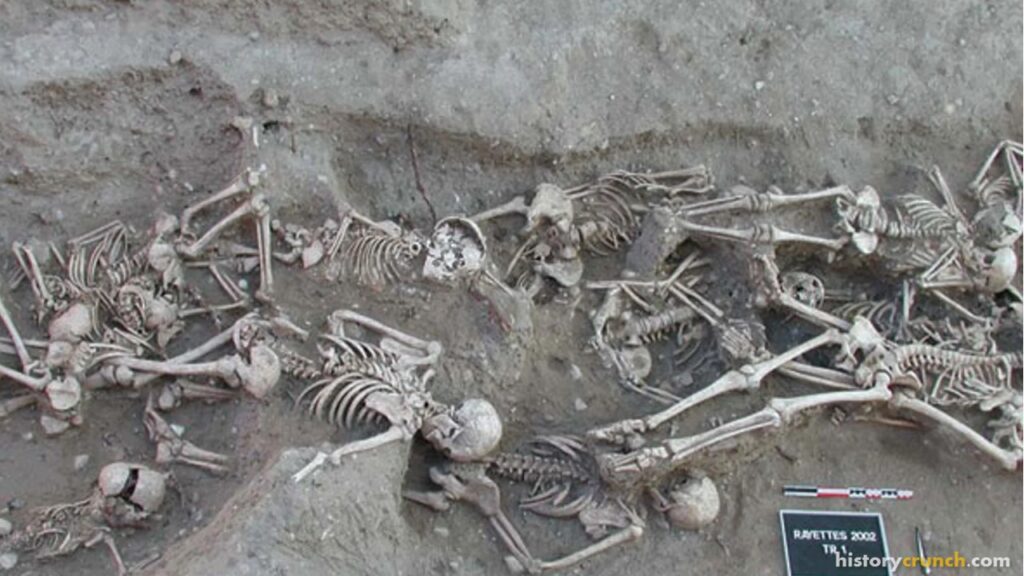
How many people died in the Black Death is one of history’s most staggering questions, with estimates suggesting millions of deaths across Europe and Asia. Globally, including Asia and the Middle East, the death tollThe total number of people who died from a specific cause or event. may have reached as high as 200 million people. The massive loss of life had lasting effects on economies, societies, and the structure of medieval life.
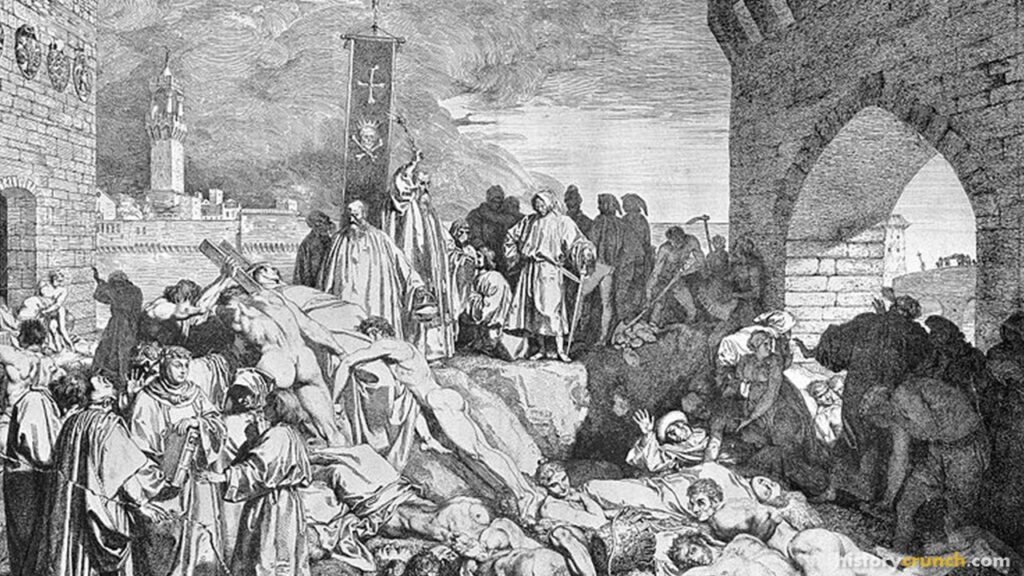
What Was the Black Death?
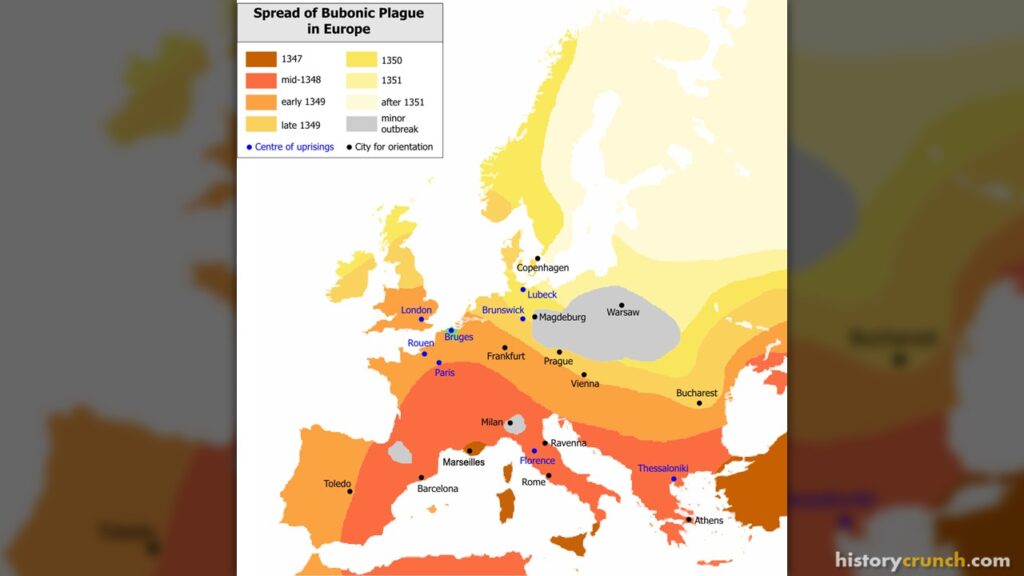
The Black Death is the term that historians use to describe the spread of the bubonic plagueA deadly infectious disease spread by fleas living on rodents that killed millions of people in the medieval world.. It is believed that the plague first began in Central Asia and spread to Europe through vast trade routesEstablished paths used by merchants to move goods between distant regions, such as the Silk Road. such as the Silk Road. Historians studying the spread of the plague discovered that the disease was spread by fleas that are commonly found on rodentsSmall mammals such as rats and mice that carried the fleas responsible for spreading the plague. such as rats and mice. As such, it is now understood that the plague spread via trade routes as the rodents traveled in caravansGroups of merchants and animals traveling together across land trade routes. and on merchant ships.
How Many People Died in the Black Death?
The death toll of the Black Death is a debated topic and different historians have offered different views on the issue. Regardless, the reported death tolls are massive, with some suggesting that it resulted in the deaths of between 75 million and 200 million people in Europe and Asia. These high numbers suggest that between 30% and 60% of people died due to the infectious disease. Some regions suffered more than others, but in general it is widely accepted that approximately half of Europeans died as a result of the disease. For example, it has been recorded that both Paris, France and London, England saw half of their populations succumb to the pandemicA disease outbreak that spreads across a very large area, affecting huge numbers of people..
The death tolls of the Black Death were devastating and led to several major impacts on European society. It had equally devastating results in the Middle East and Asia with similarly dramatic death tolls. The reasons why the death tolls were so high are many and included poor hygienePractices that keep people and their surroundings clean in order to prevent disease. and lack of medical understanding.
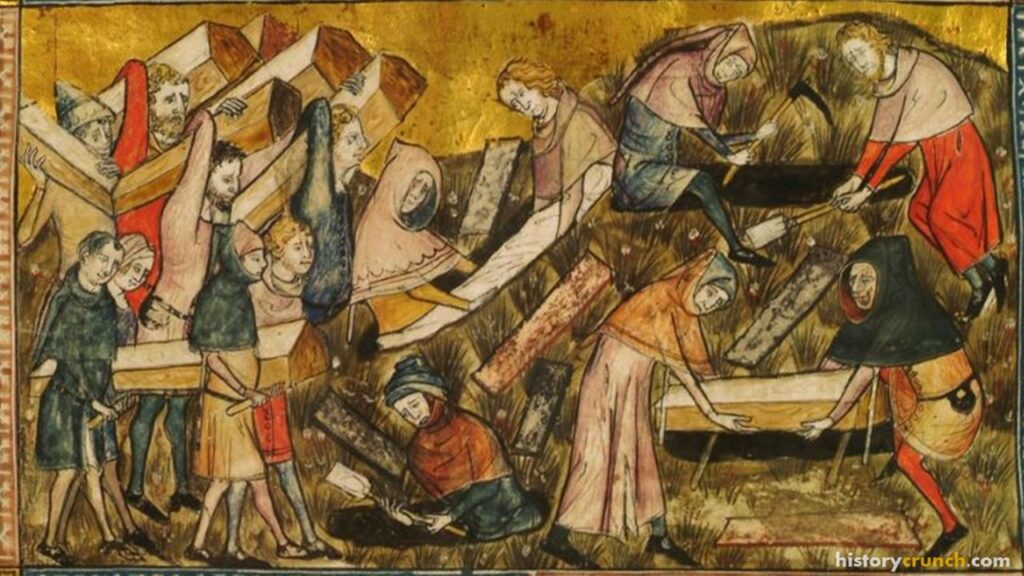
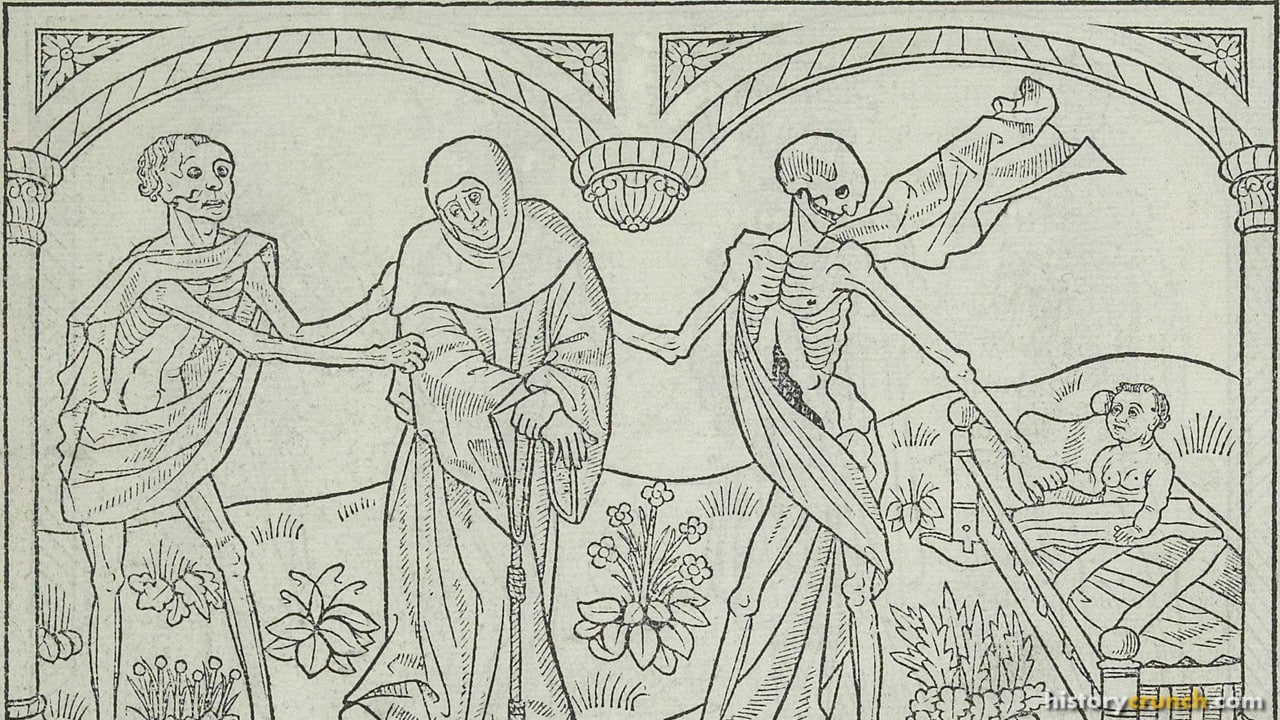
One-third to one-half of Europe's population died during the Black Death.

Black Death timeline · 1347 – 1351 CE
Key Vocabulary
Bubonic plague
Trade routes
Caravans
Pandemic
Hygiene
Death toll
Frequently Asked Questions
When did the Black Death happen?
The Black Death struck Europe mainly between 1347 and 1351 CE. It arrived after spreading west from Central Asia along busy trade routes. The disease returned in smaller waves for many years after that first deadly outbreak.
What percent of Europe’s population died in the Black Death?
Most historians agree that about half of Europe’s people died from the disease. In some crowded cities the losses were even higher. Large towns like Paris and London each lost roughly half of their residents.
Why did so many people die from the plague?
So many people died because medieval doctors did not understand how the disease spread. Poor hygiene let infected fleas and rats move freely through homes and towns. Without medicine or a cure, the plague passed quickly from person to person.
How was the Black Death spread?
The Black Death spread mostly through fleas that lived on rats and mice. These rodents traveled with merchants in caravans and aboard trading ships. Routes like the Silk Road carried the disease from Asia into the Middle East and Europe.
Did the Black Death affect places outside Europe?
Yes, the Black Death caused heavy losses across the Middle East and Asia too. When both regions are counted, the global death toll may have reached 200 million people. The disease first began in Central Asia before it ever reached Europe.
Cite This Article
To cite this article as a source, use one of the formats below.
MLA: Beck, Elias. “How Many People Died in the Black Death?: A Detailed Summary.” HistoryCrunch, 15 September 2026, https://historycrunch.com/how-many-people-died-in-the-black-death/.
APA: Beck, E. (2026). How Many People Died in the Black Death?: A Detailed Summary. HistoryCrunch. https://historycrunch.com/how-many-people-died-in-the-black-death/
Chicago: Beck, Elias. “How Many People Died in the Black Death?: A Detailed Summary.” HistoryCrunch. September 15, 2026. https://historycrunch.com/how-many-people-died-in-the-black-death/
Sources
- J.M. Roberts & Odd Arne Westad, The Penguin History of the World.
- Fordham Medieval Sourcebook
- John Aberth, The Black Death (Bedford brief history with documents).
- Ole J. Benedictow, The Black Death 1346-1353: The Complete History.