The impacts of the Crusades, as a historical event, focused primarily on three factors, including: increased interaction, trade and the role of feudalism. The crusades were a vitally important event to European and Middle Eastern History. They were centered on a clash between different religions and helped transform Europe and the Middle East during the years of the Middle Ages. As well, many historians consider the effects of the crusades as an important event in the emergence of the Renaissance in Europe a few centuries later.
WHAT WERE THE CRUSADES?
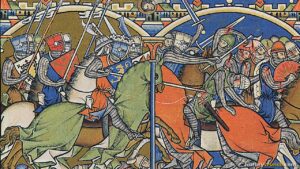
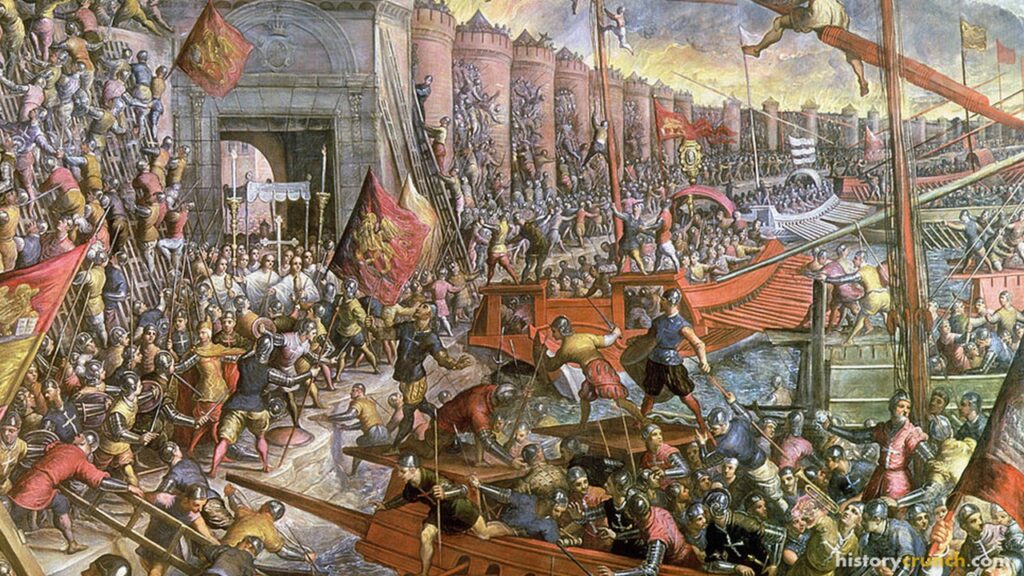
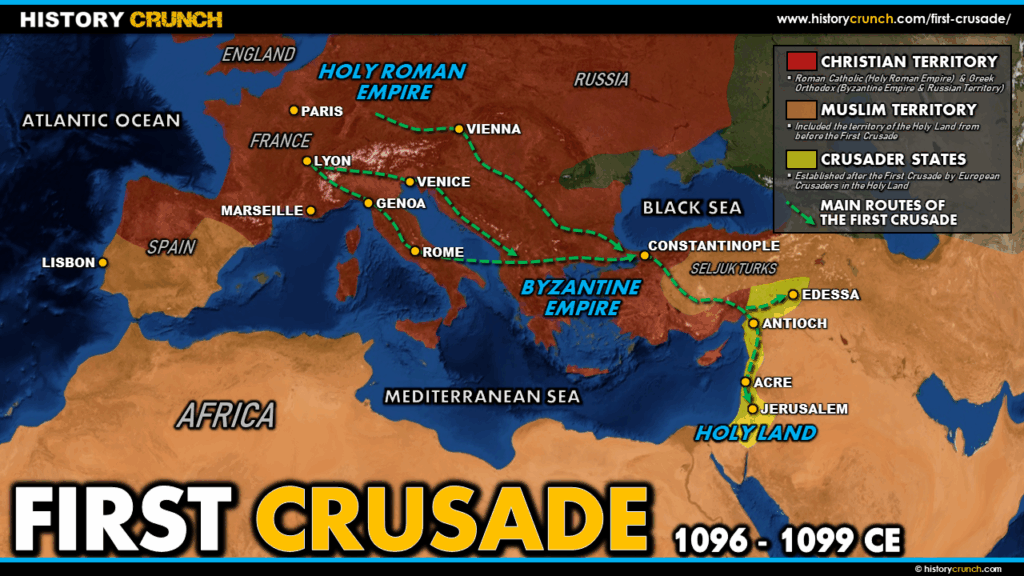
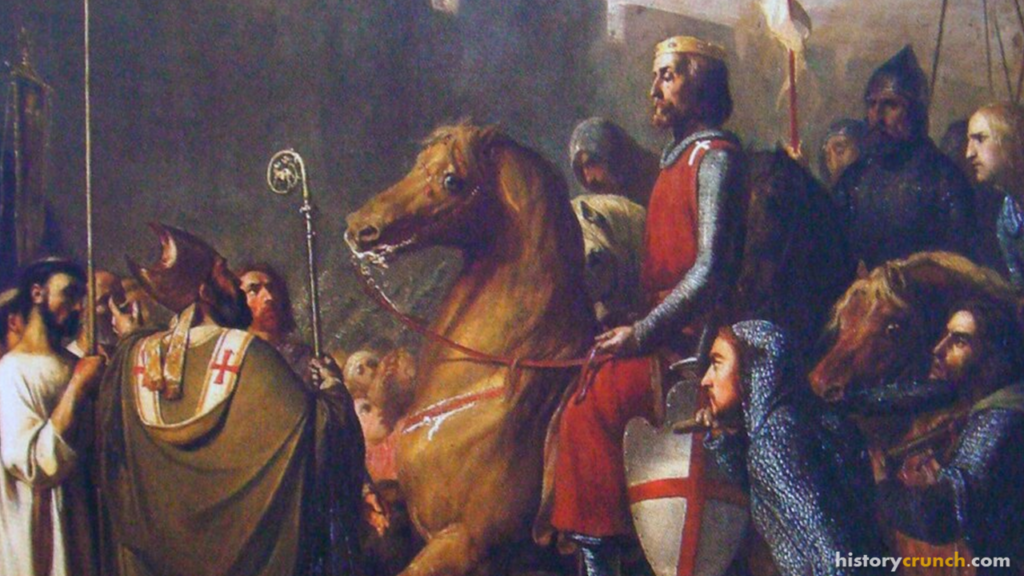
The Crusades are one of the most significant events in the history of Europe and the Middle East. They were a series of religious wars carried out by Christian crusaders from Europe during the timeframe of the Middle Ages. Beginning in 1095 CE, the crusades saw European knights and noblemen travel to the Middle East in an attempt to capture the Holy Land away from Muslim people that had controlled the region for the previous centuries. The term crusade means ‘cross’. Therefore, the Europeans that became crusaders viewed themselves as ‘taking up the cross’. In fact, many of the crusaders wore crosses on their clothing and armor as they made their pilgrimage to the Holy Land.
IMPACTS OF THE CRUSADES – INCREASED INTERACTION
The crusades were a major event in the Middle Ages and had a profound impact on the world at the time. For example, one of the first major impacts of the crusades was that it increased interaction between different societies and groups of people. For instance, the crusades caused the religions of Christianity, Judaism and Islam to clash. In this conflict, people of all faiths travelled vast distances to fight over the city of Jerusalem, which each faith considered important to its religious heritage. This clash of religious ideals caused a sharing of ideas between the different religious groups and helped the principles of each religious faith to spread into new areas. Arguably, the clash between these three religions and this area of the world continues still today.
Beyond religion, the interaction between different groups of people led to a spread of scientific and philosophical knowledge. The existence of the Silk Road had already caused a massive spread of ideas and knowledge across Eurasia, but the crusades continued and expanded the trend. At the outbreak of the crusades in the 11th century, the Middle East was a major center of learning and knowledge. Due to its geographical location, the major Middle Eastern civilizations were at the crossroads of the Silk Road and therefore benefitted greatly from having access to both European and Asian knowledge. As such, when European crusaders came into contact with Middle Eastern peoples they were exposed to new ideas and inventions which eventually made their way back into European society. For example, the Europeans learned new understandings about mathematics from Middle Eastern mathematicians who were by far the most advanced at that time. Also related to knowledge, the different societies involved in the crusades were exposed to each other’s culture. This meant that each side learned new understandings about food, cultural practices and celebrations.
IMPACTS OF THE CRUSADES – TRADE
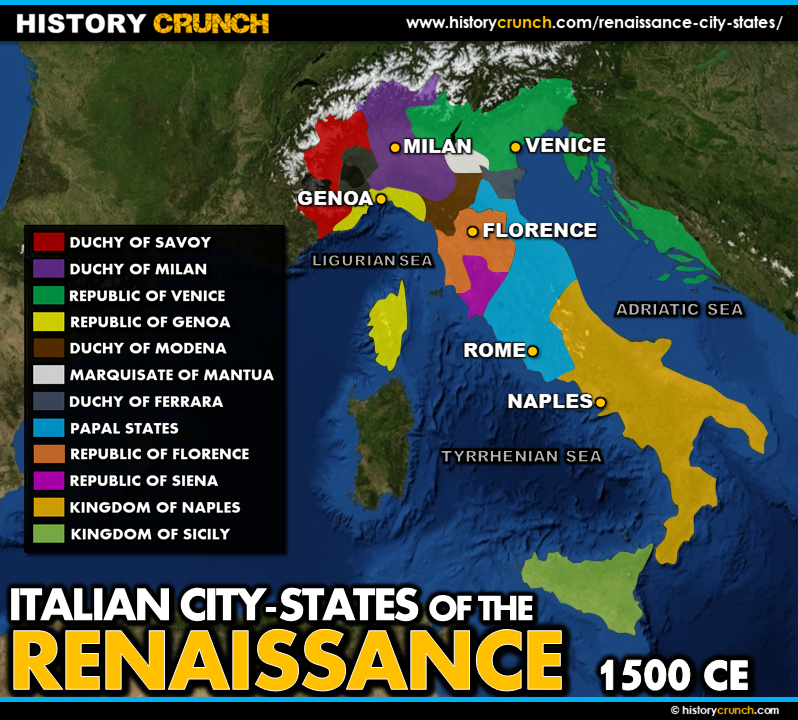
Another major impact of the crusades was the effect it had on trade. The pilgrimage of thousands of Europeans to the Holy Land created a need for new routes for supply shipments to feed and arm the crusaders. As such, towns and cities grew in size along the route to the Holy Land with many shops and markets. As well, port cities in Italy grew in size and wealth as merchants worked to meet the needs of travelling crusaders. In fact, some of these cities grew to such prominence that they became the famous city-states of the Renaissance centuries after.
IMPACTS OF THE CRUSADES – ROLE OF FEUDALISM
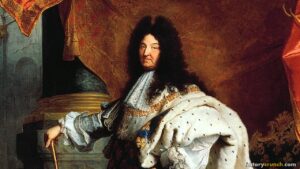
A third major impact of the crusades was the effect it had on the role of feudalism in the lives of Europeans. Feudalism was a form of government common during medieval Europe that involved society being structured in a very rigid and hierarchical way. It was popular in European society from the 9th century until the 15th century and was the form of government in which the country was dominated by an absolute monarch, in which all power was held within a single king. The monarch would rule over the country while the rest of the people were bound by a hierarchical system in which people were placed into classes in which they were born.
Due to the crusades, thousands of nobles and peasants left Europe in order to ‘take up the cross’ in the Holy Land. This meant that large populations of people left their land to fight and since feudalism was centered on the principles of land ownership and farming, this caused feudalism to lose its significance in European societies. As well, the increase in trade at certain ports and towns led to the rise of a merchant or middle class. This meant that peasants were able to build up small fortunes for themselves through trading. As a result, the feudal system began to lose its hold on society which eventually led to the ideals of the Renaissance and the emergence of powerful city-states instead of absolute monarchs. In all, the crusades had a profound impact on the world, but especially led to changes and advancements in Europe.