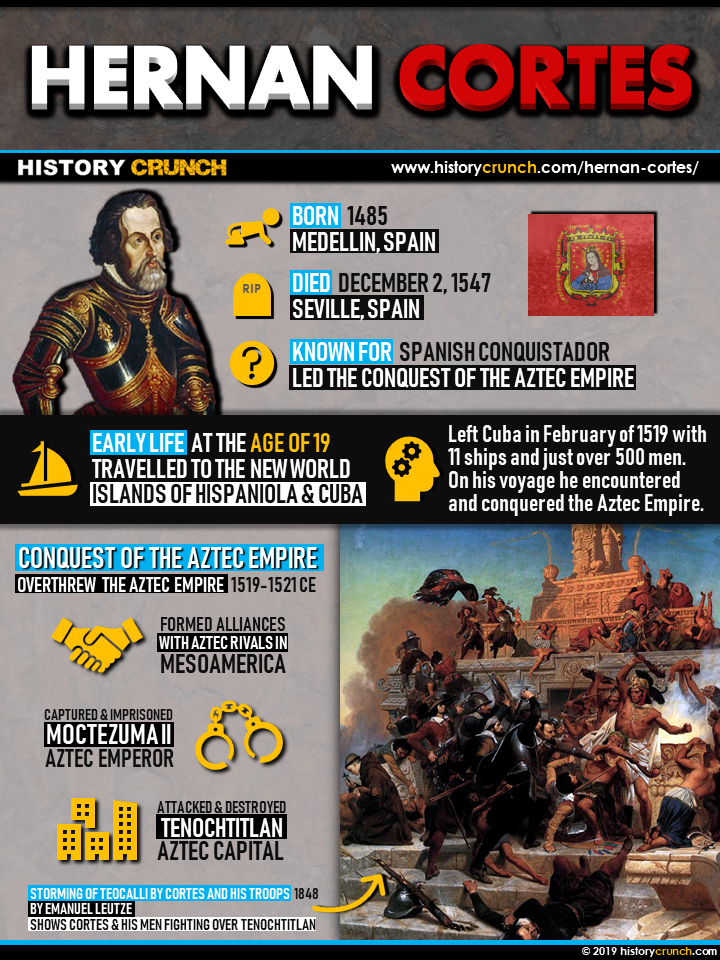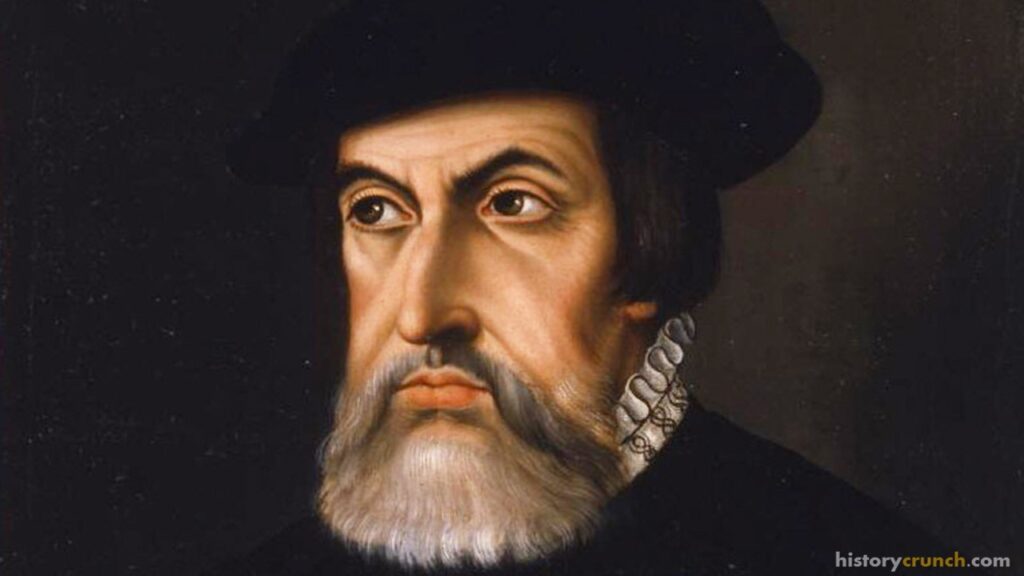
Hernán Cortés is one of the most significant figures in the history of the Age of Exploration. He famously led the Spanish conquest of the Aztec Empire in 1521 CE and led to the fall of the Aztec Empire. He is a complex historical figure, since he is often recognized for his accomplishments in exploration, but also credited with causing devastation and harm to the Aztec people.
HERNAN CORTES – EARLY LIFE
Hernán Cortés was born in Mendallin, Spain in 1485 CE. He was born into a family of lesser nobility, who were not necessarily wealthy. He was sent away to school when he was 14 years old, but did not enjoy it and returned home after just two years. After returning home, he did not pursue a career as a lawyer as his parents had wanted, and instead decided that he wanted to head to the New World in order to earn his living. He set sail for the New World at the age of just 19.
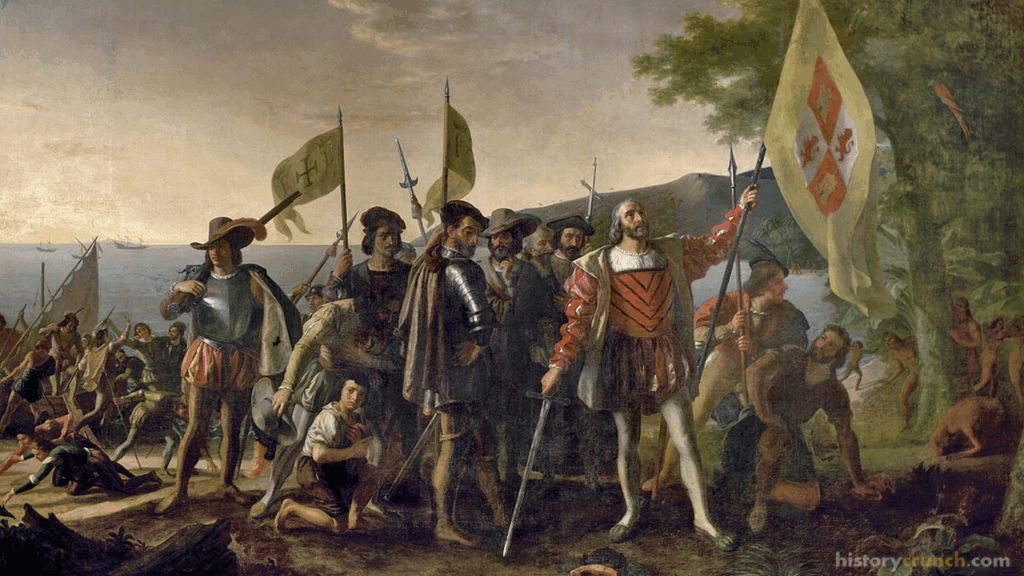
Cortés grew up during the Age of Exploration, which was a period when the Spanish Crown encouraged exploration of uncharted lands. In fact, several European nations were racing against one another, at the time, in order to capture control over newly ‘discovered’ New World. The fame of Christopher Columbus and the wealth from the New World inspired him to carve his own path. For instance, Columbus had made his first of four journeys to the New World in 1492 CE. This first journey, alongside Columbus’ accounts of what he encountered caused many to consider a life of exploration, including Hernán Cortés.
HERNAN CORTES – VOYAGE TO THE NEW WORLD
Cortés left Spain in 1504, sailing to the island of Hispaniola (present-day Dominican Republic and Haiti). Once setting sail, Cortés became a Spanish explorer, or ‘Conquistador’, and was one of the first people to start Spanish colonization of the Americas. As a result of his exploits, Cortés is one of the best known of the Spanish Conquistadors.
As stated above, Cortes’ first arrived at Hispaniola. Soon after, he then went to Cuba where he became a magistrate in one of the first Spanish towns. After a few successful years as a magistrate, he was elected as captain to lead an expedition to the mainland of modern-day Mexico. This is significant, because it led to the events of the Spanish conquest of the Aztec Empire.
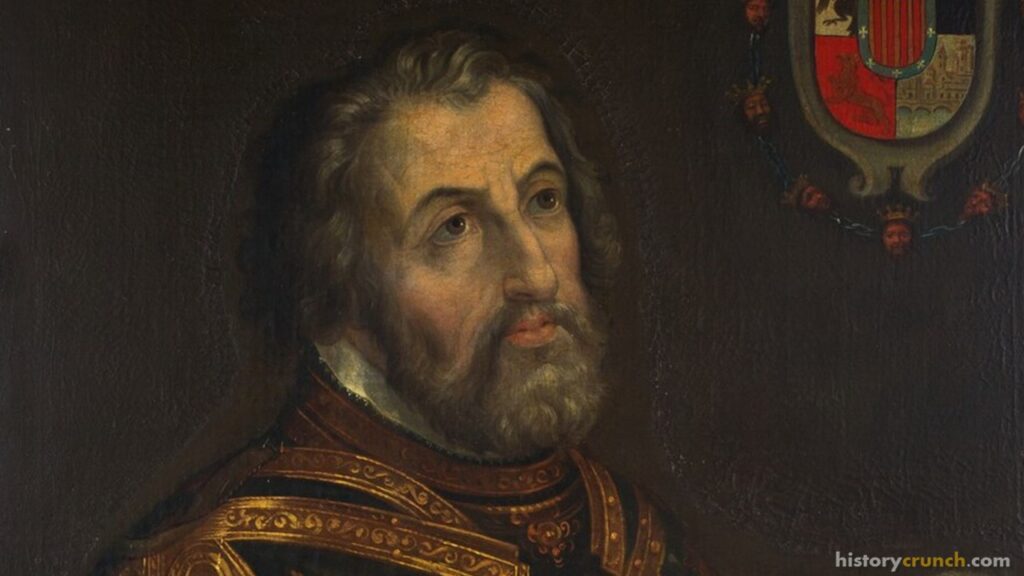
HERNAN CORTES – CONQUEST OF THE AZTEC EMPIRE
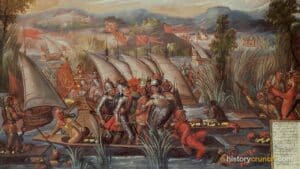
Cortés heard of the Aztec civilization through his contact with other indigenous tribes in the region. He had heard of their dominance in Mesoamerica and knew that they were a force to be reckoned with. He convinced Diego Velasquez, then governor of Cuba, to let him lead an expedition to Mexico. Right before his departure, Cortes was ordered to halt his expedition, but he defied the order and went on his journey anyways. As a result, he set sail soon after with approximately 11 ships and just over 500 men. The expedition first arrived in the area of the Yucatan Peninsula, to the east of the main territory of the Aztec Empire. Quickly, Hernan Cortés and his men encountered other Mesoamerican peoples living in the area.
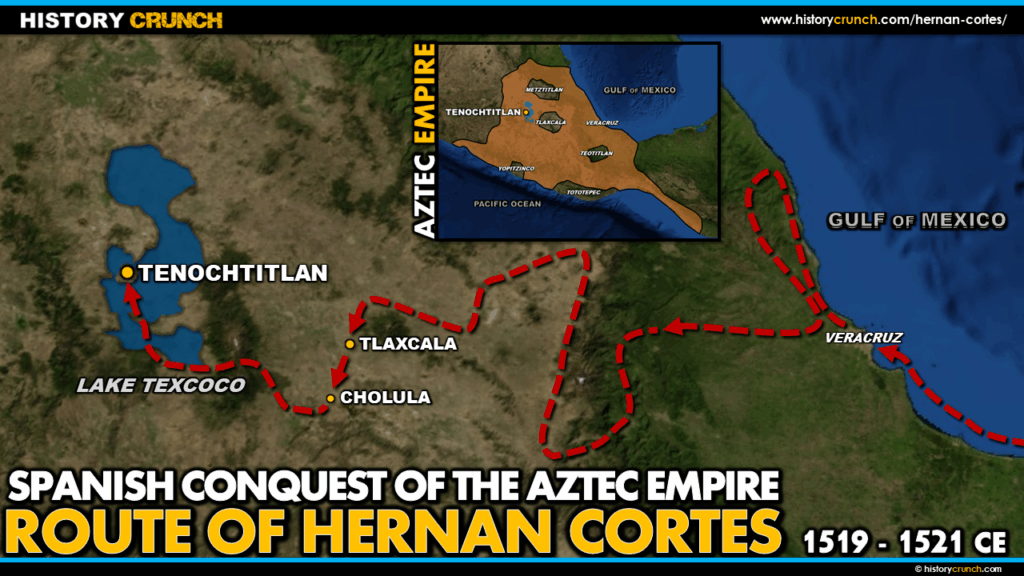
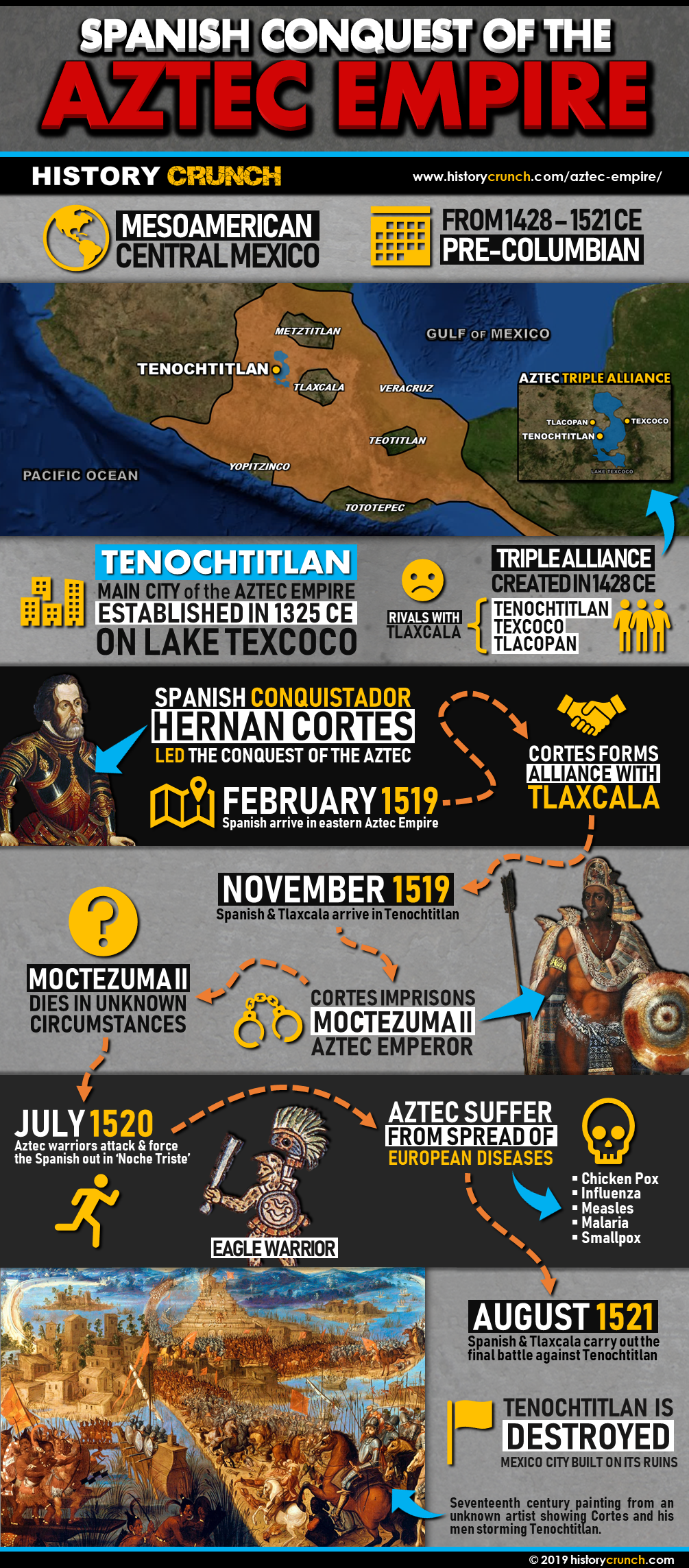
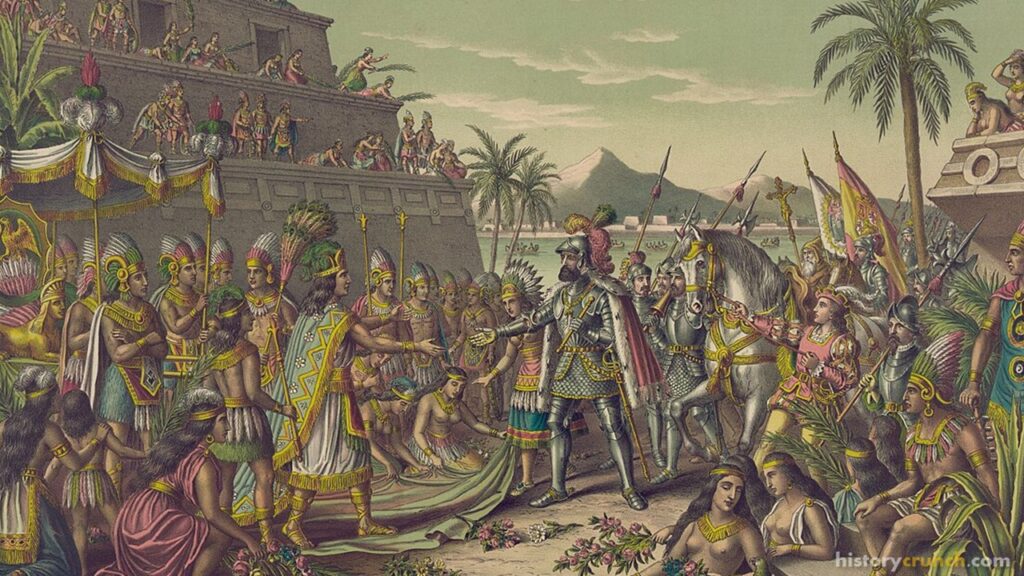
For example, they came into contact with the Tlaxcala, which was a powerful city-state to the east of Tenochtitlan. Tlaxcala were traditional enemies of the Aztec as the two had fought each in different battles including the Flower Wars. As such, the Tlaxcala used the opportunity to their advantage and allied themselves with the Spanish against Tenochtitlan. This is important, because Cortés used the Tlaxcala and other enemies of the Aztec in his later conquest of Tenochtitlan. Strangely, Cortes’ arrival coincided with an important Aztec prophecy about the Aztec god Quetzalcoatl who the Aztecs believed had created humans. As a result, Cortes was greeted with honor by the Aztecs, because they were unsure of whether or not he was indeed the god. Cortes used the confusion to his benefit and quickly began his conquest of the Aztec civilization. In general, Cortes overwhelmed the Aztecs by capturing their leader, Moctezuma II, and by leading several key battles against the Aztec people. Aided by the spread of European diseases, such as small pox Cortes took control of the great Aztec capital city. Cortes built Mexico City on the ruins of Tenochtitlan and it became one of the most powerful cities in the Spanish Empire. Click here to read more about the Spanish conquest of the Aztec Empire.
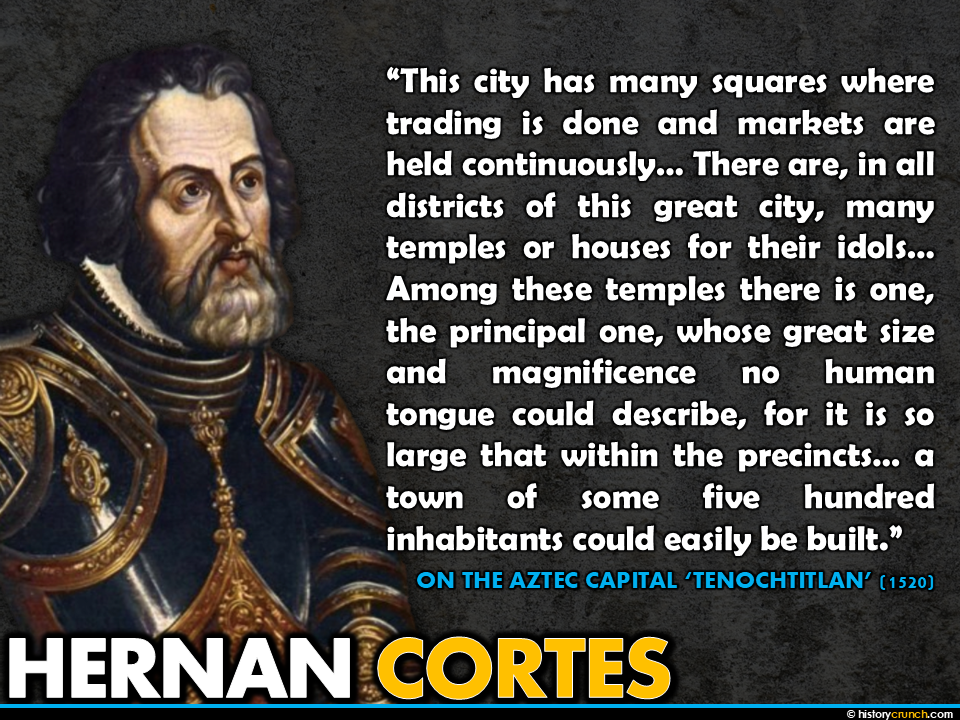
HERNAN CORTES – SIGNIFICANCE AND DEATH
The conquest of Tenochtitlan resulted in the fall of the Aztec Empire and it was one of the most notable of Cortes’ conquests, and it resulted in bringing Mexico under the rule of the Spanish Empire, in the 16th century. Cortes was appointed as Governor of New Spain, and was awarded the title of Marques del Valle de Oaxaca by the king. Cortes went back to Spain in 1541, but died six years later on the 2nd of December in 1547. Cortes is remembered today as one of the most famous explorers of the Age of Exploration and his exploits (Conquest of the Aztec Empire) would go on to inspire many other conquistadors, including Francisco Pizarro and his conquest of the Incan Empire.
HERNAN CORTES – INFOGRAPHIC