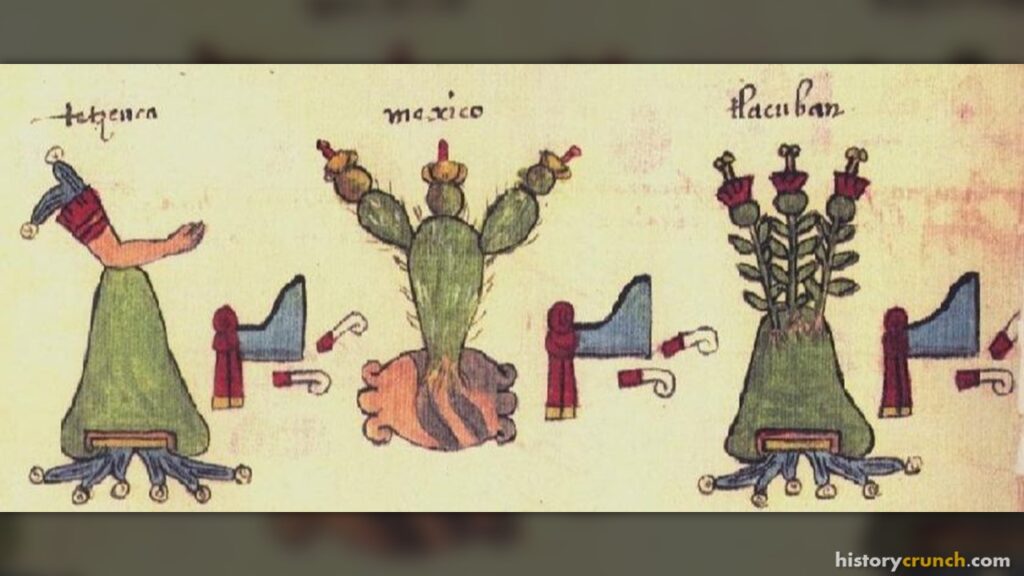
Following the Aztec’s founding and construction of Tenochtitlan in the Valley of Mexico in 1325, they quickly established their authority across the other societies in the valley. At the time the Valley of Mexico was populated by many different powerful civilizations, including: Chalco, Tepanec, Tlacopan, Texcoco, Culhuacan, and Chichimec. Several of these civilizations were also on the shores of Lake Texcoco, including the Culhuacan which was on the south shore.
 FactsthatCrunch
Which definition fits each city-state near Lake Texcoco in the Aztec Empire?
Aztec Warfare
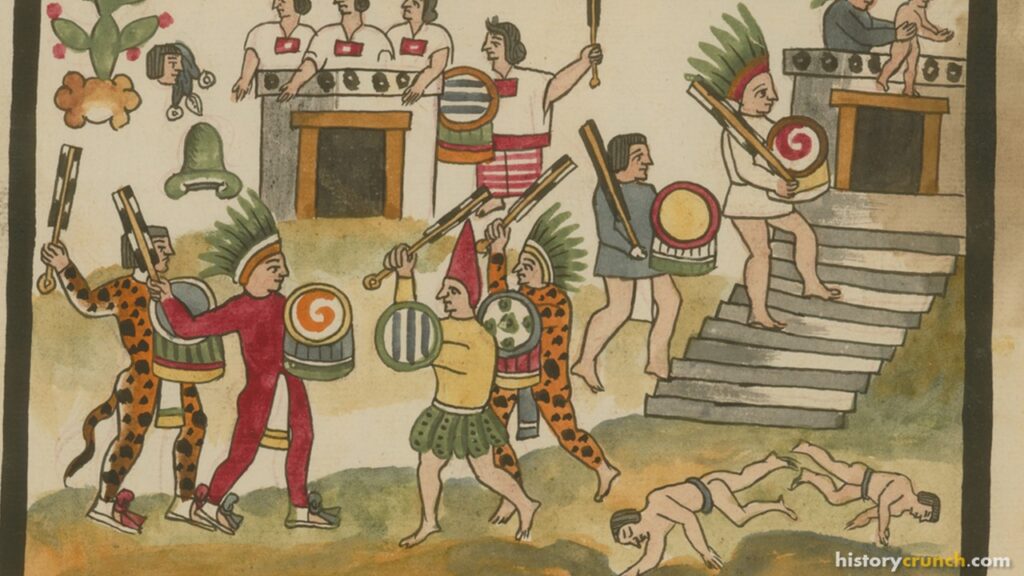
One of the ways in which the Aztec expanded in strength and wealth at the time was by acting as mercenariesSoldiers who fight for another group in exchange for payment or a share of wealth. and warriors for other societies in the region. For example, in the decades after the founding of Tenochtitlan they worked as warriors for the Tepanec people. The Tepanec used the Aztec to help with their battles and campaigns in the region against other rival societies. For their help the Aztec received portions of the wealth that the Tepanec gathered from the societies that they defeated. As a result, the city of Tenochtitlan grew in importance and wealth throughout the 14th and 15th centuries. In general though, the Aztec were subjects of the more powerful Tepanec and Aztec leaders were only allowed to remain in power by paying tributePayments of goods, wealth, or people that a conquered group was forced to give to a more powerful ruler. to the Tepanec. Also, during this time period, Aztec rulers increased the power of their society by forming strong alliances with other societies around Lake Texcoco. However, the relationship between the Aztecs and the Tepanec soon became strained and a conflict emerged.
 FactsthatCrunch
In the decades after founding Tenochtitlan in 1325 CE, the Aztec made the decision to serve as mercenary warriors for the Tepanec people, fighting the Tepanec's rivals in exchange for a share of captured wealth.
Aztec Triple Alliance
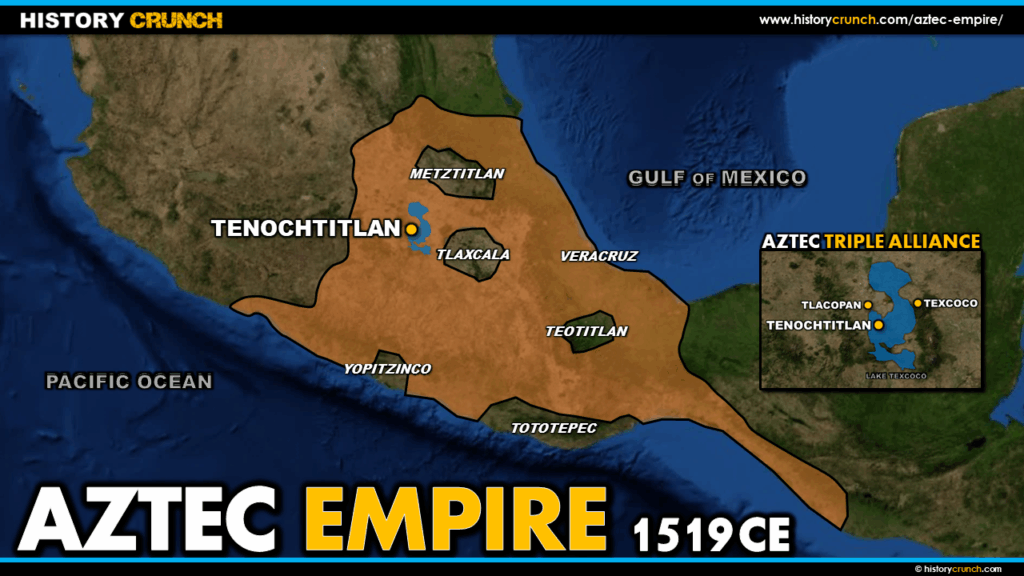
Itzcoatl became the leader of the Aztec in 1427 and became the fourth tlatoani of the Aztec people. He reigned over the Aztec Empire from 1427 until 1440, and is best remembered as the leader who saw the Aztecs become the most powerful Mesoamerican society in the Valley of Mexico. For example, as leader he famously formed an alliance with two other societies in the area in order to overthrow their mutual rivals. The Aztecs, Texcoco and Tlacopan joined forces in 1428 to create the Triple Alliance. Together they fought against the Tepanec and challenged them for superiority in the Valley of Mexico. Over time the three were able to overpower all other societies in the Valley of Mexico. As well, the Aztec became the strongest of the Triple AllianceA partnership formed in 1428 between the Aztec, Texcoco, and Tlacopan to defeat their shared rivals. and Tenochtitlan became the center of power in the region.
 FactsthatCrunch
In 1428, the Aztec ruler Itzcoatl joined forces with the city-states of Texcoco and Tlacopan to form the Triple Alliance, a partnership that defeated the Tepanec and ended their control over the Valley of Mexico. The Aztec emerged as the strongest of the three partners, and Tenochtitlan became the center of regional power.
Aztec leaders paid tribute to the Tepanec and could only stay in power with Tepanec approval
Tenochtitlan became the dominant power in the Valley of Mexico, free to expand the Aztec Empire outward
Expansion of the Aztec Empire
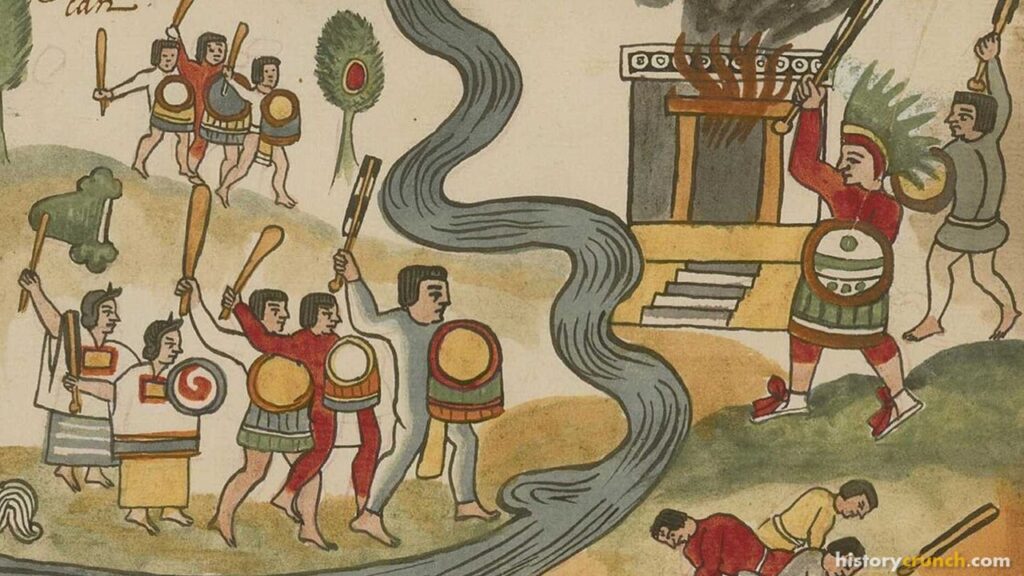
All of the Aztec rulers at this time pushed forward with expanding the Aztec Empire across Mexico and strengthening the power of Tenochtitlan. In fact, the city grew in size and importance during this time as the Aztec culture came to dominate the region. For example, by the early 16th century, Tenochtitlan is estimated to have been three to five square miles (eight to thirteen square kilometers), and have a population of between 200,000 and 300,000 people. This means that it was one of the largest cities in the world at the time and larger than any city in Spain. As well, the Aztec Empire had spread far from the Valley of Mexico during this time and, at its height, the empire consisted of land across most of central Mexico including the coastlines in both the Gulf of Mexico and Pacific Ocean. This vast expansion meant that the Aztec had conquered and suppressed many different groups of Mesoamerican peoples. The Aztec controlled these different societies by forcing them to provide tributes for payment and ritual sacrifice.
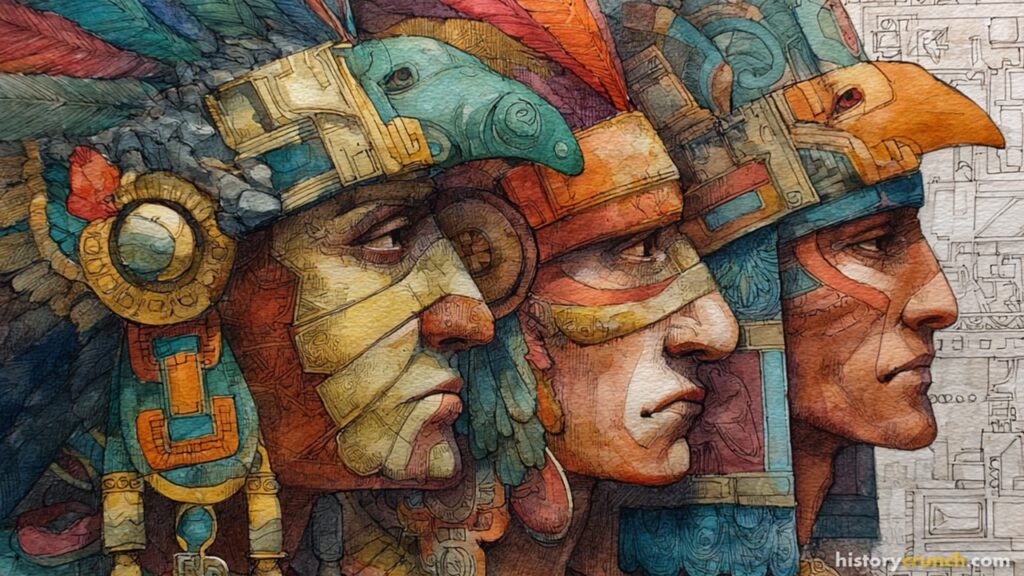
For example, conquered city-states, which are referred to as ‘altepetlA conquered city-state that was allowed to keep its own rulers and religion while under Aztec control.’, were allowed to maintain their current rulers and religion so long as they met several requirements, including: support the Aztec Empire and tlatoaniThe title given to the ruler or leader of the Aztec people. of Tenochtitlan, pay tribute to Tenochtitlan, and include the Aztec god Huitzilopochtli in their own religious beliefs and practices. Any altepetl that did not follow these conditions was often severely punished by the powerful Aztec military which would attack the city and destroy temples and public buildings. While this allowed the Aztecs to become the most powerful society in all of Mesoamerica, it also caused them to create many enemies from the surrounding city-states that they controlled.
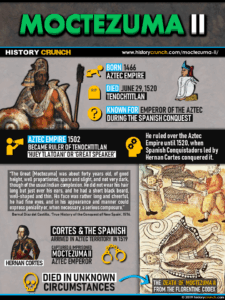
By the time of the arrival of Spanish conquistadorsSpanish soldiers and explorers who arrived in Aztec territory and sought to conquer Mesoamerican peoples. to the Aztec territory in 1519, the Aztecs were the most powerful society in all of Mesoamerica.
 FactsthatCrunch
When the Aztec conquered a city-state, they used a system of tribute and religion to keep control without replacing the local government.
Key Vocabulary
Mercenaries
Tribute
Tlatoani
Triple Alliance
Altepetl
Conquistadors
Huitzilopochtli
Frequently Asked Questions
How did the Aztec control other Mesoamerican city-states?
The Aztec controlled conquered city-states by forcing them to pay tribute and provide victims for ritual sacrifice. These city-states were called altepetl, and they usually kept their own rulers and religion. In return, they had to support Tenochtitlan and add the god Huitzilopochtli to their beliefs. Any altepetl that refused was attacked and had its temples and buildings destroyed.
What was the Aztec Triple Alliance?
The Triple Alliance was a partnership between the Aztec, Texcoco, and Tlacopan formed in 1428. The three joined forces to overthrow the powerful Tepanec, who had ruled the region. Over time they overpowered all other societies in the Valley of Mexico. The Aztec became the strongest of the three, and Tenochtitlan became the center of power.
Who was Itzcoatl?
Itzcoatl became the leader of the Aztec in 1427 and was the fourth tlatoani of his people. He reigned until 1440 and is remembered for making the Aztec the most powerful society in the Valley of Mexico. He famously formed the Triple Alliance to defeat the Tepanec. This victory set the stage for the growth of the Aztec Empire.
How large was the city of Tenochtitlan?
By the early 16th century, Tenochtitlan covered about three to five square miles (8 to 13 square kilometers). It had a population of between 200,000 and 300,000 people. This made it one of the largest cities in the world at the time. It was larger than any city in Spain at the time.
How did acting as mercenaries help the Aztec grow?
The Aztec gained wealth and strength by fighting as warriors for other societies in the region. For example, they worked as warriors for the Tepanec in the decades after founding Tenochtitlan. In return, they received a share of the wealth the Tepanec took from defeated groups. This helped Tenochtitlan grow in importance during the 14th and 15th centuries.
Why did the Aztec create so many enemies?
The Aztec created enemies because they forced conquered city-states to pay heavy tribute and give up people for sacrifice. This harsh control made them the most powerful society in Mesoamerica. However, it also left many surrounding groups angry and resentful. When Spanish conquistadors arrived in 1519, some of these groups were willing to join against the Aztec.
Cite This Article
To cite this article as a source, use one of the formats below.
MLA: Beck, Elias. “How Did the Aztec Control Other Mesoamerican City-States?: A Detailed Summary.” HistoryCrunch, 26 October 2026, https://historycrunch.com/how-did-the-aztec-control-other-mesoamerican-city-states/.
APA: Beck, E. (2026). How Did the Aztec Control Other Mesoamerican City-States?: A Detailed Summary. HistoryCrunch. https://historycrunch.com/how-did-the-aztec-control-other-mesoamerican-city-states/
Chicago: Beck, Elias. “How Did the Aztec Control Other Mesoamerican City-States?: A Detailed Summary.” HistoryCrunch. October 26, 2026. https://historycrunch.com/how-did-the-aztec-control-other-mesoamerican-city-states/
Sources
- Matthew Restall, When Montezuma Met Cortés / Seven Myths of the Spanish Conquest.
- Michael E. Smith, The Aztecs.
- Fordham Internet History Sourcebooks
- Richard Townsend, The Aztecs.