Aztec festivals and ceremonies were among the most important parts of daily life in the Aztec Empire, since they connected the Aztec people to their many gods and to the natural world around them. The Aztecs were a deeply religious society, and they organized much of their year around a busy calendar of celebrations, offerings, and rituals. These events honored specific gods, marked the planting and harvest of crops, and were believed to keep the entire universe in balance. Because of this, festivals and ceremonies were not just entertainment but a serious religious duty for everyone, from farmers and merchants to priests and the emperor himself.
An Aztec festival was a public religious celebration tied to a certain month or date on the Aztec calendar and dedicated to one or more gods. A ceremony, or ritual, was the set of sacred actions carried out during that festival, such as fasting, feasting, dancing, processions, offerings, and human sacrifice. Priests planned and led these events, while ordinary people took part by watching, praying, and joining in the singing and dancing in the great plazas of Aztec cities.
What Was the Aztec Empire?
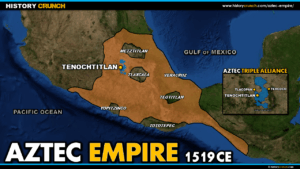
The Aztec Empire was a powerful civilization that ruled over much of central Mexico in the centuries before Spanish conquistadors arrived during the European Age of Exploration. The Aztecs, who called themselves the Mexica, established their capital city of Tenochtitlan on the shores of Lake Texcoco in 1325 CE. From there, their power spread quickly across the region as they conquered many rival city-states, each of which was known as an altepetl.
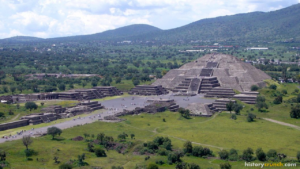
Religion was a central part of the Aztec Empire, and the Aztecs worshipped a wide array of gods. In general, the Aztecs shared many of their beliefs and gods with earlier and neighboring Mesoamerican societies, such as the Toltec and the people of Teotihuacan. When the Aztecs conquered a new city-state, they would force the defeated people to accept Aztec gods while also allowing them to keep their own. As a result, the Aztec religion grew over time to include a huge number of gods, and festivals and ceremonies became the main way that the Aztec people celebrated and honored these gods.
How Did the Aztec Calendar Shape Festivals?
The timing of Aztec festivals depended heavily on the Aztec calendar. In fact, the Aztecs used two calendars at once. The first was a 365-day solar calendar called the xiuhpohualli, which was made up of eighteen months that each lasted twenty days, followed by a short period of five days at the end of the year. These five extra days were called nemontemi, a word that translates as ‘unlucky’ or ‘useless’.
Each of the eighteen months had its own name and its own major festival or ceremony, and each of those festivals was linked to one or more gods. Most of these celebrations were tied to the farming seasons, such as the sowing of corn or the gathering of the harvest. The second calendar was a 260-day sacred calendar called the tonalpohualli, which translates as ‘day count’. Historians believe this calendar was mainly used to schedule rituals and to decide which days were lucky or unlucky, which made both calendars deeply important to Aztec religious life.
The nemontemi days at the end of the solar year were a time of bad luck. During those five days, people stayed inside, ate little, and did no important business while they waited for the next year to begin. As stated above, no major ceremonies were held during this uneasy period.
What Happened at Aztec Festivals and Ceremonies?
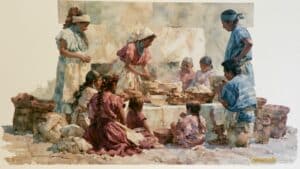
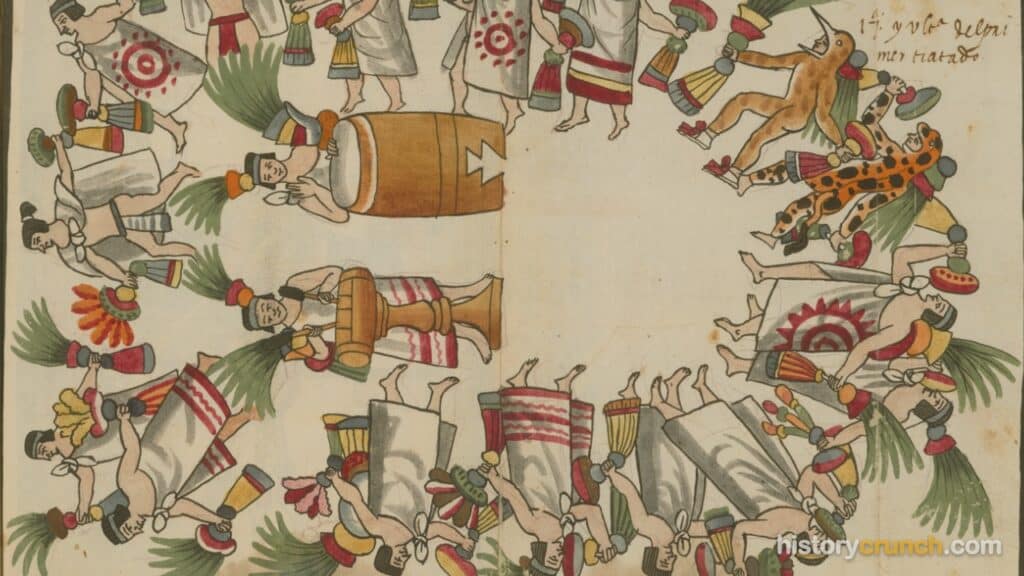
Aztec festivals filled the year with color, sound, and religious meaning. During these events, people fasted and feasted, dressed in their finest clothing, and danced to music in the large public plazas of Aztec cities. Priests organized and guided each ceremony, making sure that every offering, procession, and ritual was carried out in the correct way.
One common feature of these celebrations was the choosing of a person to impersonate a god. More specifically, in many major ceremonies an individual was selected to dress as a particular god and to be treated as that god by the people, right up until the moment of sacrifice. Offerings also took many forms. Some rituals used the blood of small birds or other animals, while others involved the practice known as bloodletting, in which priests and ordinary people would purposely cut their own tongues or skin with sharp blades to offer their blood to the gods.
Many of the largest ceremonies, however, involved human sacrifice. From the perspective of the Aztecs, this sacrifice was necessary to ensure the survival of life. In Aztec belief, the world itself had been created from the sacrifice of the gods, so the Aztecs viewed human sacrifice as a way to repay their debt to those gods and to keep the universe alive. Sacrifices most often took place atop large temples and pyramids, with the most famous being the Templo Mayor in Tenochtitlan, and they most commonly involved the removal of the victim’s heart.
Which Aztec Festivals Were the Most Important?
One of the best-known Aztec festivals was Toxcatl, held in the fifth month of the calendar, usually between May 5th and May 22nd. This festival honored the god Tezcatlipoca, whose name translates as ‘smoking mirror’ in the Nahuatl language and who was linked to the night sky and night winds. In preparation, a young man was chosen to represent Tezcatlipoca, and for an entire year he lived dressed in the likeness of the god and was treated as a god by the people. At the time of the festival, the young man was sacrificed in honor of Tezcatlipoca, and it was considered a great honor to serve this role.
Another important spring festival was Tlacaxipehualiztli, whose name meant ‘flaying of men’ and which honored Xipe Totec, a god of vegetation and agriculture sometimes called ‘Our Lord the Flayed One’. During this twenty-day celebration, captured warriors were sacrificed, and priests wore the flayed skins of the victims to symbolize the new covering of plants that the earth grows each spring. The festival also featured gladiatorial battles, in which captives fought while tethered to a stone against fully armed Aztec warriors.
Rain and farming festivals were especially common, since the Aztecs depended on good harvests to survive. Several times a year the Aztecs held festivals for Tlaloc, the god of rain, water, and fertility. For instance, in a rain festival called Atlcahualo at the start of the agricultural year, children were taken to sacred mountaintops to be sacrificed to Tlaloc in hopes of bringing the rains. Other festivals honored the maize goddess Chicomecoatl, including the autumn celebration of Ochpaniztli, when commoners swept the streets to prepare for the harvest season and to please the gods of the earth.
The god Huitzilopochtli, the patron god of war and the sun, was honored in the festival of Panquetzaliztli, held in late November and early December. During this event, sacrificial victims were dressed in the costume and blue body paint of Huitzilopochtli before their hearts were removed. The celebration included grand processions and dances that reflected the military power of the Aztec Empire.
What Was the New Fire Ceremony?
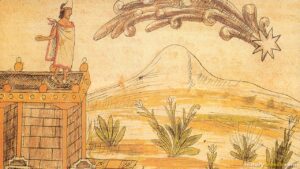
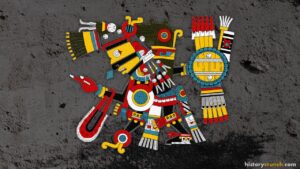
The single greatest Aztec ceremony did not happen every year. Instead, it took place once every 52 years, when the two Aztec calendars aligned and a new cycle of time began. This was the New Fire Ceremony, known in Nahuatl as the xiuhmolpilli or Toxiuhmolpilia, and it involved every citizen of the Aztec realm.
In the days before the ceremony, all activity stopped, and people put out every house and temple fire and threw away their old tools and utensils. On a hill outside the capital, priests sacrificed a chosen victim and lit a new fire in the opening in his chest. From that single flame, priests lit torches and carried the new fire down the hill to the cities and temples, where house and temple fires were relit one by one. The Aztecs believed that this ceremony prevented the end of the world, and afterward people bought new clothing and tools as a fresh 52-year cycle began.
Significance of Aztec Festivals and Ceremonies
Aztec festivals and ceremonies were significant because they tied together nearly every part of Aztec life, including religion, farming, warfare, and government. Since each of the eighteen months of the year had its own festival, the Aztec people were almost always preparing for, celebrating, or recovering from a major religious event. These celebrations gave structure to the year and reminded people of their duties to the gods.
These events also had a powerful effect on Aztec society and politics. In reality, the need for sacrificial victims helped drive the Aztec Empire to war, since captured warriors were often used in ceremonies. Festivals also displayed the wealth and power of the Aztec state, with grand processions, music, and offerings that impressed both the Aztec people and visitors from conquered lands.
Finally, Aztec festivals and ceremonies remain significant today because of what they reveal about how the Aztecs understood the universe. Although the practice of human sacrifice appears shocking to modern readers, the rituals faithfully reflected the Aztec view that the world was fragile and needed constant care to survive. After the Spanish conquest, many Aztec beliefs blended with Christianity, and echoes of these ancient celebrations can still be seen in some of the festivals of modern Mexico.
Frequently Asked Questions
Why Were Festivals So Important to the Aztecs?
Festivals were important to the Aztecs because they were the main way the people honored their gods and kept the universe in balance. The Aztecs believed that without regular offerings and ceremonies, the gods would grow angry, crops would fail, and even the sun might stop rising. Because of this, festivals were treated as a serious duty rather than simple entertainment.
How Many Aztec Festivals Were There Each Year?
There was at least one major festival for each of the eighteen months of the Aztec solar calendar, so the Aztecs held about eighteen main festivals every year. Each month lasted twenty days and was linked to its own god or gods. In addition, smaller rituals and the special five-day nemontemi period rounded out the yearly cycle.
Who Led Aztec Ceremonies?
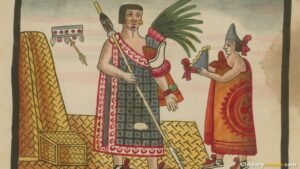
Aztec priests led and organized nearly all religious ceremonies. Priests went through long and demanding training and were highly respected and powerful members of Aztec society. During the most important state ceremonies, even the emperor took part, sometimes climbing sacred mountains to make offerings to the gods.
Did Every Aztec Festival Include Human Sacrifice?
No, not every Aztec festival required human sacrifice, though many of the largest ones did. Some ceremonies used only offerings of food, flowers, small birds, or the blessing of seed corn by priests. Other rituals relied on bloodletting, where people offered small amounts of their own blood instead of a human life.
What Was the Biggest Aztec Ceremony?
The biggest Aztec ceremony was the New Fire Ceremony, which was held only once every 52 years. It marked the moment when the two Aztec calendars lined up and a new cycle of time began. The Aztecs believed the ceremony was so important that it kept the world from coming to an end.
Cite This Article
To cite this article as a source, use one of the formats below.
MLA: Millar, B. “Aztec Festivals and Ceremonies: A Detailed Summary.” HistoryCrunch, 18 July 2026, https://historycrunch.com/aztec-festivals-and-ceremonies/.
APA: Millar, B. (2026). Aztec Festivals and Ceremonies: A Detailed Summary. HistoryCrunch. https://historycrunch.com/aztec-festivals-and-ceremonies/
Chicago: Millar, B. “Aztec Festivals and Ceremonies: A Detailed Summary.” HistoryCrunch. July 18, 2026. https://historycrunch.com/aztec-festivals-and-ceremonies/
Sources
- The Met (Heilbrunn Timeline) — Aztec art
- Matthew Restall, When Montezuma Met Cortés / Seven Myths of the Spanish Conquest.