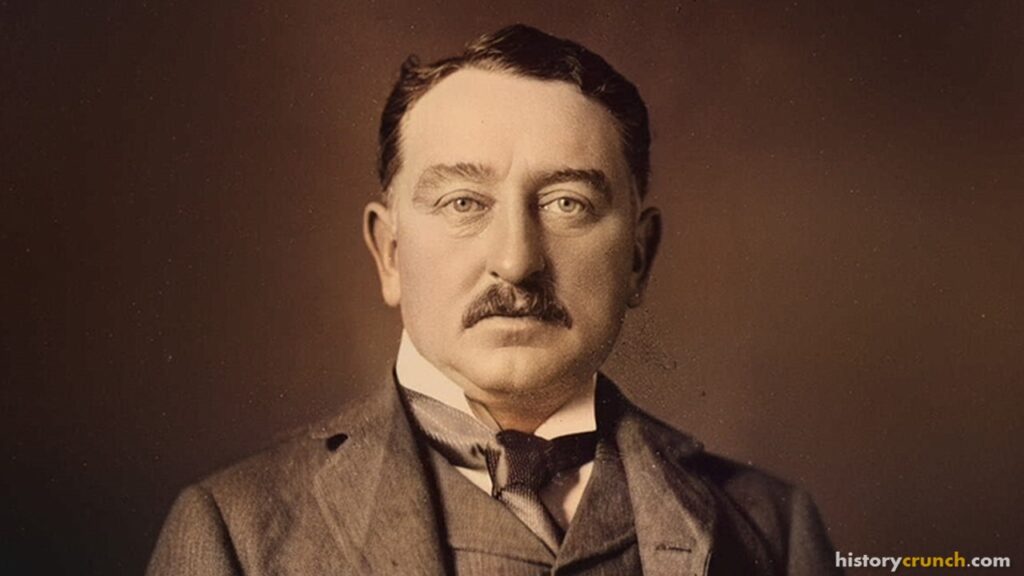
Cecil Rhodes was one of the most important figures in British imperialism in Africa, especially in relation to the history and colonization of South Africa. For instance, Cecil Rhodes was a wealthy British entrepreneurA person who starts and runs businesses, often taking financial risks to make a profit. who owned several mines in South Africa. As well, he served as the Prime Minister of the Cape Colony from 1890 until 1896. As such, historians consider Cecil Rhodes to be a significant person in the history of British ImperialismA policy where one country extends power over others by taking control of their land, resources, or governments. in Africa, the Scramble for Africa, and the history of South Africa. In fact, the famous political cartoon ‘The Rhodes ColossusA figure of enormous size, power, or importance, often used to describe someone dominating a wide area.’ by Edward Linley Sambourne symbolizes his importance to Africa in the late 19th century.
 FactsthatCrunch
Rhodes developed his beliefs about the British Empire while studying at Oriel College, Oxford, and spent years promoting the idea of a 'Cape Town to Cairo' railway and telegraph line to extend British control across Africa. He also established the Rhodes Scholarship, funded through his estate, to send postgraduate students to Oxford University, a program that continues today.
Cecil Rhodes’ Early Life
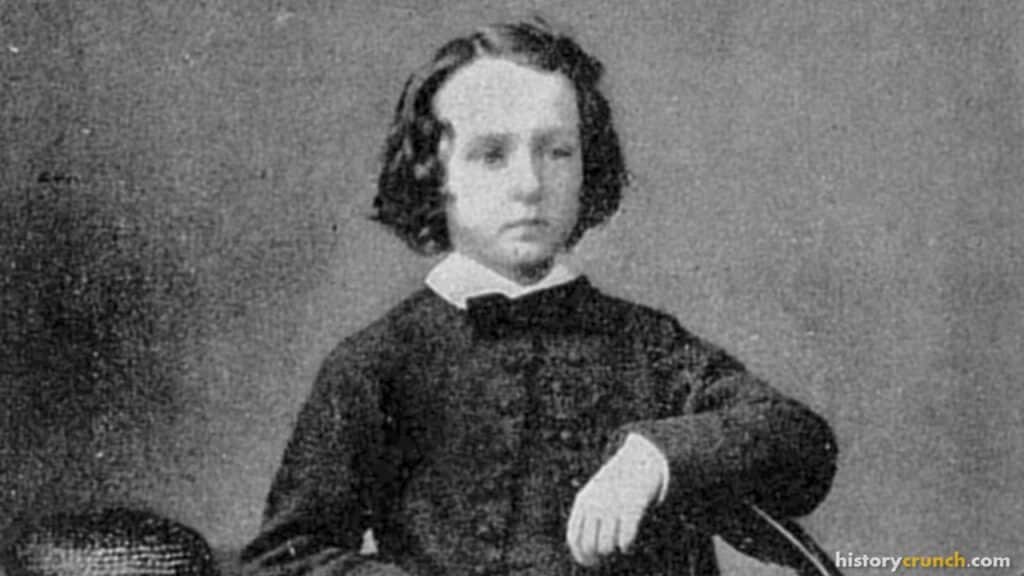
Cecil Rhodes was born on July 5th, 1853 in Bishop’s Stortford, Hertfordshire, England. Cecil’s father, Francis, was a reverend for the Church of England who was serving as a vicarA Church of England priest assigned to a particular local parish or congregation. at the time of Cecil’s birth. As a young man, Cecil attended grammar school in England, but also suffered from health issues that would plague him for the rest of his life. These included bouts of asthma and ongoing heart issues. Due to this, his family moved him to South Africa. The Cape Colony in South Africa had been part of the British Empire since 1806. It was hoped that the climate of the Cape Colony would help with his asthma and heart issues.
While there, Cecil joined his brother Herbert on a cotton farm near Natal. The time on the cotton farm was relatively short-lived though and in 1871, Cecil and his brother moved to the town of Kimberley, where diamonds had been recently discovered. In fact, diamonds were discovered in territory near the Orange Free State in the 1860s, which attracted mining companies throughout the 1870s and 1880s. The Orange Free State was a Boer state that was opposed to British influence in the area. The discovery of diamonds put more pressure on the BoersDescendants of the original Dutch colonizers of South Africa who resisted British control of the region., as British miners and businesses flooded into the region. One of these entrepreneurs was Cecil Rhodes.
Throughout the 1870s, Cecil Rhodes split his time between England and South Africa. In England, he was attending Oriel College in Oxford. His time at Oxford inspired his imperialistic beliefs about the British. Meanwhile, his time in South Africa was used to continue his business interests in the diamond mines of Kimberley. In fact, Rhodes eventually co-founded the De Beers Diamond Company in 1888. His business ventures in diamond mining proved so successful that he became an incredibly wealthy man.
 FactsthatCrunch
Cecil Rhodes first went to southern Africa in 1870, when he was just 17, because doctors hoped the warmer climate would help his weak lungs and heart.
Within a few years he was making a fortune in the diamond fields of Kimberley. By the time he died at 48, he was one of the richest and most powerful men in the British Empire.
Cecil Rhodes & South African Politics
Cecil Rhodes’ success in diamond mining helped propel him into the world of politics in the 1880s. In fact, he was elected to the Cape of Good Hope Parliament in 1880 at the age of 27. His political ambitions eventually led to his election as the 6th Prime Minister of the Cape Colony. He served as the Prime Minister from July of 1890 until January of 1896.
His time in politics was important to both Britain and South Africa. This is because Cecil Rhodes was a strong believer in the British Empire. For instance, he argued in favor of British imperialism and colonization of Africa and promoted the idea of a ‘Cape Town to Cairo’ railway and telegraph line. In fact, this led to the creation of the famous 1892 political cartoon by Edward Linley Sambourne titled ‘The Rhodes Colossus’. In short, the notion of a ‘Cape Town to Cairo’ line was promoting British interests and control over the African continent.
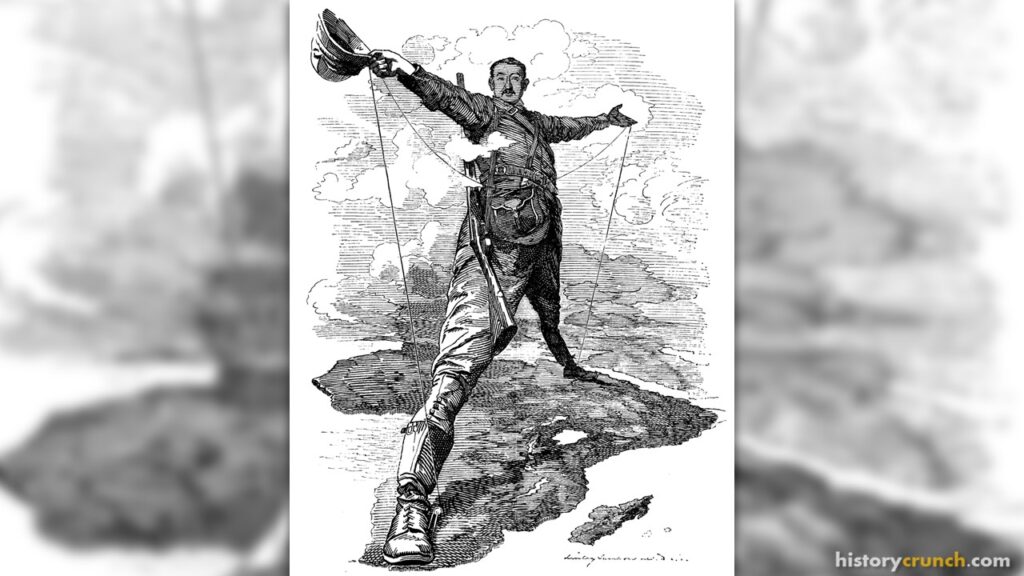
Furthermore, Rhodes also had an impact on South Africa with the formation of Rhodesia in the 1890s. Rhodesia was the term given to a region in southern Africa that was controlled by Cecil Rhodes’ company, the British South Africa Company. Rhodes was also a significant figure in the formation of the region. As such, the region was named after Rhodes and formally gained recognition in 1895.
Another important factor of Cecil Rhodes’ time in South African politics was the tensions that emerged between the British and the Boers. This was due to several factors, but primarily centered on the control of land and differing ways of life. The Boers were the descendants of the original Dutch colonizers of South Africa and established the Dutch Cape Colony. The Dutch Cape Colony continued to expand throughout the 1700s and became incredibly diverse, but was primarily based on the culture and practices of the early Dutch settlers. The British began to colonize South Africa in the early 1800s and the divide between the two groups continued to expand throughout the 19th century.
By the 1890s, the conflict between the British and the Dutch had expanded significantly and many of the original Boer settlers had established two new Boer states: Transvaal and the Orange Free State. As such, during Cecil Rhodes’ time as the Prime Minister of the Cape Colony, he oversaw and had to deal with the tensions and growing crisis. In fact, this eventually led to his end as Prime Minister in 1896 with the failed Jameson Raid.
The Jameson Raid took place from December 29th, 1895 until January 2nd, 1896. In short, the raid was carried out by British colonial administrator Leander Jameson and troops from Cecil Rhodes’ British South Africa Company, against the Transvaal State. The goal of the raid was to cause an uprising in the Transvaal State in hopes of overthrowing President Paul Kruger and allowing the British to gain control over the region. Instead, the raid was a failure and no uprising ever occurred. As a result, the British authorities, including Cecil Rhodes, were highly embarrassed by the raid. In fact, the embarrassment of the failed raid led to the end of Cecil Rhodes as the Prime Minister, and he resigned just ten days later on January 12th, 1896. Further to this idea, the Jameson Raid also played a role in the outbreak of the Boer War of 1899. For this reason, historians consider the Jameson Raid a major cause of the Boer War.
 FactsthatCrunch
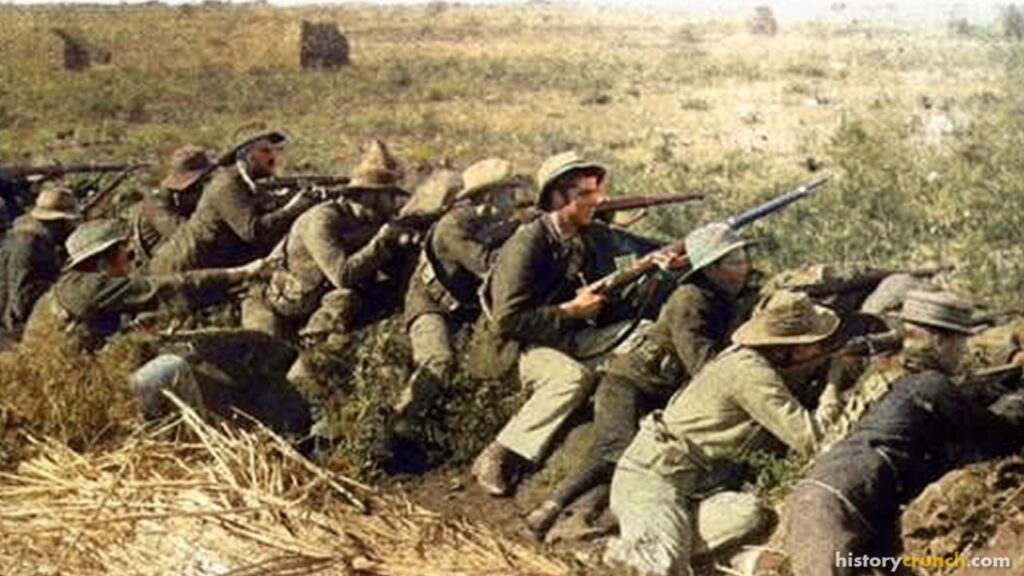
In early January 1896, British colonial administrator Leander Jameson and troops from Cecil Rhodes' British South Africa Company had just surrendered to Boer forces in the Transvaal after their raid collapsed without sparking any uprising. Rhodes, serving as Prime Minister of the Cape Colony, was now deeply tied to a failed armed attack on a neighboring Boer state. It was January 1896, and British authorities had to decide what came next for Rhodes and for relations with the Boers in the overall Age of Imperialism.
Cecil Rhodes’ Death & Legacy
Cecil Rhodes’ reputation in politics never recovered following his resignation. Regardless, the health issues that he struggled with in his earlier life became a much bigger issue again in his later years. For instance, he suffered from breathing issues and an ongoing heart problem. The heart issue became a larger issue for his overall health in his 40s, and he finally died on March 26th, 1902 at the age of 48. He was buried in Rhodesia, which today is part of Zimbabwe.
Without a doubt, Cecil Rhodes left a considerable legacy on the world, especially in South Africa. His business practices and political views helped expand the British Empire in Africa and furthered the colonization of the region. For this reason, some modern people criticize Rhodes as a historical figure that should not be celebrated. In fact, some have called into question his memorial in Africa and other memorials dedicated to his memory. However, others have argued that he was an influential figure that had a profound impact on the history of South Africa. He is also notable for the establishment of the Rhodes Scholarship at the time of his death. The scholarship provides postgraduateA level of university study pursued after a student has already completed a first degree. students with funds to attend Oxford University in England.
FactsthatCrunchWhen Cecil Rhodes died in 1902, his will set aside funds to create the Rhodes Scholarship, a program to send postgraduate students to study at Oriel College, Oxford, the same college Rhodes himself had attended in the 1870s. The scholarship was designed to bring together students from British colonies, the United States, and Germany, reflecting Rhodes's belief in the political importance of English-speaking education. It was one of the first large international scholarship programs of its kind.
The Rhodes Scholarship continues today and is widely recognized as a prestigious award for postgraduate study at the University of Oxford in England. Students from more than 60 countries now compete for the award each year, an overall reach far greater than the original program. In recent years, universities and public debates have also examined Rhodes's legacy as a promoter of British imperialism, raising questions about whether the scholarship should carry his name.
A program built on one man's imperialist beliefs has grown into a global academic award, making Rhodes's legacy both celebrated and contested more than a century after his death.
Key Vocabulary
Imperialism
Entrepreneur
Vicar
Boers
Colossus
Postgraduate
Frequently Asked Questions
Who was Cecil Rhodes?
Cecil Rhodes was a wealthy British businessman and politician who played a major role in British imperialism in Africa. He owned several diamond mines in South Africa and served as Prime Minister of the Cape Colony. His actions helped expand the British Empire across southern Africa during the late 1800s.
How did Cecil Rhodes become so wealthy?
Cecil Rhodes made his fortune in the diamond mines near Kimberley, South Africa. He moved there in 1871 after diamonds were discovered in the region. In 1888 he co-founded the De Beers Diamond Company, which made him one of the richest men of his time.
What was the Jameson Raid and why did it matter?
The Jameson Raid was a failed attack on the Boer state of Transvaal from December 29th, 1895 until January 2nd, 1896. It aimed to spark an uprising against President Paul Kruger and give Britain control of the region. The raid embarrassed Rhodes and forced him to resign as Prime Minister on January 12th, 1896.
Why is Cecil Rhodes a controversial figure today?
Cecil Rhodes is controversial because his business and political actions furthered the colonization of Africa. Many people today argue that his support of imperialism harmed African peoples and that he should not be celebrated. This has led to calls to remove statues and memorials dedicated to him.
What was the Rhodes Scholarship?
The Rhodes Scholarship is a program funded by Cecil Rhodes that pays for students to study at Oxford University in England. It was created at the time of his death in 1902. The scholarship remains one of the most famous awards for postgraduate students in the world.
How did Cecil Rhodes die?
Cecil Rhodes died on March 26th, 1902 at the age of 48 from ongoing heart problems. He had struggled with asthma and heart issues since he was young. He was buried in Rhodesia, a region named after him that is now part of Zimbabwe.
Cite This Article
To cite this article as a source, use one of the formats below.
MLA: Beck, Elias. “Cecil Rhodes: A Detailed Biography.” HistoryCrunch, 28 October 2026, https://historycrunch.com/cecil-rhodes/.
APA: Beck, E. (2026). Cecil Rhodes: A Detailed Biography. HistoryCrunch. https://historycrunch.com/cecil-rhodes/
Chicago: Beck, Elias. “Cecil Rhodes: A Detailed Biography.” HistoryCrunch. October 28, 2026. https://historycrunch.com/cecil-rhodes/
Sources
- Eric Hobsbawm, The Age of Empire 1875-1914.
- John Darwin, After Tamerlane / Unfinished Empire.
- Fordham Modern History Sourcebook