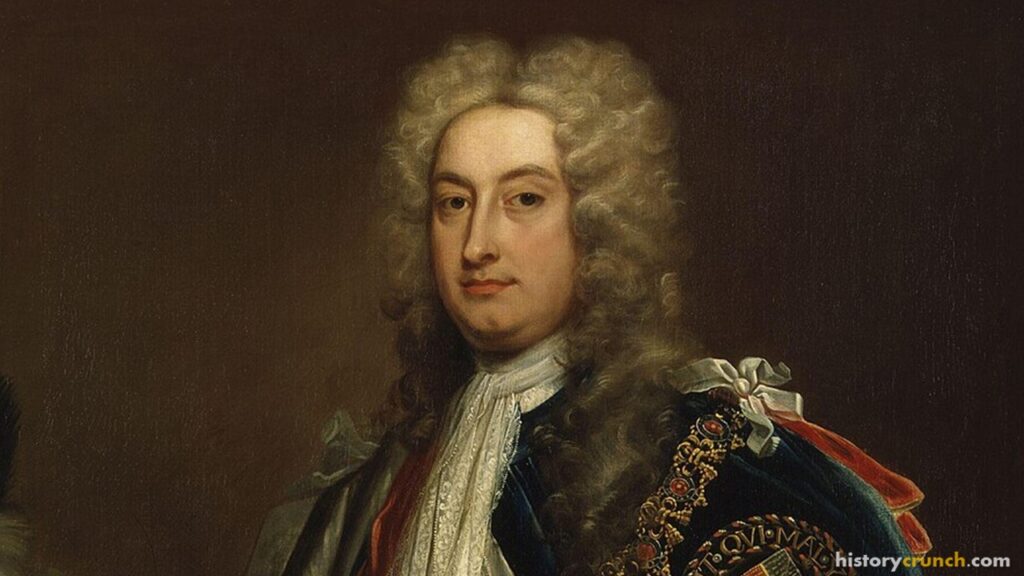
Charles Townshend: A Detailed Biography

Charles Townshend
Portrait of Charles Townshend, 2nd Viscount Townshend by Godfrey Kneller (1715)

Table of Contents

Charles Townshend is remembered today as a significant statesman for England, but more importantly for his role in the British Agricultural Revolution and the innovation of crop rotation.

Charles Townshend was an English statesman who served as the Secretary of State for a decade. Often known as ‘Turnip Townshend’, he was a pivotal figure in early 18th-century British politics and agriculture. For example, Townshend notable for his roles in both the government and agricultural reform. His contributions to crop rotation significantly advanced farming practices, earning him a lasting place in agricultural history, alongside a turbulent and influential political career.

CHARLES TOWNSHEND – EARLY LIFE

He was born on April 18th, 1674 at Raynham Hall, Norfolk, England.  He is best known for his role in the British Agricultural Revolution in the years before and during the Industrial Revolution.  Along with others such as Jethro Tull, he helped revolutionize food production in the country which led to a boom in the population.
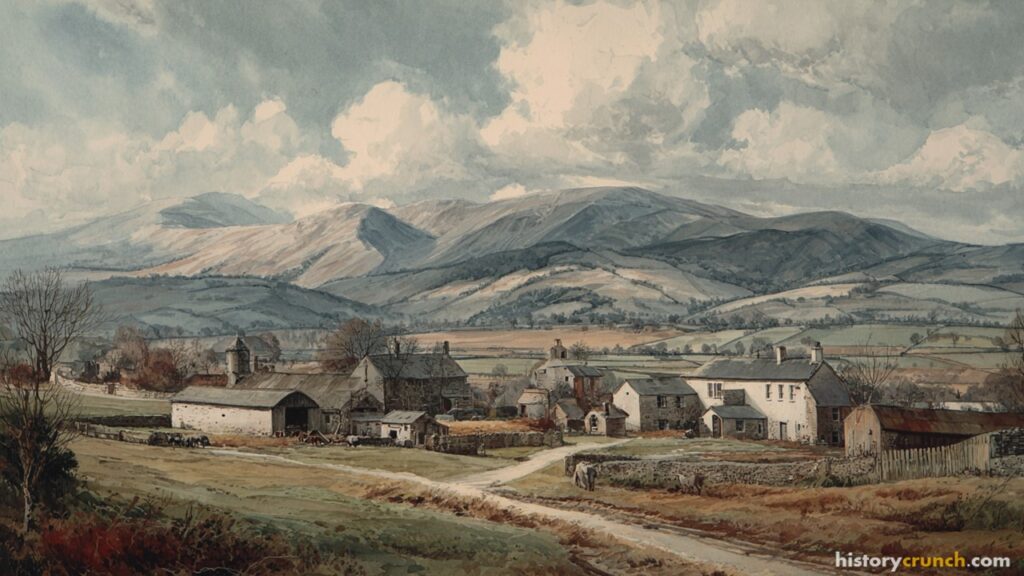
British Agricultural Revolution
The British Agricultural Revolution was a major event in world history and had a profound effect on populations throughout Europe and other historical events.

CHARLES TOWNSHEND – CROP ROTATION

In the centuries before the start of the Agricultural Revolution, European farmers practised a form of farming in which they planted the same crop in the same field every year.  This caused them to have to not plant anything in the field every few years in order to avoid destroying the quality of the soil.  However, Charles Townshend, a British statesman, identified a way to improve farming practises and thus produce more food.  In the 1730s, he discovered that by growing different types of crops in the fields year after year, British farmers did not have to leave a field for a growing season.  For example, he argued that in one year the farmers should grow a cereal grain such as whet or barley and in a following year they should grow a vegetable crop such as turnips.  By doing so, a farmer could grow food in a field every year without diminishing the ability of the soil.  For his discovery, he became known as ‘Turnip Townshend’.  In general, this allowed British farmers to grow more food, which in turn helped lead to an increase in the population of British citizens.  The increased population was important to the beginning of the Industrial Revolution because it created a large workforce for the factories and mines that would be common during the time.

Industrial Revolution
The Industrial Revolution is a significant event in world history because it transformed European and North American societies from being based on agriculture production to industrial production.

CHARLES TOWNSHEND – DEATH AND LEGACY

He died on June 21st, 1738 at the age of 64 in Raynham Hall, Norfolk; the same place that he was born.  He is remembered today as a significant statesman for England, but more importantly for his role in the British Agricultural Revolution and the innovation of crop rotation.

Enclosure Movement
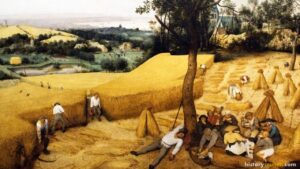
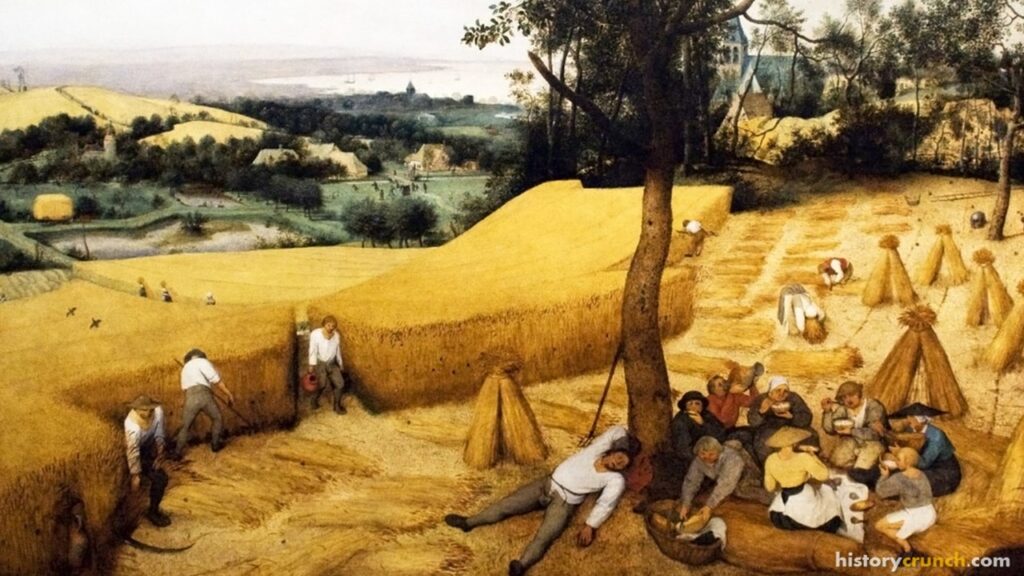
‘The Corn Harvest’ by Pieter Bruegel (1565)
Facebook
X
Reddit
Pinterest
LinkedIn

We strive to produce educational content that is accurate, engaging and appropriate for all learners. If you notice any issues with our content, please contact us and let us know!

AUTHOR INFORMATION
Picture of Elias Beck

Elias Beck

I'm a passionate history and geography teacher with over 15 years of experience working with students in the middle and high school years. I have an Education Degree with a focus in World History. I have been writing articles for History Crunch since 2015 and love the challenge of creating historical content for young learners!
Napoleon Bonaparte Infographic
Infographics

Napoleon Bonaparte: Infographic

This Napoleon Bonaparte infographic was created by History Crunch to help students and teachers quickly understand the life, military campaigns and historical significance of one of the most influential leaders in world history. It covers his early life, his rise to power, the Napoleonic Wars, his defeat and exile and his lasting legacy. Designed for students in grades 5 to 12.

Charles de Gaulle
World War II

Charles de Gaulle: A Detailed Summary

Charles de Gaulle was significant because he led Free France during World War II and later helped create the political system of modern France. This article details the life and significance of Charles de Gaulle.

Enclosure Movement
Industrial Revolution

Enclosure Movement: A Detailed Summary

The Enclosure Movement was a complex process that had important consequences for industrial Britain. It played a crucial role in the development of modern agriculture and contributed significantly to the social and economic transformations of the Industrial Revolution.

Isaac Newton
Age of Enlightenment

Isaac Newton: A Detailed Biography

Isaac Newton was an English mathematician and scientist who is best known for his laws of motion and universal gravitation. This article details the life and significance of Isaac Newton.

Infographics

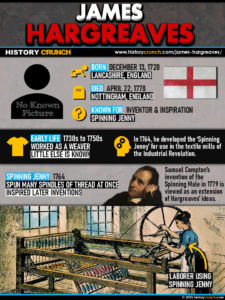
James Hargreaves: Infographic

This James Hargreaves infographic was created by History Crunch to help students and teachers quickly understand the life, invention and historical significance of the English inventor who developed the spinning jenny during the Industrial Revolution. It covers his early life, his invention of the spinning jenny in 1764 and its lasting impact on the textile industry. Designed for students in grades 5 to 12.

Cicero.
Ancient Rome

Cicero: A Detailed Biography

Cicero was one of the greatest speakers and writers of Ancient Rome, and his life reveals the final years of the Roman Republic. He rose from a modest family to become consul, defended Rome against powerful generals, and left writings that shaped Western thought for centuries.