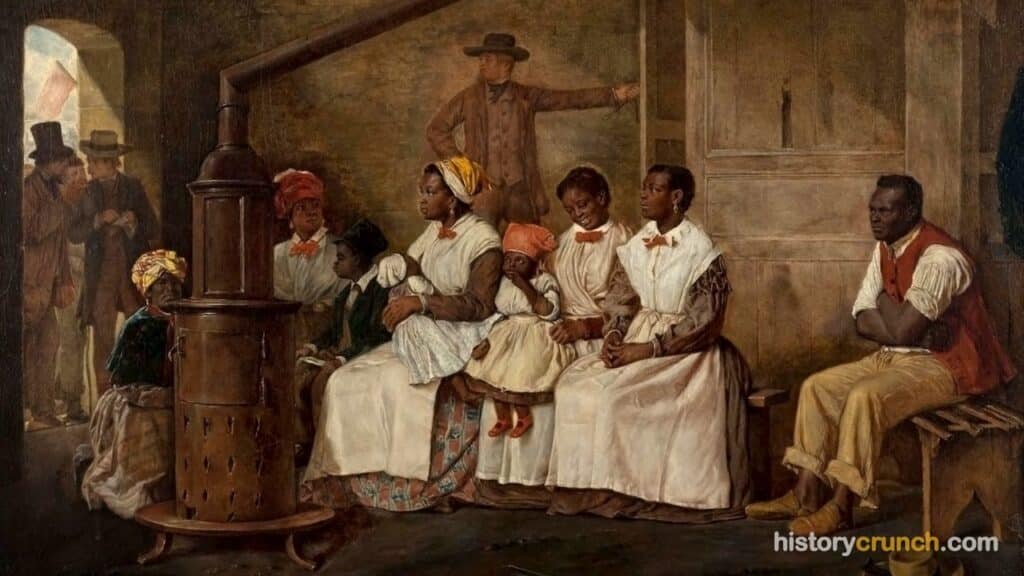
Slavery in the American South stands as one of the most important and painful subjects in American history, because it shaped the economy, politics, and society of the United States for more than two centuries. The practice involved the forced labor of millions of enslaved Africans and African Americans, who were treated as property and made to work on the plantations, farms, and households of the Southern states. Their labor built much of the wealth of the region, yet it came at the cost of enormous human suffering.
Slavery in the American South was a system of chattel slavery, meaning that enslaved people were legally owned as property and could be bought, sold, and inherited like any other possession. Within several decades of being brought to the American colonies, Africans were stripped of human rights and enslaved as chattel, an enslavement that lasted more than two centuries. Under this system, the children of enslaved women were also born into slavery, which meant that the condition passed from one generation to the next.
What Was the Antebellum Period in the United States?
To understand slavery in the American South, it helps to understand the overall era in which it grew most powerful. Slavery in the United States grew particularly powerful during the timeframe of the late 18th century until the outbreak of the Civil War in 1861. This was especially true in the Southern states, where slavery was commonly used on agricultural plantations. This time period is often referred to as the ‘Antebellum Period.’ The word antebellum comes from the Latin words meaning “before the war,” and it refers to the decades in the South that came before the American Civil War.
During the Antebellum Period, the North and the South developed along very different lines. The Northern and Southern sections of the United States developed along different lines. The South remained a predominantly agrarian economy while the North became more and more industrialized. This meant that the Southern economy depended heavily on farming, and that farming depended heavily on the labor of enslaved people. As a result, slavery became more deeply rooted in Southern life than it ever was in the North.
How Did Slavery Begin in the American South?
Slavery in America did not begin in the 19th century, even though that is the period most people picture. In fact, it began much earlier during the time of Colonial America. The first example of African slaves in the British Colonies of America was in 1619 when 19 slaves were brought to the Jamestown settlement in the Colony of Virginia. While this was the first example, it certainly was not the last, as all of the original Thirteen Colonies of America had slavery at some point.
From this early start, slavery took hold most strongly in the Southern colonies. In the 1770s the Northern colonies slaves made up only about 3% of the total population of the region. Whereas, in the Middle colonies slaves made up about 6% of the total population, and in the Southern colonies slaves made up as much as 31%. These large numbers show how central slavery already was to the South even before the United States became an independent nation.
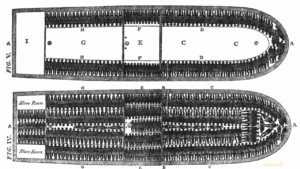
Most enslaved people in the South were Africans or the descendants of Africans. Most of the slaves in the United States were Africans, which were transported to the New World as part of the Atlantic Slave Trade. The Atlantic Slave Trade was the forced shipment of millions of captured Africans across the Atlantic Ocean, and it supplied the labor that Southern plantation owners demanded.
Why Did Slavery Expand After the Cotton Gin?
One of the most important reasons slavery grew so quickly in the South was the invention of the cotton gin. A cotton gin is a machine that separates the seeds from cotton fiber, a job that had once been slow and done entirely by hand. In 1794, U.S.-born inventor Eli Whitney (1765-1825) patented the cotton gin, a machine that revolutionized the production of cotton by greatly speeding up the process of removing seeds from cotton fiber.
The machine made cotton far more profitable, and this had a tragic effect on the enslaved population. Cotton growing became so profitable for enslavers that it greatly increased their demand for both land and enslaved labor. More profits meant that planters wanted to grow larger crops, and larger crops required more enslaved workers to plant, tend, and pick the cotton by hand.
The numbers reveal just how dramatic this growth was. The number of enslaved people rose with the increase in cotton production, from 700,000 in 1790 to over three million by 1850. By the middle of the 19th century, the South dominated the world market for cotton. By mid-century, the southern states were responsible for seventy-five percent of the world’s cotton, most of which was shipped to New England or England, where it was made into cloth.
What Was Life Like for Enslaved People in the South?
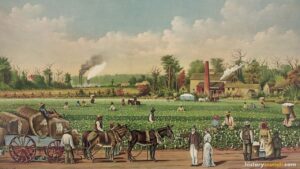
Most enslaved people in the South labored on large agricultural estates known as plantations. Slave plantations in the United States were large agricultural estates, primarily in the South, where enslaved people were forced to work long hours growing crops like cotton, tobacco, and sugar. A plantation was usually large enough to contain the home of the owner, called the master, along with the smaller cabins where enslaved families were forced to live.
On these estates, enslaved people carried out the difficult farm work that made the plantation profitable. Slaves often carried out work that was financially beneficial to the slave and property owners. This was especially true in the South where large agricultural plantations were established that operated mostly with slave labor. The days were long and the labor was harsh, and workers were forced to obey their owners under the constant threat of punishment.
The system was also cruel in the way it tore families apart. Because enslaved people were treated as property, they could be sold at any time, often far from their loved ones. Approximately one million enslaved people were sold from northern states and the upper south to the lower south to meet the demand for producing cotton. This process became known as the internal slave trade. The internal slave trade became the largest forced migration in American history, and led to the destruction of numerous families. In fact, by the time of the Civil War, nearly four million enslaved people lived in the American South.
How Did Slavery Divide the North and the South?
As the country grew, slavery became the most divisive issue in American politics. While the South depended on enslaved labor, a growing movement in the North demanded that slavery be ended. This effort was known as the American Abolitionist Movement, and an abolitionist was someone who worked to ban slavery. Over time, the two regions clashed again and again over whether slavery should be allowed to spread into new western territories.
Several major events deepened the divide. The Compromise of 1850 included a new fugitive slave law that would offer more protections for the slave owners and force escaped slaves to be returned to the slave plantations. In fact, the proposal eventually became the Fugitive Slave Act of 1850. It created anger among many Northerners who resented the idea that they were responsible for returning escaped slaves to Southern plantations. Then, in 1854, another law raised tensions even higher. In short, the Kansas-Nebraska Act allowed states to choose for themselves whether slavery would be allowed and repealed the earlier Missouri Compromise.
These arguments over slavery pushed the nation toward war. The American Civil War was a major conflict fought in the United States from 1861 to 1865. The war was fought between the Northern states (the Union) and the Southern states that seceded to form the Confederate States of America. The primary cause of the war was the issue of slavery and its expansion into new territories. The Southern states left the Union in large part because they wished to protect the institution of slavery.
How Did Slavery in the South Come to an End?
Slavery in the South finally ended as a result of the Civil War. As the war continued, President Abraham Lincoln took a bold step against slavery in the rebelling states. President Abraham Lincoln issued the Emancipation Proclamation in 1863, which declared enslaved people in Confederate states to be free. This order did not free everyone at once, but it made the destruction of slavery a central goal of the war.
The war came to a close in the spring of 1865. The violence and bloodshed of the American Civil War continued until 1865 when the Civil War ended with the surrender of the Confederate Generals. For example, most historians view the end of the Civil War as April 9th, 1865. This is when Confederate General Robert E. Lee surrendered to Union General Ulysses S. Grant at the Battle of Appomattox Court House. The Union victory meant that slavery could finally be abolished across the entire nation.
The final and lasting end of slavery came through a change to the Constitution. The Thirteenth Amendment, which was ratified on December 18th in 1865, abolished slavery in the United States. This amendment was later joined by two others, and together the three became known as the Reconstruction Amendments, which dealt with citizenship and voting rights for the millions of people who had once been enslaved.
Significance of Slavery in the American South
Slavery in the American South is significant because it shaped nearly every part of the young nation’s history. The system produced enormous wealth for slave owners and helped make cotton the leading export of the United States, yet it did so by denying freedom and dignity to millions of human beings. In this way, the economy of the entire country was tied to a practice that treated people as property.
The system also had a direct role in tearing the nation apart. The divisiveness and animosity fueled by the movement, along with other factors, led to the Civil War and ultimately the end of slavery in America. The debate over whether slavery should expand or end became the central cause of the deadliest war in American history.
Finally, the effects of slavery reached far beyond the year it ended. Though the Union victory freed the nation’s four million enslaved people, the legacy of slavery continued to influence American history, from the Reconstruction to the Civil Rights Movement that emerged a century after emancipation and beyond. For this reason, the story of slavery in the American South remains essential to understanding the struggles over freedom and equality that continued long afterward.
Frequently Asked Questions
When did slavery start in the American South?
Slavery in the American South began in the early 1600s during the era of Colonial America. The first example of African slaves in the British Colonies of America was in 1619 when 19 slaves were brought to the Jamestown settlement in the Colony of Virginia. Over the next two centuries, the practice spread across all of the Southern colonies and later the Southern states.
What crops did enslaved people grow in the South?
Enslaved people in the South grew several major cash crops, with cotton becoming the most important by the 19th century. In the earlier colonial years, tobacco, rice, and indigo were among the leading crops along the Southern coast. Sugar was also grown in the Deep South, and each of these crops required large amounts of forced labor.
How many enslaved people were in the American South?
By the time of the Civil War, roughly four million enslaved people lived in the American South. This number had grown enormously over the previous decades, rising from about 700,000 in 1790 as cotton farming spread westward. The rapid increase shows how deeply the Southern economy came to depend on enslaved labor.
Why was slavery more common in the South than the North?
Slavery was more common in the South mainly because the Southern economy was built on large-scale farming. The warm climate and long growing season made the region well suited to cash crops like cotton, tobacco, and sugar, which planters grew on large plantations. The North, by contrast, became more industrial and relied less on farm labor, so slavery there faded much earlier.
What amendment ended slavery in the United States?
The Thirteenth Amendment ended slavery in the United States when it was ratified in December of 1865. It states that neither slavery nor involuntary servitude, except as punishment for a crime, may exist anywhere in the country. It was the first of the three Reconstruction Amendments, which together aimed to protect the rights of formerly enslaved people.
Cite This Article
To cite this article as a source, use one of the formats below.
MLA: Millar, B. “Slavery in the American South: A Detailed Summary.” HistoryCrunch, 16 August 2026, https://historycrunch.com/slavery-in-the-american-south/.
APA: Millar, B. (2026). Slavery in the American South: A Detailed Summary. HistoryCrunch. https://historycrunch.com/slavery-in-the-american-south/
Chicago: Millar, B. “Slavery in the American South: A Detailed Summary.” HistoryCrunch. August 16, 2026. https://historycrunch.com/slavery-in-the-american-south/
Sources
- Bernard Bailyn, The Ideological Origins of the American Revolution.
- National Archives — Founders Online