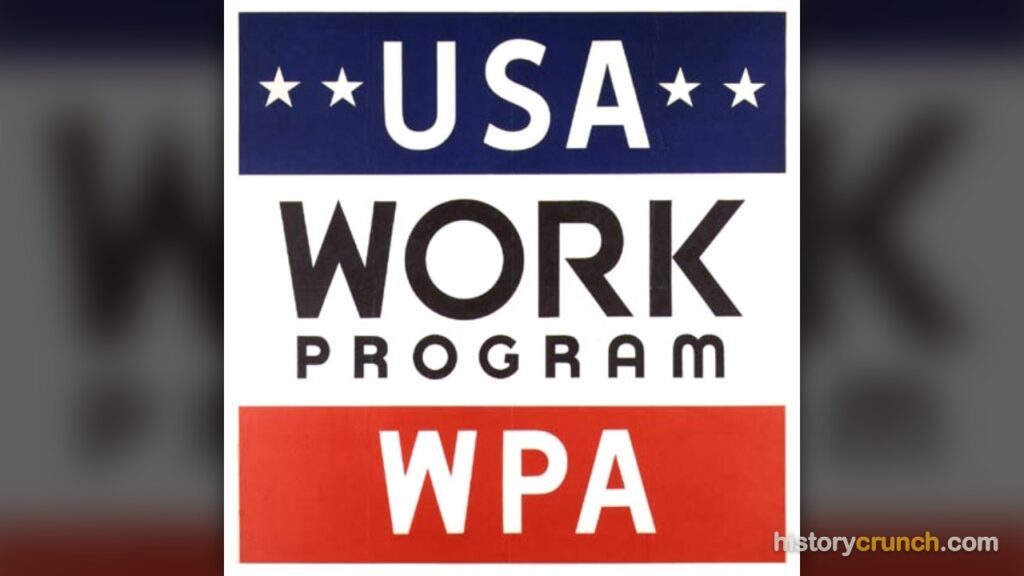
The Works Progress Administration (WPA) was one of the most important programs of the New Deal, the series of government initiatives that President Franklin D. Roosevelt used to fight the Great Depression in the United States. Created in 1935, the WPA put millions of jobless Americans back to work building roads, schools, bridges, and public buildings, and it even hired writers, artists, actors, and musicians. In fact, over its eight years of operation the WPA became the largest work-relief agency of the entire New Deal, touching nearly every community in the country.
The Works Progress Administration was a federal government agency that provided paid jobs to unemployed workers on public projects rather than simply handing out relief money. It was based on the idea that giving people useful work protected their skills and their dignity, while the wages they earned would flow back into the economy and help it recover. In this way the WPA combined two goals at once, helping struggling families and improving the nation’s roads, buildings, and public spaces.
What Was the New Deal?
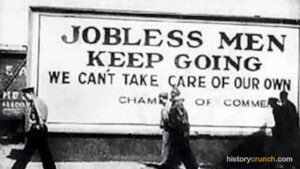
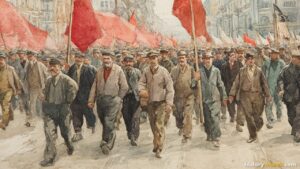
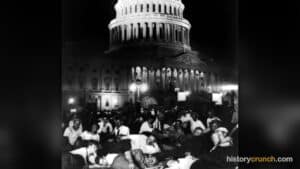
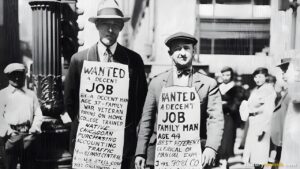
To understand the WPA, it helps to first understand the era it belonged to. The New Deal was a series of government programs and reforms created during the Great Depression to help the United States recover. The Great Depression was one of the worst economic crises in modern history, and it began with the collapse of the American stock market in October of 1929. Over the following years, the crisis wiped out jobs, businesses, and savings on a massive scale.
When Roosevelt took office in 1933, roughly a quarter of American workers were unemployed and banks were failing across the country. In response, he launched a wave of new programs and agencies, many of which became known by their initials, such as the CCC, the TVA, and the WPA. In general, Roosevelt’s plan was for the federal government to spend money to achieve three goals: economic recovery, job creation, and investment in public works projects.
Historians often divide the New Deal into two phases. The First New Deal ran from 1933 to 1934 and focused heavily on the banking crisis and immediate relief. The Second New Deal ran from 1935 to 1938 and introduced several major programs, including the Social Security Act and the Works Progress Administration. As stated above, the WPA belonged to this second, more aggressive wave of reforms.
Why Was the WPA Created?
By 1935, the Great Depression had dragged on far longer than most Americans had hoped. Earlier relief efforts, such as the Federal Emergency Relief Administration and the Civil Works Administration, had helped some people, but millions still remained unemployed, hungry, and desperate for help. Roosevelt wanted a new approach that would replace direct handouts with steady, paid work.
The WPA was established on May 6th, 1935, when Roosevelt signed Executive Order 7034. It was funded through the Emergency Relief Appropriation Act, which set aside close to $5 billion, an enormous sum for the time. With this money, the federal government aimed to employ millions of workers nationally on projects sponsored by federal, state, or local agencies.
More specifically, the WPA marked a major shift in government thinking. The federal government stepped back from direct relief, leaving that responsibility largely to the states, and focused instead on creating jobs. This idea, that the government itself should create work when private business could not, was a sharp break from earlier American policy and stirred a great deal of controversy.
Who Ran the Works Progress Administration?
The WPA was led by Harry Hopkins, one of Roosevelt’s closest and most trusted advisors. Hopkins had already directed the earlier Federal Emergency Relief Administration and the Civil Works Administration, so he brought years of experience running relief programs. He strongly believed that the best way to get the country back on track was through federal works projects rather than cash handouts.
Under Hopkins, the WPA operated through a central office in Washington, D.C., along with regional offices, state administrations, and local district offices. This structure allowed the agency to reach communities in every state and to tailor projects to local needs. Roosevelt insisted that WPA wages be set carefully, high enough to be better than simple relief payments, but low enough that they would not compete with wages in private industry.
What Kind of Work Did WPA Workers Do?
Most WPA workers were employed on public construction and infrastructure projects. Because WPA projects were not allowed to compete with private business, they concentrated on public improvements that communities needed but could not otherwise afford. As a result, the agency reshaped much of the American landscape during the 1930s.
Over its lifetime, WPA workers built more than 4,000 new school buildings, erected around 130 new hospitals, and constructed roughly 29,000 new bridges. They also laid thousands of miles of storm drains and sewer lines, built about 150 new airfields, and paved or repaired hundreds of thousands of miles of roads. In addition, WPA crews planted millions of trees to help fight the loss of topsoil during the Dust Bowl, the severe drought that damaged farmland across the Great Plains.
The WPA also created libraries, playgrounds, post offices, parks, and swimming pools that many towns still use today. At its peak in 1938, the agency employed more than three million people at one time, and over its full history it provided jobs to about 8.5 million Americans. In reality, few families in the United States were untouched by the agency’s work.
How Did the WPA Support the Arts?
One of the most unusual features of the WPA was that it hired artists as well as laborers. To help jobless writers, painters, actors, and musicians, the agency created Federal Project Number One, often called Federal One. When some critics questioned why the government should pay artists, Hopkins famously argued that artists had to eat just like everybody else.
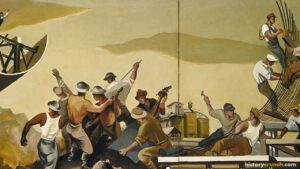
Federal One included five main divisions: the Federal Art Project, the Federal Music Project, the Federal Theatre Project, the Federal Writers’ Project, and the Historical Records Survey. Through these programs, unemployed artists painted murals in public buildings, taught community art classes, and designed the colorful posters the WPA is still known for. Musicians recorded traditional folk songs and created music programs for young people across the country.
The Federal Writers’ Project produced travel guides describing the history and culture of American cities and states, and it also recorded oral histories from formerly enslaved people, creating a valuable collection of firsthand accounts. The Federal Theatre Project, led by Hallie Flanagan, staged thousands of plays and entertained tens of millions of viewers. For instance, it helped launch the careers of talents such as Orson Welles, and it gave important opportunities to African American playwrights, actors, and musicians at a time when such chances were rare.
Why Was the WPA Controversial?
Although the WPA helped millions of people, it also faced sharp criticism from the very beginning. Some opponents argued that it was simply another form of the dole, or handout, dressed up as work. Critics joked that its initials really stood for “We Putter Around,” suggesting that its jobs were not truly useful.
Others worried that the WPA gave the Democratic Party too much power, since the agency controlled millions of jobs and paychecks. There were also complaints about wages. Organized labor argued that the low unskilled pay rate, at times only eighteen cents an hour, dragged down wages everywhere. In addition, some politicians attacked the arts programs, claiming that WPA writers and artists included dangerous radicals who did not deserve public money.
The WPA also treated men and women unequally in practice. Far more men were hired than women, and women were often placed in lower-paying activities such as sewing, bookbinding, and running school lunch and nursery programs. Even so, a few leaders within the agency worked to expand opportunities for women, especially in the professional and arts divisions.
When Did the WPA End?
In 1939, the agency was reorganized and its name was changed from the Works Progress Administration to the Work Projects Administration, though its purpose stayed the same. It became part of a larger body called the Federal Works Agency, and its everyday work continued without interruption.
By the early 1940s, the need for the WPA was fading. The outbreak of World War II created millions of jobs in factories and the military, and unemployment fell sharply as the country geared up for war. With so many people finding work, Roosevelt ordered the agency to wind down, and the WPA was officially closed in 1943.
Significance of Works Progress Administration (WPA)
The Works Progress Administration was significant because it was the largest and one of the most far-reaching work-relief programs in American history. During the worst years of the Great Depression, it gave paychecks and a sense of purpose to about 8.5 million people who might otherwise have had nothing. In doing so, it helped countless families survive one of the darkest periods the nation had ever faced.
The agency also left a lasting physical mark on the United States. The roads, bridges, schools, hospitals, and parks built by WPA workers served communities for generations, and many are still in use today. Its arts programs, meanwhile, preserved American folk music, recorded valuable oral histories, and launched artistic careers that shaped the culture of the country.
Perhaps most importantly, the WPA changed the way Americans thought about the role of government. It established the idea that the federal government could and should step in to create jobs during a crisis. This shift in thinking outlived the Depression itself and helped set a precedent for the government’s ongoing role in the nation’s economic and social life.
Frequently Asked Questions
What does WPA stand for?
WPA stands for the Works Progress Administration, later renamed the Work Projects Administration in 1939. It was a New Deal agency created in 1935 to give paid jobs to unemployed Americans during the Great Depression. The name change reflected a reorganization, but the agency’s goals stayed the same.
Who created the WPA and when?
President Franklin D. Roosevelt created the WPA on May 6th, 1935, through Executive Order 7034. It was funded by the Emergency Relief Appropriation Act, which Congress had passed earlier that spring. The agency was part of Roosevelt’s Second New Deal, a more aggressive round of programs aimed at fighting unemployment.
How was the WPA different from the CCC?
The WPA hired a wide range of workers, including skilled laborers, professionals, and artists, and it kept them living in their own communities. The Civilian Conservation Corps, or CCC, focused mainly on young men who lived in camps and worked on outdoor conservation projects like planting trees and building parks. In short, the WPA was much larger and covered many more types of jobs.
Did the WPA end the Great Depression?
The WPA did not end the Great Depression on its own, though it eased the suffering of millions of people. Most historians agree that it was World War II, and the huge demand for workers and war supplies it created, that finally brought unemployment down. Even so, the WPA played an important role in keeping families afloat during the hardest years.
What did WPA workers build?
WPA workers built thousands of schools, hospitals, bridges, and airfields, and they paved or repaired hundreds of thousands of miles of roads. They also created parks, libraries, playgrounds, and post offices that many towns still rely on today. Beyond construction, the agency produced murals, plays, guidebooks, and music through its arts programs.
Cite This Article
To cite this article as a source, use one of the formats below.
MLA: Millar, B. “Works Progress Administration (WPA): A Detailed Summary.” HistoryCrunch, 14 August 2026, https://historycrunch.com/works-progress-administration-wpa/.
APA: Millar, B. (2026). Works Progress Administration (WPA): A Detailed Summary. HistoryCrunch. https://historycrunch.com/works-progress-administration-wpa/
Chicago: Millar, B. “Works Progress Administration (WPA): A Detailed Summary.” HistoryCrunch. August 14, 2026. https://historycrunch.com/works-progress-administration-wpa/
Sources
- J.M. Roberts & Odd Arne Westad, The Penguin History of the World.
- Jerry Bentley & Herbert Ziegler, Traditions & Encounters: A Global Perspective on the Past.