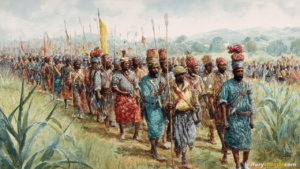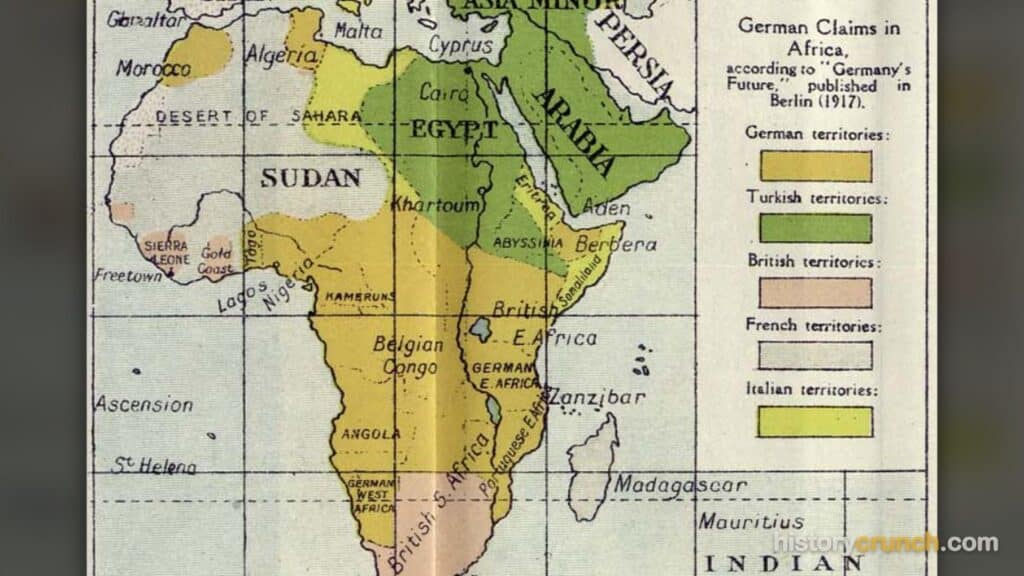
The German Empire in Africa was one of the most important examples of European imperialism during the late 19th and early 20th centuries. In the span of just three decades, Germany built the third-largest colonial empire in Africa, controlling four major territories that stretched across the western, southern, and eastern parts of the continent. Although Germany arrived late to the race for African land, its colonial rule left a deep and often violent mark on the peoples it governed. This chapter of history belongs to the wider period known as the Scramble for Africa, when the major powers of Europe divided nearly the entire continent among themselves.
The term German Empire in Africa refers to the colonies that were controlled by the newly unified nation of Germany between 1884 and the end of World War I in 1918. These colonies were governed as protectorates, which meant that Germany claimed authority over the land and its people while officially treating each territory as a protected possession rather than a full part of Germany itself. The four main colonies were Togoland, German Cameroon, German South West Africa, and German East Africa.
What Was the Scramble for Africa?
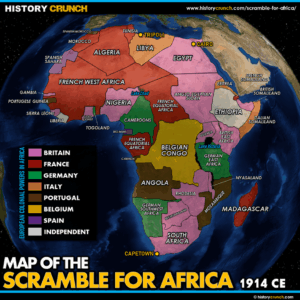
The Scramble for Africa was a period of rapid European colonization of the African continent that took place primarily between 1870 and 1914. During this time, the major European powers, including Britain, France, Germany, Belgium, and Portugal, competed aggressively to capture territory and gain control over Africa’s resources and people. By the early 20th century, nearly the entire continent had been carved up and placed under European control.
The Scramble for Africa is closely tied to the Age of Imperialism, when the industrialized nations of Europe searched for new sources of raw materials and new markets for their factory goods. In fact, the rise of the factory system pushed European nations to seek out territory that could supply resources such as rubber, cotton, and minerals. As a result, the European powers raced one another to claim as much of Africa as quickly as possible, which is why historians describe the period as a “scramble.”
By 1914, only two African nations, Ethiopia and Liberia, remained independent. The rest of the continent had been divided into colonies, with borders drawn by Europeans who paid little attention to the existing cultures, kingdoms, and communities of the African people. Germany was one of the powers that joined this contest, and its empire in Africa was a direct product of this larger struggle.
Why Did Germany Enter the Race for Africa?
Germany became a unified country only in 1871, which meant it was a latecomer compared to older colonial powers such as Britain and France. For much of the early 1880s, the German chancellor Otto von Bismarck was doubtful about the value of colonies, since he believed they would be expensive and difficult to defend. However, growing pressure from German merchants and business groups eventually changed his approach.
German traders had long been active along parts of the African coast, and business leaders argued that Germany needed to act quickly to protect its economic interests before rival powers claimed the best land. More specifically, groups such as the Hamburg Chamber of Commerce warned that Germany would lose its chance to gain footholds on the coast, especially near Cameroon, unless it moved fast. Bismarck came to believe that securing colonies was necessary to protect German trade in a world that was rapidly closing off to outsiders.
National pride also played an important role. As a new nation eager to prove itself equal to Britain and France, Germany saw colonies as a symbol of power and status among the great nations of Europe. In reality, this mixture of economic ambition and nationalism drove Germany to claim large stretches of African territory in a very short period of time.
How Did Germany Gain Its Colonies?
Germany gained most of its African territory in 1884, the same year that it hosted the Berlin Conference. The Berlin Conference was called by Bismarck and lasted from November 15th, 1884, until February 26th, 1885. During the meeting, fourteen nations agreed on a set of rules for how the European powers could divide Africa, and this helped speed up the colonization of the continent.
One of the key rules to come out of the conference was the idea of “effective occupation,” which meant that a European power had to actually occupy and control a territory in order to make its claim official. As a result, Germany and the other powers raced to plant flags, sign treaties with local rulers, and set up posts across Africa. German officials, most notably the explorer Gustav Nachtigal, traveled along the coast in 1884 and signed agreements with African chiefs to establish German protection over their lands.
In the early years, Germany often relied on private trading companies to run its colonies. These companies were given charters that allowed them to govern the territories on behalf of the German government. The argument was that private businesses would raise money and manage the colonies at a lower cost to German taxpayers, though in practice this system frequently failed and the government was forced to take direct control.
What Were the Four German Colonies in Africa?
Germany controlled four main colonies in Africa. Togoland, located in West Africa, covered modern-day Togo and part of present-day Ghana, and it became a German protectorate in 1884. The German administration focused on growing cash crops such as cocoa, coffee, and cotton, and it built railways and ports to move goods for export. Togoland was sometimes described as a model colony because of its efficient administration, but this efficiency came at a heavy cost to Africans, who faced forced labor, land seizures, and harsh taxes.
German Cameroon, known in German as Kamerun, was also claimed in 1884 after Nachtigal raised the German flag along the coast. The colony developed plantation economies that took over fertile land and depended on forced labor to grow tropical crops. Local peoples, such as the Duala, resisted the loss of their land and the demands placed upon them by German rule.
German South West Africa, located in what is today Namibia, became a protectorate in 1884 as well. It was the only German colony where large numbers of European settlers moved in to farm and raise livestock, which created intense conflict over land with the local peoples. German East Africa, which included modern Tanzania along with Rwanda and Burundi, was the largest of the four colonies and was acquired beginning in 1885. This territory was much larger than Germany itself and was subjected to land confiscations, forced labor, and a harsh system of punishments.
How Did Germany Rule Its African Colonies?
German colonial rule in Africa was known for being especially strict and violent. Across all four colonies, the German administration relied on forced labor, corporal punishment, heavy taxation, and the seizure of African land. These methods overturned traditional economic systems and long-standing cultural practices, causing great suffering for the people under German control.
African peoples resisted German rule many times, and the German response was often brutal. In German South West Africa, the Herero and Nama peoples rose up against the loss of their land, and the war that followed between 1904 and 1908 led to the deaths of tens of thousands of Africans. Many historians describe this event as the first genocide of the 20th century. In German East Africa, the Maji Maji uprising from 1905 to 1907 was crushed with a scorched earth policy that destroyed crops and villages and caused mass starvation.
Despite these harsh methods, the colonies rarely produced the profits that Germany had hoped for. In fact, the cost of running the colonies usually exceeded the money they brought in, and trade with the colonies made up only a small share of Germany’s overall commerce. Only in the final years, with the discovery of diamonds in South West Africa and a boom in rubber, did the colonies begin to become more economically self-sustaining.
How Did the German Empire in Africa End?
The German Empire in Africa came to an end as a result of World War I, which began in 1914. Once the war started, the Allied powers, including Britain, France, and Belgium, attacked Germany’s African colonies. The small German forces stationed in Africa were quickly overwhelmed by larger Allied armies.
Togoland was among the first to fall, surrendering to the British in August of 1914. German South West Africa was occupied by forces from South Africa in 1915, and Cameroon was fully taken by Allied troops by 1916. Only in German East Africa did German forces hold out, waging a long guerrilla campaign that lasted until the end of the war.
After Germany’s defeat, the Treaty of Versailles in 1919 stripped the country of all its overseas colonies. The former German territories in Africa were handed over to the victorious Allied nations, mainly Britain and France, which governed them under the supervision of the League of Nations. In this way, the German Empire in Africa was completely dismantled just thirty years after it began.
Significance of German Empire in Africa
The German Empire in Africa was significant because it showed how quickly a latecomer to imperialism could seize a large empire during the Scramble for Africa. In only a few years, Germany claimed four major colonies and became one of the leading colonial powers on the continent, which fueled the intense rivalry among European nations that helped lead to World War I.
The empire is also significant because of the extreme violence that marked German rule. The war against the Herero and Nama peoples is widely remembered as the first genocide of the 20th century, and some historians have studied it as a grim forerunner to later atrocities in European history. This history shows how colonial rule could turn deadly for the peoples who resisted it.
Finally, the German Empire in Africa left lasting effects on the lands it once controlled. The borders drawn during this period shaped the modern nations of Namibia, Tanzania, Rwanda, Burundi, Togo, and Cameroon. As stated above, the arbitrary way these borders were created reflects the wider legacy of the Scramble for Africa, which continues to influence the continent today.
Frequently Asked Questions
What countries did Germany colonize in Africa?
Germany colonized four main territories in Africa, which are known today as Namibia, Tanzania, Togo, and Cameroon, along with the areas of Rwanda and Burundi. These regions were organized into the colonies of German South West Africa, German East Africa, Togoland, and German Cameroon. Some of these colonies were larger than Germany itself.
When did Germany control colonies in Africa?
Germany controlled colonies in Africa from 1884 until 1918, a period of about thirty years. The empire began the same year Germany hosted the Berlin Conference and ended with the country’s defeat in World War I. The formal transfer of the colonies to the Allies was completed by the Treaty of Versailles in 1919.
Why did Germany want colonies in Africa?
Germany wanted colonies in Africa mainly to gain resources, protect its trade, and boost its national prestige. As a newly unified country, Germany hoped to prove that it was equal in power to Britain and France. Pressure from German merchants and business groups also convinced Chancellor Otto von Bismarck to claim territory before rival nations could take it.
Was German colonial rule in Africa violent?
Yes, German colonial rule in Africa was known for being extremely violent, especially toward peoples who resisted it. The German army carried out brutal military campaigns, including the genocide of the Herero and Nama peoples in South West Africa. Everyday rule also relied on forced labor, harsh punishments, and the seizure of African land.
What happened to Germany’s African colonies after World War I?
After World War I, Germany’s African colonies were taken away and given to the victorious Allied nations, mainly Britain and France. The League of Nations oversaw the transfer, dividing territories such as Togoland and Cameroon between the two powers. Germany never regained any of its overseas colonies after this point.
Cite This Article
To cite this article as a source, use one of the formats below.
MLA: Millar, B. “German Empire in Africa: A Detailed Summary.” HistoryCrunch, 14 August 2026, https://historycrunch.com/german-empire-in-africa/.
APA: Millar, B. (2026). German Empire in Africa: A Detailed Summary. HistoryCrunch. https://historycrunch.com/german-empire-in-africa/
Chicago: Millar, B. “German Empire in Africa: A Detailed Summary.” HistoryCrunch. August 14, 2026. https://historycrunch.com/german-empire-in-africa/
Sources
- A. Adu Boahen, African Perspectives on Colonialism.
- H.L. Wesseling, Divide and Rule: The Partition of Africa.