European exploration of Africa is one of the most important topics in the study of world history because it reshaped the relationship between Europe and the African continent over the course of several centuries. It began as a search for gold, trade routes, and a sea path to Asia, and it eventually opened the way for the colonization of nearly the entire continent. The story stretches from the first Portuguese voyages down the western coast of Africa in the early 15th century to the daring interior expeditions of the 1800s that filled in the last blank spaces on European maps.
European exploration of Africa refers to the long process by which European sailors, traders, and adventurers charted the coasts of Africa and, much later, pushed inland to map its rivers, lakes, and interior regions. For most of this period, Europeans stayed close to the coast and traded through posts they built along the shore. Only in the 19th century did they finally venture deep into the interior, a step that helped set the stage for the conquest and colonization of Africa.
What Was the Age of Exploration?
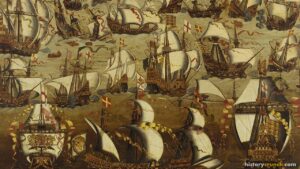
The Age of Exploration, also called the Age of Discovery, was a period of European overseas exploration that took place from the late 15th century through the 17th century. During this era, European sailors, navigators, and explorers ventured across the Atlantic, Pacific, and Indian Oceans in search of new trade routes, wealth, and territory. It is considered one of the most important events in the history of the western world.
In general, the four European nations most closely associated with the Age of Exploration were Portugal, Spain, France, and England. Each of these countries shared an important advantage: they all bordered the Atlantic Ocean and had access to experienced sailors, well-developed sea ports, and the financial resources needed to fund long ocean voyages. In fact, improvements in ship design, including the caravel and the carrack, made it possible for explorers to travel farther than ever before while carrying larger amounts of cargo.
Africa played a central role in this era. Europeans expressed an economic interest in Africa for a long period of time before the start of the Age of Imperialism. More specifically, the Age of Exploration saw European explorers travel along the shores of Africa in search of new trading posts and a route to Asia. This early contact would grow into a much deeper and more troubling involvement over the following centuries.
Why Did Europeans Begin to Explore Africa?
European interest in Africa was driven by a combination of economic, religious, and political motives. The most powerful motive was trade. European countries wanted access to the gold, ivory, and other goods that reached Europe overland, and they hoped to reach the source of that wealth by sailing along the African coast.
Another important goal was to find a sea route to Asia. European merchants had long traded with China, India, and other Asian lands, but the overland journey along the Silk Road was slow and costly. By sailing around Africa, Europeans hoped to reach the riches of the Far East by sea and avoid the middlemen who controlled the land routes.
Religion also played a role. Many Europeans hoped to spread Christianity and to find allies against the Muslim powers of North Africa and the Middle East. Some even searched for the legendary Christian kingdom of a ruler called Prester John, which they believed lay somewhere in East Africa. Together, these motives pushed European rulers to fund expedition after expedition.
How Did Portugal Lead the Early Exploration of Africa?
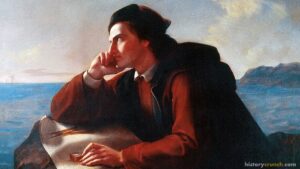
Portugal was the European nation that made the first and most expansive explorations, including along the coastline of Africa. A key figure in these early efforts was Prince Henry, often called Henry the Navigator. Although he never sailed on the voyages himself, he funded and organized many of them.
Explorations sponsored by Henry are credited with exploring the Madeira Islands in the north Atlantic, the Azores islands, and more importantly the west coast of Africa. He pushed his explorers to venture further south than any other European had gone before and helped establish the basic techniques of navigation that would play a critical role in later European expeditions. In fact, Henry’s explorers began to chart the wind patterns in the Atlantic Ocean. By the time of his death in 1460, Portuguese ships had reached as far south as present-day Sierra Leone.
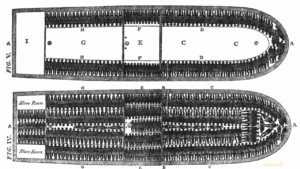
Sadly, these early voyages had a dark side. These explorations laid the foundation for the Atlantic Slave Trade, as Portuguese traders began capturing and later purchasing enslaved Africans to be sold in Europe and, eventually, in the New World. The search for gold and trade quickly became tied to the buying and selling of human beings, a trade that would grow for centuries.
Who Rounded the Southern Tip of Africa?
As Portuguese ships pushed farther and farther south, they eventually reached the bottom of the continent. Portuguese explorer Bartolomeu Dias was the first European to sail around the southern tip of Africa. He achieved the feat in 1488 CE. His journey set the stage of later European explorations along Africa, which eventually led Europeans using the route as a way to reach Asia by sea.
The point where Dias turned the corner became known as the Cape of Good Hope. This breakthrough proved that ships could sail from the Atlantic Ocean into the Indian Ocean, opening the long-awaited sea route toward Asia. It was one of the most important navigational achievements of the entire Age of Exploration.
The next great step came a decade later. Vasco da Gama was the first European to sail to India around Africa. Also a Portuguese explorer, da Gama made his voyage in 1498 and opened the way for other Europeans to reach the Far East. With this voyage, Portugal gained access to a whole new trade network that connected Europe with Africa, India, and Arabia.
Why Did European Exploration Stay Along the Coast for So Long?
For a surprisingly long time, European exploration of Africa did not go beyond the shoreline. European exploration of Africa itself remained very limited during the 16th and 17th centuries. Instead of moving inland, Europeans built trading posts along the coast and did business there.
There were several reasons for this. The European powers were content to establish trading posts along the coast while they were actively exploring and colonizing the New World. The Americas offered vast lands and enormous wealth, and much European energy was directed there instead of into the African interior.
The interior of Africa also presented serious dangers. Thick forests, powerful rivers, and diseases such as malaria made travel deadly for Europeans. In addition, well-organized African kingdoms controlled inland trade and had little reason to allow outsiders to pass through. As a result, European knowledge of Africa’s interior stayed vague for hundreds of years.
How Did Europeans Explore the African Interior in the 1800s?
Everything changed in the 19th century. New technology, including steamships, medicine, and better weapons, made it possible for Europeans to travel deeper into Africa than ever before. Curiosity about the “blank spaces” on the map also drove a wave of famous expeditions.
One of the most famous of these explorers was David Livingstone. David Livingstone is one of the most famous British figures from the 19th century and played a significant role in early efforts of European exploration in Africa. For example, he was a Christian missionary and travelled extensively throughout the African continent in the timeframe of the Age of Imperialism. He wanted to spread Christianity, open Africa to trade, and help bring an end to the slave trade.
Livingstone became well known for his search for the source of the Nile River, one of the great geographic mysteries of the age. When he seemed to disappear for years, the journalist Henry Morton Stanley set out to find him, leading to one of the most famous meetings in the history of exploration. Historians compare his actions with other famous figures, such as Henry Morton Stanley, and consider him an influential person in the outbreak of the Scramble for Africa in the 19th century.
By the middle of the 1800s, most of the continent had been mapped except for the Congo Basin and the region of the African Great Lakes. As explorers filled in these last areas, European nations grew more and more interested in claiming African land for themselves.
How Did Exploration Lead to the Scramble for Africa?
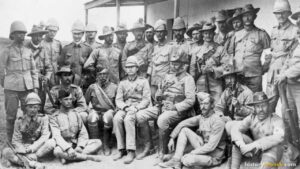
The knowledge gained during these expeditions helped trigger a rush for territory known as the Scramble for Africa. The ‘Scramble for Africa’ is the term that historians use to refer to the expansion of European empires into Africa during the Age of Imperialism. It is referred to as a ‘scramble’ due to the way in which the European nations raced to capture territory to expand to their empires. The Scramble for Africa is considered to have occurred from approximately 1870 until the outbreak of World War I in 1914.
During these years, almost all of Africa came under European control. Almost all of Africa came under the control of the major European powers, including: Britain, France, Germany, Belgium, Italy, Portugal and Spain. New technology gave these nations a huge advantage. For instance, the development of the Maxim gun played a vitally important role in Europe’s success in Africa. In short, the Maxim gun was a machine gun that was invented by Hiram Maxim and could fire up to 600 rounds per minute.
Missionaries and explorers also helped pave the way. In reality, Christian missionaries often accompanied early explorers to the African interior, and the spread of Christianity was a key feature of European imperialism in Africa. The maps and reports created by explorers made it easier for European governments to divide Africa among themselves.
Significance of European Exploration of Africa
The significance of European exploration of Africa is enormous, because it changed the history of two continents in lasting ways. The early Portuguese voyages opened the sea route to Asia and connected Europe to a global trading system. In doing so, they also helped launch the Atlantic slave trade, which forced millions of Africans across the ocean and caused suffering on a massive scale.
The later expeditions into the interior had equally serious effects. As Europeans mapped the continent, they laid the groundwork for the Scramble for Africa and the colonization that followed. Almost every part of Africa lost its independence, and its people and resources were exploited by outside powers.
These events still shape the world today. Many of the borders of modern African nations were drawn by European powers rather than by Africans themselves. In this way, the story of European exploration is closely tied to the modern history of Africa and to the overall history of colonialism and globalization.
Frequently Asked Questions
Which country first explored the coast of Africa?
Portugal was the first European country to systematically explore the coast of Africa. Beginning in the early 15th century, Portuguese ships sailed farther and farther down the western coast, reaching new lands with each expedition. Portugal’s head start gave it an early lead in the trade and exploration of the continent.
Why didn’t Europeans explore inland Africa sooner?
Europeans avoided the African interior for centuries because it was extremely dangerous and difficult to reach. Deadly diseases like malaria, thick jungles, and powerful rivers made travel almost impossible, and strong African kingdoms controlled the inland trade. It was easier and safer for Europeans to trade at coastal posts than to risk journeys into the interior.
Who was Bartolomeu Dias?
Bartolomeu Dias was a Portuguese explorer who became the first European to sail around the southern tip of Africa in 1488. His voyage proved that ships could pass from the Atlantic Ocean into the Indian Ocean. This achievement opened the door for later voyages, such as the one led by Vasco da Gama, that reached Asia by sea.
What did David Livingstone discover in Africa?
David Livingstone explored large parts of southern and central Africa and became the first European to see a huge waterfall on the Zambezi River, which he named Victoria Falls. He also spent years searching for the source of the Nile River. His journeys and writings greatly increased European interest in the continent during the 19th century.
How is European exploration connected to the slave trade?
European exploration of Africa was closely tied to the growth of the Atlantic slave trade from its earliest days. As Portuguese traders sailed the western coast, they began buying and capturing enslaved Africans to sell in Europe and later in the Americas. Over time, this trade grew into one of the largest forced migrations in human history.
Cite This Article
To cite this article as a source, use one of the formats below.
MLA: Millar, B. “European Exploration of Africa: A Detailed Summary.” HistoryCrunch, 14 August 2026, https://historycrunch.com/european-exploration-of-africa/.
APA: Millar, B. (2026). European Exploration of Africa: A Detailed Summary. HistoryCrunch. https://historycrunch.com/european-exploration-of-africa/
Chicago: Millar, B. “European Exploration of Africa: A Detailed Summary.” HistoryCrunch. August 14, 2026. https://historycrunch.com/european-exploration-of-africa/
Sources
- Felipe Fernández-Armesto, Pathfinders: A Global History of Exploration.
- J.H. Parry, The Age of Reconnaissance.