The Treaty of Tordesillas was one of the most important agreements of the Age of Exploration, because it was the first time two European powers tried to divide the entire non-European world between them. Signed in 1494, the treaty was an agreement between the kingdoms of Spain and Portugal that split newly discovered lands along an imaginary line running from the North Pole to the South Pole. The treaty settled a growing rivalry between the two nations and shaped the future of colonization in the Americas, Africa, and Asia for centuries to come.
In simple terms, the Treaty of Tordesillas was a written agreement, or treaty, that divided the world outside Europe into two zones of exploration and settlement. Spain received the right to claim all non-Christian lands west of the line, while Portugal received the right to claim all such lands to the east. A treaty is a formal deal between countries, and in this case it was backed by the authority of the Catholic Church.
What Was the Age of Exploration?
The Age of Exploration, also called the Age of Discovery, is considered one of the most important events in the history of the western world. It began in the early 15th century and continued until the end of the 17th century, and it involved European explorers using their navigational skills to travel across the world’s oceans. During this time, European nations launched expeditions that led to the discovery of lands new to them, the expansion of trade routes, and the rise of colonial empires.
In general, the Age of Exploration occurred for several different reasons, particularly in the countries of Portugal, Spain, France, and England. For instance, European countries were seeking new trade routes to distant trading partners in the Far East, including China, India, and Japan. As well, the fall of Constantinople in 1453 and the rise of the Ottoman Empire had disrupted traditional overland trade routes such as the Silk Road, pushing European nations to seek new sea routes to Asia.
Religion also played a major role in driving exploration. The Catholic Church, especially through Spain and Portugal, saw overseas expansion as a way to spread Christianity to non-European peoples. As a result, missionaries were often part of the voyages to the New World, meaning people who traveled to a distant region in order to spread religious teachings and beliefs. It was within this world of intense competition and religious zeal that the Treaty of Tordesillas took shape.
Why Did Spain and Portugal Need a Treaty?
By the late 15th century, Portugal had become the leading exploring nation in Europe. Portuguese sailors had spent decades pushing south along the coast of Africa, and they had claimed the Atlantic island groups of Madeira, the Azores, and Cape Verde. Before 1492, Portugal faced almost no competition in these efforts, and it hoped to reach the riches of Asia by sailing around the southern tip of Africa.
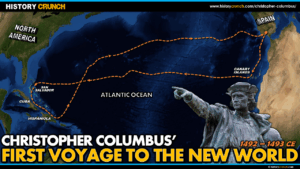
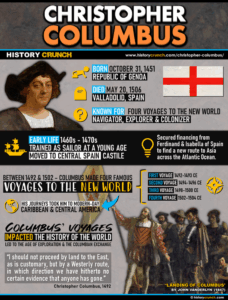
Everything changed when Christopher Columbus returned in 1493 from his first voyage across the Atlantic Ocean, which he had made under the flag of Spain. Suddenly Spain had a powerful claim to lands in the west, and this created a serious dispute with Portugal. Both were major Catholic powers, and the possibility of open war between them worried the leaders of the Catholic Church.
To protect their new claims, the Spanish rulers Ferdinand and Isabella turned to the pope for support. At the time, the pope was seen as the highest authority in the Christian world, and his approval gave a claim great weight. Spain hoped that papal backing would block Portugal and any other rival from taking the lands Columbus had reached.
Role of the Pope and the Papal Bulls
The Spanish-born Pope Alexander VI stepped in to settle the argument. In 1493, he issued a series of official orders known as papal bulls, the most famous of which was called Inter Caetera. This bull established a line of demarcation, or dividing line, running north to south about 100 leagues west of the Azores and the Cape Verde Islands. A league was an old unit of distance, so the exact spot was not precise, but the idea was clear.
Under the pope’s plan, Spain received the exclusive right to explore, trade, and settle in all newly discovered lands west of the line. All others were forbidden to approach the lands west of the line without special permission from Spain. This heavily favored Spain, and it left Portugal deeply unhappy.
King John II of Portugal objected strongly, arguing that the line was too far east and cut Portugal off from lands it believed it could reach in the South Atlantic. In fact, some evidence suggests the Portuguese may already have suspected that land existed there. Because neither side was fully satisfied with the pope’s ruling, the two kingdoms decided to negotiate a new agreement directly with each other.
What Did the Treaty of Tordesillas Say?
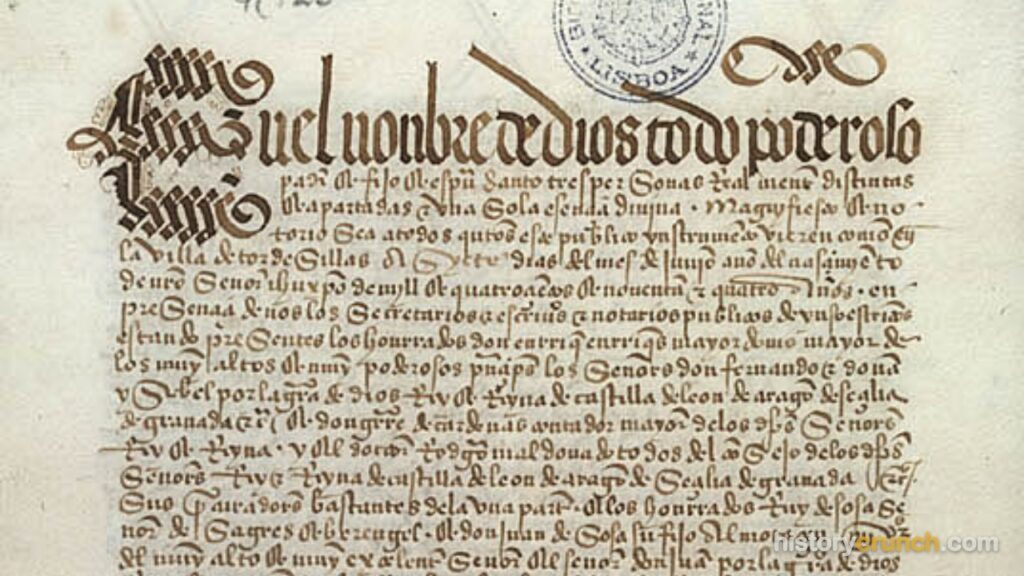
Representatives from both Spain and Portugal met in the small town of Tordesillas in northwestern Spain to work out a compromise. The Treaty of Tordesillas was signed there on June 7th, 1494. The most important change was the location of the dividing line.
More specifically, the negotiators moved the line of demarcation much farther west than the pope had drawn it. The world was now divided by a north-south line in the Atlantic Ocean, 370 leagues, or roughly 1,100 miles (1,770 km), west of the Cape Verde Islands. This shift of about 270 leagues to the west was a major victory for Portugal.
The rule itself was simple. Under this agreement, Spain could claim all non-Christian lands west of the line, and Portugal alone could claim all non-Christian lands east of the line. Both kingdoms were also expected to convert the peoples they encountered to Roman Catholicism, which tied the treaty closely to the religious goals of the age.
One serious weakness was that the treaty never fully defined where the line actually fell. The treaty only specified the line in leagues from the Cape Verde Islands, and it did not state the exact length of a league or which island was meant. These questions were supposed to be settled by a joint voyage, but that voyage never took place, which left the border uncertain for decades.
How Did the Treaty Affect the Americas?
The westward move of the line had enormous consequences for South America. Because the new line cut across the eastern bulge of the continent, the land that would become Brazil fell on the Portuguese side. This meant that when Brazil was officially reached in 1500, Portugal could claim sovereignty over it. To this day, Brazil is the only large nation in the Americas where Portuguese is the main language, a direct result of the treaty.
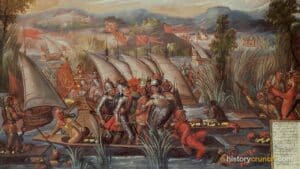
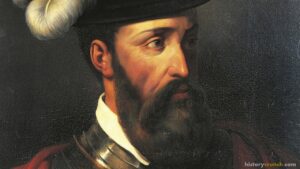
The rest of the Americas fell to Spain. Over the following decades, Spanish expeditions moved deep into the mainland, and conquerors such as Hernan Cortes and Francisco Pizarro overthrew the powerful Aztec and Inca Empires. In this way, the treaty helped Spain build a vast empire across Mexico, Central America, and much of South America.
It is important to remember that the indigenous peoples who actually lived in these lands had no say in the treaty at all. Their own borders, governments, and cultures were completely ignored, even though the agreement claimed to grant ownership of their homelands to distant European kings.
Problems and Later Disputes
Although the treaty prevented war between Spain and Portugal in the short term, it created new problems as exploration continued. The biggest issue appeared on the other side of the globe. Once explorers realized how large the world truly was, both kingdoms wanted to know where the dividing line ran on the far side of the planet, especially near the valuable Spice Islands of Asia.
This question grew urgent after the first voyage around the world was completed in 1522, which proved that the earth was far bigger than earlier explorers had believed. To settle the eastern half of the world, Spain and Portugal signed a follow-up agreement, the Treaty of Zaragoza, in 1529. That treaty set a second dividing line on the opposite side of the globe from the Tordesillas line.
Other European nations largely rejected the entire idea. As countries such as England, France, and the Netherlands grew stronger, they refused to accept that Spain and Portugal could simply divide the world between themselves. These nations launched their own voyages and built their own colonies, ignoring the treaty completely.
Significance of Treaty of Tordesillas
The Treaty of Tordesillas is significant because it was the first formal attempt by European powers to divide the non-European world for exploration and colonization. In doing so, it laid the groundwork for the enormous Spanish and Portuguese empires that would dominate the Americas for centuries.
The treaty also shaped the modern map in lasting ways. It explains why most of Latin America speaks Spanish while Brazil speaks Portuguese, and it influenced the spread of Catholic religion, language, and culture across two continents. In this sense, the effects of a single 1494 agreement are still visible today.
At the same time, the treaty helped set in motion the harsh side of colonization. By treating distant lands as property to be handed out, it encouraged the conquest and exploitation of indigenous peoples who were never consulted. As such, the Treaty of Tordesillas stands as both a landmark in diplomatic history and an early example of the injustices that came with European expansion.
Frequently Asked Questions
What was the Treaty of Tordesillas in simple terms?
The Treaty of Tordesillas was a 1494 agreement in which Spain and Portugal divided the newly discovered world along an imaginary line. Spain got the right to claim lands west of the line and Portugal got the lands to the east. It was created to stop the two Catholic kingdoms from going to war over their overseas discoveries.
Who signed the Treaty of Tordesillas?
The treaty was signed by the rulers of Spain and Portugal, namely King Ferdinand II and Queen Isabella I of Spain and King John II of Portugal. Their diplomats did the actual negotiating in the town of Tordesillas, and each kingdom later ratified, or formally approved, the deal within a few months of its signing.
Why did Brazil become Portuguese?
Brazil became Portuguese because the treaty’s dividing line cut across the eastern bulge of South America, placing that region on Portugal’s side. When Portuguese ships reached the coast in 1500, Portugal was able to claim the land legally under the treaty. This is the reason Portuguese remains the national language of Brazil today.
Did the pope help create the Treaty of Tordesillas?
Yes, Pope Alexander VI set the stage by issuing papal bulls in 1493 that first drew a dividing line favoring Spain. Because Portugal objected, the two kingdoms negotiated the treaty directly and moved the line farther west. A later pope formally confirmed the updated agreement in 1506.
Did other countries follow the Treaty of Tordesillas?
No, other European powers largely ignored the treaty. Nations such as England, France, and the Netherlands never agreed that Spain and Portugal could divide the world between themselves, and they built their own colonies regardless. The indigenous peoples of the Americas also never recognized the agreement over their homelands.
Cite This Article
To cite this article as a source, use one of the formats below.
MLA: Millar, B. “Treaty of Tordesillas: A Detailed Summary.” HistoryCrunch, 2 August 2026, https://historycrunch.com/treaty-of-tordesillas/.
APA: Millar, B. (2026). Treaty of Tordesillas: A Detailed Summary. HistoryCrunch. https://historycrunch.com/treaty-of-tordesillas/
Chicago: Millar, B. “Treaty of Tordesillas: A Detailed Summary.” HistoryCrunch. August 2, 2026. https://historycrunch.com/treaty-of-tordesillas/
Sources
- J.M. Roberts & Odd Arne Westad, The Penguin History of the World.
- Jerry Bentley & Herbert Ziegler, Traditions & Encounters: A Global Perspective on the Past.