The impacts of imperialism in China were far reaching and reshaped the country in ways that are still felt today. During the 19th century and into the early 20th century, foreign powers forced their way into China, took control of trade, and stripped away much of the country’s independence. Imperialism in China weakened the ruling Qing Dynasty, sparked violent rebellions, and eventually helped bring an end to thousands of years of imperial rule. Understanding these impacts helps explain how a proud and ancient civilization was pushed into what many Chinese people later called a “century of humiliation.”
Imperialism is a policy in which one country uses its economic, political, or military power to control another country or region. In China’s case, foreign nations did not usually take over the entire country as a colony. Instead, they carved out sections called spheres of influence, forced unfair trade agreements, and demanded special legal rights. This type of control is sometimes called informal empire, because the foreign powers ruled over trade and territory without ever officially owning the whole nation.
What Was the Age of Imperialism?
The Age of Imperialism was a period from roughly the 1800s until the early 1900s when powerful nations, especially in Europe, expanded their control over large parts of the world. During this era, countries such as Britain, France, Germany, Russia, and later Japan and the United States competed to gain colonies, resources, and trade markets across Africa, Asia, and the Pacific. In fact, imperialism in China took place alongside other major events of the same era, including British imperialism in India and European imperialism in Africa.
At the time that imperialism in China was at its height, the country was ruled by the Qing Dynasty. The Qing Dynasty existed from the early 1600s until 1912, when the Republic of China replaced it. The Qing came to power after Manchu forces from the northern region now called Manchuria defeated the earlier Ming Dynasty. For centuries the Qing ruled a vast and wealthy empire, but by the 1800s the dynasty had grown weaker, and this weakness left China open to foreign pressure.
How Did the Opium Wars Affect China?
One of the most important causes of imperialism in China was trade. European nations, especially Britain, wanted Chinese goods such as tea, silk, and porcelain, but China had little interest in European products. This created a trade imbalance, meaning Britain paid far more in silver for Chinese goods than it earned in return. To fix this problem, British merchants began selling opium, a powerful and addictive drug grown in India, to Chinese buyers.
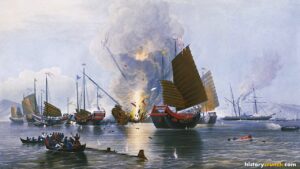
As opium addiction spread across China, the Qing government tried to stop the trade by banning the drug and destroying stocks of opium brought in by British merchants. Britain responded with military force, leading to the First Opium War from 1839 until 1842. Because of their far more powerful navy, the British quickly defeated the Qing forces. The war ended with the Treaty of Nanking, an agreement so unfair to China that it became known as one of the “unequal treaties.”
The Treaty of Nanking had major impacts. China was forced to hand over the island of Hong Kong to Britain, pay a large sum of money as punishment, and open several treaty ports where foreigners could live and trade. It also granted foreigners a right called extraterritoriality, which meant that foreign citizens who broke the law in China could only be tried in their own courts, not Chinese ones. More conflict followed in the Second Opium War, fought from 1856 until 1860, when Britain and France defeated China again and forced even more concessions, including the legalization of the opium trade and the opening of more of the country to foreigners.
How Did Foreign Powers Divide China?
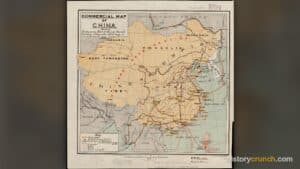
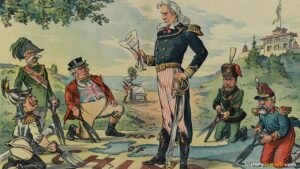
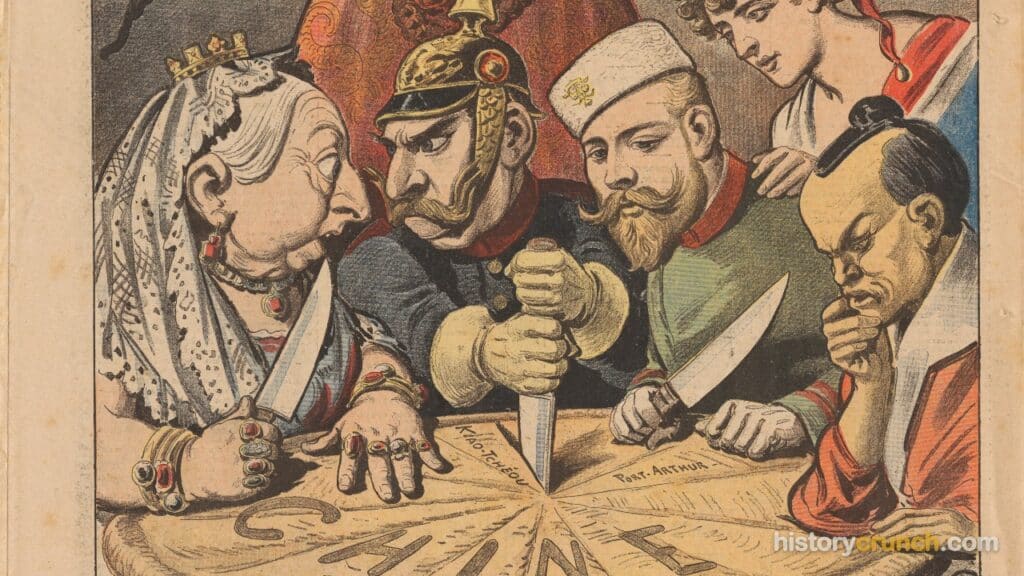
After the Opium Wars, foreign nations pushed deeper into China. By the 1890s, powerful countries including Britain, France, Germany, Russia, and Japan had carved out spheres of influence. A sphere of influence was a region where a single foreign power claimed special trading rights and economic control, almost as if that part of China belonged to it. In these areas, the foreign nation could build railroads, open mines, and control commerce, while the Qing government could do little to stop it.
China’s weakness became even more obvious after it lost the First Sino-Japanese War in 1895 to Japan, a neighbor that had modernized quickly. This defeat encouraged the foreign powers to grab even larger sections of Chinese territory and trade. As a result, many people feared that China would be broken apart completely, much like the way European powers had divided Africa during the same period.
The United States, which had arrived late to the competition for China, worried that it would be shut out of these markets. In response, the American Secretary of State John Hay proposed the Open Door Policy in 1899. This policy asked all the foreign powers to allow equal trading access throughout China rather than keeping certain regions closed to outsiders. In reality, the Open Door Policy was meant to protect American trade, but it also claimed to support keeping China whole rather than dividing it into colonies.
How Did Chinese People Respond to Imperialism?
The impacts of imperialism created deep anger and unrest inside China. One major result was the Taiping Rebellion, a massive civil war that lasted from 1850 until 1864. It was led by Hong Xiuquan, a man who had failed the Chinese civil service exams and later claimed to be the younger brother of Jesus. Although it had many local causes, the rebellion grew out of the poverty, corruption, and instability that foreign pressure had made worse. The Taiping Rebellion was one of the deadliest conflicts in human history, with an estimated 20 million people killed.
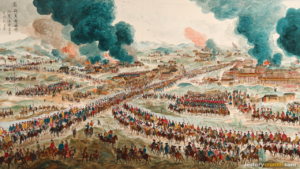
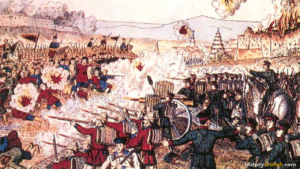
Another major response was the Boxer Rebellion, which erupted at the very end of the 1800s and lasted into 1900. It was carried out by a group known as the Society of Righteous and Harmonious Fists, called “Boxers” by foreigners because of the fighting exercises they practiced. The Boxers were strongly anti-foreign and anti-Christian, and they attacked missionaries, foreign officials, and Chinese Christians. When the Boxers surrounded the foreign area of Beijing, an international army made up of soldiers from several nations, including Britain, Russia, Japan, Germany, and the United States, marched in to crush the uprising.
The defeat of the Boxers was another humiliation for China. Afterward, the Qing government was forced to pay a huge sum of money to the foreign powers as punishment. More specifically, this payment drained the Chinese treasury and deepened the country’s dependence on outside nations, showing just how little control the Qing had left over its own affairs.
What Were the Economic and Social Impacts?
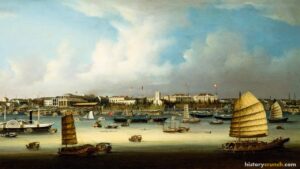
Imperialism changed China’s economy in lasting ways. The treaty ports, especially cities such as Shanghai, became busy centers of international trade, banking, and industry. Foreign businesses introduced Western manufacturing, modern factories, railroads, and new financial systems. While these changes brought some modernization, they mostly served foreign interests and often pushed aside local Chinese merchants and craftsmen.
Socially, the effects were painful. The spread of opium harmed millions of people and damaged families and communities across the country. Christian missionaries arrived in large numbers, building schools and hospitals but also creating tension with Chinese traditions rooted in Confucian values. As stated above, foreigners enjoyed special legal protections that ordinary Chinese people did not, which created a deep sense of injustice and resentment.
Perhaps the most important impact was the rise of Chinese nationalism. As people watched foreign powers take control of their land, trade, and laws, many began to demand change. This growing anger helped fuel the revolution that finally ended the Qing Dynasty in 1912 and created the Republic of China.
Significance of Impacts of Imperialism in China
The impacts of imperialism in China are considered a significant event in world history because they reshaped one of the oldest civilizations on Earth. Foreign control weakened and eventually helped destroy the Qing Dynasty, ending thousands of years of imperial rule. In its place rose modern China, a nation shaped by the memory of foreign domination.
For many Chinese people, this period became known as the “century of humiliation,” a time when their country was treated unfairly by stronger nations. In reality, this memory became a powerful force in modern Chinese identity and politics. Leaders who came later often pointed to the age of imperialism as a reason China needed to become strong, unified, and independent.
Overall, the impacts of imperialism in China show how economic greed, military power, and unequal treaties could bend even a great empire to the will of foreign nations. The events of this era, from the Opium Wars to the Boxer Rebellion, helped set the stage for the revolutions and transformations of the 20th century. In fact, understanding these impacts is key to understanding how modern China came to be.
Frequently Asked Questions
What were the main impacts of imperialism in China?
The main impacts of imperialism in China included the loss of Chinese independence, the spread of opium addiction, and the division of the country into spheres of influence. Foreign powers also forced China to sign unequal treaties, open treaty ports, and give up territory such as Hong Kong. Together these effects weakened the Qing Dynasty and stirred up anger that led to rebellion and revolution.
Why did European countries want to control China?
European countries wanted to control China mainly to gain access to its huge markets and valuable goods. China had a population of hundreds of millions of people, which foreign businesses saw as a giant customer base for their products. In addition, prized Chinese goods such as tea, silk, and porcelain were in high demand across Europe.
What was the century of humiliation in China?
The “century of humiliation” is a term used in China to describe the period from the mid-1800s to the mid-1900s when foreign powers dominated the country. It covers events such as the Opium Wars, the unequal treaties, and the Boxer Rebellion. Chinese leaders later used this memory to inspire national pride and a determination to make China strong again.
How did imperialism lead to the fall of the Qing Dynasty?
Imperialism weakened the Qing Dynasty by exposing its inability to protect China from foreign nations. Repeated military defeats, costly payments to foreign powers, and the loss of control over trade made the government look weak and helpless. This loss of respect encouraged reformers and revolutionaries, and in 1912 the Qing Dynasty finally collapsed and was replaced by the Republic of China.
Did imperialism have any lasting effects on modern China?
Yes, imperialism had lasting effects that still shape China today. Cities like Shanghai became major centers of trade and industry partly because of the foreign presence during this era. The memory of foreign control also continues to influence how China views its place in the world and its relationships with other nations.
Cite This Article
To cite this article as a source, use one of the formats below.
MLA: Millar, B. “Impacts of Imperialism in China: A Detailed Summary.” HistoryCrunch, 12 August 2026, https://historycrunch.com/impacts-of-imperialism-in-china/.
APA: Millar, B. (2026). Impacts of Imperialism in China: A Detailed Summary. HistoryCrunch. https://historycrunch.com/impacts-of-imperialism-in-china/
Chicago: Millar, B. “Impacts of Imperialism in China: A Detailed Summary.” HistoryCrunch. August 12, 2026. https://historycrunch.com/impacts-of-imperialism-in-china/
Sources
- The Met (Heilbrunn Timeline) — Chinese art
- Mark Edward Lewis, The Early Chinese Empires: Qin and Han.