The United States in the Age of Imperialism marks the moment when the country shifted from expanding across its own continent to building an overseas empire and taking a leading role in world affairs. This shift is one of the most important developments in modern American history, and it reshaped how the United States saw itself and how other nations saw it. Between the 1890s and the early 1900s, American leaders acquired distant territories, fought a war with Spain, and used both military force and economic pressure to spread American influence into the Caribbean, Central America, the Pacific, and Asia.
In simple terms, imperialism is the policy of a powerful nation extending its control over other lands and peoples, whether through direct rule, military occupation, or economic and political pressure. American imperialism refers to the period when the United States practiced this policy on a large scale, chiefly in the late nineteenth and early twentieth centuries. This era overlapped with the Gilded Age and the Progressive Era at home, and it turned the United States into a global power for the first time.
What Was the Age of Imperialism?
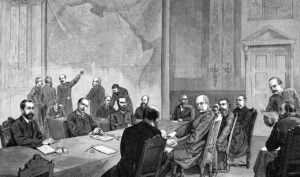
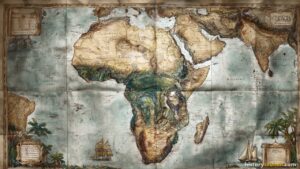
The Age of Imperialism was a period of intense colonial expansion that took place primarily from the mid-eighteenth century through the early twentieth century. During this time, the major powers of Europe raced to claim territory and establish colonies across Africa, Asia, and the Pacific. They were driven by economic interests, national rivalry, and a belief in their own cultural and racial superiority.
Britain built the largest empire in history during this period, and France, Germany, Belgium, Italy, Portugal, and Spain all controlled colonies as well. Major events of the era included the Scramble for Africa, British rule in India, and the carving of China into spheres of influence by foreign powers. The Age of Imperialism also saw non-European powers rise, and in fact the United States and Japan both emerged as imperial nations during this time. The overall period fundamentally reshaped global politics, economics, and societies in ways that still influence the world today.
Why Did the United States Turn to Imperialism?
The imperialistic actions of the United States were carried out for several key reasons, including economics, strategy, ideological beliefs, and patriotism. On the economic side, rapid industrial growth after the Civil War produced far more goods than Americans could buy at home. As a result, business leaders wanted new overseas markets to sell their products and new sources of raw materials to feed their factories.
Strategy was another powerful motive. A modern navy needed distant bases and coaling stations where warships could refuel, so islands in the Pacific and Caribbean became valuable prizes. Ideology also played a part, as many Americans believed in ideas such as Manifest Destiny and felt a duty to spread their culture, religion, and form of government.
Finally, patriotism and national pride pushed the United States toward empire. As European powers expanded around the globe, the United States felt pressure to compete on the world stage and prove its strength. In reality, these motives worked together, and by the end of the 1890s they combined to launch the country into a series of imperial adventures.
How Did the United States Annex Hawaii?
One of the first major acts of American imperialism was the annexation of Hawaii. The islands were strategically important both as a naval base and as a gateway to the markets of Asia, and American sugar planters had built enormous wealth there. For instance, in 1887 American business leaders forced the Hawaiian king to sign a constitution that greatly weakened the monarchy and secured naval rights at Pearl Harbor.
In 1893, American businessmen and sugar planters helped overthrow Queen Liliuokalani and seize control of the kingdom. The new government asked to be joined to the United States, and after several years of debate the United States formally annexed Hawaii in 1898. This gave the country a permanent foothold in the middle of the Pacific Ocean.
What Happened During the Spanish-American War?
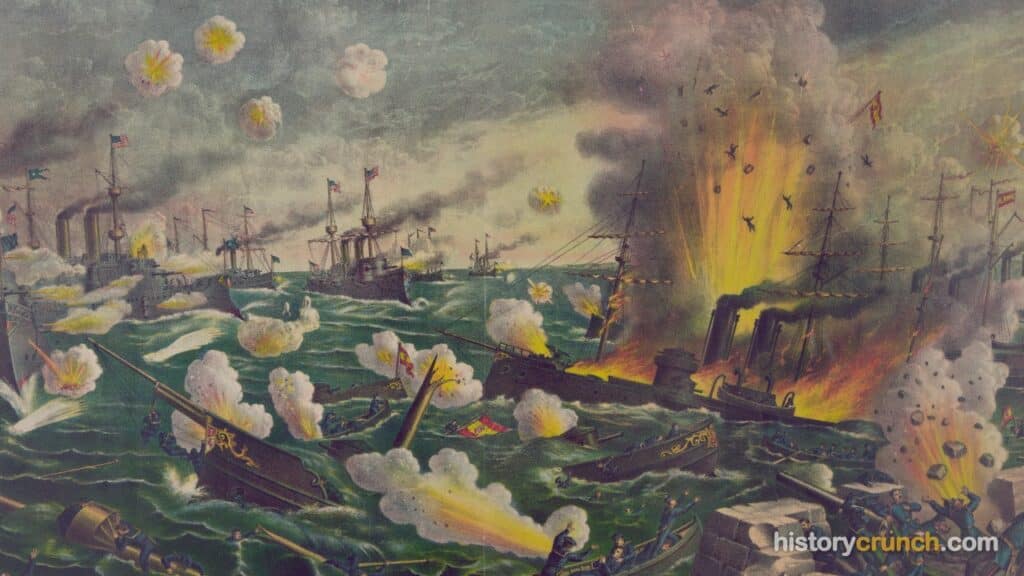
The Spanish-American War of 1898 was a short but decisive conflict between the United States and Spain, and it was the great turning point of American imperialism. The war grew out of the Cuban struggle for independence from Spanish rule, which began in 1895. Many Americans sympathized with the Cuban rebels, and reports of Spanish cruelty, often exaggerated by newspapers, fueled public anger against Spain.
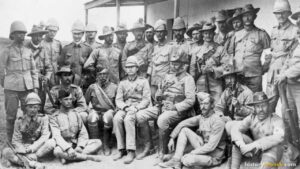
Tensions boiled over when the American battleship Maine exploded in Havana harbor, and the United States declared war in April of 1898. The fighting lasted only a few months, and American forces won victories in both Cuba and the Spanish colony of the Philippines. The war ended with the Treaty of Paris, signed on December 10th, 1898.
Under the treaty, Spain gave up its claim to Cuba and handed Puerto Rico and Guam to the United States. Spain also transferred the Philippines to the United States in exchange for a payment of twenty million dollars. In this way, the United States suddenly gained an overseas empire and announced itself to the world as a formidable military power.
Why Did the Philippine-American War Break Out?
Winning the Philippines did not bring peace, because many Filipinos wanted independence rather than a new colonial ruler. Filipino nationalists had been fighting Spain for their freedom, and they were unwilling to accept American control in Spain’s place. As a result, fighting broke out between American troops and Filipino forces in 1899.
The Philippine-American War lasted from 1899 to 1902 and was far bloodier than the war with Spain. The brutal conflict caused heavy loss of life and highlighted the moral problems of American imperialism, since a nation founded on liberty was now ruling a distant people against their will. In fact, some Americans opposed the war and formed anti-imperialist groups to protest the taking of colonies.
What Was the Open Door Policy in China?
By the late 1890s, European powers and Japan had carved China into spheres of influence, each claiming special trading rights in different regions. The United States feared being shut out of the huge Chinese market, so in 1899 Secretary of State John Hay sent a series of notes to the major powers proposing equal trade access for all nations. This proposal became known as the Open Door Policy.
In 1900, Hay expanded the policy to include respect for China’s territorial and administrative unity. The idea reflected a uniquely American approach to imperialism, which sought economic advantages without formal ownership of colonies. Although no foreign power actually signed a binding agreement, the Open Door became the official American policy toward China for decades.
How Did the Panama Canal and the Monroe Doctrine Shape American Power?
The construction of the Panama Canal, which took place between 1904 and 1914, was a massive engineering achievement that showed both American technological skill and strategic ambition. More specifically, the United States supported Panama’s independence from Colombia in order to secure the right to build and control the waterway. The canal linked the Atlantic and Pacific Oceans and gave American warships and merchant ships a far shorter route between the two coasts.
American expansion in the Western Hemisphere rested on the Monroe Doctrine, a foreign policy statement first announced by President James Monroe in 1823. This doctrine declared that any European attempt to intervene in the political affairs of the Americas would be viewed as an act of aggression. Over time, the United States used the doctrine to justify its own influence over the region.
In 1904, President Theodore Roosevelt added the Roosevelt Corollary to the Monroe Doctrine. This corollary claimed the right of the United States to step in and manage the affairs of Latin American nations, by military force if necessary, in order to keep European powers out. As stated above, these policies made the United States the dominant power throughout the Caribbean and Central America.
Significance of United States in the Age of Imperialism
The Age of Imperialism transformed the United States from a mostly inward-looking nation into a global power with colonies and interests spread across the world. The victory over Spain, the annexation of Hawaii, and the building of the Panama Canal all announced that the country now belonged among the leading nations of the earth. In fact, the choices made during this period set the pattern for American foreign policy throughout the twentieth century.
These events also carried heavy costs and hard questions. Millions of people in Puerto Rico, the Philippines, Cuba, and elsewhere came under American control without their consent, and the Philippine-American War showed how violent that control could be. This tension between the ideals of liberty and the reality of empire sparked debates in the United States that continue to this day.
Overall, the era gave the United States lasting responsibilities and lasting influence far beyond its borders. The naval bases, trade networks, and strategic interests created during this time shaped the country’s role in later conflicts, including both World Wars. For this reason, the Age of Imperialism stands as one of the most important turning points in the history of the United States.
Frequently Asked Questions
When did the American Age of Imperialism take place?
American imperialism was most active during the late nineteenth and early twentieth centuries, roughly from the 1890s into the 1910s. This period lined up with the Gilded Age and the Progressive Era at home, and its most famous events, such as the Spanish-American War and the Panama Canal, all fell within these decades.
What territories did the United States gain during this period?
The United States gained Puerto Rico, Guam, and the Philippines from Spain, and it annexed Hawaii in the same year. It also gained control over the Panama Canal Zone and established heavy influence over Cuba. Several of these territories, including Puerto Rico and Guam, remain connected to the United States today.
Who were the anti-imperialists?
The anti-imperialists were Americans who opposed the taking of overseas colonies. They argued that ruling other peoples against their will betrayed the nation’s founding belief in self-government and freedom. Famous writers and public figures joined organizations that spoke out against the Philippine-American War and the growth of empire.
What was “Big Stick” diplomacy?
Big Stick diplomacy was the foreign policy approach of President Theodore Roosevelt, who believed the United States should negotiate peacefully while keeping a strong military ready to back up its words. The phrase came from a saying about speaking softly while carrying a big stick. Roosevelt used this approach in the Caribbean and Central America, especially in matters connected to the Panama Canal.
How did imperialism change the United States at home?
Imperialism gave the United States a larger military, a stronger navy, and a much bigger role in world trade and diplomacy. It also sparked national debates about race, citizenship, and whether a democracy should rule distant peoples. These questions influenced American politics and shaped the country’s path into the twentieth century.
Cite This Article
To cite this article as a source, use one of the formats below.
MLA: Millar, B. “United States in the Age of Imperialism: A Detailed Summary.” HistoryCrunch, 12 August 2026, https://historycrunch.com/united-states-in-the-age-of-imperialism/.
APA: Millar, B. (2026). United States in the Age of Imperialism: A Detailed Summary. HistoryCrunch. https://historycrunch.com/united-states-in-the-age-of-imperialism/
Chicago: Millar, B. “United States in the Age of Imperialism: A Detailed Summary.” HistoryCrunch. August 12, 2026. https://historycrunch.com/united-states-in-the-age-of-imperialism/
Sources
- State Department — Office of the Historian
- John Darwin, After Tamerlane / Unfinished Empire.
- Fordham Modern History Sourcebook
- Daniel R. Headrick, The Tools of Empire.