The Netherlands stands out as one of the most important European nations of the colonial era, and its story helps explain how a small country on the North Sea grew into a global power. During the Age of Imperialism, the Dutch built and defended a scattered empire that stretched across Asia, the Americas, and parts of Africa. Their greatest prize was the Dutch East Indies, the group of islands in Southeast Asia that later became the modern nation of Indonesia. Dutch power began with trade and profit, and over time it grew into direct political control that lasted into the middle of the 20th century.
Imperialism is the term historians use to describe the process by which one country extends its political, economic, or cultural control over another country or region. In many cases this control was gained by force, and the imperial nation used the colony to gather resources, cheap labor, and profit. The Dutch example is unusual because for a long time much of this control was carried out not by the government itself, but by a giant private trading company that acted almost like a state.
What Was the Age of Imperialism?
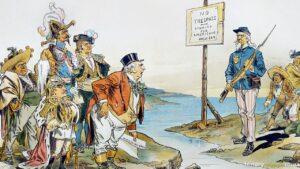
The Age of Imperialism was a period that lasted from roughly the middle of the 18th century until the early part of the 20th century. During this time, the powerful nations of Europe, along with the United States and Japan, expanded their empires and spread their influence across large sections of the globe. Major imperial powers such as Britain, France, Germany, Belgium, Spain, and Portugal raced to claim territory and establish colonies across Africa, Asia, and other parts of the world.
This competition was driven by several main causes, including economic interests, the desire to resettle growing populations, religious missions, ethnocentrism, and national prestige. In fact, the most famous example of this rivalry was the Scramble for Africa, which took place from about 1870 until 1914 and saw nearly the entire African continent divided among European powers. The Netherlands took part in this overall movement, though its empire looked quite different from those of its larger neighbors.
How Did the Dutch Empire Begin?
The roots of Dutch empire reached back long before the main Age of Imperialism, to the late 1500s. At that time, the Dutch provinces were fighting a long war of independence against the Spanish Empire, which ruled over them. This struggle pushed the Dutch to build their own overseas trade network to rival those of Spain and Portugal. The coastal towns of the Netherlands were already busy trading hubs, so the country had a head start in shipping and seafaring.
The 1600s became known as the Dutch Golden Age, a time when the Netherlands became one of the richest and most powerful trading nations in the world. Dutch merchants set up trading posts across many continents and dealt in valuable goods such as spices, silver, and textiles. More specifically, the Dutch focused less on conquering huge stretches of land and more on controlling trade routes and profitable ports. This approach shaped the entire character of their empire for centuries.
What Was the Dutch East India Company?
The most important institution in the early Dutch empire was the Dutch East India Company, known by its Dutch initials as the VOC. The government created the company in 1602 by combining several smaller competing merchant companies into a single, unified business. This joint-stock company was given the power to trade, wage war, sign treaties, and govern territory, which made it act almost like a country of its own. In many ways it was the first truly multinational corporation in history.
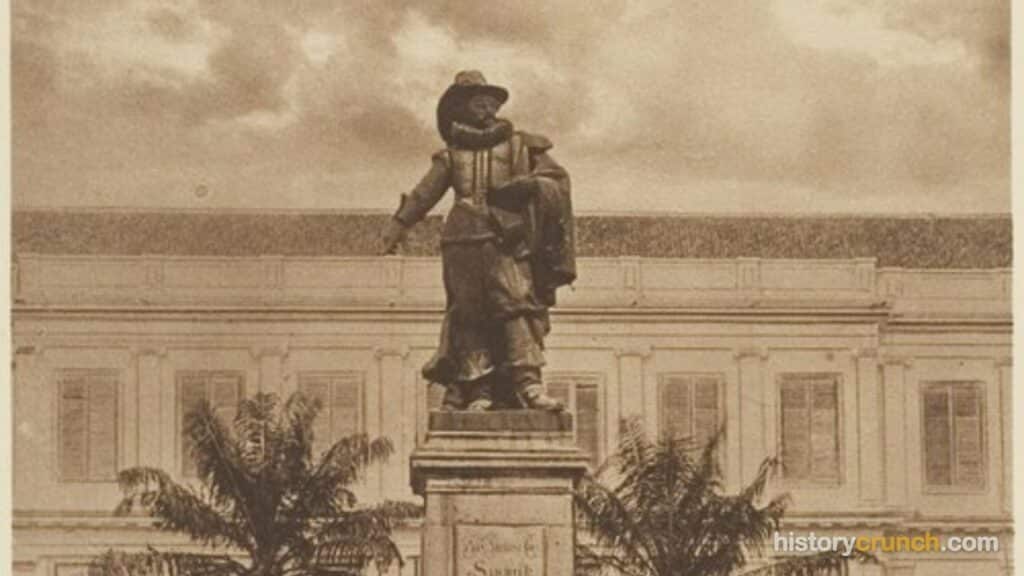
The company’s main goal was to dominate the lucrative spice trade with the islands of Southeast Asia, especially valuable products like nutmeg, cloves, and pepper. To do this, the VOC seized control of important ports and forced local rulers into trade monopolies. In 1619, the Dutch captured the city of Jayakarta on the island of Java and renamed it Batavia, making it the capital of their operations in Asia. From this base, the company built a network of forts, warehouses, and trading posts stretching from the Persian Gulf all the way to Japan.
At its height, the VOC was enormous, with tens of thousands of employees, a large fleet of merchant ships, and its own private army. In reality, this power often came at a terrible cost to local people, as the company used violence, forced labor, and harsh punishment to protect its profits. As stated above, the company blurred the line between business and government, and its actions laid the foundations for what would later become a full colonial empire.
Why Did the Dutch East India Company Collapse?
Despite its wealth and power, the Dutch East India Company eventually fell into decline. By the 1700s, the company suffered from corruption, mismanagement, and rising costs from the many wars it fought. Its debts grew larger and larger, and it could no longer make the huge profits it once had. As a result, the company went bankrupt and was formally dissolved at the very end of the 18th century.
When the company collapsed, its territories did not simply disappear. Instead, they were handed over to the Dutch government and became national property known as the Dutch East Indies. This change marked an important turning point, because control of these lands now passed from a private company to the state itself. From that point on, the Netherlands ran the colony directly as part of its national empire.
How Did the Netherlands Rule the Dutch East Indies?
The shift to direct government rule was interrupted by the wars in Europe surrounding Napoleon Bonaparte. During this period, French armies took over the Netherlands, and Britain occupied several Dutch colonies. After Napoleon’s defeat in 1815, the great powers met at the Congress of Vienna and returned most of the colonies to the Dutch. From this time forward, the Dutch kingdom took full charge of governing its overseas possessions.
The most important Dutch colony was by far the Dutch East Indies, which today makes up the nation of Indonesia. The Dutch were mainly interested in commerce and plantation agriculture, and they ran the colony in a way designed to earn the maximum possible profit. To do this, they exploited valuable cash crops such as coffee, tea, sugar, and spices, and they forced much of the local population to grow and harvest these goods. This system brought great wealth to the Netherlands while causing hardship and suffering for many Indonesians.
For much of its history, Dutch control over the islands was actually quite limited and uneven. The island of Java was firmly under Dutch rule, but many other regions remained independent for long periods of time. During the 19th century, especially during the main Age of Imperialism, the Dutch worked to expand and tighten their control over the whole archipelago. This effort included the long and brutal Aceh War, which began in 1873 on the island of Sumatra and dragged on for decades. Only in the early 20th century did Dutch authority finally reach the borders of what is now Indonesia.
What Other Colonies Did the Netherlands Control?
While the Dutch East Indies was the crown jewel of the empire, the Netherlands held colonies in other parts of the world as well. In the Americas, the Dutch controlled Suriname on the northern coast of South America, along with several islands in the Caribbean. These colonies were managed for a time by a separate business called the Dutch West India Company, which also played a major and shameful role in the Atlantic slave trade.
The Dutch had once held other important territories that they later lost or gave up. For instance, they founded the colony of New Netherland in North America, including the settlement that later became New York City, but they lost it to the English in the 1600s. In Africa, the Dutch controlled trading posts along the Gold Coast, but they sold these to Britain in the 1870s. By the height of the Age of Imperialism, the empire had shrunk down mainly to the East Indies, Suriname, and the Caribbean islands.
Significance of Netherlands in the Age of Imperialism
The Netherlands holds an important place in the history of imperialism because it showed how a small nation could build a global empire through trade and sea power rather than through the conquest of vast lands. The Dutch model, led for so long by a private company acting like a government, was different from the empires of Britain and France, which relied more heavily on direct annexation and military campaigns. In this way, the Dutch example helps students understand that imperialism took many different forms.
The effects of Dutch rule are still felt today, most clearly in Indonesia. The borders of modern Indonesia were largely shaped by the reach of the old Dutch East Indies, and the long experience of colonial control left deep marks on the region’s economy, society, and politics. In reality, the wealth that flowed from the colonies helped make the Netherlands rich, while the people of the colonies often paid a heavy price in forced labor, lost freedom, and human suffering.
The end of the Dutch empire came in the middle of the 20th century, when Indonesia declared its independence after the Second World War. This decolonization was part of the overall collapse of European empires around the world during that era. Understanding the rise and fall of the Dutch empire therefore helps explain many of the political and economic conditions that shape Southeast Asia and the wider world today.
Frequently Asked Questions
What was the most important Dutch colony?
The most important Dutch colony was the Dutch East Indies, which is now the nation of Indonesia. This colony was by far the most valuable to the Dutch economy because of its rich supplies of spices and cash crops. The many other Dutch colonies, such as Suriname and the Caribbean islands, were much smaller and less profitable by comparison.
What does VOC stand for?
VOC stands for the Dutch name of the Dutch East India Company, which in the original language means the United East India Company. The company was created in 1602 and is often called the first modern multinational corporation. It even issued shares of stock that people could buy and sell, an idea that helped shape modern business and finance.
Did the Netherlands own New York?
Yes, the Dutch once controlled the area that includes modern New York City as part of a colony called New Netherland. The main settlement there was originally named New Amsterdam. The Dutch lost this North American colony to the English in the 1600s, and the city was then renamed New York.
Why did the Dutch want the Spice Islands?
The Dutch wanted the Spice Islands because spices such as nutmeg, cloves, and pepper were extremely valuable in Europe at the time. These spices were rare, hard to obtain, and could be sold for enormous profits, which made control of the spice trade a path to great wealth. By seizing the islands and forcing trade monopolies, the Dutch aimed to be the only European supplier of these prized goods.
When did Indonesia become independent from the Netherlands?
Indonesia declared its independence in 1945, right after the end of the Second World War. The Netherlands tried to regain control of the colony for several years, but it was unable to hold on in the face of a strong independence movement. Dutch rule officially ended in 1949, when the Netherlands finally recognized Indonesian independence.
Cite This Article
To cite this article as a source, use one of the formats below.
MLA: Millar, B. “Netherlands in the Age of Imperialism: A Detailed Summary.” HistoryCrunch, 12 August 2026, https://historycrunch.com/netherlands-in-the-age-of-imperialism/.
APA: Millar, B. (2026). Netherlands in the Age of Imperialism: A Detailed Summary. HistoryCrunch. https://historycrunch.com/netherlands-in-the-age-of-imperialism/
Chicago: Millar, B. “Netherlands in the Age of Imperialism: A Detailed Summary.” HistoryCrunch. August 12, 2026. https://historycrunch.com/netherlands-in-the-age-of-imperialism/
Sources
- Eric Hobsbawm, The Age of Empire 1875-1914.
- Fordham Modern History Sourcebook
- John Darwin, After Tamerlane / Unfinished Empire.
- State Department — Office of the Historian