Italy in the Age of Imperialism is one of the most important examples of how a young and newly united nation tried to join the race for colonies during the late 19th and early 20th centuries. Italy had only become a single unified country in 1861, and by that point older powers like Britain, France, Spain, and Portugal had already spent centuries building large overseas empires. As a result, Italian leaders felt that their nation had arrived late to the competition and had to grab whatever territory was still available, mostly in Africa. This drive shaped Italian politics, its economy, and its sense of national pride for decades.
In simple terms, imperialism is a policy in which one nation extends its power and control over other territories and peoples, often through direct conquest, settlement, or economic domination. For Italy, imperialism meant seizing land in Africa and along the Mediterranean and Adriatic seas in order to be seen as a great power. More specifically, Italian imperialism combined a hunger for prestige, a search for markets and raw materials, and a desire to relieve the pressures of a growing and often poor population at home.
What Was the Age of Imperialism?
The Age of Imperialism was a period of intense colonial expansion that lasted from roughly the mid-18th century until the early part of the 20th century. During this time, the major European nations, along with the United States, Russia, and Japan, expanded their influence across large regions of Africa and Asia. They were driven by economic interests, national rivalry, and a widespread belief in racial and cultural superiority.
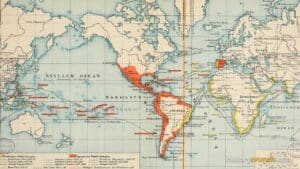
The most dramatic expression of this era was the Scramble for Africa, which took place from about 1870 until the outbreak of World War I in 1914. During these decades, powers such as Britain, France, Germany, Belgium, Italy, Portugal, and Spain raced to claim as much of the African continent as they could. By the early 20th century, nearly the entire continent had been divided among them, often with borders drawn in Europe without any regard for the peoples who actually lived there.
Historians usually point to five main causes or motives of the Age of Imperialism. These were economic gain, colonization to resettle growing populations, the spread of religion through Christian missionaries, ethnocentrism, and national prestige. In fact, all five of these motives can be seen clearly in the way Italy pursued its own empire.
Why Did Italy Turn to Imperialism?
Italy turned to imperialism largely because of a deep desire for prestige. As stated above, the major European nations of the 19th century viewed the size of their empires as a measure of their national power and greatness. Because Italy had only recently become a united country, its leaders were eager to prove that the new kingdom belonged among the great powers of Europe.
Economic reasons also played an important role. Italy in the late 1800s was a poor nation with limited industry, and its leaders hoped that colonies might provide new markets for Italian goods as well as sources of cheap raw materials. In reality, most of Italy’s colonies were dry, difficult lands that never produced the riches that leaders had promised.
A third motive was population pressure. During the 19th century, Europe’s population grew rapidly, and Italy in particular suffered from poverty and overcrowding, which pushed millions of Italians to emigrate to other countries. Some Italian leaders hoped that colonies could serve as new homes for these emigrants, keeping them within an Italian empire rather than losing them to nations like the United States and Argentina.
Where Did Italy Build Its Empire?
Italy focused most of its early colonial efforts on the Horn of Africa, a region in the northeast of the continent. Beginning in the early 1880s, Italy took control of territory along the Red Sea coast, which it later organized into the colony of Eritrea. Around the same time, Italy began to expand its influence along the coast of what is now Somalia, forming a colony known as Italian Somaliland.
Italy also looked north across the Mediterranean Sea toward North Africa. In 1911, Italy went to war with the Ottoman Empire and seized the region that became known as Libya. For instance, this conquest gave Italy a large stretch of coastline directly across the sea from the Italian mainland, though much of the territory was harsh desert with a small population.
Beyond Africa, Italy gained control of the Dodecanese Islands in the Aegean Sea as a result of the same war against the Ottomans. These scattered possessions gave Italy an empire that stretched across the Mediterranean and into the Red Sea, but it remained smaller and poorer than the empires of Britain and France.
What Happened at the Battle of Adwa?
The most famous event of Italian imperialism in this era was the Battle of Adwa, which took place on March 1st, 1896. Italy had hoped to expand from its coastal colony of Eritrea into the independent African kingdom of Ethiopia, ruled by Emperor Menelik II. A dispute over a treaty led Italy to claim that Ethiopia had become an Italian protectorate, a claim that Menelik firmly rejected.
When war broke out, Italy sent an army into the Ethiopian highlands, wrongly assuming that the Ethiopians were divided and would be easy to defeat. Instead, Menelik united his people and gathered a huge army, much of it armed with modern rifles. Near the town of Adwa, this large Ethiopian force crushed the smaller and poorly supplied Italian army.
The defeat was a shocking moment in the history of imperialism. In fact, it marked the first time during this era that a European power was decisively beaten by an African nation, and it forced Italy to recognize Ethiopian independence. For many people across Africa and around the world, the victory at Adwa became a powerful symbol of resistance against European colonial rule.
How Did Italian Imperialism Change After 1922?
Italian imperialism took on a new and more aggressive form after 1922, when Benito Mussolini and the Fascist party came to power. Mussolini dreamed of restoring the glory of ancient Rome and made the expansion of empire a central part of his government’s message and propaganda. He encouraged Italians to view colonies as proof of national strength and to move to them as settlers.
The high point of this new imperial ambition came with the invasion of Ethiopia in 1935. This time, Italy used a much larger and more modern army, including aircraft and poison gas, to conquer the country that had defeated it at Adwa. More specifically, Italy then joined Ethiopia, Eritrea, and Italian Somaliland together into a single colony known as Italian East Africa.
The Italian occupation of these territories was often brutal, involving the destruction of villages and the killing of many local people. However, the empire proved short-lived. During World War II, Allied forces captured Italy’s overseas colonies, and by the war’s end Italy had lost its empire entirely, formally giving up all colonial claims in a peace treaty signed in 1947.
Significance of Italy in the Age of Imperialism
Italy in the Age of Imperialism is significant because it shows how national pride, rather than clear economic benefit, could drive a country into costly colonial adventures. Italy spent great amounts of money and many lives on colonies that never became wealthy, all in an effort to be seen as a great power. This makes Italy a useful example of how the desire for prestige shaped the entire era.
The Italian experience is also important because of the Battle of Adwa, which stands out as one of the most striking defeats of a European power during the Age of Imperialism. The victory of Ethiopia inspired later movements against colonial rule and reminded the world that European conquest was not unstoppable. In this way, Italian imperialism helped shape the story of resistance across Africa.
Finally, the harsh methods used by Italy, especially under Mussolini, left lasting scars in the regions it controlled. The memory of invasion, occupation, and violence continued to affect relations between Italy and its former colonies long after the empire disappeared. As such, the history of Italian imperialism remains a clear reminder of both the ambitions and the cruelties of the colonial age.
Frequently Asked Questions
When did Italy become a colonial power?
Italy began building its colonial empire in the early 1880s, only about two decades after it became a unified nation in 1861. Its first territories were along the Red Sea coast in the Horn of Africa, which grew into the colony of Eritrea. Because it started so late, Italy had to compete for the lands that older empires had not already claimed.
What countries did Italy colonize?
Italy colonized parts of what are today Eritrea, Somalia, Libya, and, for a short time, Ethiopia. It also controlled the Dodecanese Islands in the Aegean Sea and later occupied Albania. Most of these possessions were located in Africa or around the Mediterranean, close to the Italian mainland.
Why was the Battle of Adwa so important?
The Battle of Adwa was important because it was the first time an African nation decisively defeated a European power during the Age of Imperialism. Ethiopia’s win in 1896 protected its independence and embarrassed Italy on the world stage. The battle later became a symbol of hope for people fighting against colonial rule.
How did Mussolini change Italian imperialism?
Mussolini made imperialism far more aggressive and central to Italian identity after taking power in 1922. He wanted to recreate the glory of ancient Rome and used modern weapons, including aircraft and poison gas, during the invasion of Ethiopia in 1935. His empire, however, collapsed during World War II.
When did Italy lose its empire?
Italy lost its empire during and immediately after World War II. Allied forces captured its overseas colonies in the early 1940s, and Italy formally gave up all remaining colonial claims in a peace treaty signed in 1947. This ended a colonial history that had lasted for about sixty years.
Cite This Article
To cite this article as a source, use one of the formats below.
MLA: Millar, B. “Italy in the Age of Imperialism: A Detailed Summary.” HistoryCrunch, 12 August 2026, https://historycrunch.com/italy-in-the-age-of-imperialism/.
APA: Millar, B. (2026). Italy in the Age of Imperialism: A Detailed Summary. HistoryCrunch. https://historycrunch.com/italy-in-the-age-of-imperialism/
Chicago: Millar, B. “Italy in the Age of Imperialism: A Detailed Summary.” HistoryCrunch. August 12, 2026. https://historycrunch.com/italy-in-the-age-of-imperialism/
Sources
- Daniel R. Headrick, The Tools of Empire.
- Eric Hobsbawm, The Age of Empire 1875-1914.