The connection between the Enlightenment and nationalism helped shape the modern world and gave rise to many of the nations and democratic ideals that exist today. The Enlightenment was an intellectual movement of the 18th century that celebrated reason, individual rights, and the idea that government should serve the people rather than rule over them. Nationalism was the belief that people who share a common language, culture, and history should govern themselves as a single independent nation. Although these two ideas were different, they were deeply linked. The Enlightenment provided many of the ideas about liberty, popular sovereignty, and the rights of the individual that nationalist movements later used to challenge kings, empires, and foreign rulers across Europe and the Americas.
In simple terms, the Enlightenment was a period of new thinking in which philosophers questioned traditional authority and argued that human reason could be used to improve society, government, and daily life. Nationalism, by contrast, was a political idea that grew in strength during the 19th century and held that the nation, meaning a group of people bound together by a shared identity, was the most natural and important unit around which a government should be built. The relationship between the two is the story of how new ideas about reason and rights slowly transformed into a powerful demand for self-rule.
What Was the Age of Enlightenment?
The Age of Enlightenment, also known as the Age of Reason, occurred during the 18th century and is often considered one of the most important periods in the history of the western world. It was an intellectual movement in which famous thinkers and philosophers challenged some of the basic foundations of society, including the role of the government, basic human nature, sources of authority, and ideas centered on liberty. Instead of relying on tradition or religious teaching, these thinkers argued that people could use reason and observation to understand the world and improve their lives.
The Enlightenment did not appear suddenly. In fact, it grew out of several earlier developments, including the Scientific Revolution, the Renaissance and its focus on humanism, and the Protestant Reformation. For instance, the Scientific Revolution showed that reason and careful observation could uncover the laws of nature, and this inspired people to apply the same methods to questions about society and government. Together, these developments encouraged people to focus on evidence and critical thinking rather than accepting old ideas without question.
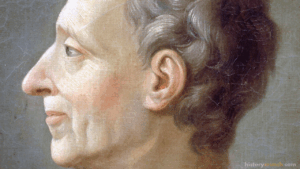
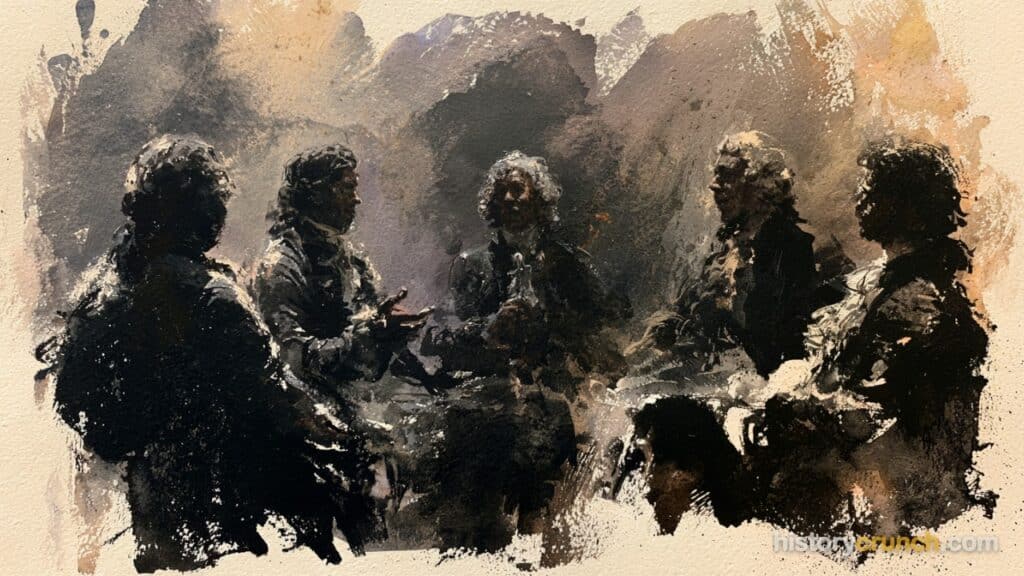
The ideas of the Enlightenment can best be seen in the work of several influential philosophers, including Thomas Hobbes, John Locke, Baron de Montesquieu, Jean-Jacques Rousseau, and Voltaire. Each offered a particular view on human nature and the proper role of government. John Locke, often called the Father of Liberalism, argued that all people were born with natural rights to life, liberty, and property, and that governments existed only with the consent of the governed. Montesquieu argued for the separation of powers so that no single person or group could gain too much control. Rousseau developed the idea of the social contract and the belief that legitimate government must reflect the general will of the people. These ideas spread through books, salons, and coffeehouses, reaching audiences across Europe and the Americas.
How Did Enlightenment Ideas Lead to Nationalism?
Before the late 18th century, most people identified themselves primarily by their religion, their village, or their loyalty to a king or dynasty rather than by any sense of national identity. Authority was usually based on the belief that a monarch had a divine right to rule, meaning that God had chosen the king to govern. The Enlightenment challenged this idea directly. If, as Locke and Rousseau argued, government drew its power from the people rather than from God, then the question naturally arose of who exactly “the people” were.
Nationalism offered an answer. If a government was supposed to reflect the will of the people, then it made sense that a nation should be made up of people who shared a common language, culture, history, and identity. In this way, the Enlightenment idea of popular sovereignty, meaning that political power belongs to the people, blended with the growing belief that each group with a shared identity deserved to govern itself. More specifically, the Enlightenment weakened the old loyalties to church and crown and helped create space for a new loyalty to the nation.
A second key principle that connected the two ideas was self-determination. Nationalists argued that each nation had the right to determine its own political future and to govern itself without being ruled by a foreign power or a distant dynasty. This claim rested directly on Enlightenment beliefs about liberty and consent. As stated above, once people accepted that governments served the governed, it became difficult to justify the rule of empires over people who did not share their language or culture.
How Did Revolutions Connect the Two Ideas?
The clearest link between the Enlightenment and nationalism can be seen in the great revolutions of the late 18th and early 19th centuries. The American Revolution drew heavily on Enlightenment thought, and the Declaration of Independence of 1776 echoed Locke’s ideas about natural rights and government by consent. In doing so, the American colonists began to see themselves not as subjects of a distant king but as a distinct people with the right to rule themselves.
The French Revolution, which broke out in 1789, carried these ideas even further. Enlightenment writers had criticized the absolute monarchy and the privileges of the church and nobility, and their ideas helped inspire the French people to overthrow the rule of King Louis XVI. During the revolution, the French began to speak of the nation as the true source of authority, and the idea of belonging to a united people took hold. In fact, the wars that followed spread these ideas across Europe.
When the armies of Napoleon Bonaparte conquered much of Europe, they carried revolutionary ideas with them, but they also provoked a powerful reaction. As people in the German states, Italy, Spain, and elsewhere united to resist French rule, they developed a stronger sense of their own national identity. In this way, both the ideas of the Enlightenment and the experience of the Napoleonic Wars helped fuel the rise of nationalism in the 19th century.
How Did Nationalism Spread in the 19th Century?
During the 19th century, nationalism became one of the most powerful forces in Europe. In Italy and Germany, it took the form of movements to unify many separate regions into single nation-states. Before this period, both Italy and Germany were divided into dozens of small kingdoms, duchies, and city-states that shared a common language and culture but were governed independently. Nationalists argued that these people belonged together and should form a single country.
For instance, the belief that all German-speaking people shared a common national identity was a central argument of those who pushed for the unification of Germany, which was finally achieved in 1871 under the leadership of the Prussian statesman Otto von Bismarck. Italy unified in the same year, drawing on a shared sense of Italian culture and history. In other places, nationalism worked in the opposite direction, encouraging different ethnic groups within large multi-ethnic empires to demand independence. This helped weaken empires such as the Austrian and Ottoman empires, whose many peoples increasingly wished to govern themselves.
The growth of literacy, cheaper printing, and expanding cities also helped nationalism spread. As more people could read newspapers, books, and pamphlets in their own language, they came to feel a shared connection with others who spoke and thought as they did. In reality, this printed culture was itself a product of the Enlightenment, which had valued education and the wide sharing of ideas.
Significance of Enlightenment and Nationalism
The connection between the Enlightenment and nationalism is one of the most important developments in modern history because together these ideas reshaped the political map of the world. The Enlightenment transformed the way people thought about government, arguing that power should rest with the people and that individuals possessed natural rights that no ruler could take away. Nationalism then applied these ideas to the question of identity, insisting that people who shared a common language and culture had the right to govern themselves.
Together, these ideas inspired revolutions, toppled monarchies, ended the rule of some empires, and led to the creation of many of the nation-states that still exist today. They also spread the ideals of democracy, liberty, and self-government far beyond Europe. At the same time, nationalism could be a source of conflict as well as unity. In the late 19th and early 20th centuries, competing national ambitions helped set the stage for major wars, including World War I. For this reason, the story of the Enlightenment and nationalism is both a story of freedom and progress and a warning about how powerful ideas can divide as well as unite.
Frequently Asked Questions
What Is the Difference Between the Enlightenment and Nationalism?
The Enlightenment was an intellectual movement about reason and rights, while nationalism was a political idea about shared identity and self-rule. The Enlightenment came first, during the 18th century, and focused on how governments should treat individuals. Nationalism grew mostly in the 19th century and focused on which people should form a nation and govern themselves. The two are connected because nationalist movements borrowed Enlightenment ideas about liberty and popular sovereignty.
Which Enlightenment Thinkers Influenced Nationalism the Most?
Jean-Jacques Rousseau and John Locke are usually seen as the thinkers whose ideas most influenced nationalism. Rousseau’s idea of the general will suggested that a government should reflect the shared desires of a united people, which fit closely with nationalist thinking. Locke’s belief that government depends on the consent of the governed gave nationalists a strong argument against being ruled by foreign powers or distant kings.
How Did the French Revolution Spread Nationalism?
The French Revolution spread nationalism by teaching people that the nation, not the king, was the true source of political power. Revolutionary France created national symbols, a national anthem, and mass armies made up of citizens who fought for their country. When French armies under Napoleon later invaded other lands, the people they conquered often responded by developing their own sense of national pride and unity.
What Countries Were Formed Because of Nationalism?
Germany and Italy are the two most famous countries formed through nationalism, both unifying in 1871. Before that time, each region was divided into many smaller states that shared a language and culture but were ruled separately. Nationalism also encouraged independence movements among peoples living within the Austrian and Ottoman empires, which eventually led to the creation of several new nations in eastern and southeastern Europe.
Was Nationalism a Good Thing or a Bad Thing?
Nationalism had both positive and negative effects, which is why historians view it in different ways. On the positive side, it helped people win independence, unite divided regions, and gain the right to govern themselves. On the negative side, extreme nationalism created rivalry and hostility between nations and contributed to major conflicts, including World War I. As a result, nationalism is often described as a force that can both unite and divide.
Cite This Article
To cite this article as a source, use one of the formats below.
MLA: Millar, B. “Enlightenment and Nationalism: A Detailed Summary.” HistoryCrunch, 12 August 2026, https://historycrunch.com/enlightenment-and-nationalism/.
APA: Millar, B. (2026). Enlightenment and Nationalism: A Detailed Summary. HistoryCrunch. https://historycrunch.com/enlightenment-and-nationalism/
Chicago: Millar, B. “Enlightenment and Nationalism: A Detailed Summary.” HistoryCrunch. August 12, 2026. https://historycrunch.com/enlightenment-and-nationalism/
Sources
- Dorinda Outram, The Enlightenment.
- Roy Porter, The Enlightenment / Enlightenment: Britain and the Creation of the Modern World.
- Stanford Encyclopedia of Philosophy